
Warmth for Sierra Ridge that never touches a flame.
No chimney, no gas line, no wood smoke drifting through a fire-prone Douglas County canyon. Just clean supplemental heat, matched to a trusted local dealer.
Every Project Starts From One of These Five Situations
A clean answer in a place where smoke is already a worry.
Sierra Ridge sits at nearly 6,000 feet on the dry, wind-exposed rangeland southeast of Denver, where Douglas County's winters bring an average low near 19°F and a long, cold heating season lasting roughly six to seven months a year—cold enough that supplemental heat matters, but this is not a wood-burning community. Between seasonal wildfire smoke advisories along the Front Range and the scattered, newer-build character of this unincorporated area, wood stoves and pellet appliances see almost no uptake here, even though ponderosa pine and juniper are common in the surrounding foothills and Arapaho-Roosevelt National Forest permits are cheap and easy to get for anyone driving up for firewood elsewhere.
What does work in Sierra Ridge is electric. There's no venting to run, no combustion byproducts to worry about on a Red Flag Warning day, and no chimney for wind-driven embers to find. Core Electric Cooperative serves the area at roughly 15 cents per kWh, which makes an electric insert or built-in a practical, low-maintenance way to add zone heat to a bonus room, a finished basement, or a primary living space without touching gas lines or masonry. It's a fast retrofit in the kind of newer homes common to this growing exurb.
Three steps. No salesperson until you're ready.
Tell us about your project
Your zip code, your situation, and the fuel you're leaning toward—or let the answers point you to one.
See what's actually available
The brands dealers within 100 miles genuinely carry—real options, never a catalog mirage.
Get your dealer & Project Guide
A trusted local dealer, plus the free Project Guide & Parts List that names every component of the job.
Frequently Asked Questions
How much does an electric fireplace installation cost in Sierra Ridge?
Most electric fireplace projects in Sierra Ridge run $500 to $3,000. A plug-in insert that drops into an existing mantel or wall opening sits at the low end—often just the unit cost plus an hour of labor. A built-in wall unit with new framing, trim, and a dedicated 20-amp circuit run by an electrician lands at the higher end. Because there's no chimney, gas line, or exterior venting involved, electric is consistently the least expensive fireplace fuel to install in Douglas County, and a local dealer can usually confirm a firm number after seeing your wall and electrical panel.
Do I need a permit to install an electric fireplace in Sierra Ridge?
Usually not for the fireplace itself. A plug-in electric insert that uses an existing outlet typically requires no permit at all. If you're adding a built-in unit that needs a new dedicated circuit, the electrical work itself may need a permit through the Douglas County Building Division, since Sierra Ridge is unincorporated. Most licensed electricians pull that permit as part of the job, so it's rarely something a homeowner has to manage directly.
Will my electric fireplace still work during a power outage?
No—and this matters in a wildfire-risk area like Sierra Ridge, where Core Electric Cooperative and other Front Range utilities sometimes de-energize lines during high-wind Red Flag conditions. An electric fireplace goes dark exactly when the grid does. If backup heat during outages is a real concern for your household, that's worth weighing against a propane appliance, since natural gas service isn't run through this part of Douglas County. For everyday supplemental warmth and ambiance when the power is on, though, electric is dependable and low-maintenance.
What types of electric fireplaces are available for a home like mine?
There are three main formats: plug-in inserts that slide into an existing mantel or media wall opening, built-in wall units that get framed into new construction or a remodel, and freestanding electric stoves that mimic the look of a wood stove without any venting. Given how many homes in Sierra Ridge are newer builds, a built-in unit framed into a great room or basement wall is a common request—it reads as a real architectural feature rather than an add-on appliance.
How much heat does an electric fireplace actually put out?
Most electric fireplaces top out around 4,600–5,000 BTU, roughly the output of a small space heater, and they're rated to comfortably heat 400–1,000 square feet depending on insulation and room layout. At Sierra Ridge's elevation and with winter lows averaging 19°F, that makes electric a strong choice for a single room, a finished basement, or supplemental zone heat—but it's not a replacement for your furnace on the coldest nights of a long, six-to-seven-month winter. Local dealers can help match wattage to your specific room size.
Why don't more homes in Sierra Ridge use wood or pellet stoves?
It comes down to fit. This part of Douglas County deals with recurring wildfire smoke advisories, and adding another combustion source—even a clean-burning EPA-certified stove—isn't the direction most homeowners here want to go. Wood and pellet installs are genuinely rare in Sierra Ridge; the newer housing stock, lack of masonry fireplaces to retrofit, and smoke-conscious culture all push residents toward gas or electric instead. If you specifically want a wood-burning setup, it's still possible, but you'll be in the minority in this particular community.
Electric vs. gas—which is right for my Sierra Ridge home?
Gas delivers more real heat output, works during a power outage with a battery-backup or Valor-style self-powered pilot, and suits a primary living space better on the coldest days. Electric costs less to install, needs no gas line or venting, produces zero combustion byproducts, and can go almost anywhere in the house. Because natural gas isn't run through this area, a gas option here typically means propane with a tank installation, which adds cost and a supplier relationship. For a bonus room, basement, or secondary space where ambiance and easy installation matter more than backup heat, electric is usually the simpler call.
Can an electric fireplace lower my Core Electric Cooperative bill?
It can, if you're using it to zone-heat a single room instead of running your central furnace for the whole house. At roughly 15 cents per kWh through Core Electric Cooperative, a 1,500-watt electric fireplace running a few hours an evening costs somewhere around 20-30 cents an hour to operate—often less than heating an entire home to keep one room comfortable. It won't replace your furnace as a whole-house strategy, but as supplemental heat for a home office or finished basement, it can shave real dollars off winter bills.
What should I look for in an electric fireplace for a high-elevation, dry climate like Sierra Ridge?
Look for a unit with a strong LED flame effect and adjustable heat settings independent of the flame—that lets you run the visual effect year-round without heat output during Sierra Ridge's warm, dry summers, then dial up warmth for the cold months. Given the area's Red Flag wind days and wildfire smoke concerns, some homeowners also value that electric units produce zero embers, zero smoke, and no indoor air quality tradeoffs whatsoever. A local dealer can walk you through flame-effect quality and heater wattage side by side before you buy.
Do electric fireplaces actually produce heat?
Yes—most put out around 4,800–5,000 BTUs from a standard outlet, which comfortably warms a bedroom, office, or den as a comfort-zone heater. What they won't do is carry a whole house the way wood, gas, or pellet can. Think of electric as ambiance-first with honest supplemental heat: flames on with no heat in July, flames plus warmth in January.
Can I put a TV above my fireplace?
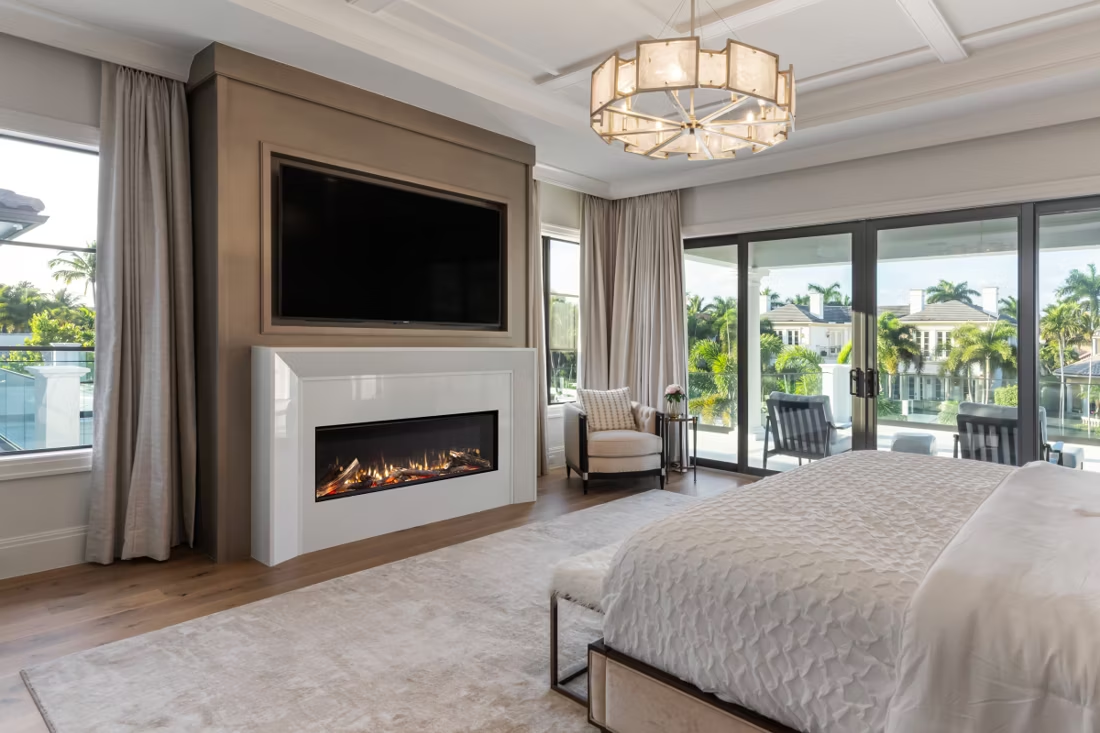
Yes—with an asterisk. Fireplaces are hot and TVs don't like heat. Either put a mantel between them to deflect rising warmth, or choose a fireplace with heat-management technology that creates a cool zone on the wall above—the wall stays around 125 degrees, barely warm, while the room still gets full heat. If you like clean lines and don't want a mantel, heat management is the answer.
Can a fireplace actually lower my heating bill?
Yes—by creating a comfort zone. A furnace heats every square foot of the house just to warm the one room you're in; a gas fireplace on low burns roughly a sixth of the gas a typical furnace does. Set the furnace around 55–60 degrees as a baseline, then heat the rooms your family actually uses. Families who heat this way commonly save $20–$60 a month.
Does a fireplace add value to my home?
On average, a fireplace adds back to the home about the same amount you spent installing it. Add the monthly savings from heating the rooms you actually use instead of the whole house—often hundreds of dollars a year—and the value case is strong before you even count what a fire does for how your family uses the room.
Nearby Dealers
Hearth shops serving Sierra Ridge and the surrounding area. Every listing shows whether it is a WhyFire partner, a dealer we have verified as authorized for the brands we recommend, or a local business carrying hearth products. No manufacturer pays for placement. How we verify dealers →
Midtown Chimney Fireplace Store
Thoshini LLC
Spa Brokers Iii
Spa Brokers
Spa Brokers
Western Fireplace Supply
Spa Brokers V
Proud Souls Barbecue & Provisions
Outdoor Kitchen Dist. Inc
Fireplace And Grill Experts - Service Only
Spa Brokers (Corporate)
Aria Custom Design
Rio Grande Co.
Distinctive Mantel Designs
Spa Brokers
Electric Service in Sierra Ridge
An electric fireplace's heater draws about 1,500 watts—pennies per hour at local rates.
Core Electric Cooperative
Find your electric fireplace in Sierra Ridge.
Tell us a bit about your home and we'll put together a free Project Guide & Parts List—the right electric fireplace or insert for your space, plus a trusted local Sierra Ridge-area dealer to install it.
Find Your Fireplace →