
Clean, steady heat that shrugs off the plains wind.
Sedgwick County's open high-plains winters bring hard wind and cold straight off the South Platte valley. A pellet stove sized right for your farmhouse or in-town Julesburg home delivers consistent heat without the wood supply problem the plains create. We'll match you with a trusted local dealer.
Every Project Starts From One of These Five Situations
Clean-burning heat built for a windy, wide-open county.
Sedgwick County sits in Colorado's far northeastern corner, where the South Platte River cuts through dryland farm country near the Nebraska and Kansas state lines. With a population of roughly 1,644 spread across Julesburg and the surrounding ranch and farm land, this is about as rural as Colorado gets. Climate zone 5B means winters here run cold and long, with the kind of relentless, open-plains wind exposure you'd recognize in Fargo or Bismarck—ground blizzards, sideways snow, and wind chill that outpaces the thermometer reading. Pellet stoves handle that wind well: sealed, direct-vent combustion doesn't rely on a strong natural draft the way an old masonry chimney does, so performance stays consistent even on the county's roughest nights.
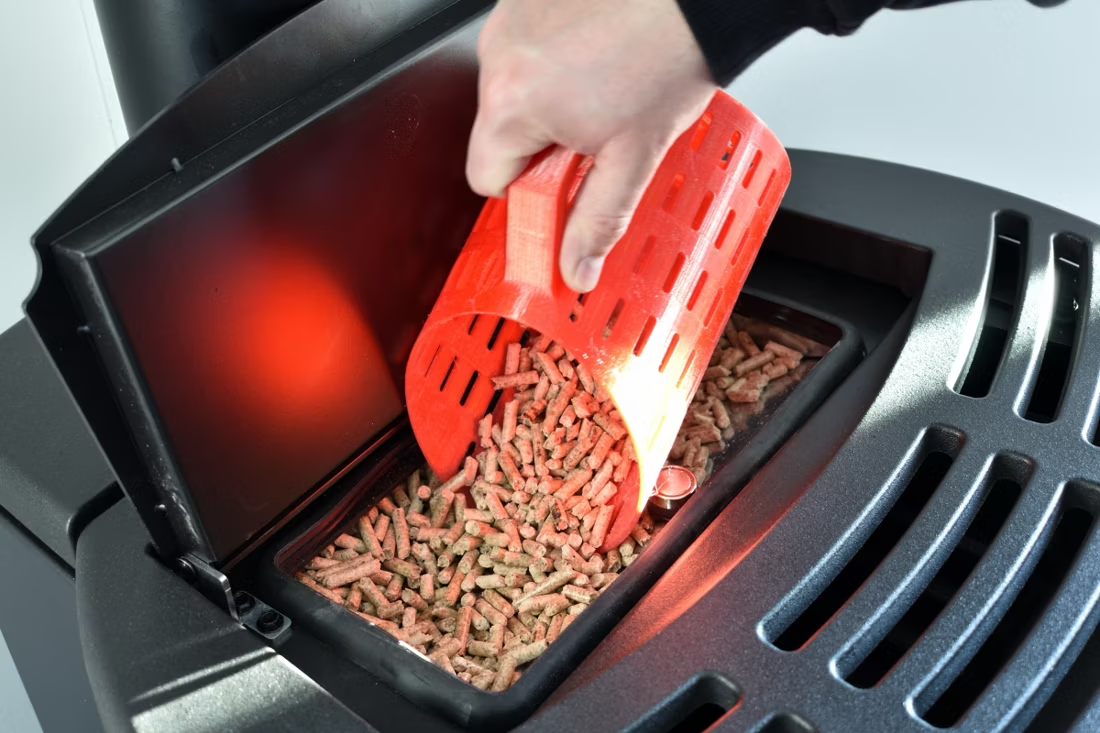
Sedgwick County is plains country, not forest country—there's no local timber stand to cut a winter's worth of ponderosa pine or aspen from, so firewood here typically gets hauled in from the Front Range or bought by the truckload. Pellets solve that supply problem differently: bagged fuel from Bear Mountain, Lignetics, and Forest Energy moves through regional farm and ranch supply channels along the I-76 corridor, making it far easier to stock a winter's supply than sourcing cordwood in a county with no forest to speak of. Pellet stoves also burn cleaner during the seasonal wildfire smoke that drifts across the eastern plains from mountain and grassland fires, which matters in a county where outdoor air quality is already something residents keep an eye on.
Three steps. No salesperson until you're ready.
Tell us about your project
Your zip code, your situation, and the fuel you're leaning toward—or let the answers point you to one.
See what's actually available
The brands dealers within 100 miles genuinely carry—real options, never a catalog mirage.
Get your dealer & Project Guide
A trusted local dealer, plus the free Project Guide & Parts List that names every component of the job.
Frequently Asked Questions
How much does a pellet stove installation cost in Sedgwick County?
A typical pellet stove or insert installation in Sedgwick County runs in the neighborhood of $3,500 to $6,500, depending on whether you're installing a freestanding stove, converting an existing masonry fireplace to a pellet insert, and how much venting work is needed. Because Sedgwick County has very few hearth retailers of its own given its small population, most installers are based out of Sterling or the Nebraska panhandle around Sidney, and travel time to Julesburg or outlying farms can add a modest trip charge to the estimate. Ask for that itemized on your quote up front.
What size pellet stove do I need for my home?
Sizing depends on square footage, ceiling height, and how much wind infiltration your home deals with—a real factor for older farmhouses scattered across Sedgwick County's open ground. A small unit (up to 1,000 sq ft) suits a single room or a tight in-town house in Julesburg; a medium unit (1,000–1,800 sq ft) covers most main living areas; and a large-hopper unit (1,800+ sq ft) is often the better call for drafty older farmhouses that lose heat quickly in a stiff plains wind. A local dealer will walk your specific home before recommending a model rather than sizing off square footage alone.
Where can I find pellet stove dealers near me in Sedgwick County?
Given Sedgwick County's population of under 2,000, there isn't a hearth retailer on every corner—most homeowners end up working with a dealer based in Sterling (Logan County) or across the state line near Sidney, Nebraska, both within reasonable driving distance of Julesburg. What matters more than proximity is certification: look for installers with NFI (National Fireplace Institute) credentials who regularly work with pellet appliances, not just wood stoves or gas units. We match Sedgwick County homeowners with the nearest dealer who actually stocks and services pellet equipment, rather than leaving you to guess from a phone book.
What's the difference between a pellet stove and a pellet insert?
A pellet stove is a freestanding appliance that sits on its own hearth pad and vents through a wall or existing chimney—it can go almost anywhere in a home with the right clearances. A pellet insert is built to slide into an existing masonry fireplace opening, which is a common upgrade path for older Sedgwick County farmhouses that already have a brick fireplace but want cleaner, more efficient heat than an open hearth provides. Since local wood supply is limited on the plains, converting an existing fireplace to a pellet insert is often the more practical route than sourcing enough cordwood to run it as a wood-burning unit.
Do I need a permit to install a pellet stove in Sedgwick County?
Yes—new pellet stove and insert installations require a building permit through the Sedgwick County Building Department, and the unit itself needs to meet current EPA emissions certification. Most local installers handle the permit paperwork as part of the job, so this typically isn't something you manage yourself. Because pellet appliances vent differently than wood stoves, make sure your installer specifies the venting method on the permit application—it affects clearance requirements and inspection sign-off.
What's the best pellet stove for Sedgwick County's climate?
Look for a unit with a large hopper capacity and a proven track record in cold, windy climates—long burn times matter when a ground blizzard rolls through and you don't want to be refilling the hopper every few hours. Brands like Harman and Quadra-Fire offer models with battery-backup ignition systems, which are worth prioritizing given how exposed Sedgwick County's power grid can be during severe plains winter storms. For fuel, Bear Mountain, Lignetics, and Forest Energy pellets are all readily available through regional ag and farm supply channels, so sticking with a stove that runs well on widely-stocked pellet brands avoids sourcing headaches later.
How often should my pellet stove be cleaned and serviced?
Plan on a professional inspection and full cleaning once a year, ideally before the burning season starts in the fall. Day-to-day, ash pans typically need emptying every few days of regular use, and the hopper and burn pot benefit from a quick brush-out weekly. Homes in Sedgwick County's dustier ag areas sometimes see faster buildup in the intake and exhaust components due to blowing field dust mixing with combustion air, so it's worth checking those more often than the manual suggests during harvest season or after a dry, windy stretch.
Where can I buy pellet fuel in Sedgwick County?
Bagged pellets from Bear Mountain, Lignetics, and Forest Energy are the regional standards, typically sold through farm and ranch supply stores along the I-76 corridor rather than dedicated hearth shops, given the county's small population. Expect pricing in the neighborhood of $250 to $320 per ton, broadly consistent with what you'd see elsewhere in eastern Colorado, though it's worth calling ahead in late fall since rural supply can tighten up once cold weather sets in and demand spikes across the region.
Pellet stove vs. propane fireplace—which makes sense in Sedgwick County?
Natural gas mains are limited outside town limits in a county this rural, so propane is the common alternative to pellet heat for most Sedgwick County homes. Propane fireplaces offer instant on-off convenience and, with the right ignition system, can run without electricity—a real advantage during the power outages that sometimes accompany severe plains winter storms. Pellet stoves need electricity to run the auger and igniter, so they're not a guaranteed backup during an outage unless paired with a battery backup or generator. Where pellet wins is fuel cost and a cleaner regional supply chain, since bagged pellets are easy to stockpile and store compared to managing a propane tank refill schedule. Many rural households in the county end up with one of each—propane for guaranteed backup, pellet for everyday efficient heat.
Why is a fireplace insert so efficient?
An insert does two things: it seals the chimney completely, so you stop losing air you already paid to heat, and it radiates warmth into the room through the firebox and glass. Most add a heat-exchange fan that pulls cool room air underneath, wraps it around the hot firebox, and pushes it back out warm. Your home is more efficient before you've even lit the first fire.
What's the difference between an insert and a zero-clearance fireplace?
An insert is a fireplace that slides into a pre-existing wood-burning fireplace—if you don't have one, there's nothing to insert it into. A zero-clearance fireplace is built into a framed wall, which makes it the answer for remodels and new construction. Simple test: existing masonry fireplace means insert; blank or framed wall means zero-clearance.
Does a fireplace add value to my home?
On average, a fireplace adds back to the home about the same amount you spent installing it. Add the monthly savings from heating the rooms you actually use instead of the whole house—often hundreds of dollars a year—and the value case is strong before you even count what a fire does for how your family uses the room.
What is an in-home preview and do I need one?
It's a visit where a hearth professional measures your space, confirms the model you picked actually works in your home, and walks the specs—framing, gas line, venting, finish work—before anything is ordered. Some details you just can't know until you see the house. Never make a down payment without one; it's the single most-skipped step that burns buyers.
Pellet Brands Stocked Around Sedgwick County
Manufacturers will point you to the nearest stocking dealer.
Find your pellet stove in Sedgwick County.
Tell us about your home in Julesburg or out on the county's farm ground, and we'll match you with a trusted local dealer and send over a free Project Guide & Parts List—the exact equipment and vent kit your pellet project needs, no big-box guesswork.
Find Your Fireplace →