
Add fireplace warmth to your Sedgwick County home—no chimney required.
From Julesburg to the farm homes scattered along the South Platte, electric fireplaces bring real ambiance and supplemental warmth to a county built on propane furnaces and long wind-driven winters. Find the right unit, and connect with a trusted local dealer.
Every Project Starts From One of These Five Situations
Electric heat that fits the plains, and the power lines already in place.
Sedgwick County sits in Colorado's far northeastern corner, a stretch of high plains along the South Platte River where Julesburg—population under 1,300—anchors a county of barely 1,600 people. Winters here bring sustained wind, hard cold snaps typical of climate zone 5B, and, increasingly, wildfire smoke drifting in from range fires and larger Western wildfires during dry stretches. With no natural gas infrastructure reaching most of the county, propane furnaces do the heavy lifting in most homes, and wood stoves burning local ponderosa pine, aspen, pinyon, and juniper have long served as backup and supplemental heat on outlying properties.
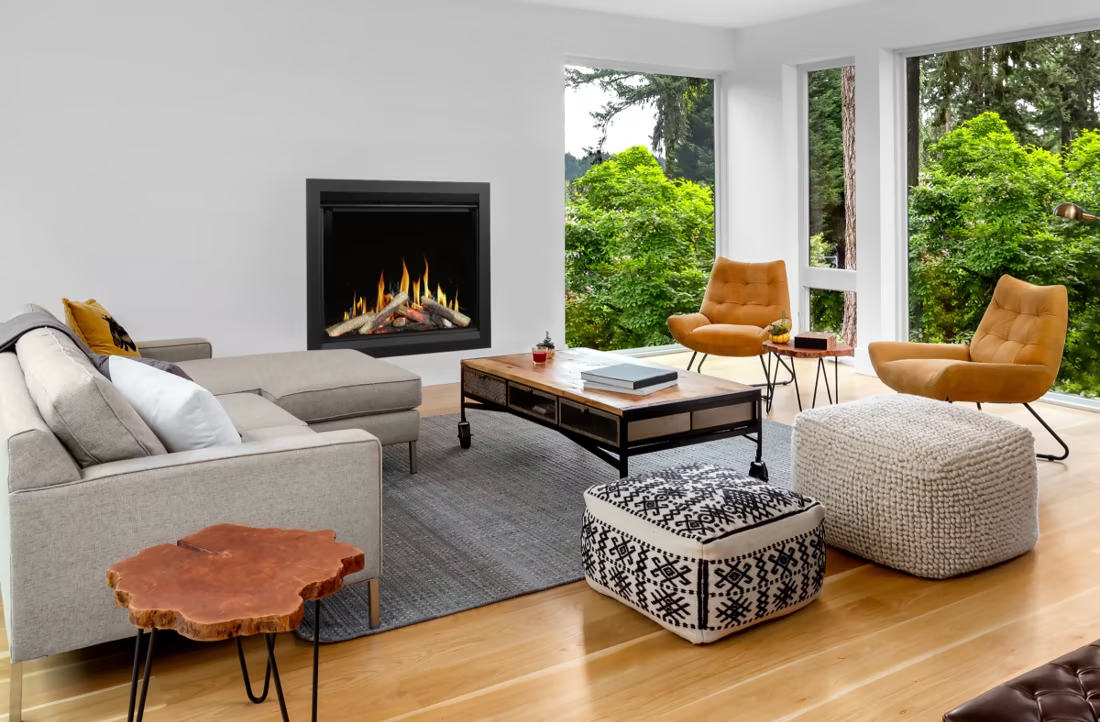
That's exactly where electric fireplaces earn their place. Many homes in Sedgwick County—older farmhouses around Julesburg and Ovid, manufactured and doublewide housing common on rural acreage—aren't plumbed for gas and don't have a masonry chimney to work with. An electric insert or wall unit sidesteps both problems entirely: no venting, no gas line, and in most cases just a standard outlet or a single dedicated circuit run by a licensed electrician. Power in the county comes through Highline Electric Association, the rural cooperative serving Sedgwick along with Phillips and Logan counties, and most electric fireplace loads are modest enough not to strain even older rural service panels. The result is real flame-look ambiance and zone heat in a living room or bedroom, installed in an afternoon rather than a multi-day chimney project.
Three steps. No salesperson until you're ready.
Tell us about your project
Your zip code, your situation, and the fuel you're leaning toward—or let the answers point you to one.
See what's actually available
The brands dealers within 100 miles genuinely carry—real options, never a catalog mirage.
Get your dealer & Project Guide
A trusted local dealer, plus the free Project Guide & Parts List that names every component of the job.
Frequently Asked Questions
How much does it cost to install an electric fireplace in Sedgwick County?
A plug-in freestanding electric fireplace or stove is the least expensive route—often $150 to $600 for the unit itself with no installation cost beyond plugging it in. Built-in wall units, mantel inserts, or larger linear models that require a dedicated 120V or 240V circuit typically run $800 to $2,500 installed, with the electrician's time for running new circuit runs from the panel accounting for most of that range. Costs tend to sit toward the higher end in older farmhouses around Julesburg and Ovid where panel upgrades or longer wire runs are needed to reach the room where the fireplace is going in.
Do I need a permit to install an electric fireplace in Sedgwick County?
A plug-in electric fireplace needs no permit—it's treated like any other appliance you plug into a wall outlet. A built-in unit wired to a new dedicated circuit does require an electrical permit, since it involves work on the home's wiring. In unincorporated Sedgwick County, that permit runs through the county building department; a licensed electrician handling the circuit work will typically pull it as part of the job. Given how many homes in the county are served by older rural distribution from Highline Electric Association, it's worth having an electrician confirm your panel has capacity before adding a new circuit, particularly in pre-1980s farmhouses.
Will my electric fireplace still work during a power outage?
No—and this matters more in Sedgwick County than in a lot of places. Wind-driven snow and ice on the open plains regularly cause Highline Electric Association outages that can last several hours, occasionally longer during a bad winter storm. An electric fireplace goes dark right along with everything else in the house. For that reason, most rural households in the county that rely on electric fireplaces for ambiance still keep a propane furnace or wood stove as their real backup heat source—electric is best thought of as a convenient supplemental option for daily use, not an emergency heat plan for when the lines go down.
What size electric fireplace do I need for my home?
Sizing depends mostly on the room, not the whole house, since electric units are typically zone heaters rather than whole-home systems. A compact 26- to 36-inch insert or wall unit suits a bedroom or a single living space in the manufactured and doublewide homes common on Sedgwick County acreage. Larger 50-inch-plus linear units make sense in the more open great-room layouts found in newer construction around Julesburg. Because most electric heaters top out around 5,000 to 9,000 BTU regardless of the unit's size, bigger models buy you a wider flame display more than dramatically more heat—a point worth discussing with a local dealer if you're deciding between look and heating output.
Can an electric fireplace actually heat a room, or is it just for looks?
Most electric fireplaces include a built-in fan heater in the 4,600 to 9,000 BTU range, enough to noticeably warm a single bedroom or living room, especially in the well-sealed, smaller-footprint homes common in the county. It won't replace a propane furnace on a sub-zero plains night with wind chill, but it does a good job taking the edge off in a specific room and letting you turn down the thermostat on the rest of the house. Models with the flame effect on a separate switch from the heater let you run ambiance year-round without running the heater in summer.
Where can I find an electric fireplace dealer near Julesburg?
Sedgwick County's small population means there isn't a hearth showroom in Julesburg itself—most homeowners end up working with dealers based in Sterling (Logan County) or occasionally across the Nebraska line, both of which regularly service this stretch of the South Platte valley. Find My Fireplace matches you with a trusted local dealer who actually covers Sedgwick County rather than leaving you to guess which showroom will make the drive, and hands you a Project Guide & Parts List so the dealer arrives ready to install rather than starting from scratch.
Does wildfire smoke affect the choice between electric and wood heat in Sedgwick County?
It's a real factor for some households. Sedgwick County sees periodic wildfire smoke drifting in from range fires and larger Western fires during dry, windy stretches, and on those days even a well-tended wood stove adds smoke exposure that some residents—especially those with respiratory sensitivities—would rather avoid. An electric fireplace produces zero combustion byproducts, so it's a clean-air option for supplemental heat and ambiance on days when outdoor air quality is already compromised, even though most county households still keep wood or propane as their primary cold-weather heat source.
How does electric compare to propane, wood, or pellet heat in Sedgwick County?
Sedgwick County has no natural gas utility, so propane is the default for central heating in most homes, and wood—often ponderosa pine, aspen, pinyon, or juniper—remains a common backup or supplemental fuel on rural properties. Pellet stoves running regional brands like Bear Mountain, Lignetics, or Forest Energy are a middle-ground option, offering more heat output than electric but still needing power to run the auger. Electric fireplaces don't compete with any of these on raw heat output or outage resilience, but they win on cleanliness, zero maintenance, and installation simplicity—no venting, no fuel storage, no annual inspection. Most Sedgwick County homeowners use electric as a second unit alongside propane or wood, not as a replacement for either.
Are there any rebates or incentives for electric fireplace installation in Sedgwick County?
Highline Electric Association periodically offers efficiency-related rebate programs for its members, and it's worth a call to ask whether a given electric heating appliance qualifies before you install—cooperative programs change from year to year. Separately, some higher-efficiency built-in electric heating inserts may qualify for federal energy tax credits, though the flame-effect fireplace units themselves generally do not. A local dealer working in the Highline territory will typically know which current programs, if any, apply to a specific unit.
Can I put a TV above my fireplace?
Yes—with an asterisk. Fireplaces are hot and TVs don't like heat. Either put a mantel between them to deflect rising warmth, or choose a fireplace with heat-management technology that creates a cool zone on the wall above—the wall stays around 125 degrees, barely warm, while the room still gets full heat. If you like clean lines and don't want a mantel, heat management is the answer.
Do electric fireplaces actually produce heat?
Yes—most put out around 4,800–5,000 BTUs from a standard outlet, which comfortably warms a bedroom, office, or den as a comfort-zone heater. What they won't do is carry a whole house the way wood, gas, or pellet can. Think of electric as ambiance-first with honest supplemental heat: flames on with no heat in July, flames plus warmth in January.
Does a fireplace add value to my home?
On average, a fireplace adds back to the home about the same amount you spent installing it. Add the monthly savings from heating the rooms you actually use instead of the whole house—often hundreds of dollars a year—and the value case is strong before you even count what a fire does for how your family uses the room.
How much should I budget for a fireplace?
For an average home—covering the fireplace, the vent pipe, and basic installation—a budget between $3,900 and $5,500 gives you a lot of options across wood, gas, and pellet. By the time you add finish work, gas line, and electrical, the average complete installation lands between $5,000 and $12,000 all-in. In a remodel or new build, a good rule is to put about 2.5% of the total project cost toward the fireplace.
Find your electric fireplace in Sedgwick County.
Tell us a bit about your home and we'll put together a free Project Guide & Parts List for your electric fireplace project, then match you with a trusted local dealer who actually covers Sedgwick County.
Find Your Fireplace →