
Find your pellet stove in San Miguel County.
Steady, thermostat-controlled heat for the San Juan high country—from Telluride's box canyon to Norwood's mesa top. Find the right stove or insert and connect with a trusted local dealer.
Every Project Starts From One of These Five Situations
Steady heat for Colorado's harshest winters.
San Miguel County runs from Telluride's box canyon at roughly 8,750 feet up into the San Juan Mountains, then drops onto the open ranchland of Wright's Mesa around Norwood and Placerville. With a winter heating season as demanding as Bozeman, Montana's and a winter low averaging 0 degrees, this is genuinely severe-cold territory—closer to Bozeman, Montana than to most of Colorado's Front Range. Winter here runs long, and homes at elevation lose heat fast, which is why so many San Miguel County residents are looking for something more predictable than tending a firebox at 2 a.m.
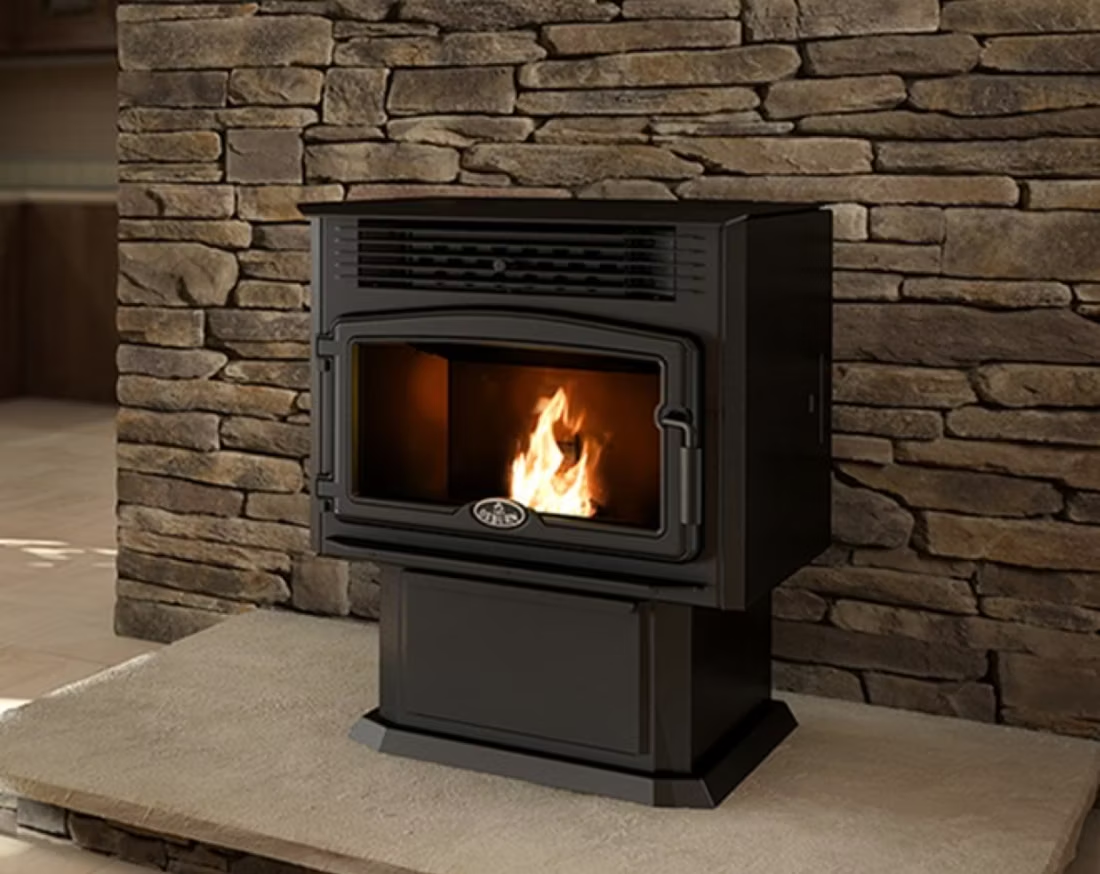
That's the case for pellet heat. A pellet stove loads from a hopper, runs on a thermostat, and holds a steady output through the kind of sustained cold this county sees from November into April—without the felling, splitting, and hauling that wood heat demands. It also matters during wildfire smoke season: summer and fall smoke events are a real air quality concern here, and pellet appliances burn cleaner than open wood fires, which counts for something in a narrow mountain valley where smoke can sit for days. Regional brands like Bear Mountain, Lignetics, and Forest Energy are commonly stocked at feed and hardware stores serving Telluride, Mountain Village, and Norwood, so fuel is generally easier to plan around than firewood cut under a Forest Service permit.
Three steps. No salesperson until you're ready.
Tell us about your project
Your zip code, your situation, and the fuel you're leaning toward—or let the answers point you to one.
See what's actually available
The brands dealers within 100 miles genuinely carry—real options, never a catalog mirage.
Get your dealer & Project Guide
A trusted local dealer, plus the free Project Guide & Parts List that names every component of the job.
Frequently Asked Questions
How much does a pellet stove installation cost in San Miguel County?
Expect a typical pellet stove installation in San Miguel County to run in the $3,500 to $7,000 range, depending on the unit, whether you're venting through an existing masonry chimney or need a new through-wall pellet vent kit, and whether electrical work is required for the hopper motor and blower. Homes at elevation in Telluride or Mountain Village with log or timber-frame construction sometimes run toward the higher end because venting through thick walls and matching architectural finishes takes more labor. Installations in Norwood and Placerville, where homes are more often standard frame construction, tend to land lower in that range.
Does high elevation affect how a pellet stove performs?
Yes. At Telluride and Mountain Village elevations near 8,750 feet, thinner air changes combustion airflow, and most manufacturers publish altitude-specific damper or auger-feed adjustments for installations above 4,500 feet. A qualified local installer will set the stove up for your specific elevation rather than using factory defaults meant for sea-level installs. This matters more with pellet appliances than with open wood fires, since the auger feed rate and combustion blower are calibrated settings, not something you can eyeball by watching the flame.
Are pellet stoves a good fit during wildfire smoke season?
They're one of the cleaner-burning options available for San Miguel County, where wildfire smoke is a recurring summer and fall concern in the San Juan basin. A pellet stove burns dense, kiln-dried fuel through a controlled auger feed, which produces far less particulate than an open wood fire and doesn't require you to keep a woodpile that can become a fire-mitigation issue near structures. Pellet stoves aren't a wildfire-mitigation strategy on their own, but for homeowners weighing wood versus pellet with defensible-space rules in mind, pellet is generally the lower-maintenance, lower-smoke choice.
Pellet stove vs. wood stove—which makes more sense in San Miguel County?
Wood is deeply practical here—ponderosa pine, aspen, pinyon, and juniper are all available locally, and cutting permits through the San Juan National Forest and the Grand Mesa-Uncompahgre-Gunnison National Forest run just $5 to $20 per cord during the May-to-October season. If you're set up to cut, split, and store wood, it's the cheapest fuel around. Pellet stoves trade that self-sufficiency for convenience: no felling trips up county forest roads, no seasoning wood for a year before burning, and more even heat output overnight. For second homes in Telluride or Mountain Village that sit empty for stretches, or for homeowners who don't want to manage a woodpile at 9,000 feet, pellet is usually the more practical call.
Do I need a permit to install a pellet stove in San Miguel County?
Most pellet stove installations require a building permit through the county building department, covering the appliance clearance, venting path, and any electrical work for the unit's hopper motor and blower. If you're in Telluride or Mountain Village, permitting typically runs through the local municipal building office rather than the county. A local hearth dealer who regularly installs in the area will usually pull the permit as part of the job, which is worth confirming before you sign a contract.
What happens to my pellet stove during a power outage?
This is the honest tradeoff with pellet heat: the auger, igniter, and blower all run on household electricity, so a standard pellet stove stops working the moment the power drops. In San Miguel County's mountain terrain, winter storms can knock out power for hours at a time, particularly in more remote parts of the county along Highway 145 or up county forest roads. Homeowners who want pellet convenience but need backup heat security during outages typically pair the stove with a small battery backup unit or a portable generator sized for the appliance's draw—worth discussing with your installer before you buy.
Where can I buy pellet fuel in San Miguel County?
Regional pellet brands including Bear Mountain, Lignetics, and Forest Energy are commonly available through hardware and feed stores serving Telluride, Mountain Village, and Norwood. Because winter storms occasionally close sections of Highway 145 and the Lizard Head Pass corridor, most longtime residents stock up on several tons before the heart of winter rather than buying a bag or two at a time. Buying a full season's supply early also tends to get better per-ton pricing than picking up pellets piecemeal once snow season is underway.
How much maintenance does a pellet stove need?
Pellet stoves need more frequent light maintenance than a wood stove needs deep cleaning, but each task is quicker. Plan on emptying the ash pan every few days during heavy winter use, cleaning the burn pot weekly, and having the venting, auger, and blower professionally serviced once a year—ideally in late summer before the county's long heating season starts in earnest. Skipping the annual service is the most common reason pellet stoves lose efficiency or jam mid-winter, which is an inconvenient time to be without heat at altitude.
Pellet stove vs. propane fireplace—which is right for my San Miguel County home?
Propane is the standard fuel for many San Miguel County homes outside city limits, since natural gas infrastructure is limited across the county's rural and mountain terrain. A propane fireplace offers instant on-off heat and doesn't depend on you keeping fuel stocked at home, but ongoing propane costs can run high during a winter this cold and long. A pellet stove requires more hands-on loading and annual servicing, but pellet fuel is generally cheaper per BTU than propane and gives you a stockpile on hand rather than depending on a tank refill during a storm. Homeowners who want the lowest possible running cost through a 9,781-degree-day winter often lean pellet; those who want zero-maintenance convenience often lean propane.
How often does a pellet stove need cleaning?
A clean pellet stove is a happy pellet stove. Plan on cleaning the burn pot about once a week when you're burning regularly—ash and clinkers gum up the air holes just like a pellet barbecue. Most pellet stove problems trace back to skipped cleaning that nobody explained up front. Some designs make it easy with a trapdoor burn pot: pull a lever and the gunk drops into the ash pan.
What's the difference between an insert and a zero-clearance fireplace?
An insert is a fireplace that slides into a pre-existing wood-burning fireplace—if you don't have one, there's nothing to insert it into. A zero-clearance fireplace is built into a framed wall, which makes it the answer for remodels and new construction. Simple test: existing masonry fireplace means insert; blank or framed wall means zero-clearance.
How much should I budget for a fireplace?
For an average home—covering the fireplace, the vent pipe, and basic installation—a budget between $3,900 and $5,500 gives you a lot of options across wood, gas, and pellet. By the time you add finish work, gas line, and electrical, the average complete installation lands between $5,000 and $12,000 all-in. In a remodel or new build, a good rule is to put about 2.5% of the total project cost toward the fireplace.
Does a fireplace add value to my home?
On average, a fireplace adds back to the home about the same amount you spent installing it. Add the monthly savings from heating the rooms you actually use instead of the whole house—often hundreds of dollars a year—and the value case is strong before you even count what a fire does for how your family uses the room.
Pellet Brands Stocked Around San Miguel County
Manufacturers will point you to the nearest stocking dealer.
Find your pellet stove in San Miguel County.
Tell us about your home and elevation, and we'll match you with the right pellet stove or insert—plus a free Project Guide & Parts List with your recommended local dealer.
Find Your Fireplace →