
Electric warmth for San Miguel County's brutal winters at altitude.
From Telluride's box canyon to Mountain Village's ski-in condos to the ranch country around Norwood, electric fireplaces give San Miguel County homes clean, ventless zone heat without a chimney. Find the right unit and connect with a trusted local dealer.
Every Project Starts From One of These Five Situations
A ventless option for condos, historic homes, and cabins alike.
San Miguel County runs from the Telluride box canyon at 8,750 feet up to Mountain Village at 9,545 feet, then down through Placerville and Norwood's Wright's Mesa ranch country. It's Climate Zone 6B with 9,781 heating degree days—in the same range as International Falls, Minnesota—and winter lows that average around 0°F. With only about 5,300 year-round residents spread across a mix of historic mining-town homes, ski condos, and rural ranch properties, heating needs vary as much as the housing stock itself.
Electric fireplaces have become a genuine fixture here, not because they replace a furnace or wood stove at 9,781 HDD—they don't, and shouldn't be relied on as sole heat during a January cold snap—but because they solve real local problems. Many Mountain Village condo HOAs restrict wood-burning units given wildfire-smoke-season air quality concerns, and downtown Telluride's Historic Preservation Commission limits exterior chimney changes on landmark buildings. An electric insert or built-in needs no flue, no combustion air, and no rooftop penetration, which makes it one of the few heat-and-ambiance upgrades that clears both a condo HOA board and a historic-district review. San Miguel Power Association, the local electric co-op, serves the whole county, and most installations are simply a matter of a licensed electrician adding the right circuit.
Three steps. No salesperson until you're ready.
Tell us about your project
Your zip code, your situation, and the fuel you're leaning toward—or let the answers point you to one.
See what's actually available
The brands dealers within 100 miles genuinely carry—real options, never a catalog mirage.
Get your dealer & Project Guide
A trusted local dealer, plus the free Project Guide & Parts List that names every component of the job.
Frequently Asked Questions
How much does an electric fireplace installation cost in San Miguel County?
A plug-in electric insert or wall-mount unit that uses a standard 120V outlet can run as little as $300 to $800 installed, since there's no venting or gas line to run. Built-in linear electric fireplaces with custom framing, trim, and a dedicated 240V circuit—common in new Mountain Village construction and Telluride remodels—typically land between $1,500 and $3,500 once an electrician is involved. Because these units don't need combustion venting or a chimney, they're consistently one of the lower-cost hearth options available in the county, and the cost difference mostly comes down to the unit's size and whether new wiring is needed.
Can an electric fireplace actually heat my home in San Miguel County's climate?
Not as a primary heat source, and no local dealer will tell you otherwise. With 9,781 heating degree days and winter lows averaging around 0°F, most electric fireplaces (typically 4,000–5,000 BTU/hour, or about 1,500 watts) are built for zone heating—a bedroom, a den, a condo living room—not for carrying a whole home through a Telluride or Mountain Village winter. They pair well with a home's existing furnace, boiler, or radiant floor system, adding supplemental warmth and ambiance to the room where you spend the most time without asking the unit to do more than it can.
Do I need a permit for an electric fireplace in Telluride or Mountain Village?
A simple plug-in unit generally doesn't require a permit. A built-in electric fireplace that involves new framing, wiring, or a dedicated circuit typically needs an electrical permit, and in downtown Telluride's historic district, any change visible from the exterior—even something as minor as a new vent grille—should be checked against Historic Preservation Commission guidelines before work starts. Mountain Village condo owners should also check their HOA's architectural review requirements, since many buildings have specific rules about in-unit electrical work. Local installers who work regularly in the county are familiar with both processes.
What electrical circuit does an electric fireplace need?
Smaller electric fireplace inserts and wall-mounts (under about 1,500 watts) usually run on a standard 120V, 15-amp household outlet—no special wiring required. Larger built-in units, especially those with higher-wattage heaters or multiple zones, often call for a dedicated 240V circuit. In older Telluride homes with older electrical panels, adding a dedicated circuit sometimes means a panel upgrade first, which a local electrician working with San Miguel Power Association service can assess during a site visit.
Electric vs. wood—which makes more sense for my San Miguel County home?
Wood remains a strong choice for many San Miguel County homes, especially rural properties around Norwood and Redvale where cutting permits through the San Juan National Forest and Grand Mesa-Uncompahgre-Gunnison National Forest run $5 to $20 per cord during the May-to-October season, and local ponderosa pine, aspen, pinyon, and juniper are all available. Wood also keeps working during a power outage, which electric cannot do. Electric wins where a chimney isn't practical or allowed—Mountain Village condos with HOA restrictions, historic Telluride buildings with limited exterior changes, or any home where wildfire-smoke-season air quality concerns make a smoke-free option appealing. Many households end up with both: wood as a real heat source, electric for a low-maintenance secondary room.
Electric vs. pellet stove—which is better here?
Pellet stoves burning brands like Bear Mountain, Lignetics, or Forest Energy deliver real supplemental heat output and a longer burn than most electric units, which matters given San Miguel County's 9,781 heating degree days. But pellet stoves need a hopper refilled, ash cleared, and—like electric—rely on power to run the auger and blower. Electric fireplaces skip the fuel handling entirely and install faster with no venting, which tends to matter more in condo settings or as a quick ambiance upgrade in a room that doesn't need serious heat. If you want genuine supplemental warmth for a drafty mountain home, pellet is the stronger performer; if you want low-maintenance ambiance with modest heat, electric fits better.
Insert, wall-mount, or built-in linear—what's the difference?
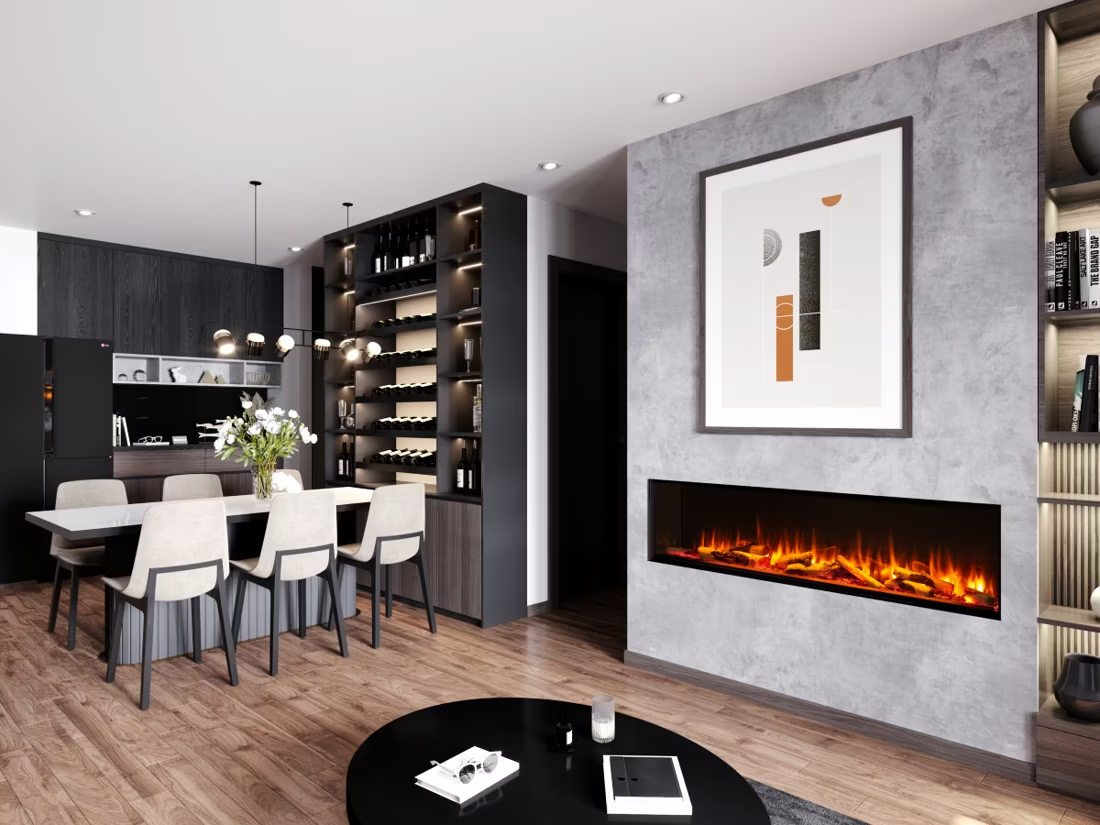
An electric insert drops into an existing masonry fireplace opening, giving an old wood-burning firebox in a historic Telluride home new life without touching the chimney. A wall-mount unit hangs like a flat-screen TV and works well in condos and newer builds with no existing fireplace. A built-in linear fireplace is framed into a wall during construction or remodel and offers the widest range of sizes and finish options—the choice most Mountain Village new-builds use for a clean, modern look. Which one makes sense depends mostly on whether you're retrofitting an existing opening or building from scratch.
Will my electric fireplace work if the power goes out?
No—and this is worth planning around in San Miguel County, where mountain storms and heavy snow loads can occasionally knock out power for hours at a time. San Miguel Power Association's service is generally reliable, but any electric fireplace, insert, or wall-mount unit stops working the moment power drops, with no battery backup option like some gas units offer. Homes that rely on wood or a propane appliance elsewhere in the house have a heat source that keeps working through an outage; electric fireplace owners should treat the unit as ambiance and supplemental heat, not emergency backup.
What's the best electric fireplace for a high-elevation San Miguel County home?
Look for units rated for full heater output rather than flame-effect-only models, since even supplemental heat matters when overnight lows sit near 0°F. Built-in linear models with adjustable heat settings work well in Mountain Village and Telluride living rooms where you want real warmth on top of the ambiance. For a condo with HOA restrictions or a historic downtown building where any exterior change requires review, a wall-mount or insert that needs no venting and no structural change is usually the easiest to get approved. A local dealer can walk through your room size, existing heat source, and HOA or historic-district rules before recommending a specific model.
Can I put a TV above my fireplace?
Yes—with an asterisk. Fireplaces are hot and TVs don't like heat. Either put a mantel between them to deflect rising warmth, or choose a fireplace with heat-management technology that creates a cool zone on the wall above—the wall stays around 125 degrees, barely warm, while the room still gets full heat. If you like clean lines and don't want a mantel, heat management is the answer.
Does an electric fireplace need a vent or chimney?
No—that's its superpower. An electric fireplace needs a wall and an outlet, period. No vent pipe, no gas line, no clearances to design around, which is why it works in bedrooms, offices, apartments, and walls where venting a gas or wood unit would be impractical or impossible. Installation is typically the simplest and least expensive of any fireplace type.
Does a fireplace add value to my home?
On average, a fireplace adds back to the home about the same amount you spent installing it. Add the monthly savings from heating the rooms you actually use instead of the whole house—often hundreds of dollars a year—and the value case is strong before you even count what a fire does for how your family uses the room.
Can I install a fireplace myself?
If you're putting a fire in your house on purpose, it's best to work with an expert. Unless you're genuinely experienced in framing, gas line, vent pipe, and the national code on clearances to combustibles, have a professional do it—and ideally the same company that sells you the fireplace, so warranty, service, and liability all live under one roof.
Find your electric fireplace in San Miguel County.
Tell us a bit about your home—condo, historic downtown property, or ranch house outside Norwood—and we'll match you with the right electric fireplace or insert, plus a free Project Guide & Parts List from a trusted local dealer.
Find Your Fireplace →