
Pellet heat built for Silverton's high-altitude winters.
San Juan County is one of the smallest, highest, and most remote counties in Colorado—a single town at 9,318 feet, surrounded by peaks that close the highway more than once a winter. A pellet stove gets you consistent, thermostat-controlled heat without splitting cordwood at elevation. Find the right unit and connect with a trusted local dealer.
Every Project Starts From One of These Five Situations
Convenient heat for one of Colorado's most remote counties.
San Juan County has just 613 year-round residents and one incorporated town—Silverton, sitting at 9,318 feet inside the San Juan Mountains. The county's climate zone rating of 7 puts it among the coldest building climates in the country, in the same category as places like International Falls, Minnesota, but reached here through altitude rather than latitude. Winters run long, snowfall is heavy, and US 550—the only paved route in and out over Red Mountain and Molas Pass—closes for avalanche control or storms with some regularity. That isolation shapes how people here heat their homes.
Ponderosa pine, aspen, pinyon, and juniper all grow in the surrounding forest and have historically supplied Silverton's wood stoves, but hauling and splitting cordwood at 9,000-plus feet is real labor, especially for older residents or second-home owners who aren't in town every week. A pellet stove trades that labor for a hopper you fill every day or two and a thermostat that holds a steady room temperature overnight—a meaningful upgrade when the goal is reliable heat rather than a wood-splitting hobby. Bear Mountain, Lignetics, and Forest Energy all distribute bagged softwood pellets through Western Slope dealers, and stocking up before the passes get bad is standard practice for anyone burning pellets here through a full Silverton winter.
Three steps. No salesperson until you're ready.
Tell us about your project
Your zip code, your situation, and the fuel you're leaning toward—or let the answers point you to one.
See what's actually available
The brands dealers within 100 miles genuinely carry—real options, never a catalog mirage.
Get your dealer & Project Guide
A trusted local dealer, plus the free Project Guide & Parts List that names every component of the job.
Frequently Asked Questions
How much does a pellet stove installation cost in San Juan County?
Dealers serving this part of the San Juan Mountains typically quote freestanding pellet stove installations in the $3,000 to $6,500 range, depending on the unit and how much venting work is involved. A pellet insert going into an existing masonry fireplace usually runs a bit higher once the liner and hearth clearances are accounted for. Because Silverton itself is small, most installers travel in from Durango or Montrose, so expect a trip charge folded into the quote—worth asking about up front given how weather-dependent travel over Red Mountain Pass can be in winter.
What size pellet stove do I need for a home at this elevation?
San Juan County's climate zone 7 rating means you're sizing for genuinely severe cold, and elevation adds wind exposure that most sizing charts don't fully capture. For a typical Silverton-area home, that usually means sizing toward the higher end of a stove's stated square-footage range rather than the middle—a stove rated for 1,500 square feet in a mild climate should be treated as adequate for something closer to 1,000-1,200 square feet here. Older mining-era homes with less insulation and single-pane windows need even more margin. A local dealer can walk your home and size it properly rather than relying on the box label.
Will my pellet stove work if the power goes out?
Not on its own—pellet stoves rely on an electric auger to feed fuel and a blower to move heat, so a power outage stops the stove. That matters in San Juan County, where winter storms can knock out power to Silverton and the surrounding area for hours at a stretch, sometimes longer when the same storm is closing US 550. Most dealers offer a battery backup accessory that runs the stove's electronics for several hours on a charge, and some households pair a pellet stove with a small generator or keep a wood-burning backup for extended outages. Ask your installer about backup power options specifically—it's a more relevant question here than in most parts of Colorado.
What's the difference between a pellet stove and a pellet insert?
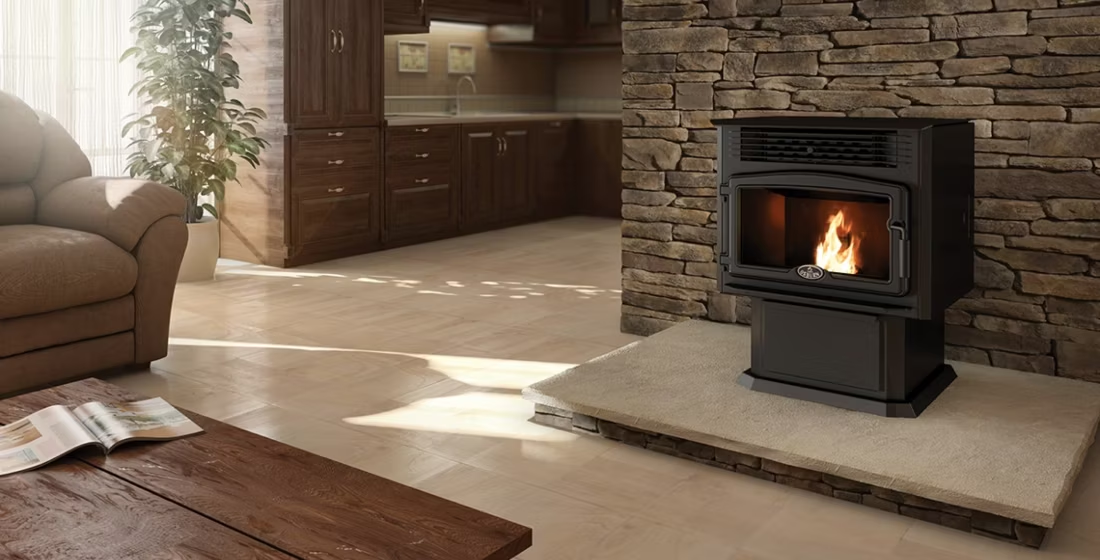
A pellet stove is a freestanding unit that sits on its own hearth pad and vents through an exterior wall or existing chimney—it can go almost anywhere with the right clearances. A pellet insert is built to slide into an existing masonry fireplace opening, which is common in some of Silverton's older homes, converting an open hearth into a sealed, thermostat-controlled heat source. For a home that already has a fireplace, an insert is usually the more efficient upgrade; for new construction or a home without an existing chimney, a freestanding stove is typically simpler to install.
Do I need a permit to install a pellet stove in San Juan County?
Yes—new solid-fuel appliance installations in San Juan County, including within the town of Silverton, generally require a building permit, and the unit needs to meet current EPA emissions standards. Most local hearth dealers handle the permitting as part of the installation, which is worth confirming when you get a quote since the nearest building department staff may not be in town every day given how small the county's administrative footprint is.
Which pellet brand works best in this climate?
Bear Mountain, Lignetics, and Forest Energy are the three brands most commonly stocked by Western Slope dealers that serve San Juan County, and all three make premium softwood pellets with low ash content that burn cleanly in the cold, dry mountain air. Low humidity at elevation actually helps pellet performance—properly stored bags stay dry and feed consistently through the auger. The bigger variable is supply: because Silverton is small and remote, it pays to buy several tons before the first heavy snow rather than counting on being able to restock mid-winter if a pass closes.
How often does a pellet stove need to be cleaned and serviced?
Plan on emptying and cleaning the ash pan every few days during heavy use, a deeper cleaning of the burn pot and heat exchanger tubes every couple of weeks, and a full professional service annually—ideally before the season starts in late summer or early fall. Homes that run a pellet stove as primary heat through a full Silverton winter will burn through more pellets and generate more ash than a supplemental setup, so more frequent cleaning keeps efficiency up and reduces the chance of a feed jam on a night you actually need the heat.
Where can I buy pellets in San Juan County?
San Juan County itself has very limited retail infrastructure given its population of 613, so most residents buy pellets from dealers or hardware stores in Durango or Montrose and either haul them up US 550 themselves or arrange delivery before winter sets in. Bear Mountain, Lignetics, and Forest Energy pellets are all available through regional suppliers on the Western Slope. Given how often mountain passes close with heavy snow, most experienced pellet-stove owners here buy a full season's supply—often 2 to 3 tons for a primary-heat home—in the fall rather than restocking as they go.
Pellet stove vs. wood stove—which makes more sense in San Juan County?
A wood stove burning local ponderosa pine, aspen, pinyon, or juniper works without electricity, which is a real advantage in a county where storms can take down power lines and close the only highway in or out at the same time. A pellet stove is far less labor—no splitting, stacking, or hauling cordwood—and gives more even, thermostat-controlled heat, but it stops working the moment the power does unless you've added a battery backup. Many Silverton homes end up with both: a pellet stove for daily convenience and a wood stove or fireplace as the fallback for extended outages. If you're only installing one appliance and outages concern you, talk to a local dealer about pairing your pellet stove with a battery backup rather than going without.
Why is my open fireplace making my house colder?
Open fireplaces suck—literally. As the fire burns, it consumes air your furnace already paid to heat and pulls it out through the chimney, so the house is actually colder after the fire goes out than before you lit it. An insert fixes this: it seals the chimney, puts fixed glass across the front, and turns that hole in your house into a real heat source.
Why is a fireplace insert so efficient?
An insert does two things: it seals the chimney completely, so you stop losing air you already paid to heat, and it radiates warmth into the room through the firebox and glass. Most add a heat-exchange fan that pulls cool room air underneath, wraps it around the hot firebox, and pushes it back out warm. Your home is more efficient before you've even lit the first fire.
How much should I budget for a fireplace?
For an average home—covering the fireplace, the vent pipe, and basic installation—a budget between $3,900 and $5,500 gives you a lot of options across wood, gas, and pellet. By the time you add finish work, gas line, and electrical, the average complete installation lands between $5,000 and $12,000 all-in. In a remodel or new build, a good rule is to put about 2.5% of the total project cost toward the fireplace.
Can a fireplace actually lower my heating bill?
Yes—by creating a comfort zone. A furnace heats every square foot of the house just to warm the one room you're in; a gas fireplace on low burns roughly a sixth of the gas a typical furnace does. Set the furnace around 55–60 degrees as a baseline, then heat the rooms your family actually uses. Families who heat this way commonly save $20–$60 a month.
Pellet Brands Stocked Around San Juan County
Manufacturers will point you to the nearest stocking dealer.
Find your pellet stove in San Juan County.
Tell us a bit about your home in Silverton or the surrounding county and we'll match you with a trusted local dealer and send over a free Project Guide & Parts List—sized for your elevation, with the vent kit and backup power options spelled out.
Find Your Fireplace →