
Reliable Heat at 9,300 Feet—Every Winter.
Silverton and the rest of San Juan County sit in IECC climate zone 7—the coldest zone in the continental U.S. Propane-fired gas heat gives homes here instant, dependable warmth when the passes are snowed shut. Find the right unit and connect with a trusted local dealer.
Every Project Starts From One of These Five Situations
Propane heat for the coldest corner of Colorado.
San Juan County is tiny—about 613 year-round residents spread across roughly 387 square miles of the San Juan Mountains, with Silverton (elevation 9,318 feet) as the county seat and only real town. This is climate zone 7, on par with winters in International Falls, Minnesota, but with the added complication of altitude: peaks over 13,000 feet ring the town, Red Mountain Pass and Molas Pass close during storms, and heating a home here means planning for weeks of sub-zero nights and the real possibility of being cut off from town for days at a time.
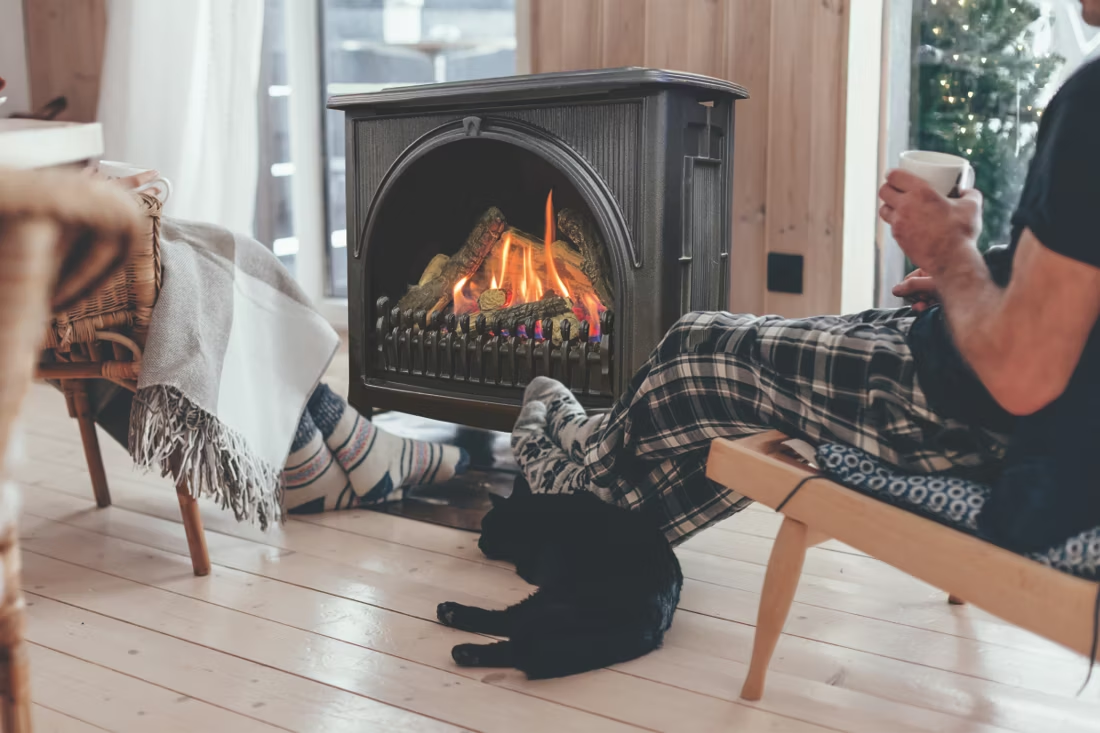
There is no natural gas utility serving San Juan County—homes here run on propane, delivered and stored in tanks by regional suppliers, since there's no pipeline infrastructure to justify running mains to a county this small and remote. That makes gas fireplaces and inserts a practical, reliable choice: no cordwood to season and store at 9,000+ feet where the burning season is short and dry wood is harder to come by, and no worrying about a fire going out overnight when it's 20 below outside. Because Silverton sits well above the elevation where standard gas appliances are rated to run correctly, most installations here require a high-altitude conversion kit—something a local, altitude-experienced dealer will already know to spec.
Three steps. No salesperson until you're ready.
Tell us about your project
Your zip code, your situation, and the fuel you're leaning toward—or let the answers point you to one.
See what's actually available
The brands dealers within 100 miles genuinely carry—real options, never a catalog mirage.
Get your dealer & Project Guide
A trusted local dealer, plus the free Project Guide & Parts List that names every component of the job.
Frequently Asked Questions
How much does a gas fireplace installation cost in San Juan County?
Expect a wider range than you'd see at lower elevations—roughly $5,500 to $12,000 for a propane fireplace or insert in San Juan County, once you account for the altitude conversion kit most units need above 9,000 feet, a new or upgraded propane tank if one isn't already on the property, and the fact that installers often have to travel from Durango, Ouray, or Montrose to reach Silverton. Simple insert conversions using an existing chimney and an existing propane tank land on the lower end; new construction or cabins needing a fresh tank, gas line, and venting run land on the higher end. Winter scheduling can also add lead time if Red Mountain Pass is closed.
Can I convert my existing wood fireplace to gas?
Yes, and it's a common upgrade for older cabins and homes around Silverton that were originally built with a masonry wood fireplace burning local ponderosa pine or aspen. A propane insert typically slides into the existing firebox and vents through a stainless liner run up the same chimney, which keeps the exterior look of the home intact while eliminating the need to haul and season firewood through a Silverton winter. Because of the elevation, the insert still needs to be rated (or field-converted) for high-altitude combustion—a detail a local dealer familiar with San Juan County installs will already build into the quote.
Is natural gas available in San Juan County, or is it all propane?
It's propane. San Juan County has no natural gas utility or distribution mains—the population base is too small and the terrain too remote to justify pipeline infrastructure. Every gas fireplace, insert, or stove installed in Silverton or elsewhere in the county runs on propane, stored in an above-ground or buried tank on the property. If you're moving from a natural-gas market, the main difference is planning for tank placement, keeping it accessible for delivery trucks even in heavy snow, and budgeting for periodic propane refills rather than a monthly utility bill.
Will my gas fireplace work during a power outage?
Most modern propane fireplaces will, which matters here—winter storms along Red Mountain Pass and Molas Pass can knock out power to Silverton for extended stretches. Units with IPI (intermittent pilot ignition) run on battery backup and will still light and heat the room with the grid down, as long as the batteries are fresh. Valor fireplaces take it a step further: their pilot assembly generates its own electricity through the thermocouple, so there's no battery to check or replace, ever. For a county this isolated, that kind of self-sufficiency is worth asking about directly with your local dealer.
What's the difference between a gas fireplace, gas insert, and gas stove?
A gas fireplace is a fully built-in unit framed into a wall—the right choice for new cabins or additions. A gas insert drops into an existing masonry firebox and uses the existing chimney as its vent path, which is the more common retrofit for older Silverton homes with a wood fireplace already in place. A gas stove is a freestanding cabinet unit that sits on its own hearth pad and doesn't require an existing fireplace opening at all—a good option for smaller cabins or outbuildings without a chimney. All three need to be spec'd or field-converted for San Juan County's altitude.
Do I need a permit to install a gas fireplace in San Juan County?
Yes. Within the Town of Silverton, permits go through the town's building department; outside town limits, the San Juan County Building Department handles both the building permit and the gas line permit for propane appliance installations. Because propane line work requires a licensed gas-fitter and inspections have to line up with a small local permitting office, most homeowners let their installer handle the paperwork rather than coordinating it themselves—especially useful given how few contractors regularly work this far up the valley.
What's the difference between vented and vent-free gas fireplaces—and does altitude matter?
Vented (direct-vent) gas fireplaces draw combustion air from outside and exhaust it back outside through a sealed pipe—they're the safest option and the one almost universally recommended for San Juan County. Vent-free units burn directly into the room air and are far more sensitive to altitude, since thinner air at 9,300 feet changes how completely propane combusts; many vent-free models aren't rated for use this high at all. Direct-vent units, by contrast, just need the correct high-altitude orifice and pressure regulator, which any dealer experienced in mountain installs will set up as a matter of course. Given the altitude and the harsh winters here, direct-vent is the practical choice almost every time.
How often should my gas fireplace be serviced?
Plan on an annual inspection, ideally before the first hard freeze rather than mid-winter when Silverton's access roads are least predictable. A technician will check the burner, pilot assembly, propane connections, and venting, and confirm the altitude regulator is still delivering the right pressure—a detail that matters more here than almost anywhere else in Colorado. Because so few service techs cover San Juan County regularly, many homeowners schedule service through the same dealer who handled the original install to avoid a second trip charge from Durango or Ouray.
Gas vs. wood—which makes more sense for a home in San Juan County?
Wood is deeply practical here—ponderosa pine, aspen, pinyon, and juniper are all locally available, many residents cut their own under San Juan National Forest permits, and a wood stove keeps burning with zero dependence on the grid or a propane delivery truck making it up Highway 550 in a storm. Propane's advantage is convenience and consistency: instant heat at the flip of a switch, no ash or creosote, and no wood to season in a burning season this short. Given how isolated San Juan County can get in winter, many homes here end up with both—propane for daily, no-fuss heat in the main living space, and a wood stove as the fallback that doesn't care whether the power or the propane truck gets through.
Is my gas fireplace wasting gas?
If it was installed more than 15 years ago, probably. Older gas fireplaces keep a standing pilot light burning all the time, and that little flame can cost a couple hundred dollars a year. Newer models use pilot-on-demand ignition—the pilot lights only when you use the fireplace and goes out when you turn it off.
Can I put a TV above my fireplace?
Yes—with an asterisk. Fireplaces are hot and TVs don't like heat. Either put a mantel between them to deflect rising warmth, or choose a fireplace with heat-management technology that creates a cool zone on the wall above—the wall stays around 125 degrees, barely warm, while the room still gets full heat. If you like clean lines and don't want a mantel, heat management is the answer.
Can a fireplace actually lower my heating bill?
Yes—by creating a comfort zone. A furnace heats every square foot of the house just to warm the one room you're in; a gas fireplace on low burns roughly a sixth of the gas a typical furnace does. Set the furnace around 55–60 degrees as a baseline, then heat the rooms your family actually uses. Families who heat this way commonly save $20–$60 a month.
Does a fireplace add value to my home?
On average, a fireplace adds back to the home about the same amount you spent installing it. Add the monthly savings from heating the rooms you actually use instead of the whole house—often hundreds of dollars a year—and the value case is strong before you even count what a fire does for how your family uses the room.
Find your gas fireplace in San Juan County.
Tell us about your home and its elevation, and we'll match you with a trusted local dealer experienced in high-altitude propane installs—plus a free Project Guide & Parts List with the exact parts for your San Juan County gas fireplace project, including the vent kit and altitude conversion kit.
Find Your Fireplace →