
Pellet heat built for San Luis Valley winters.
With winter lows averaging -2°F and one of the longest, coldest heating seasons around, Rio Grande County demands serious heat. From Del Norte to Monte Vista to South Fork, find the right pellet stove and get matched with a trusted local dealer.
Every Project Starts From One of These Five Situations
Consistent warmth without the wood-splitting work.
Rio Grande County sits in the San Luis Valley at roughly 7,800 feet, in climate zone 7—one of the coldest zones on the map. With a long, brutal heating season and average winter lows near -2°F, the heating season here stretches long past what most of the country deals with. Ponderosa pine, aspen, pinyon, and juniper grow throughout the surrounding Rio Grande National Forest, and plenty of households still cut their own firewood on permits that run $5 to $20 per cord during the May-through-October season. But splitting and hauling wood at altitude, winter after winter, wears on people—which is where pellet appliances have carved out a real niche.
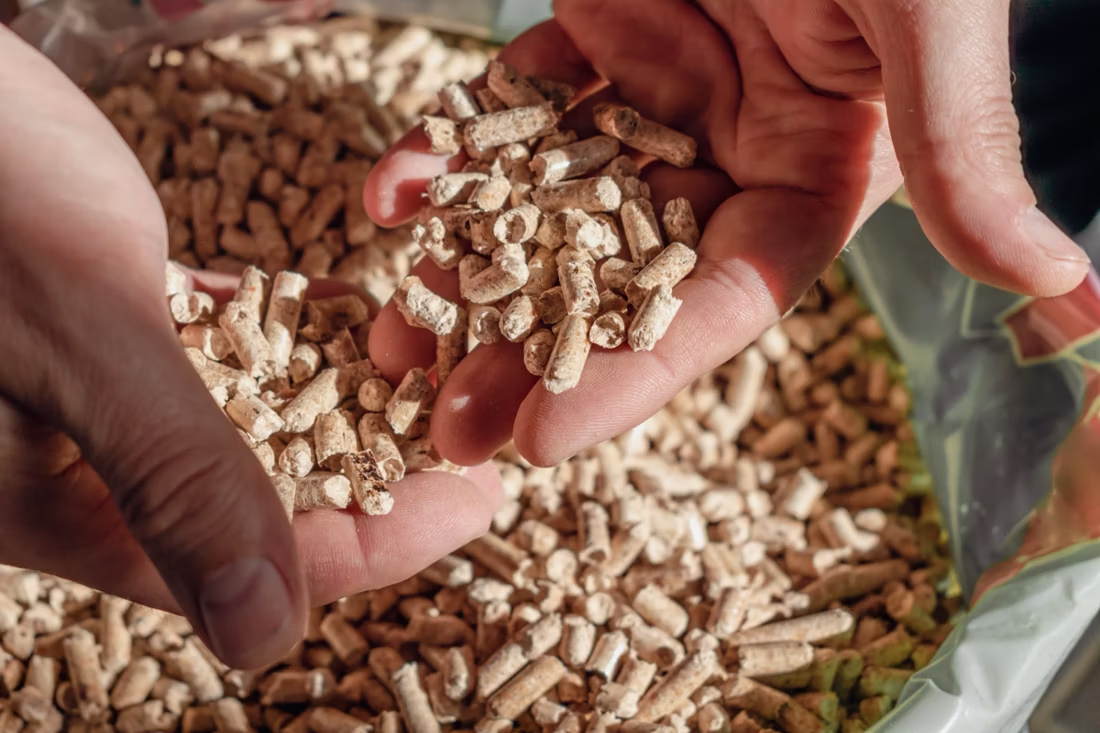
A pellet stove loads from a hopper, holds a steady burn for 24 hours or more on a single fill, and produces a fraction of the smoke a wood stove does—a real plus given the wildfire smoke that periodically settles into the valley during summer and fall. Regional pellet brands like Bear Mountain, Lignetics, and Forest Energy are sold through hearth dealers and farm-and-feed suppliers across the San Luis Valley, so fuel isn't hard to find. The one honest tradeoff: pellet stoves run on electricity for the auger and blower, which matters in a rural county where winter storms do occasionally knock out power. A local dealer can walk you through battery backup options so that tradeoff doesn't become a cold night.
Three steps. No salesperson until you're ready.
Tell us about your project
Your zip code, your situation, and the fuel you're leaning toward—or let the answers point you to one.
See what's actually available
The brands dealers within 100 miles genuinely carry—real options, never a catalog mirage.
Get your dealer & Project Guide
A trusted local dealer, plus the free Project Guide & Parts List that names every component of the job.
Frequently Asked Questions
How much does a pellet stove installation cost in Rio Grande County?
Pellet stove installations in Rio Grande County typically run in the $3,500 to $6,500 range, depending on the unit and whether you're venting through an existing wall or need new penetration work. Freestanding pellet stoves are generally less involved than a masonry conversion, since they vent through a small-diameter pipe rather than a full chimney. Homes in more remote parts of the county—out toward La Garita or up the South Fork corridor—may see a modest travel charge added to the install quote. A local dealer will give you a firm number after seeing your space.
How does a pellet stove handle Rio Grande County's cold, high-elevation winters?
Well, with the right sizing. At 7,800 feet and with winter lows averaging -2°F, Rio Grande County pushes appliances harder than most of the country—climate zone 7 is about as demanding as U.S. heating gets outside Alaska. Mid-size and large pellet stoves rated for continuous run times can hold a steady output through the coldest overnight stretches, and because pellets burn more consistently than cordwood, you get fewer temperature swings than with a wood stove that needs reloading and restoking. The tradeoff is that at altitude, combustion air adjustments matter more, so make sure whoever installs your unit accounts for elevation when setting up the appliance.
Will my pellet stove work during a power outage in the San Luis Valley?
Not without a backup power source—this is the honest limitation of pellet heat. The auger that feeds pellets into the burn pot and the blower that circulates heat both run on standard household electricity. In a rural county like Rio Grande, where winter storms can take out power for hours at a time, that matters. Many local homeowners pair a pellet stove with a small battery backup unit or a generator sized to run the stove's low electrical draw, which keeps the heat going through an outage. If backup heat during outages is a top priority, it's worth discussing wood as a supplemental option alongside your pellet stove.
What size pellet stove do I need for my home?
Sizing depends on square footage, insulation, and whether the stove is your primary or supplemental heat. Given Rio Grande County's climate zone 7 conditions and a long, demanding winter heating season, sizing tends to run larger here than in milder parts of Colorado—a stove rated for a given square footage in Denver may come up short in Del Norte or South Fork. Older homes with less insulation, common throughout the valley's older housing stock, also need more heating capacity per square foot. A local dealer will size your space accurately during an in-home visit rather than relying on a generic chart.
Where can I buy pellet fuel in Rio Grande County?
Regional brands like Bear Mountain, Lignetics, and Forest Energy are the most common pellets sold through hearth retailers and farm-and-feed stores in the San Luis Valley. Because Rio Grande County is rural, it's worth buying pellets by the pallet (usually 50 forty-pound bags) rather than by the individual bag, both for cost savings and to make sure you have enough on hand—winter deliveries can be delayed by weather. Stock up before the season starts if you can; local supply can run tight during a hard cold stretch when everyone is buying at once.
Do I need a permit to install a pellet stove in Rio Grande County?
Yes, a building permit is generally required for a new pellet stove installation, whether you're in Del Norte, Monte Vista, or unincorporated parts of the county. Most local hearth dealers handle the permitting as part of the installation, so you typically don't have to navigate it yourself. Unlike open wood burning, pellet stoves are not subject to the seasonal curtailment restrictions that apply in some Colorado non-attainment areas, since they burn much cleaner—one of the practical advantages of pellet heat here.
Pellet stove vs. wood stove—which is right for my home in Rio Grande County?
Wood is deeply rooted in this county—Rio Grande National Forest cutting permits run $5 to $20 per cord through the May-to-October season, and ponderosa pine, aspen, pinyon, and juniper are all available locally. Wood stoves also keep working without electricity, which matters during valley power outages. Pellet stoves trade that off for convenience: no splitting, less ash, a much longer unattended burn, and noticeably less smoke—a real consideration given the wildfire smoke that settles into the valley some summers and falls. For households that value hands-off operation and don't mind the electrical dependency, pellet often wins. For households prioritizing storm-proof backup heat and don't mind the labor, wood usually wins. Plenty of Rio Grande County homes run both.
How often does a pellet stove need maintenance?
Pellet stoves need more frequent light maintenance than wood stoves but far less heavy work. Plan on emptying the ash pan every few days during regular use, cleaning the burn pot weekly, and scheduling a full professional cleaning and inspection annually—ideally before the heating season starts given how early cold arrives in the valley. The auger motor and blower are mechanical components, so an annual service check catches wear before it causes a mid-winter breakdown, which is the last thing you want with lows near -2°F outside.
Can I use a pellet stove as my primary heat source at 7,800 feet elevation?
Yes, plenty of Rio Grande County homes do exactly that, though it's worth sizing generously given the county's climate zone 7 rating and a winter heating season among the longest and coldest around. A stove sized correctly for the square footage, with attention to elevation-adjusted combustion settings, can carry a well-insulated home through the winter as the primary heat source. For larger or less-insulated homes, or homes in the coldest pockets of the valley, pairing the pellet stove with a backup system—propane furnace or wood stove—is a common and sensible approach.
How often does a pellet stove need cleaning?
A clean pellet stove is a happy pellet stove. Plan on cleaning the burn pot about once a week when you're burning regularly—ash and clinkers gum up the air holes just like a pellet barbecue. Most pellet stove problems trace back to skipped cleaning that nobody explained up front. Some designs make it easy with a trapdoor burn pot: pull a lever and the gunk drops into the ash pan.
Why is a fireplace insert so efficient?
An insert does two things: it seals the chimney completely, so you stop losing air you already paid to heat, and it radiates warmth into the room through the firebox and glass. Most add a heat-exchange fan that pulls cool room air underneath, wraps it around the hot firebox, and pushes it back out warm. Your home is more efficient before you've even lit the first fire.
What is an in-home preview and do I need one?
It's a visit where a hearth professional measures your space, confirms the model you picked actually works in your home, and walks the specs—framing, gas line, venting, finish work—before anything is ordered. Some details you just can't know until you see the house. Never make a down payment without one; it's the single most-skipped step that burns buyers.
Can a fireplace actually lower my heating bill?
Yes—by creating a comfort zone. A furnace heats every square foot of the house just to warm the one room you're in; a gas fireplace on low burns roughly a sixth of the gas a typical furnace does. Set the furnace around 55–60 degrees as a baseline, then heat the rooms your family actually uses. Families who heat this way commonly save $20–$60 a month.
Stove and Fireplace Dealers in Rio Grande County
Pellet Brands Stocked Around Rio Grande County
Manufacturers will point you to the nearest stocking dealer.
Find your pellet stove in Rio Grande County.
Tell us a bit about your home and we'll match you with a trusted local dealer and send over a free Project Guide & Parts List—sized for the San Luis Valley's climate, with the exact parts and vent kit your installer will need.
Find Your Fireplace →