
Supplemental heat built for San Luis Valley winters.
No venting, no gas line, no chimney—just plug-in or hardwired zone heat for a room in Del Norte, Monte Vista, or anywhere else in Rio Grande County. Find the right unit and get matched with a trusted local dealer.
Every Project Starts From One of These Five Situations
Electric heat has a real, specific job here.
Rio Grande County sits high in Colorado's San Luis Valley, with Del Norte and Monte Vista both above 7,600 feet. The county falls in climate zone 7, one of the coldest zones on the map, with an average winter low around -2°F and roughly 8,950 heating degree days a year—a burden closer to International Falls, MN than to most of Colorado's Front Range. In a valley this cold, the primary heat load is carried by wood, pellet, or propane appliances, not electric ones. Ponderosa pine, aspen, pinyon, and juniper are the common local firewood species, and Rio Grande National Forest issues cutting permits from May through October at $5 to $20 per cord.
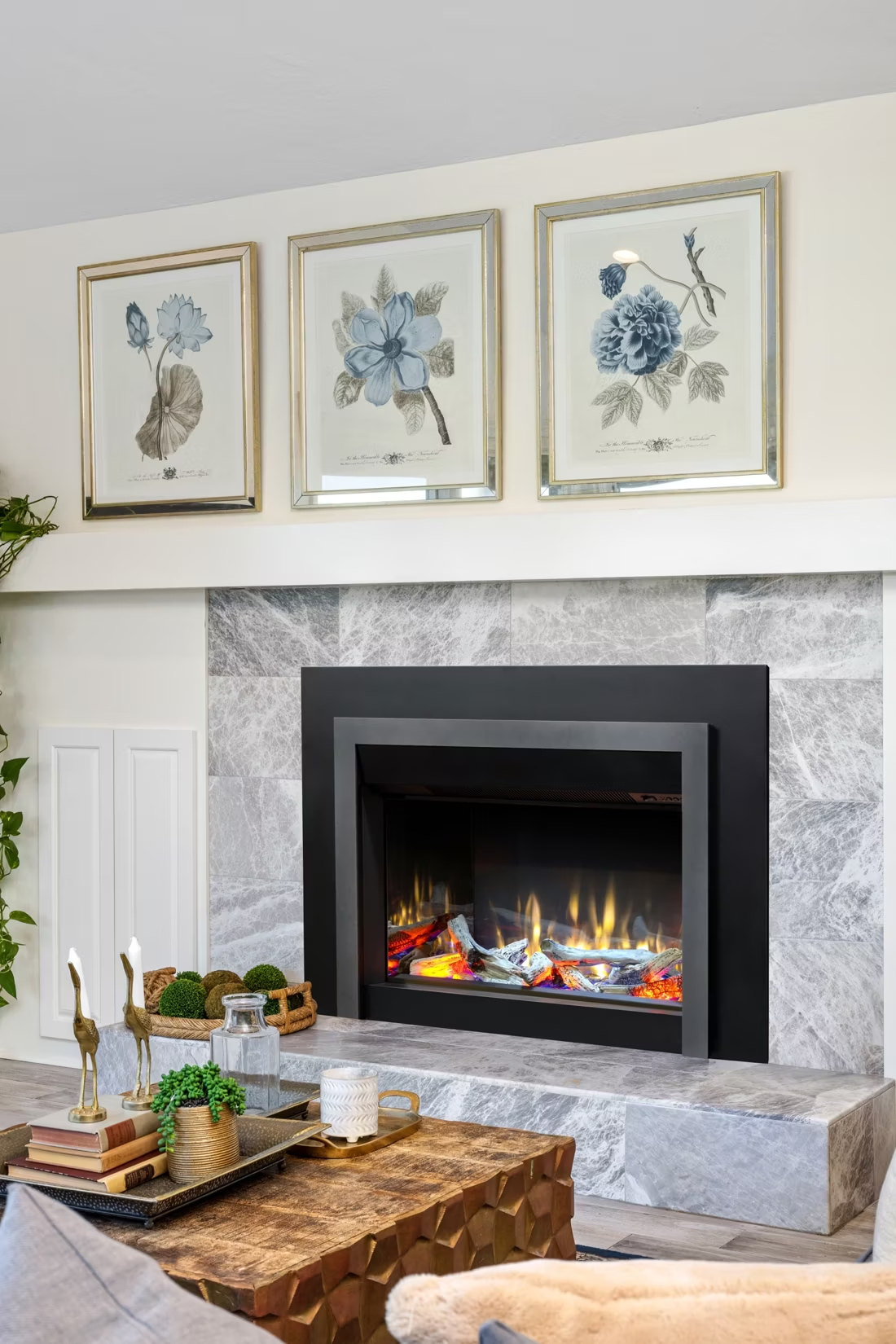
Electric fireplaces earn their place in this county as supplemental heat and ambiance—a wall-mounted unit in a converted sunporch, a stove-style insert in a manufactured home addition, or a zone heater in a room that's hard or expensive to run a flue into. What electric can't do here is replace a real heating plan for a Zone 7 winter, and it won't run during a power outage, which matters in a rural valley served by San Luis Valley Rural Electric Cooperative where winter storms occasionally knock out lines. Most homeowners here pair an electric unit with wood, pellet, or propane heat rather than using it as the whole story.
Three steps. No salesperson until you're ready.
Tell us about your project
Your zip code, your situation, and the fuel you're leaning toward—or let the answers point you to one.
See what's actually available
The brands dealers within 100 miles genuinely carry—real options, never a catalog mirage.
Get your dealer & Project Guide
A trusted local dealer, plus the free Project Guide & Parts List that names every component of the job.
Frequently Asked Questions
How much does an electric fireplace installation cost in Rio Grande County?
Electric fireplaces are the least expensive hearth appliance to install because there's no chimney, no gas line, and no combustion venting to run. A plug-in freestanding or wall-mounted unit can often be set up in under an hour with no permit involved. A built-in electric fireplace or insert that requires new framing, a dedicated 120V or 240V circuit, and finish carpentry costs more, and if the circuit isn't already in place your installer will loop in a licensed electrician. Local retailers serving Del Norte and Monte Vista can walk you through the exact scope and give a firm number after seeing the space.
Will an electric fireplace heat my whole house in Rio Grande County's winters?
No, and any installer who tells you otherwise isn't being straight with you. With roughly 8,950 heating degree days and average winter lows near -2°F, this is a Zone 7 climate—one of the harshest in the state—and electric resistance heat simply isn't built to carry a whole home through that. Most electric units here are rated for a single room of a few hundred square feet. For primary heat, San Luis Valley homeowners typically rely on wood stoves, pellet stoves, or propane appliances, and use electric fireplaces to take the edge off a specific room without firing up the whole system.
Do I need a permit to install an electric fireplace in Rio Grande County?
A simple plug-in electric fireplace generally doesn't require a permit since there's no new wiring or gas work involved. If you're installing a built-in unit that needs a new dedicated circuit, your electrician will typically need to pull an electrical permit through the county building department, since that work falls under standard electrical code regardless of the appliance. Local dealers who install built-in units routinely coordinate this step, so you're not left tracking down the paperwork yourself.
What's the difference between an electric fireplace, insert, and stove?
An electric fireplace is typically a wall-mounted or built-in unit designed to look like a traditional fireplace, often with a realistic flame effect and a mantel surround. An electric insert is sized to slide into an existing masonry or wood-burning fireplace opening, letting you keep the look of your existing hearth while swapping to no-mess electric heat. An electric stove is a freestanding, stove-shaped unit that sits on the floor like a wood stove but plugs into the wall. For a home in Del Norte or Monte Vista with an existing fireplace opening you don't want to use for wood anymore, an insert is usually the simplest upgrade.
Will my electric fireplace work during a power outage?
No—electric fireplaces need grid power to run the heating element and flame effect, so they go dark the moment power drops. That's a real consideration in Rio Grande County, where San Luis Valley Rural Electric Cooperative lines occasionally go down during heavy winter storms, sometimes for hours at a stretch. If backup heat during an outage matters to you, a wood stove or a battery-backed gas or propane unit is the better choice for that specific job. Many valley homeowners keep an electric unit for everyday convenience and a wood or propane appliance as the storm-proof fallback.
What's the best electric fireplace for a Rio Grande County home?
Since electric units here are almost always supplemental rather than whole-home heat, sizing is more about the room than the county's climate extremes. A wall-mounted unit with a 1,500-watt heater is enough to noticeably warm a bedroom, sunroom, or den in Del Norte or Monte Vista. For a converted garage, basement, or manufactured-home addition, a freestanding electric stove with a larger footprint and a built-in thermostat gives more consistent coverage. Local dealers can match wattage and unit style to the specific room you're trying to heat rather than guessing off square footage alone.
Electric vs. wood—which is right for my home?
Wood is the primary heat choice for most Rio Grande County homes that need to get through a Zone 7 winter, and it keeps working when the power doesn't—a real advantage given occasional co-op outages during storms. Local ponderosa pine, aspen, pinyon, and juniper are all common firewood species, and Rio Grande National Forest cutting permits run $5 to $20 per cord from May through October, which keeps fuel costs low for homeowners willing to cut and haul their own. Electric wins on convenience and zero mess—no ash, no chimney to sweep, no smoke—but it's a supplemental choice here, not a substitute for a real winter heating plan.
Are electric fireplaces expensive to run day to day?
A typical electric fireplace or stove draws around 1,500 watts on the heater setting, similar to a space heater, and can be run on the flame-only setting with no heat for close to nothing. Running one a few hours a day for supplemental warmth in a single room adds a modest amount to your San Luis Valley Rural Electric Cooperative bill—nowhere near what it would cost to heat the same space with electric resistance as a primary system through an 8,950-degree-day winter. That's exactly why these units are best used as a targeted, occasional-use heater rather than the main event.
Electric vs. propane—which makes more sense here?
Without natural gas infrastructure reaching most of Rio Grande County, propane is the standard alternative fuel for homes that want gas-style instant heat, and it can serve as real primary or backup heat since propane appliances keep working without grid power. Electric fireplaces can't make that claim, but they cost far less to install, require no tank or fuel deliveries, and are the simplest option when you just want a heated accent in one room rather than another whole-home fuel system to manage. Many valley homeowners run propane for backup or primary heat and add an electric unit purely for convenience in a specific space.
Can I put a TV above my fireplace?
Yes—with an asterisk. Fireplaces are hot and TVs don't like heat. Either put a mantel between them to deflect rising warmth, or choose a fireplace with heat-management technology that creates a cool zone on the wall above—the wall stays around 125 degrees, barely warm, while the room still gets full heat. If you like clean lines and don't want a mantel, heat management is the answer.
Do electric fireplaces actually produce heat?
Yes—most put out around 4,800–5,000 BTUs from a standard outlet, which comfortably warms a bedroom, office, or den as a comfort-zone heater. What they won't do is carry a whole house the way wood, gas, or pellet can. Think of electric as ambiance-first with honest supplemental heat: flames on with no heat in July, flames plus warmth in January.
What is an in-home preview and do I need one?
It's a visit where a hearth professional measures your space, confirms the model you picked actually works in your home, and walks the specs—framing, gas line, venting, finish work—before anything is ordered. Some details you just can't know until you see the house. Never make a down payment without one; it's the single most-skipped step that burns buyers.
Can I install a fireplace myself?
If you're putting a fire in your house on purpose, it's best to work with an expert. Unless you're genuinely experienced in framing, gas line, vent pipe, and the national code on clearances to combustibles, have a professional do it—and ideally the same company that sells you the fireplace, so warranty, service, and liability all live under one roof.
Stove and Fireplace Dealers in Rio Grande County
Find your electric fireplace in Rio Grande County.
Tell us about the room you're trying to heat and we'll match you with a trusted local dealer and a free Project Guide & Parts List—the right electric fireplace, insert, or stove for your San Luis Valley home, with the parts list and dealer recommendation spelled out.
Find Your Fireplace →