
Steady heat for Moffat County's long, cold winters.
With 8,234 heating degree days and winter lows averaging 3°F, Moffat County homes need heat that keeps working night after night. Find the right pellet stove or insert and get matched with a trusted local dealer who can install it correctly.
Every Project Starts From One of These Five Situations
Consistent, thermostat-like heat without the woodpile.
Moffat County sits on a high desert plateau in Colorado's far northwest corner, anchored by Craig at roughly 6,200 feet and stretching out toward Dinosaur National Monument, Maybell, and Elk Springs. Climate zone 6B and 8,234 heating degree days put this among the coldest counties on Colorado's Western Slope—the heating season here runs from September into May, and a 3°F average winter low means an appliance has to perform, not just look good in the living room.
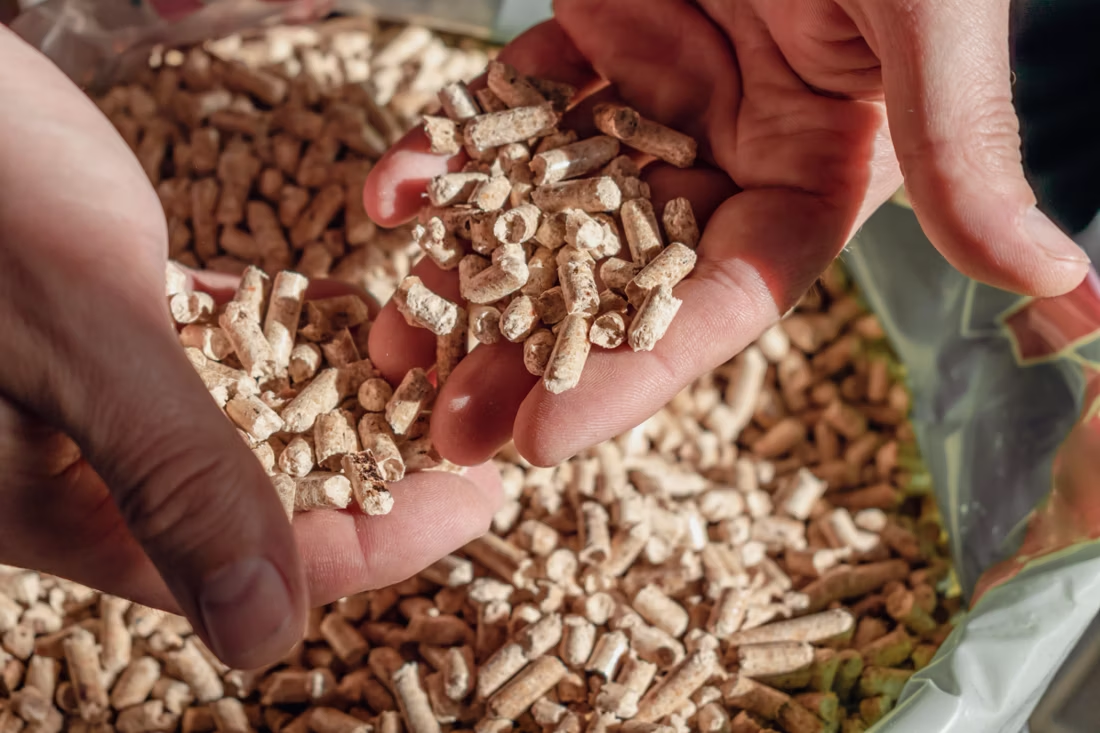
Plenty of Moffat County households still cut their own firewood—ponderosa pine, aspen, pinyon, and juniper are all available through White River National Forest permits, running $5 to $20 per cord during the May-through-October cutting season. But a growing number of homeowners, especially those in town, on fixed schedules, or managing a second home, are choosing pellet stoves instead. Regional brands like Bear Mountain, Lignetics, and Forest Energy are readily stocked by local dealers, and a pellet stove gives you set-it-and-forget-it heat: no splitting, no seasoning wood for a year, and a noticeably cleaner burn—a real plus given the wildfire smoke that can settle into the Yampa and Little Snake River valleys during fire season.
Three steps. No salesperson until you're ready.
Tell us about your project
Your zip code, your situation, and the fuel you're leaning toward—or let the answers point you to one.
See what's actually available
The brands dealers within 100 miles genuinely carry—real options, never a catalog mirage.
Get your dealer & Project Guide
A trusted local dealer, plus the free Project Guide & Parts List that names every component of the job.
Frequently Asked Questions
How much does a pellet stove installation cost in Moffat County?
Installation cost depends mainly on three things: the stove itself, whether it's a freestanding unit or an insert going into an existing fireplace, and how much venting work is required. A straightforward freestanding pellet stove with a simple through-wall vent typically costs less than an insert conversion that needs a liner run up an existing masonry chimney. Hopper size matters too—larger hoppers built for Moffat County's long burn season generally carry a higher unit price. Because there's real variation project to project, the most reliable number is a firm, in-home quote from a local dealer rather than a generic average.
What size pellet stove do I need for my home?
In a county with 8,234 heating degree days, sizing tends to run larger than the national average for the same square footage. A small pellet stove suits a single room, a cabin, or a well-insulated addition; most Moffat County main living areas need a mid-size unit rated for 1,000 to 2,000 square feet; older ranch-style homes or drafty ag properties outside Craig often benefit from sizing up a notch, since the 3°F average winter low means the stove is working hard for months, not just on the occasional cold snap. A local dealer can walk your home and size it properly rather than guessing off square footage alone.
Where can I find certified pellet stove installers near me?
Look for installers with NFI (National Fireplace Institute) pellet specialist certification—it signals real training in venting, clearances, and hopper/auger setup, which differs meaningfully from wood stove installation. Dealers based in and around Craig generally cover the county, but expect a travel charge for outlying properties toward Dinosaur, Maybell, or Elk Springs, where drive time adds up. Working with the dealer that sold you the stove also keeps warranty coverage and any manufacturer registration simple, since installation method can affect coverage on the auger motor and igniter.
What's the difference between a pellet stove and a pellet insert?
A pellet stove is a freestanding appliance that sits on a hearth pad and vents through a wall or existing chimney chase—it can go almost anywhere with the right clearances. A pellet insert is built to slide into an existing masonry fireplace opening, turning a drafty open hearth into a sealed, high-output heat source using a liner run through your current chimney. For Moffat County homes with an older wood-burning fireplace that rarely gets used, an insert is often the simpler retrofit. Homes without an existing fireplace, or new construction, usually go with a freestanding stove instead.
Do I need a permit to install a pellet stove in Moffat County?
Yes—a building permit is required for a new pellet stove or insert installation, and the appliance needs to meet current EPA emissions standards. Most local dealers handle the permit application and inspection scheduling as part of the install, so it's rarely something you have to manage yourself. Because pellet stoves burn cleaner and produce far less particulate than open wood burning, they're also not subject to the kind of curtailment restrictions that can apply to wood stoves during winter inversions or wildfire-smoke advisories—one of the practical reasons some Moffat County homeowners choose pellet over wood.
What's the best pellet stove for Moffat County's climate?
For a county averaging 8,234 heating degree days, prioritize a stove with a larger hopper capacity (so you're not refilling every few hours on the coldest nights) and a higher continuous BTU output rating. Regional dealers commonly stock Bear Mountain, Lignetics, and Forest Energy pellets, and most major stove brands are rated to burn any of them, so fuel availability isn't usually the limiting factor—output and hopper size are. A local dealer familiar with Craig-area homes and the harsher microclimates out toward the higher elevations can match a specific model to your square footage and insulation level.
Where can I buy pellets in Moffat County?
Bear Mountain, Lignetics, and Forest Energy are the regional brands most commonly stocked by hearth and farm supply retailers serving Moffat County. Pellets are sold by the ton (roughly fifty 40-lb bags), and pricing shifts from season to season and by brand—your local dealer can tell you current pricing and, in many cases, arrange seasonal delivery so you're not hauling bags yourself. Buying early in the fall, before the coldest stretch of the 8,234-HDD heating season hits, is generally the safer play given how quickly regional supply can tighten.
Will my pellet stove work during a power outage?
Not without a backup power source. Pellet stoves rely on electricity to run the auger that feeds fuel and the blower that distributes heat, so a grid outage stops the stove even with a full hopper. For a county served by Yampa Valley Electric Association, where winter storms can knock out rural lines for hours at a time, many pellet-stove households pair the unit with a small battery backup or generator sized to keep the auger and igniter running. If backup-free winter-storm heat is a top priority, that's worth weighing against a wood stove, which needs no electricity at all.
Pellet stove vs. wood stove—which is right for my Moffat County home?
Wood stoves work without electricity, pair naturally with the ponderosa pine, aspen, pinyon, and juniper available through low-cost White River National Forest cutting permits ($5-$20 per cord), and are the traditional choice for many longtime Moffat County households. Pellet stoves trade that self-sufficiency for convenience and consistency: load the hopper, set the thermostat, and get steady, cleaner-burning heat with far less ash and no splitting or seasoning wood. Given the region's wildfire-smoke concerns in summer, pellet's lower particulate output is also a practical upside. If you want backup heat that survives a power outage, wood usually wins; if you want low-maintenance, thermostat-controlled warmth for the long 8,234-HDD heating season, pellet is often the better fit.
What's the difference between an insert and a zero-clearance fireplace?
An insert is a fireplace that slides into a pre-existing wood-burning fireplace—if you don't have one, there's nothing to insert it into. A zero-clearance fireplace is built into a framed wall, which makes it the answer for remodels and new construction. Simple test: existing masonry fireplace means insert; blank or framed wall means zero-clearance.
How often does a pellet stove need cleaning?
A clean pellet stove is a happy pellet stove. Plan on cleaning the burn pot about once a week when you're burning regularly—ash and clinkers gum up the air holes just like a pellet barbecue. Most pellet stove problems trace back to skipped cleaning that nobody explained up front. Some designs make it easy with a trapdoor burn pot: pull a lever and the gunk drops into the ash pan.
Can I install a fireplace myself?
If you're putting a fire in your house on purpose, it's best to work with an expert. Unless you're genuinely experienced in framing, gas line, vent pipe, and the national code on clearances to combustibles, have a professional do it—and ideally the same company that sells you the fireplace, so warranty, service, and liability all live under one roof.
Can a fireplace actually lower my heating bill?
Yes—by creating a comfort zone. A furnace heats every square foot of the house just to warm the one room you're in; a gas fireplace on low burns roughly a sixth of the gas a typical furnace does. Set the furnace around 55–60 degrees as a baseline, then heat the rooms your family actually uses. Families who heat this way commonly save $20–$60 a month.
Stove and Fireplace Dealers in Moffat County
Pellet Brands Stocked Around Moffat County
Manufacturers will point you to the nearest stocking dealer.
Find your pellet stove in Moffat County.
Tell us about your home and heating needs, and we'll match you with a trusted local dealer plus a free Project Guide & Parts List—sized for Moffat County's cold, long winters.
Find Your Fireplace →