
Heat That Lasts Through a Moffat County Winter.
Wood, gas, pellet, and electric fireplace resources for every town and ranch in Moffat County—from Craig to Dinosaur and Maybell. Find the right unit and connect with a trusted local hearth retailer.
Every Project Starts From One of These Five Situations
Cold, dry heating in Colorado's northwest corner.
Moffat County sits in Colorado's high, dry northwest corner, where the county seat of Craig sits at roughly 6,200 feet along the Yampa River and the terrain climbs into sagebrush steppe and national forest toward the Utah line. The winter math here runs colder than Bozeman, Montana—average winter lows sit around 3°F, and hard subzero snaps are routine from December through February. The heating season stretches from September into May. Wood heat has deep roots in this county: ponderosa pine and aspen from higher elevations, and pinyon and juniper cut closer to the valley floor, are the traditional fuels, often gathered under White River National Forest cutting permits.
What you'll find on this hub: hearth retailers, service technicians, and fuel suppliers serving the whole county—from Craig out to Dinosaur near the national monument, north to Slater and Savery Creek, and the ranch country in between. Pick your fuel below to drill into specifics—local dealers, installation costs, recommended units, and the resources that match your project. Whether you're heating a Craig home or a line cabin near the White River drainage, this is the starting point.
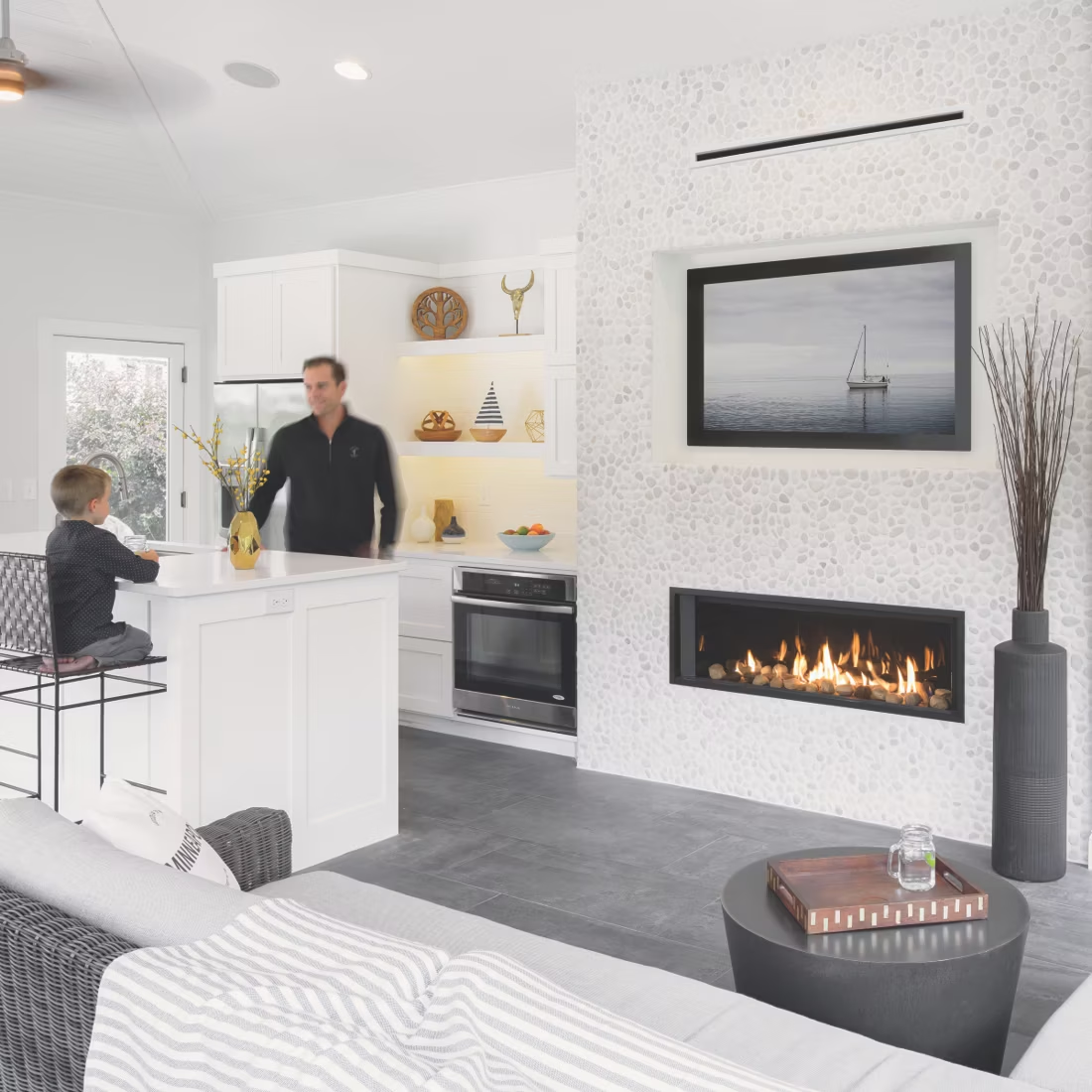
Four fuels. One honest answer for Moffat County.
Three steps. No salesperson until you're ready.
Tell us about your project
Your zip code, your situation, and the fuel you're leaning toward—or let the answers point you to one.
See what's actually available
The brands dealers within 100 miles genuinely carry—real options, never a catalog mirage.
Get your dealer & Project Guide
A trusted local dealer, plus the free Project Guide & Parts List that names every component of the job.
Frequently Asked Questions
Which fuel works best in Moffat County?
It depends on your home and situation, but the math here favors serious heat. With winter lows averaging 3°F and a long, cold heating season stretching from September into May, Moffat County runs colder than most of Colorado's Front Range. Wood remains the backbone fuel in rural areas—pinyon and juniper cut locally burn hot and dense, ponderosa pine and aspen are widely available, and a catalytic wood stove can carry a home through a subzero night without power. Gas or propane is the convenience choice, especially outside Craig's gas lines where propane delivery is standard. Pellet stoves are a solid middle ground, with Bear Mountain, Lignetics, and Forest Energy pellets stocked by regional dealers. Electric fireplaces work well for supplemental warmth in a bedroom or den, but given how much heating this climate demands, they're not a realistic primary heat source. Many Moffat County homes pair wood or pellet as primary heat with gas or electric in secondary rooms.
Do I need a permit to install a fireplace in Moffat County?
In most cases, yes. Wood stoves, wood inserts, gas fireplaces, gas inserts, gas stoves, and pellet stoves typically require a building permit through the county building department, and gas installations need a separate gas-line permit handled by a licensed installer. Wood-burning appliances must meet current EPA New Source Performance Standards emissions requirements—this matters in a county where pinyon, juniper, ponderosa, and aspen are all commonly burned as primary heat. Electric fireplaces usually skip the permit process unless the installation involves hardwiring or a new circuit. Most local hearth retailers in and around Craig handle the permitting paperwork as part of a full installation, so it's rarely something the homeowner has to manage alone.
How does wildfire smoke affect wood-burning here?
Moffat County's main air quality concern isn't winter inversion—it's wildfire smoke during the dry season, which can linger for weeks depending on fire activity across northwest Colorado and southern Wyoming. That has two practical effects on hearth heating. First, seasoned, properly dried pinyon, juniper, ponderosa, and aspen burn hotter and cleaner, which matters for both efficiency and reducing smoke output from your own chimney. Second, cutting permits through White River National Forest can be restricted or suspended during periods of extreme fire danger, so it's worth stocking firewood a season ahead rather than counting on last-minute cutting trips. An EPA-certified stove or insert, properly seasoned wood, and a defensible space around any woodpile are the practical basics for burning responsibly in this county.
Can one local hearth retailer handle all four fuel types?
In a county with under 10,000 residents, the retailer count is small, and most dealers stock more than one fuel type rather than specializing narrowly. It's common for a Craig-area retailer to carry wood stoves and inserts, gas fireplaces, and pellet stoves under one roof, with electric units available as a lower-volume add-on. If you're deciding between fuels, a multi-fuel dealer can show you working displays side by side and talk through what actually performs at 3°F outside—which matters more here than in milder Colorado counties. Fewer dealers also means it's worth calling ahead before driving into Craig, since inventory and floor displays can be limited compared to larger Front Range markets.
How does service work for homes outside Craig?
Most technicians serving Moffat County are based in Craig and travel out to Dinosaur, Maybell, Slater, and the ranch roads in between. Expect a modest travel charge for calls outside town, and expect scheduling to tighten up once winter arrives—a chimney sweep or gas inspection booked in August or September is far easier to get than one requested during a January cold snap. Given how remote parts of this county are and how cold it gets, it's worth keeping backup capacity in mind: a wood stove as backup heat if your primary system is gas or electric, or vice versa, since a rural home losing heat at 3°F below zero is a real problem, not an inconvenience.
What's the typical cost range for fireplace installation across fuel types in Moffat County?
Ranges vary by fuel and by how much venting or gas-line work is involved. Wood stove or insert installation: roughly $4,500–$9,500 for a typical retrofit, more for new chimney construction. Gas fireplace, insert, or stove: roughly $4,500–$11,000, with propane conversions and new gas-line runs pushing toward the higher end for rural properties. Pellet stove or insert: roughly $4,500–$7,500 installed. Electric fireplace: $200–$3,000 for the unit itself, plus $400–$1,200 in labor for anything beyond a plug-and-play install. Rural travel and propane tank setup can add to wood and gas projects outside Craig—a local dealer can give you a firm number once they've seen the site.
Wood, gas, pellet, or electric—how do I choose?
Match the fuel to your life, not the other way around. Wood: lowest fuel cost and total power-outage independence, but you're hauling and stacking. Gas: press a button, set a thermostat, no maintenance to speak of. Pellet: wood economics with automatic feeding, in exchange for weekly cleaning and a need for electricity. Electric: plugs in anywhere with honest supplemental heat. Nobody regrets the fuel that fits how they actually live.
Can I install a fireplace myself?
If you're putting a fire in your house on purpose, it's best to work with an expert. Unless you're genuinely experienced in framing, gas line, vent pipe, and the national code on clearances to combustibles, have a professional do it—and ideally the same company that sells you the fireplace, so warranty, service, and liability all live under one roof.
Can a fireplace actually lower my heating bill?
Yes—by creating a comfort zone. A furnace heats every square foot of the house just to warm the one room you're in; a gas fireplace on low burns roughly a sixth of the gas a typical furnace does. Set the furnace around 55–60 degrees as a baseline, then heat the rooms your family actually uses. Families who heat this way commonly save $20–$60 a month.
Does a fireplace add value to my home?
On average, a fireplace adds back to the home about the same amount you spent installing it. Add the monthly savings from heating the rooms you actually use instead of the whole house—often hundreds of dollars a year—and the value case is strong before you even count what a fire does for how your family uses the room.
Stove and Fireplace Dealers in Moffat County
Listings include WhyFire partner dealers, dealers we have verified as authorized for the brands we recommend, and established local businesses that carry hearth products. Every listing shows which one it is. The ones marked Preferred run on WhyFire's software, so they can show you real pricing and book your appointment right here. No manufacturer pays for placement. How we verify dealers →
Mjk Sales & Feed, Inc.
Alpine Heating & Sheet Metal
Get matched with a hearth dealer in Moffat County.
Tell us about your project and we'll match you with a trusted local dealer and send a free Project Guide & Parts List—the right unit, the vent kit, and a plan built for your fuel type and your Moffat County home.
Find Your Fireplace →