
Pellet Heat for One of Colorado's Highest, Quietest Counties.
With roughly 280 year-round residents spread across Creede and the surrounding San Juan Mountain valleys, Mineral County runs cold—Climate Zone 7, the same bracket as high alpine and subarctic terrain. Find the right pellet stove for a county this remote, and connect with a trusted local dealer.
Every Project Starts From One of These Five Situations
Automated heat where every delivery counts.
Mineral County is small in every sense but elevation—one of the least populated counties in Colorado, tucked into the San Juan Mountains around Creede. Winters here fall into Climate Zone 7, a bracket usually reserved for high alpine and subarctic conditions, which means long burn seasons and homes that need dependable, steady heat rather than an occasional supplemental fire. Ponderosa pine, aspen, pinyon, and juniper all grow locally and get burned as cordwood, but many of those same softwood species are exactly what regional pellet mills compress into fuel—Bear Mountain, Lignetics, and Forest Energy pellets are widely stocked across the Colorado mountain corridor and burn cleanly in the kind of stove that suits a small, remote household well.
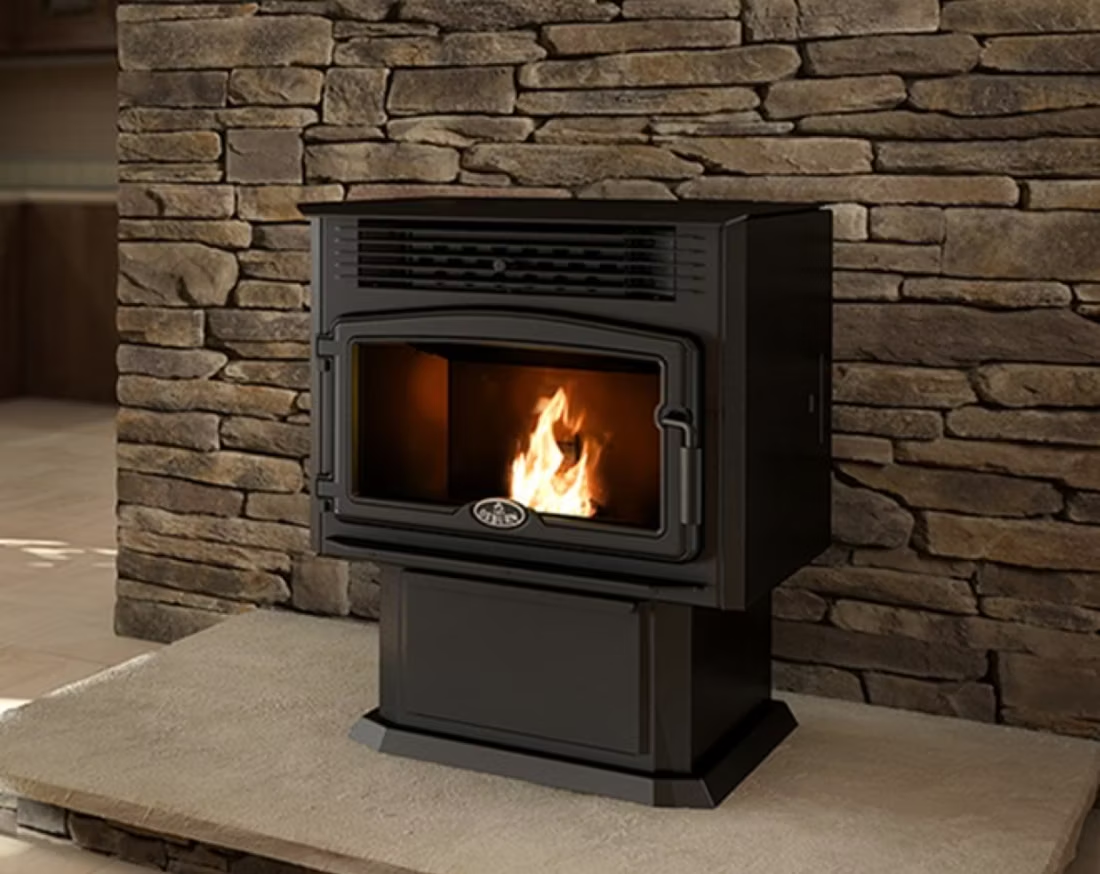
Pellet stoves solve two problems specific to a county like this. First, they run on a thermostat and a hopper instead of constant tending, which matters in a place where a single household may be the only heated structure for miles. Second, they burn far cleaner than open cordwood fires—a real advantage given that wildfire smoke already degrades air quality across the region during dry stretches of the year. The tradeoff is that pellet stoves need electricity to run the auger and blower, which is worth planning around in a county where power lines run long distances between substations and outages can last longer than they would in a city grid.
Three steps. No salesperson until you're ready.
Tell us about your project
Your zip code, your situation, and the fuel you're leaning toward—or let the answers point you to one.
See what's actually available
The brands dealers within 100 miles genuinely carry—real options, never a catalog mirage.
Get your dealer & Project Guide
A trusted local dealer, plus the free Project Guide & Parts List that names every component of the job.
Frequently Asked Questions
How much does a pellet stove installation cost in Mineral County?
A typical pellet stove installation runs roughly $3,000 to $6,500 once you account for the unit, venting, and an electrical circuit if one isn't already in place near the install site. Because Mineral County has so few year-round households, most certified installers are based out of larger towns along US 160 or US 285 and will roll a trip charge into the estimate for a Creede-area job. It's worth asking upfront whether that travel fee is included in the quote, since it can meaningfully change the total for a county this remote.
Where do I buy pellet fuel in a county with only about 280 residents?
There isn't a big-box hearth store in Mineral County, so most homeowners either arrange bulk delivery through a regional distributor that carries Bear Mountain, Lignetics, or Forest Energy pellets, or they stock up during trips to nearby supply towns and haul several tons back at once. Given the drive distances typical of San Juan Mountain living, most local pellet burners plan for one or two large deliveries per season rather than buying by the bag as needed—your matched dealer can point you toward whoever currently delivers to the Creede area.
Will my pellet stove keep running during a power outage?
Not without help. Pellet stoves depend on electricity to run the auger that feeds fuel and the blower that distributes heat, so a standard unit will shut down the moment power drops. In a county where outages can run longer than in a metro grid, many homeowners here pair a pellet stove with a small battery backup or a generator sized to carry the stove's low draw. If backup power during outages is a priority for your household, say so when you're matched with a dealer—some pellet models are easier to run on generator power than others.
What size pellet stove do I need for a Climate Zone 7 home?
Climate Zone 7 sits among the coldest bands in the IECC classification, on par with high alpine and subarctic conditions, so sizing tends to run larger than a mild-climate chart would suggest. A well-insulated cabin under about 1,200 square feet can often run on a mid-size pellet stove as primary heat, but older or leakier structures—common in a mining-era town like Creede—usually need to size up or plan on the stove as a strong supplement to another heat source. A local dealer will walk your square footage, ceiling height, and insulation before recommending a model, which matters more here than the manufacturer's generic sizing chart.
Do I need a permit to install a pellet stove in Mineral County?
Most pellet stove installations require a building permit through the Mineral County building department, along with a mechanical or electrical permit if new wiring is needed for the unit's blower and auger. Because the county has so few active building projects in a given year, processing times can be quick, but it's still worth confirming venting and clearance requirements before your installer shows up—pellet stoves vent through a smaller-diameter pipe than wood stoves, which changes what's allowed through an exterior wall versus a roof penetration.
Pellet stove or wood stove—which makes more sense in Mineral County?
Wood is abundant and inexpensive here—ponderosa pine, aspen, pinyon, and juniper all grow locally, and plenty of Creede-area households already cut and split their own. Wood stoves also work without electricity, which matters given how remote the county's power infrastructure can be. Pellet stoves trade that self-sufficiency for convenience and cleaner combustion: no splitting, no creosote buildup to manage, and meaningfully less smoke output—a real consideration in a region where wildfire smoke already compromises air quality for stretches of the year. Many local homes end up with both: wood for backup and ambiance, pellet for the daily, low-maintenance heat load.
What pellet brands are available for a county at this elevation?
Bear Mountain, Lignetics, and Forest Energy are the three regional brands most commonly stocked for Colorado mountain customers, and all three make softwood pellets suited to the high-BTU demand of a Zone 7 winter. Softwood pellets—made from species like the ponderosa pine and pinyon common around Mineral County—generally burn hotter and leave less ash than hardwood blends, which is the right tradeoff for a household leaning on the stove through a long, cold season rather than occasional use.
How often does a pellet stove need to be serviced?
Plan on a full cleaning and inspection once a year, ideally before the season really sets in around Creede's early autumn. Ash pan emptying is a weekly task during heavy-use months, and the burn pot benefits from a quick scrape every few days of steady operation. Because certified service techs aren't based locally, an annual appointment is worth scheduling early—the same travel-distance factor that affects installation quotes applies to service calls.
Pellet stove or propane—which fits a remote mountain home better?
Propane is common across rural Colorado mountain counties where natural gas lines don't reach, and it offers instant, thermostat-controlled heat with no hopper to refill. A pellet stove costs less to run per BTU in most years and burns a renewable, regionally milled fuel, but it needs a working electrical circuit and a fuel supply hauled in from outside the county. If your household already has a propane tank and delivery route established, propane may be the simpler add. If you're building fresh heating infrastructure and want a lower running cost tied to local timber, pellet is worth serious consideration—a local dealer can walk through both given your specific site.
Why is a fireplace insert so efficient?
An insert does two things: it seals the chimney completely, so you stop losing air you already paid to heat, and it radiates warmth into the room through the firebox and glass. Most add a heat-exchange fan that pulls cool room air underneath, wraps it around the hot firebox, and pushes it back out warm. Your home is more efficient before you've even lit the first fire.
Why is my open fireplace making my house colder?
Open fireplaces suck—literally. As the fire burns, it consumes air your furnace already paid to heat and pulls it out through the chimney, so the house is actually colder after the fire goes out than before you lit it. An insert fixes this: it seals the chimney, puts fixed glass across the front, and turns that hole in your house into a real heat source.
How much should I budget for a fireplace?
For an average home—covering the fireplace, the vent pipe, and basic installation—a budget between $3,900 and $5,500 gives you a lot of options across wood, gas, and pellet. By the time you add finish work, gas line, and electrical, the average complete installation lands between $5,000 and $12,000 all-in. In a remodel or new build, a good rule is to put about 2.5% of the total project cost toward the fireplace.
What is an in-home preview and do I need one?
It's a visit where a hearth professional measures your space, confirms the model you picked actually works in your home, and walks the specs—framing, gas line, venting, finish work—before anything is ordered. Some details you just can't know until you see the house. Never make a down payment without one; it's the single most-skipped step that burns buyers.
Pellet Brands Stocked Around Mineral County
Manufacturers will point you to the nearest stocking dealer.
Find your pellet stove in Mineral County.
Tell us a bit about your home near Creede or elsewhere in Mineral County, and we'll match you with a trusted local dealer along with a free Project Guide & Parts List—the exact parts, including the vent kit, for your pellet stove install.
Find Your Fireplace →