
Warm, reliable heat for Mineral County's high alpine winters.
From Creede to the ranches and cabins scattered through the San Juan Mountains backcountry, propane-fueled gas fireplaces and inserts deliver instant heat where no natural gas main reaches. Find the right unit and connect with a trusted local dealer.
Every Project Starts From One of These Five Situations
In Mineral County, gas heat means propane.
Mineral County sits at the top of the Rio Grande headwaters in Colorado's San Juan Mountains, with Creede—the county seat and its only real town—perched around 8,850 feet. With roughly 280 year-round residents, it's one of the least populated counties in the state, and that sparse population is exactly why no natural gas utility has ever run a pipeline main into the county. Climate Zone 7 means brutal, sustained cold: long winters, deep snowpack, and stretches where daytime highs stay well below freezing. Homes here need heat that turns on instantly and keeps running through multi-day storms—which is where propane earns its place.
Almost every 'gas' fireplace, insert, or stove installed in Mineral County runs on propane delivered and stored in an on-site tank, since there's no municipal gas line to tap into. That's standard practice here, not a workaround—local dealers who serve Creede and the surrounding ranches and cabins are used to sizing tanks, running gas lines from tank to appliance, and building in backup ignition for winters where the power can go out for days. Wood remains part of the heating mix too—ponderosa pine, aspen, pinyon, and juniper are all burned locally—but a propane fireplace or insert gives second-home owners and full-time residents alike a heat source that doesn't need tending, doesn't add to wildfire-season smoke concerns, and starts on demand at 20 below.
Three steps. No salesperson until you're ready.
Tell us about your project
Your zip code, your situation, and the fuel you're leaning toward—or let the answers point you to one.
See what's actually available
The brands dealers within 100 miles genuinely carry—real options, never a catalog mirage.
Get your dealer & Project Guide
A trusted local dealer, plus the free Project Guide & Parts List that names every component of the job.
Frequently Asked Questions
How much does a gas (propane) fireplace installation cost in Mineral County?
Costs depend heavily on whether you already have a propane tank and gas line in place. A direct-vent propane insert going into an existing masonry fireplace with gas already run to the hearth is the most affordable path. A new freestanding unit or built-in fireplace in a cabin without existing propane infrastructure costs more, since it typically requires a new above-ground or buried tank, a regulator, and a full gas line run from tank to appliance—plus venting through a log or timber-frame wall, which is common in Creede-area construction. Local dealers who work in the county can walk you through tank purchase-versus-lease options as part of the estimate.
Is natural gas available anywhere in Mineral County?
No. There is no natural gas utility serving Mineral County—not in Creede, not in the outlying ranches and cabins along the Rio Grande and its tributaries. Every 'gas fireplace' installed here runs on propane, stored in a tank on the property and refilled by a propane delivery service. If you're moving from a natural-gas market, the main difference is planning for tank placement and delivery access, especially for properties with steep or seasonal driveways that can be hard to reach in heavy snow.
Can I convert an existing wood fireplace to gas?
Yes, and it's a common project in Mineral County's older mining-era homes and cabins around Creede, many of which still have their original masonry fireplace. A propane insert with a stainless liner run up the existing chimney is usually the most cost-effective route, and it preserves the look of the original hearth while eliminating the need to haul and split wood at 8,800 feet through a Zone 7 winter. Your installer will size the insert to the flue and confirm the chimney can safely accept a liner before quoting the job.
Will my propane fireplace work during a power outage?
Most modern propane fireplaces will, which matters a great deal in a county where winter storms regularly knock out power for extended stretches at elevation. Units with intermittent pilot ignition (IPI) run on a battery backup—usually AA batteries inside the unit—that keeps the fireplace lighting on demand when the grid goes down. Valor fireplaces take a different approach: the pilot's thermocouple generates its own electricity, so there's no battery to remember or replace. For a full-time Creede-area residence or a cabin that sits empty for stretches in winter, that battery-free reliability is worth asking your local dealer about directly.
What's the difference between a gas fireplace, gas insert, and gas stove?
A gas fireplace is a fully built-in unit, framed into a wall—the right choice for new cabin construction or a remodel. A gas insert fits into an existing masonry fireplace opening, using a lined chimney to vent, which suits Mineral County's older stone-hearth homes. A gas stove is a freestanding unit on its own hearth pad, often chosen for smaller cabins or outbuildings where a full fireplace surround isn't practical. All three can run on propane with the appropriate tank and regulator setup.
Do I need a permit to install a gas fireplace in Mineral County?
Yes—new gas or propane fireplace installations require a building permit through the Mineral County Building Department, along with sign-off on the gas line work, which should be done by a licensed gas-fitter or propane technician. Most established local installers handle the permitting as part of the job. Given the county's remoteness, it's worth confirming inspection scheduling up front, since inspectors may need to travel from elsewhere in the region.
Should I choose a vented or vent-free propane fireplace at this elevation?
Vented (direct-vent) propane fireplaces draw combustion air from outside and exhaust it back outside through sealed venting—they're the safer, more universally recommended choice, and especially so at Mineral County's elevation. Vent-free units rely on oxygen depletion sensors calibrated for sea-level conditions, and their performance and safety margins get less predictable above 8,000 feet. For a county sitting near 8,800 feet, direct-vent units are the standard recommendation from most hearth professionals, and they avoid any question about indoor air quality in a tightly sealed mountain cabin.
How often should a propane fireplace be serviced in Mineral County?
An annual inspection before the start of heating season is the standard recommendation for any propane appliance—checking the burner, pilot assembly, gas connections, and venting, and confirming the tank and regulator are functioning properly after a summer of disuse. This matters more for part-time cabins around Creede that sit empty for months, since a unit that wasn't serviced before being shut down can develop issues that only show up the next time it's needed on a cold night.
Gas (propane) vs. wood—which makes more sense for a Mineral County home?
Wood—ponderosa pine, aspen, pinyon, and juniper are all cut locally—offers heat that doesn't depend on a propane delivery truck reaching your driveway, which matters on properties with long or steep access roads. It also works without electricity. Propane offers instant, consistent heat without splitting and hauling wood, and it doesn't add to the smoke load during wildfire-season air quality concerns that affect the region in late summer. Many full-time Mineral County residents keep both: a wood stove or fireplace as backup and for ambiance, and a propane unit for daily convenience and as insurance against a delivery delay.
Can I put a TV above my fireplace?
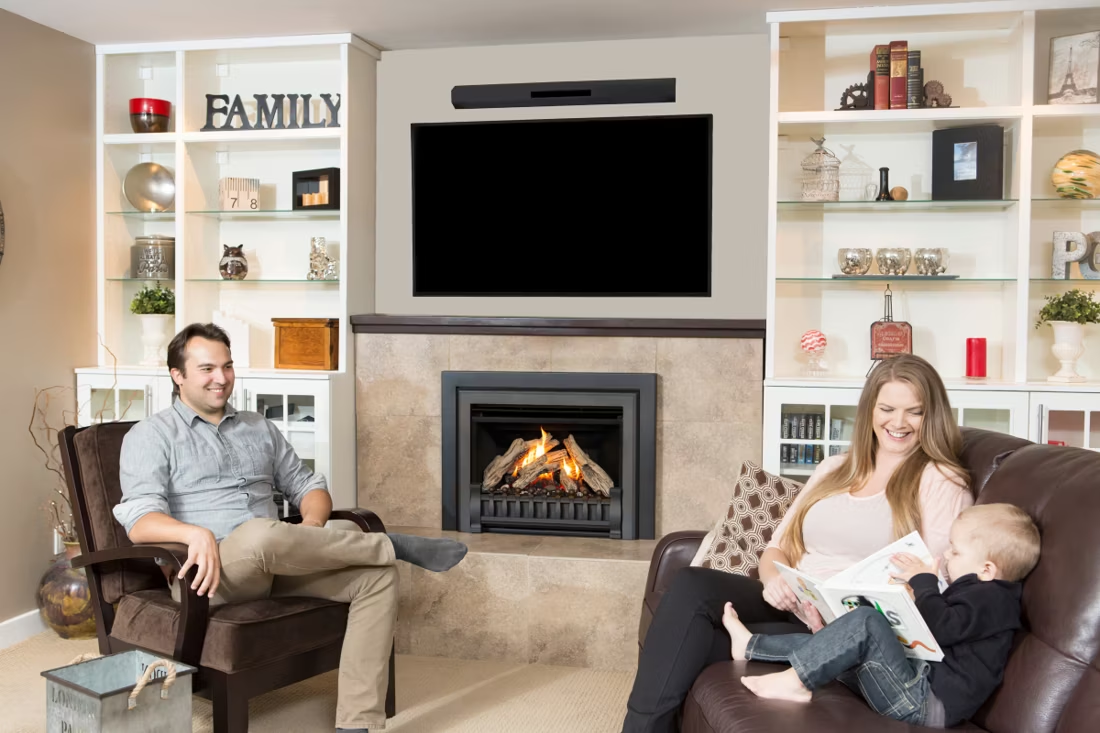
Yes—with an asterisk. Fireplaces are hot and TVs don't like heat. Either put a mantel between them to deflect rising warmth, or choose a fireplace with heat-management technology that creates a cool zone on the wall above—the wall stays around 125 degrees, barely warm, while the room still gets full heat. If you like clean lines and don't want a mantel, heat management is the answer.
Is my gas fireplace wasting gas?
If it was installed more than 15 years ago, probably. Older gas fireplaces keep a standing pilot light burning all the time, and that little flame can cost a couple hundred dollars a year. Newer models use pilot-on-demand ignition—the pilot lights only when you use the fireplace and goes out when you turn it off.
Does a fireplace add value to my home?
On average, a fireplace adds back to the home about the same amount you spent installing it. Add the monthly savings from heating the rooms you actually use instead of the whole house—often hundreds of dollars a year—and the value case is strong before you even count what a fire does for how your family uses the room.
How much should I budget for a fireplace?
For an average home—covering the fireplace, the vent pipe, and basic installation—a budget between $3,900 and $5,500 gives you a lot of options across wood, gas, and pellet. By the time you add finish work, gas line, and electrical, the average complete installation lands between $5,000 and $12,000 all-in. In a remodel or new build, a good rule is to put about 2.5% of the total project cost toward the fireplace.
Get matched with a trusted gas dealer in Mineral County.
Tell us about your Creede-area home or cabin and we'll match you with a trusted local dealer, plus a free Project Guide & Parts List—the exact parts, including the vent kit, for a propane fireplace or insert built for Mineral County's high, cold winters.
Find Your Fireplace →