
Keep Your Family Warm and Safe—No Matter What
Holly Hills is a small, tightly platted Denver-metro suburb where gas fireplaces are the default and wood installs are rare. If you're one of the exceptions, we'll connect you with a local dealer who can tell you what's actually possible on your lot.
Every Project Starts From One of These Five Situations
A tiny, dense suburb where wood is the exception and gas is the default.
Holly Hills packs about 2,800 residents into a single square mile inside Arapahoe County, wedged between Denver and Englewood at roughly 5,477 feet. Winters here are genuinely cold—average lows around 17°F and a long, demanding heating season, comparable to Fargo, ND—but the housing stock is postwar ranch-style homes on small, close-set lots, and the setbacks and clearances a wood-burning chimney needs are hard to fit on a typical Holly Hills parcel.
There's also a regulatory layer: the Denver metro area, including Arapahoe County, is subject to Regional Air Quality Council (RAQC) High Pollution Advisories during winter inversions, when older uncertified wood stoves are asked to sit idle. Add wildfire smoke concerns in late summer and fall, and most Holly Hills homeowners land on gas or electric instead. The homeowners who do pursue wood here are usually converting an existing masonry fireplace already built into the home, or they split time at a mountain property near the Arapaho-Roosevelt National Forest where cutting permits and cordwood are part of daily life.
Firewood Cutting Permits Near Holly Hills
Three steps. No salesperson until you're ready.
Tell us about your project
Your zip code, your situation, and the fuel you're leaning toward—or let the answers point you to one.
See what's actually available
The brands dealers within 100 miles genuinely carry—real options, never a catalog mirage.
Get your dealer & Project Guide
A trusted local dealer, plus the free Project Guide & Parts List that names every component of the job.
Frequently Asked Questions
Is it even possible to install a wood stove in Holly Hills?
It's possible but uncommon. Given the small lot sizes and tight setbacks typical of Holly Hills' postwar ranch homes, new freestanding wood stove installations with fresh chimney construction are rare—most local dealers who'll take on a Holly Hills wood project are converting an existing masonry fireplace with a wood-burning insert rather than building new venting from scratch. Because wood work here is infrequent, get quotes from at least two Denver-metro hearth retailers; expect a masonry insert conversion to run roughly $3,500 to $8,000 depending on the insert and any liner or damper work needed.
Are there air quality restrictions on burning wood in Holly Hills?
Yes. Arapahoe County and the rest of the Denver metro area fall under the Regional Air Quality Council's High Pollution Advisory program, which asks residents with older, uncertified wood-burning devices to avoid burning on advisory days during winter inversions—typically triggered by stagnant cold air trapping smoke close to the ground. EPA-certified stoves and inserts are generally exempt from these voluntary curtailments. If you install new, an EPA 2020 NSPS-certified unit avoids the issue almost entirely and is worth the small price premium over an older or used stove.
Do I need a permit to install a wood stove in Holly Hills?
Yes—any new wood-burning appliance or chimney modification requires a building permit, typically pulled through the Arapahoe County or applicable local building department depending on your specific parcel. Because wood installs are infrequent in Holly Hills, plan on the permit process taking a bit longer than a routine gas fireplace swap, simply because the reviewing office may handle fewer of these applications. A local hearth retailer familiar with Arapahoe County code will usually pull the permit as part of the install.
What's the difference between a wood stove and a wood insert?
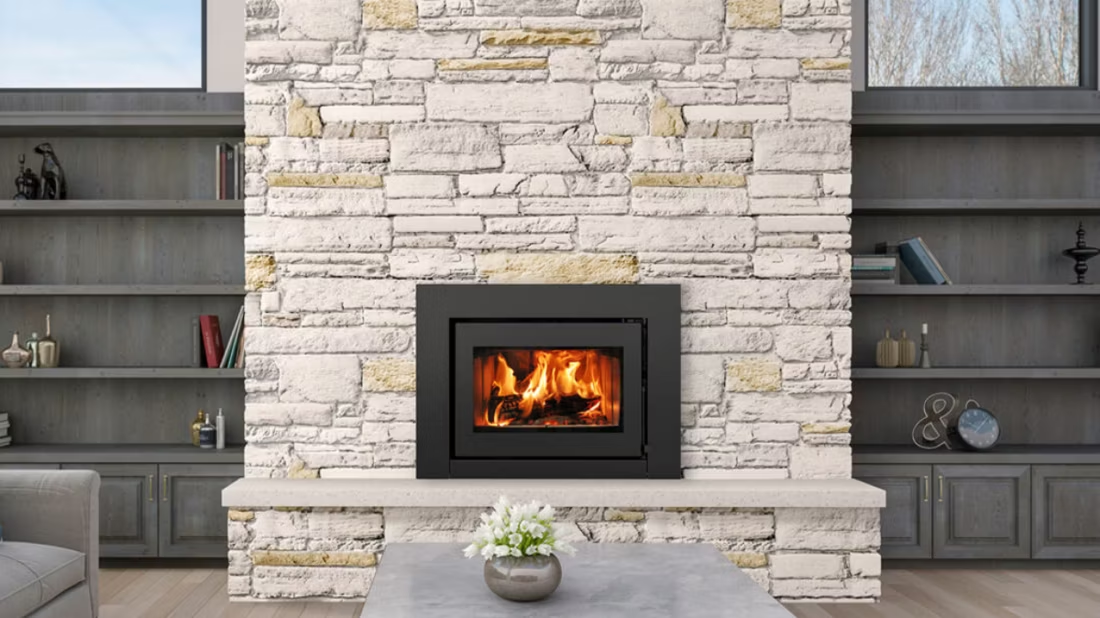
A wood stove is a freestanding unit on its own hearth pad, requiring new Class A chimney venting if one doesn't already exist—the harder path on a tight Holly Hills lot. A wood insert slides into an existing masonry fireplace opening and vents through a stainless liner run up the chimney you already have. For the older homes common in Holly Hills that were built with a traditional open fireplace, an insert is almost always the more realistic option, since it doesn't require new penetrations through a roof or wall.
Why is wood heat considered rare or not applicable in Holly Hills specifically?
It comes down to density and regulation rather than climate—Holly Hills gets plenty cold enough for wood heat to work. But the town's small footprint means most lots can't easily accommodate new chimney clearances, the Denver metro's RAQC advisory program discourages older uncertified stoves during winter inversions, and natural gas service is widely available and standard throughout the area. Most homeowners here default to gas fireplaces for that reason; wood tends to show up only where a masonry fireplace already exists or where the homeowner also has a mountain property.
If I do install a wood stove, what should I look for given Holly Hills' winters?
With average lows around 17°F and elevation over 5,400 feet, a mid-size catalytic or non-catalytic stove sized for the specific room you're heating works better than an oversized unit—most Holly Hills wood installs are supplemental heat for one room rather than whole-house primary heat. Catalytic stoves from Blaze King hold a fire long enough for cold overnight lows, while non-catalytic models from Lopi or Pacific Energy are simpler to run for occasional use. A local retailer can size the unit to your specific insert opening or room.
How often should a chimney be inspected in Holly Hills?
The CSIA recommends an annual inspection for any wood-burning appliance, and that holds even for lightly used units. Given how few active wood-burning chimneys exist in Holly Hills relative to a wood-heavy mountain town, it's worth confirming your chosen sweep actually services Arapahoe County regularly rather than assuming—a quick call ahead of scheduling saves a wasted trip. Plan the sweep for late summer, before wildfire smoke season and before the RAQC advisory season begins in earnest.
Where can I get firewood near Holly Hills?
Firewood cutting permits for the surrounding area are issued through the Arapaho-Roosevelt National Forests, running roughly $5 to $20 per cord during the May-through-October season—common species include ponderosa pine, aspen, pinyon, and juniper. Since Holly Hills itself sits well within the Denver metro rather than near forest land, most residents who burn wood buy delivered cordwood from Front Range suppliers rather than cutting their own, though the National Forest permit option remains available for anyone willing to make the drive into the foothills.
Should I choose wood or gas for my Holly Hills home?
For most homes in Holly Hills, gas is the more practical choice—natural gas service is standard throughout the area, installation doesn't require new chimney clearances on a tight lot, and it isn't affected by RAQC winter air quality advisories. Wood makes sense mainly if you already have a masonry fireplace you want to upgrade with an insert, or if you value wood heat's ability to run without electricity during an outage. If cost, code simplicity, and low maintenance matter most, most local dealers will steer Holly Hills homeowners toward gas first.
Why won't my new wood stove get going like my old one?
New wood stoves are 70%+ efficient, so far less heat goes up the flue—which also means less draft to get a fire established. The rule: build a genuinely hot fire for about 45 minutes before you choke it down. Skip that and you get smoke in the room, creosote in the chimney, and a fire that never takes off. Most performance complaints trace straight back to this.
What's the difference between an insert and a zero-clearance fireplace?
An insert is a fireplace that slides into a pre-existing wood-burning fireplace—if you don't have one, there's nothing to insert it into. A zero-clearance fireplace is built into a framed wall, which makes it the answer for remodels and new construction. Simple test: existing masonry fireplace means insert; blank or framed wall means zero-clearance.
What is an in-home preview and do I need one?
It's a visit where a hearth professional measures your space, confirms the model you picked actually works in your home, and walks the specs—framing, gas line, venting, finish work—before anything is ordered. Some details you just can't know until you see the house. Never make a down payment without one; it's the single most-skipped step that burns buyers.
Does a fireplace add value to my home?
On average, a fireplace adds back to the home about the same amount you spent installing it. Add the monthly savings from heating the rooms you actually use instead of the whole house—often hundreds of dollars a year—and the value case is strong before you even count what a fire does for how your family uses the room.
Nearby Dealers
Hearth shops serving Holly Hills and the surrounding area. Every listing shows whether it is a WhyFire partner, a dealer we have verified as authorized for the brands we recommend, or a local business carrying hearth products. No manufacturer pays for placement. How we verify dealers →
Outdoor Kitchen Dist. Inc
Spa Brokers V
Aria Custom Design
Proud Souls Barbecue & Provisions
Distinctive Mantel Designs
Spa Brokers
Spa Brokers
Fireplace And Grill Experts - Service Only
Spa Brokers Iii
Rio Grande Co.
Spa Brokers (Corporate)
Thoshini LLC
Spa Brokers
Spa Brokers
Western Fireplace Supply
See if a wood fireplace makes sense for your Holly Hills home.
Wood isn't the default choice in Holly Hills, but if you have an existing masonry fireplace or a specific reason to want one, tell us about your home and we'll match you with a trusted local dealer and a free Project Guide & Parts List—a real plan, not a guess, for what will actually fit and vent correctly on your lot.
Find Your Fireplace →