
Warmth that keeps up with Grand County's coldest nights.
From Winter Park and Fraser to Granby, Grand Lake, and Kremmling, Grand County sees some of the harshest winters in the Lower 48. Find the right pellet stove or insert, and get matched with a trusted local dealer who can size and install it correctly.
Every Project Starts From One of These Five Situations
Clean-burning heat built for 8,000 feet and climbing.
Grand County sits almost entirely above 7,500 feet, with towns like Winter Park, Fraser, and Grand Lake pushing toward 9,000. That elevation, combined with a Climate Zone 7 designation and roughly 10,000 heating degree days a year, puts the county in the same heating-demand league as International Falls, Minnesota—one of the coldest, longest winters anywhere in the continental US. Average winter lows hover around 2°F, and hard freezes arrive well before Halloween and linger past Memorial Day in the high valleys.
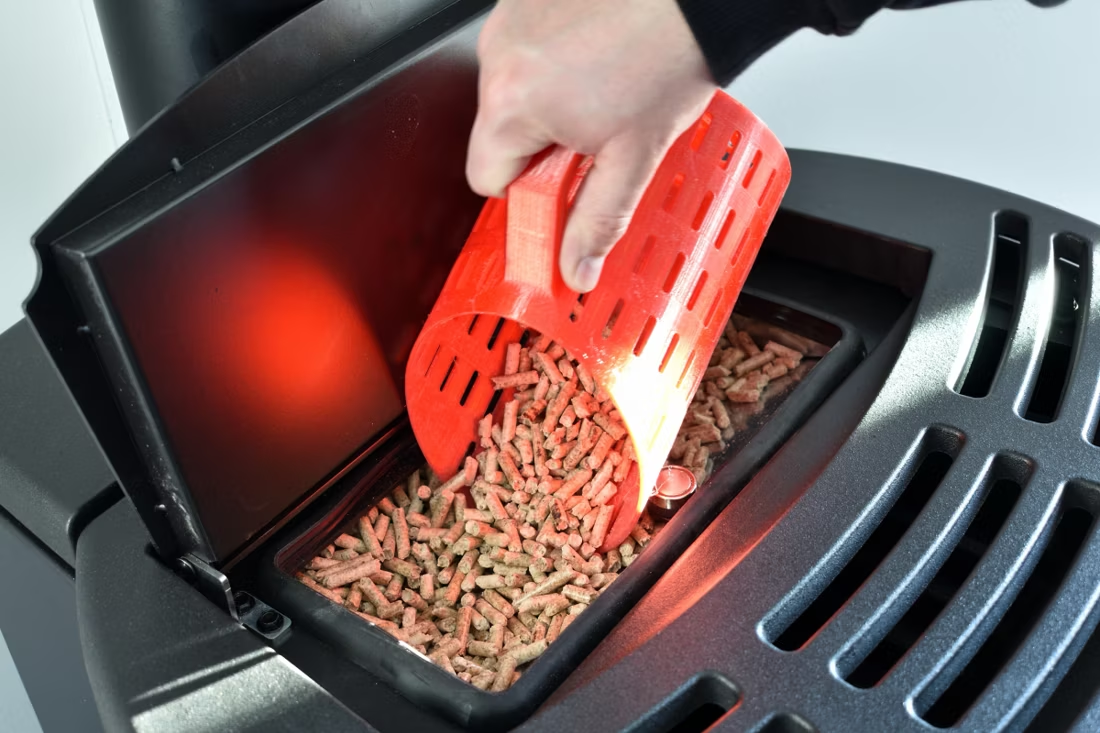
That's a lot of heating season to get through, which is why pellet stoves have earned a real following here—especially among the county's many second-home owners in Winter Park and Grand Lake who need consistent, thermostat-controlled heat without tending a fire every few hours. Pellet appliances also burn far cleaner than cordwood, which matters in a county where summer wildfire smoke already strains local air quality. Regional brands like Bear Mountain, Lignetics, and Forest Energy stock hearth shops and hardware stores along the US 40 corridor each fall, and local dealers can walk you through sizing for the elevation and square footage you're actually heating—not a generic lowland number.
Three steps. No salesperson until you're ready.
Tell us about your project
Your zip code, your situation, and the fuel you're leaning toward—or let the answers point you to one.
See what's actually available
The brands dealers within 100 miles genuinely carry—real options, never a catalog mirage.
Get your dealer & Project Guide
A trusted local dealer, plus the free Project Guide & Parts List that names every component of the job.
Frequently Asked Questions
How much does a pellet stove installation cost in Grand County?
Most freestanding pellet stove installations run in the $3,000 to $6,000 range, and pellet inserts into an existing masonry fireplace typically land between $4,000 and $7,000, depending on venting length, electrical work for the hopper and blower, and whether a hearth pad upgrade is needed. Homes in more remote parts of the county—Kremmling, Hot Sulphur Springs, and the areas around Grand Lake—can see a modest travel charge added to the quote. A local dealer can give you a firm number after an in-home visit, which is worth doing given how much elevation and home layout affect the final install.
What size pellet stove do I need for a Grand County home?
Sizing here runs larger than most of the country because of Climate Zone 7 and roughly 10,000 heating degree days a year—figures more typical of Fargo, North Dakota or International Falls, Minnesota than most of Colorado. A stove that would comfortably heat 1,500 square feet at sea level often needs to be sized up for a home at 8,500 or 9,000 feet in Fraser or Grand Lake, since thinner air and colder average lows both push heating demand higher. Older, less-insulated cabins common around Grand Lake and Kremmling also tend to need more capacity than newer, tightly built homes in Winter Park. A local dealer will factor in your actual elevation, insulation, and square footage rather than a generic chart.
Where can I find certified pellet stove installers near me?
Look for NFI (National Fireplace Institute)-certified installers, which indicates specific training on pellet appliance venting, electrical hookups, and clearance requirements. Hearth retailers serving Grand County typically cover the whole county from a base in Winter Park, Granby, or Fraser, though expect a small travel fee for installs in Kremmling, Hot Sulphur Springs, or other outlying areas. Because pellet stoves involve both venting and a dedicated electrical circuit, it's worth avoiding general handyman installs—improper venting or an undersized circuit is the most common source of callbacks.
What's the difference between a pellet stove and a pellet insert?
A pellet stove is a freestanding appliance that sits on a hearth pad and vents through an exterior wall or existing chimney—it can go almost anywhere with the right clearances. A pellet insert is built to slide into an existing masonry fireplace opening, turning a drafty open hearth into a sealed, thermostat-controlled heat source. For Grand County's older mountain cabins with an existing fireplace, an insert is often the simpler upgrade since it reuses the chimney chase. New construction or rooms without an existing fireplace are better suited to a freestanding stove.
Do I need a permit to install a pellet stove in Grand County?
Yes—new pellet stove and insert installations require a building permit through the Grand County Building Department, and most local dealers handle the paperwork and inspection scheduling as part of the install. Because pellet appliances need a dedicated electrical circuit in addition to venting, an electrical permit is sometimes required as well. This is one of the reasons it pays to go through a hearth retailer rather than a general contractor—they're used to coordinating both trades and the county's inspection process.
What's the best pellet stove for Grand County's climate?
For a county running roughly 10,000 heating degree days a year, look for a higher-BTU-output pellet stove designed for sustained cold-climate use—brands like Harman, Lopi, and Quadra-Fire make models built for exactly this kind of demand. Homes above 8,500 feet in Winter Park, Fraser, or Grand Lake should size up compared to a chart built for lower elevations, since combustion efficiency and heat output both change with thinner air. Because pellet stoves depend on electricity to run the auger and combustion blower, pairing one with a small backup power source (a battery unit or generator) is worth discussing with your dealer given how often mountain winter storms knock out power here.
How often does a pellet stove need maintenance?
Plan on cleaning the burn pot and ash pan every few days during heavy winter use, a full glass and hopper cleaning weekly, and a professional annual service before each burning season—checking the auger motor, gaskets, exhaust fan, and venting for creosote or ash buildup. Grand County's long heating season means a typical home here may run its pellet stove five to six months a year, more than most of the country, so components see more cycles and benefit from that annual once-over. Local hearth shops that sell pellet stoves generally offer this service directly.
Where can I buy pellet fuel in Grand County?
Hardware stores and hearth retailers along the US 40 corridor in Winter Park, Fraser, and Granby stock regional brands including Bear Mountain, Lignetics, and Forest Energy, especially heading into fall as residents stock up before mountain passes get harder to travel. Pellets typically run in the low-to-mid $300s per ton, and buying early in the season—before the first big snow—is a common local habit, since some stores sell out during the coldest stretches of January and February. Stocking a full winter's supply (often two to three tons for a primary-heat home) ahead of time avoids scrambling later.
Pellet stove vs. wood stove—which makes more sense in Grand County?
Wood is the traditional choice here, and cutting your own is genuinely affordable—permits through the Arapaho-Roosevelt National Forest run just $5 to $20 per cord during the May-to-October season, and ponderosa pine, aspen, pinyon, and juniper are all common locally. The tradeoff is the labor of cutting, hauling, and seasoning wood, plus more manual fire-tending through a heating season that runs half the year. Pellet stoves trade that labor for convenience—thermostat control, longer unattended burn times, and cleaner combustion, which matters given the county's wildfire-smoke-related air quality concerns in summer. The real dividing line is usually whether someone is on-site full time to tend a wood fire or wants set-and-forget heat, which is why so many part-time residents in Winter Park and Grand Lake lean pellet while full-time, hands-on households often stick with wood.
Why is a fireplace insert so efficient?
An insert does two things: it seals the chimney completely, so you stop losing air you already paid to heat, and it radiates warmth into the room through the firebox and glass. Most add a heat-exchange fan that pulls cool room air underneath, wraps it around the hot firebox, and pushes it back out warm. Your home is more efficient before you've even lit the first fire.
How often does a pellet stove need cleaning?
A clean pellet stove is a happy pellet stove. Plan on cleaning the burn pot about once a week when you're burning regularly—ash and clinkers gum up the air holes just like a pellet barbecue. Most pellet stove problems trace back to skipped cleaning that nobody explained up front. Some designs make it easy with a trapdoor burn pot: pull a lever and the gunk drops into the ash pan.
Can a fireplace actually lower my heating bill?
Yes—by creating a comfort zone. A furnace heats every square foot of the house just to warm the one room you're in; a gas fireplace on low burns roughly a sixth of the gas a typical furnace does. Set the furnace around 55–60 degrees as a baseline, then heat the rooms your family actually uses. Families who heat this way commonly save $20–$60 a month.
Can I install a fireplace myself?
If you're putting a fire in your house on purpose, it's best to work with an expert. Unless you're genuinely experienced in framing, gas line, vent pipe, and the national code on clearances to combustibles, have a professional do it—and ideally the same company that sells you the fireplace, so warranty, service, and liability all live under one roof.
Stove and Fireplace Dealers in Grand County
Pellet Brands Stocked Around Grand County
Manufacturers will point you to the nearest stocking dealer.
Find your pellet stove in Grand County.
Tell us about your home and elevation, and we'll match you with a trusted local dealer and send over a free Project Guide & Parts List—the exact parts, including the vent kit, for your Grand County pellet project.
Find Your Fireplace →