
Heat that keeps up with Grand County's coldest nights.
With winter lows averaging 2°F and one of the longest, coldest heating seasons in the country, Grand County homes from Winter Park to Grand Lake need heat that starts instantly and doesn't quit. Find the right gas fireplace or insert and get matched with a trusted local dealer.
Every Project Starts From One of These Five Situations
Instant heat for one of Colorado's coldest counties.
Grand County sits in the Middle Park basin, ringed by the Continental Divide, with towns like Winter Park, Fraser, and Grand Lake perched above 8,000 feet. With a long, deep winter heating season comparable to International Falls, Minnesota—and with average winter lows around 2°F, subzero nights are routine rather than exceptional. For a county of under 8,000 year-round residents that also carries a large population of second homes and ski-town rentals, heat that comes on reliably and doesn't require someone splitting wood before a weekend trip matters a great deal.
Fuel access varies block by block here. Natural gas service reaches parts of the Granby and Kremmling corridor through the regional utility grid, but much of the county—including Winter Park, Fraser, and the Grand Lake area—runs on propane delivered and stored on-site. Either way, a direct-vent gas fireplace or insert gives you heat at the flip of a switch, no chimney maintenance in a county where summer brings its own wildfire smoke concerns, and—with the right ignition system—a source of warmth that keeps working even when a winter storm knocks out power on Berthoud Pass or Trail Ridge Road.
Three steps. No salesperson until you're ready.
Tell us about your project
Your zip code, your situation, and the fuel you're leaning toward—or let the answers point you to one.
See what's actually available
The brands dealers within 100 miles genuinely carry—real options, never a catalog mirage.
Get your dealer & Project Guide
A trusted local dealer, plus the free Project Guide & Parts List that names every component of the job.
Frequently Asked Questions
How much does a gas fireplace installation cost in Grand County?
Expect a typical gas fireplace or insert installation in Grand County to run roughly $5,000 to $12,000, with the spread driven by whether you're on propane or natural gas, how much venting the job requires, and whether a new propane tank has to be set. Many Grand County homes are timber-frame or log construction with vaulted ceilings, which can add venting length and cost compared to a standard ranch layout. Because the county sits above 8,000 feet in most of its populated areas, installers also need to account for altitude-rated venting and BTU adjustments—factor that into any quote that seems suspiciously close to sea-level pricing.
Can I convert my existing wood-burning fireplace to gas?
Yes, and it's a common upgrade for older Grand County cabins and A-frames built with an open masonry fireplace. A gas insert typically slides into the existing firebox, using a stainless liner run up the current chimney for venting. Because most of the county isn't on the natural gas main, this usually means running a line from an existing or new propane tank rather than tapping municipal gas. The conversion keeps your existing mantel and hearth look while eliminating the need to haul and split ponderosa pine, aspen, or pinyon through a Grand County winter.
Should I go with propane or natural gas for my fireplace?
It depends on where in the county you're located. Homes in and around Granby and parts of the Kremmling corridor have access to natural gas service, which is generally the more convenient and lower-maintenance option if you're already tied into it. Everywhere else—Winter Park, Fraser, Tabernash, Grand Lake, and most of the county's rural and resort-adjacent parcels—propane is the standard, delivered and stored in an on-site tank by regional suppliers. Most gas fireplace models can be configured for either fuel; your local installer will set the correct orifice and regulator for whichever you have.
Will my gas fireplace still work if the power goes out?
Most modern direct-vent gas fireplaces are built to keep working through a power outage. Units with an IPI (intermittent pilot ignition) system run on a small battery backup that kicks in automatically, so the fireplace still lights on demand even with the grid down—a real advantage in Grand County, where winter storms can close mountain passes and knock out power for hours at a stretch. Valor fireplaces take a slightly different approach: their pilot generates its own electricity through the thermocouple, so there's no battery to remember at all. Ask your local dealer about the ignition system on any unit you're considering, especially for a primary or vacation home where you can't check on batteries every week.
What's the difference between a gas fireplace, gas insert, and gas stove?
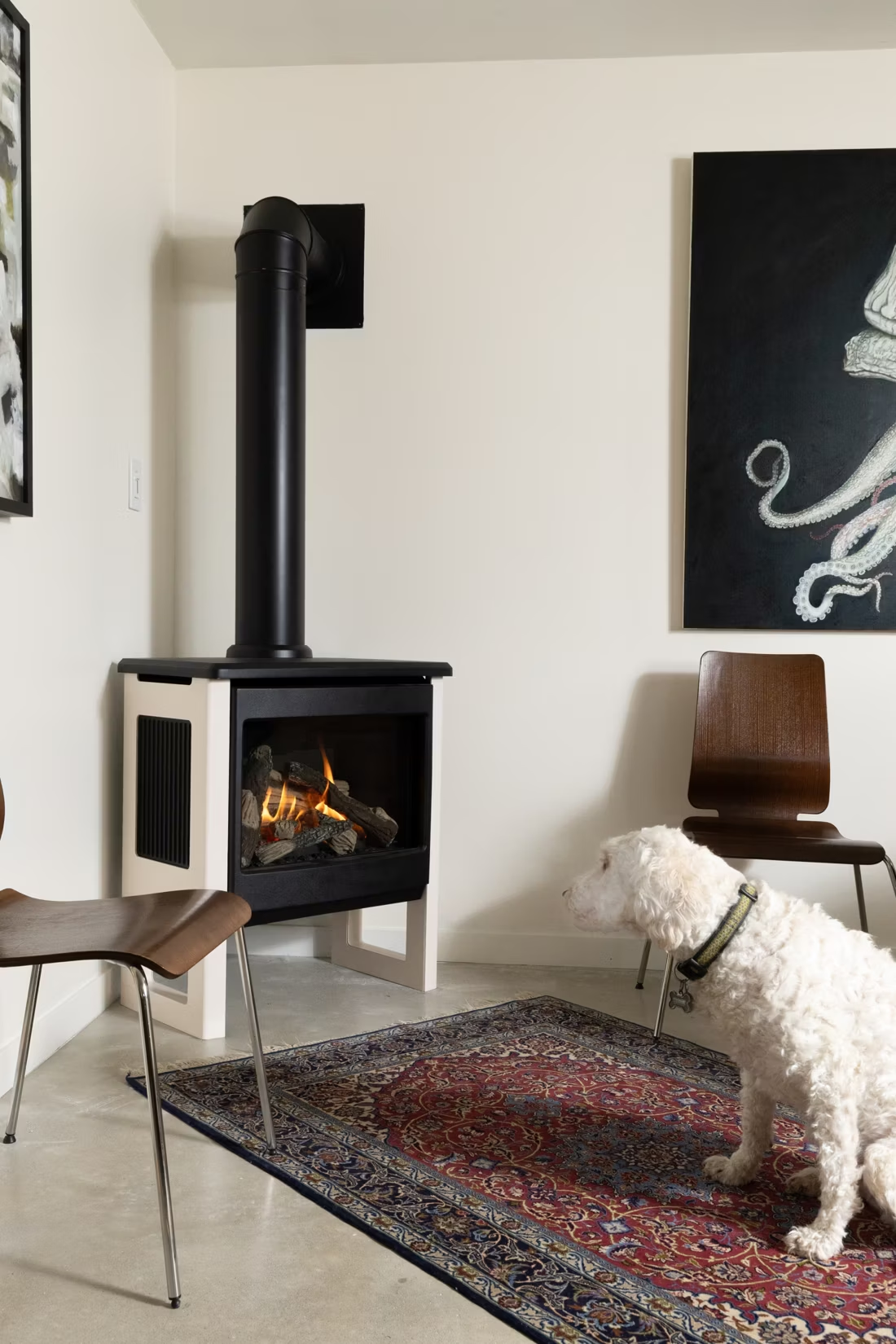
A gas fireplace is a fully built-in unit framed into a wall—the standard choice for new construction or a full remodel, which is common given how much building is happening around Winter Park and Fraser. A gas insert fits into an existing masonry firebox, turning an old fireplace into a sealed, efficient heat source using the existing chimney as a vent chase. A gas stove is freestanding, sitting on its own hearth pad, and works well in smaller cabins or as a secondary heat source in a bonus room. For most existing Grand County homes with a legacy wood fireplace, an insert is the simplest upgrade; new builds usually go straight to a built-in unit.
Do I need a permit to install a gas fireplace in Grand County?
Yes. New gas fireplace and insert installations require a building permit through the Grand County Building Department, plus a gas line permit if propane or gas piping is being added or modified. The gas line work has to be done by a licensed gas-fitter, which is one reason to go through an established local hearth dealer rather than a general handyman—they coordinate the appliance install, venting, and gas line inspection as one job instead of leaving you to schedule separate trades in the middle of a mountain winter.
Should I choose a vented or vent-free gas fireplace at this elevation?
Vented, in almost every case. Direct-vent gas fireplaces draw combustion air from outside and exhaust it back outside through a sealed pipe, which keeps combustion clean and complete regardless of elevation. Vent-free units burn directly into the room and are far more sensitive to altitude—combustion efficiency drops as air thins, and above 8,000 feet, which describes most of populated Grand County, vent-free performance and safety margins get noticeably worse. Colorado permits vent-free units under specific conditions, but most local dealers steer high-elevation customers toward direct-vent models with altitude-rated venting kits instead, and that's the right call for a county sitting this high above sea level.
How often does a gas fireplace need servicing?
Plan on an annual inspection, ideally before the heating season ramps up in the fall. A technician will check the burner, pilot assembly, venting, and gas connections, and clean the glass—typically a $150 to $250 visit. If you're on propane, it's also worth having your tank, regulator, and line checked annually, since regulators can freeze or ice up during Grand County's coldest stretches and cause pressure problems right when you need the heat most. For vacation or rental properties that sit empty for weeks at a time, an annual check before guests or owners arrive is cheap insurance.
Gas or wood—which makes more sense for a Grand County home?
Wood remains popular here—ponderosa pine, aspen, pinyon, and juniper are all locally available, and a Forest Service permit through the Arapaho-Roosevelt National Forests runs just $5 to $20 per cord during the May-to-October cutting season. Wood also keeps working with no power at all, which matters during a mountain-pass storm outage. Gas, though, wins on convenience: instant heat with no wood to split or haul, no chimney creosote to manage, and no added smoke during summer wildfire smoke events when air quality is already a concern. For the county's large share of second homes and short-stay rentals, gas is usually the practical choice since there's no one around to tend a fire between visits. Many full-time Grand County residents end up with both—gas for daily convenience, wood as backup and ambiance.
Why is my open fireplace making my house colder?
Open fireplaces suck—literally. As the fire burns, it consumes air your furnace already paid to heat and pulls it out through the chimney, so the house is actually colder after the fire goes out than before you lit it. An insert fixes this: it seals the chimney, puts fixed glass across the front, and turns that hole in your house into a real heat source.
Why is a fireplace insert so efficient?
An insert does two things: it seals the chimney completely, so you stop losing air you already paid to heat, and it radiates warmth into the room through the firebox and glass. Most add a heat-exchange fan that pulls cool room air underneath, wraps it around the hot firebox, and pushes it back out warm. Your home is more efficient before you've even lit the first fire.
Can I install a fireplace myself?
If you're putting a fire in your house on purpose, it's best to work with an expert. Unless you're genuinely experienced in framing, gas line, vent pipe, and the national code on clearances to combustibles, have a professional do it—and ideally the same company that sells you the fireplace, so warranty, service, and liability all live under one roof.
Can a fireplace actually lower my heating bill?
Yes—by creating a comfort zone. A furnace heats every square foot of the house just to warm the one room you're in; a gas fireplace on low burns roughly a sixth of the gas a typical furnace does. Set the furnace around 55–60 degrees as a baseline, then heat the rooms your family actually uses. Families who heat this way commonly save $20–$60 a month.
Stove and Fireplace Dealers in Grand County
Find your gas fireplace in Grand County.
Tell us about your home—and whether you're on propane or natural gas—and we'll send you a free Project Guide & Parts List for your Grand County gas fireplace project, along with a match to a trusted local dealer who can install it right.
Find Your Fireplace →