
Find the right pellet stove for Gilpin County's mountain cabins.
From Black Hawk and Central City to the unpaved switchbacks of Coal Creek Canyon and Rollinsville, pellet stoves deliver steady, thermostat-controlled heat at 8,000+ feet. Find the right stove and get matched with a trusted local dealer who can size and install it correctly for your elevation.
Every Project Starts From One of These Five Situations
Consistent heat without the wood-splitting work.
Gilpin County is one of Colorado's smallest counties by year-round population—just 973 residents spread across Black Hawk, Central City, Rollinsville, Coal Creek Canyon, and the unincorporated mountain land between them. Elevations run from roughly 7,800 feet near Black Hawk to well over 9,500 feet toward the county's western edge, and the whole county sits in climate zone 5B—cold enough on its own, and meaningfully colder once you add altitude. Many properties are seasonal cabins or full-time homes reached by gravel roads that get plowed on their own schedule, not the county's. Winters here run long, closer in character to Helena, Montana than to Denver thirty miles down the canyon.
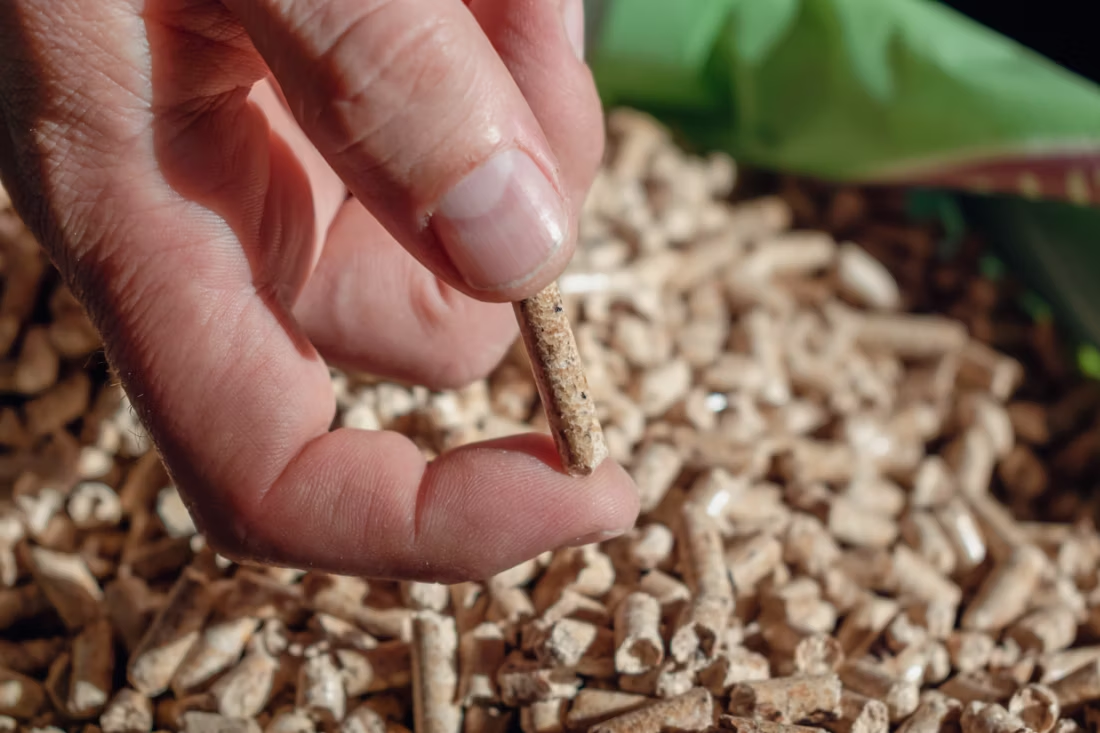
Pellet stoves fit that reality well. A hopper-fed pellet stove can hold a fire for 24 to 40+ hours per load depending on the model and hopper size, which matters when a mountain road might not get plowed for a day or two after a storm. They also burn far cleaner than an open wood fireplace or an older wood stove—a real consideration in a county where regional wildfire smoke already strains summer air quality some years. Regional pellet brands including Bear Mountain, Lignetics, and Forest Energy supply the Front Range and Rockies corridor, so fuel isn't the scarce resource here that it can be in more remote parts of the state. The trade-off: pellet stoves need electricity to run the auger and blower, which matters in a county where mountain power outages aren't rare—worth discussing with your dealer, especially if the stove is heating a cabin you're not always at.
Three steps. No salesperson until you're ready.
Tell us about your project
Your zip code, your situation, and the fuel you're leaning toward—or let the answers point you to one.
See what's actually available
The brands dealers within 100 miles genuinely carry—real options, never a catalog mirage.
Get your dealer & Project Guide
A trusted local dealer, plus the free Project Guide & Parts List that names every component of the job.
Frequently Asked Questions
How much does a pellet stove installation cost in Gilpin County?
A freestanding pellet stove installation in Gilpin County typically runs $3,000 to $6,500, depending on the model, whether the wall-vent path is straightforward, and whether a new dedicated electrical circuit is needed. Converting an existing masonry fireplace to a pellet insert usually lands in a similar range once the liner and surround work are factored in. Properties on unpaved roads in Coal Creek Canyon, Rollinsville, or the more remote stretches of the county sometimes carry a small travel surcharge for the install crew. If you want the stove to keep running during outages, ask your dealer about adding a battery backup or small generator hookup—that's an add-on cost worth budgeting for separately.
What size pellet stove do I need for a cabin at 8,500 feet?
Heat loss is more aggressive at Gilpin County's elevations than the square-footage charts on a stove's spec sheet assume, especially in older cabins with single-pane windows or minimal insulation. As a rough guide, size up one category from what a sea-level chart recommends—a stove rated for 1,200 square feet at low elevation is a safer fit for an 900-1,000 square foot cabin up here. Whether the property is a full-time home or a weekend cabin also matters: for seasonal use, some owners choose a slightly smaller stove they can run continuously on a low setpoint to keep pipes from freezing, rather than a large stove they cycle on and off. A local dealer familiar with high-country installs can size this correctly during an in-home visit.
Do I need a permit to install a pellet stove in Gilpin County?
Yes—a new pellet stove installation typically requires a building permit through Gilpin County's building department, covering hearth clearances, the wall-vent penetration, and any new electrical work for the stove's circuit. Most local hearth dealers handle the permit application and inspection scheduling as part of the installation, so you generally don't have to navigate it yourself. If you're converting an existing fireplace to a pellet insert, the permit is usually simpler since you're using an existing chimney opening rather than cutting a new wall penetration.
How does a pellet stove vent, and do I need a full chimney?
Pellet stoves vent through a smaller-diameter PL (pellet) vent pipe rather than a full masonry or Class A chimney—most installations run a short horizontal run through an exterior wall with a termination cap outside. This makes pellet stoves a good option for Gilpin County cabins and additions that don't have an existing fireplace or chimney, since there's no need to build one from scratch. If you do have an existing masonry fireplace, a pellet insert can use the existing opening with the vent pipe run up through the flue instead of out the wall.
Where can I buy pellets near Gilpin County, and how many bags should I stock up on?
Regional brands like Bear Mountain, Lignetics, and Forest Energy are distributed through hearth retailers and hardware stores along the Front Range, with delivery or pickup available before mountain roads get harder to navigate in deep winter. A typical Gilpin County home heating primarily with pellets burns somewhere between 1.5 and 3 tons per season depending on square footage and how many days the stove runs continuously versus intermittently at a cabin. Given how quickly a storm can close county roads, most local owners buy in bulk in fall and store a season's supply in a dry garage, shed, or basement rather than restocking bag by bag through winter.
Will my pellet stove work during a power outage?
No—pellet stoves rely on electricity to run the auger that feeds fuel and the blower that distributes heat, so a standard installation stops working when the power goes out. That's a meaningful consideration in Gilpin County, where mountain power outages happen more often than in the Denver metro. If backup heat during outages matters to you, ask your dealer about a battery backup unit sized for a pellet stove's low draw, or a small generator you can run during extended outages. Some homeowners in the county choose to pair a pellet stove for daily convenience with a wood stove or fireplace for true off-grid backup heat.
How often does a pellet stove need to be cleaned and serviced?
Plan on emptying the ash pan every few days to weekly during regular use, and a deeper cleaning of the burn pot and exhaust fan every few weeks depending on how many hours the stove runs. Once a year—ideally before the heavy snow months set in—the venting, auger, and combustion blower should get a full professional service. For cabins that only get used on and off, it's worth having a technician check the stove at the start of the season before you're relying on it during a storm, rather than finding a problem the hard way at 9,000 feet.
Does the local wood—ponderosa pine, aspen, pinyon, juniper—matter if I'm burning pellets instead of firewood?
Not directly. Firewood cut locally from Gilpin County's ponderosa pine, aspen, pinyon, and juniper stands is a separate fuel path from bagged pellets, which are manufactured from compressed sawmill byproduct—often softwood species like pine, but not sourced from your own property or the surrounding national forest. If part of the appeal of wood heat for you is cutting your own fuel from nearby stands, a pellet stove won't offer that; its advantage is the opposite trade-off—no cutting, splitting, or seasoning, just a bag from the store and a hopper you fill every day or two.
Pellet stove vs. wood stove—which is right for my Gilpin County property?
Wood stoves work without electricity, which matters given how often mountain power outages hit this county, and they pair well with the abundant ponderosa pine, aspen, pinyon, and juniper in the surrounding forest if you're willing to cut, split, and season your own fuel. Pellet stoves trade that self-sufficiency for convenience and cleaner burning—steadier heat output, less ash, and lower particulate emissions, which matters in a county where regional wildfire smoke already affects summer air quality. For a full-time home where you want backup heat that works no matter what, wood often wins. For a cabin you visit intermittently and want to keep comfortable with minimal fuss—or a primary home where daily convenience matters more than off-grid resilience—pellet is usually the better fit.
What's the difference between an insert and a zero-clearance fireplace?
An insert is a fireplace that slides into a pre-existing wood-burning fireplace—if you don't have one, there's nothing to insert it into. A zero-clearance fireplace is built into a framed wall, which makes it the answer for remodels and new construction. Simple test: existing masonry fireplace means insert; blank or framed wall means zero-clearance.
How often does a pellet stove need cleaning?
A clean pellet stove is a happy pellet stove. Plan on cleaning the burn pot about once a week when you're burning regularly—ash and clinkers gum up the air holes just like a pellet barbecue. Most pellet stove problems trace back to skipped cleaning that nobody explained up front. Some designs make it easy with a trapdoor burn pot: pull a lever and the gunk drops into the ash pan.
Can a fireplace actually lower my heating bill?
Yes—by creating a comfort zone. A furnace heats every square foot of the house just to warm the one room you're in; a gas fireplace on low burns roughly a sixth of the gas a typical furnace does. Set the furnace around 55–60 degrees as a baseline, then heat the rooms your family actually uses. Families who heat this way commonly save $20–$60 a month.
Does a fireplace add value to my home?
On average, a fireplace adds back to the home about the same amount you spent installing it. Add the monthly savings from heating the rooms you actually use instead of the whole house—often hundreds of dollars a year—and the value case is strong before you even count what a fire does for how your family uses the room.
Pellet Brands Stocked Around Gilpin County
Manufacturers will point you to the nearest stocking dealer.
Find your pellet stove in Gilpin County.
Tell us about your cabin or home and we'll match you with the right pellet stove or insert, hand you a free Project Guide & Parts List sized to your elevation and square footage, and connect you with a trusted local dealer who installs in Gilpin County.
Find Your Fireplace →