
Fireplace Heat That Holds Up in Gilpin County's High Country.
Wood, gas, pellet, and electric fireplace resources for Central City, Black Hawk, Rollinsville, and the unincorporated mountain communities that make up most of Gilpin County. Find the right unit for elevation and snow load, then connect with a trusted local dealer.
Every Project Starts From One of These Five Situations
Small county, serious winters, in the Colorado high country.
Gilpin County is one of the smallest counties in Colorado by population—under 1,000 residents spread across Central City, Black Hawk, Rollinsville, and scattered mountain properties in the Front Range foothills, with elevations running from roughly 7,700 feet at Black Hawk up past 9,000 feet near the Continental Divide. Climate zone 5B means long, genuinely cold winters—closer in character to Helena, Montana than to nearby Denver, thirty miles and several thousand feet of elevation away. Wood heat has deep roots here: ponderosa pine, aspen, pinyon, and juniper are the species most homeowners burn, much of it self-cut or sourced through nearby national forest firewood permits. Late-summer wildfire smoke is the county's main air-quality concern, and it shapes how and when people burn outdoors, though it doesn't restrict certified indoor wood appliances.
Because Gilpin County's population is so small, most hearth retailers and technicians who service the county are based down the canyon in Golden, Boulder, or the greater Denver metro, driving up to Central City, Black Hawk, and the surrounding mountain roads for consultations and installs. This hub rounds up the retailers, service techs, and fuel suppliers who actually cover Gilpin County, plus a directory of the towns and unincorporated areas we serve. Pick your fuel below for installation costs, altitude-specific considerations, and dealer recommendations for your address.
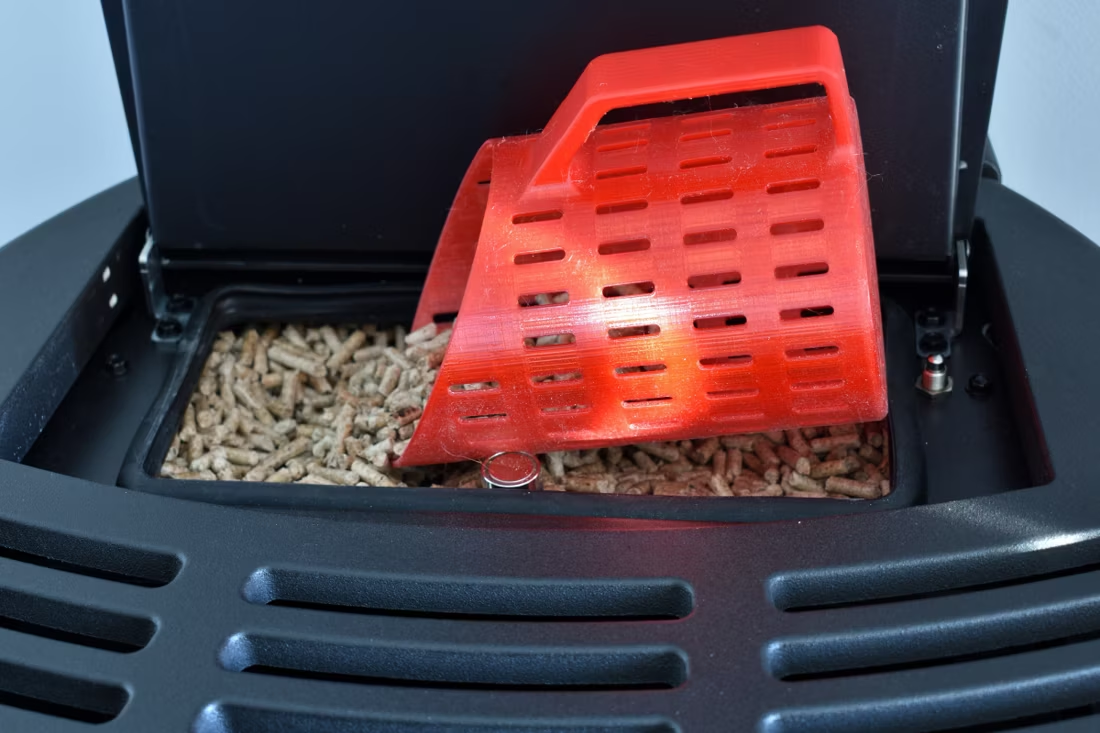
Four fuels. One honest answer for Gilpin County.
Three steps. No salesperson until you're ready.
Tell us about your project
Your zip code, your situation, and the fuel you're leaning toward—or let the answers point you to one.
See what's actually available
The brands dealers within 100 miles genuinely carry—real options, never a catalog mirage.
Get your dealer & Project Guide
A trusted local dealer, plus the free Project Guide & Parts List that names every component of the job.
Frequently Asked Questions
Which fuel works best for a home in Gilpin County?
It depends on elevation, access, and how you use the property. Wood is the traditional choice and still the most reliable in a power outage—a catalytic stove burning local ponderosa pine or aspen can hold overnight lows without any electricity or gas line at all, which matters given how often winter storms knock out power along the mountain corridor. Propane is the practical gas option, since Gilpin County has no piped natural gas service—propane fireplaces and inserts give you instant, thermostat-controlled heat, but appliances need altitude-rated orifices above roughly 7,000 feet, which any qualified local installer will spec correctly. Pellet stoves are a strong middle ground if you don't want to cut and stack wood, though they do require electricity to run the auger and fan, so most owners in the county pair one with a wood stove or generator for outage backup. Electric units work well for supplemental heat in a bedroom or bonus room but shouldn't be your only heat source through a Gilpin County winter.
Do I need a permit to install a wood stove or propane fireplace in Gilpin County?
Yes, in most cases. New wood stoves, wood inserts, propane fireplaces and inserts, and pellet stoves all typically require a building permit through the Gilpin County Building Department, and wood appliances need to meet current EPA emissions standards to pass inspection. Propane installations also need a licensed gas-fitter to run and pressure-test the line, since there's no piped natural gas up here—every propane hookup is a standalone tank-and-line system that has to be sized and installed correctly. Electric fireplaces are usually permit-exempt unless you're doing a built-in installation with new wiring. Most local retailers who serve the county handle the permit paperwork as part of the install, since they're already used to working with the county building department on mountain properties.
How does wildfire smoke season affect wood burning in Gilpin County?
Wildfire smoke, not winter inversion, is the county's main air-quality issue—it's a late-summer and early-fall concern rather than a wood-stove-specific restriction. During active fire season, outdoor burning (slash piles, campfires, debris burns) is often restricted or banned under county or Forest Service fire orders, but certified indoor wood stoves and inserts aren't targeted by those restrictions. The bigger practical impact for wood burners is fuel supply: dry conditions can affect firewood availability and pricing, and homeowners who self-cut aspen or ponderosa pine under a national forest permit should check current fire restrictions before cutting. Indoor wood heat itself remains a normal, accepted part of how Gilpin County homes stay warm through the winter.
Since Gilpin County is so small, where do I actually find a hearth retailer?
You won't find a showroom in Central City or Black Hawk—the population base doesn't support one. Instead, hearth retailers based in Golden, Boulder, and the western Denver metro cover Gilpin County as part of their regular mountain service territory, typically driving up Highway 119 or Golden Gate Canyon Road for consultations and installs. This is common for small mountain counties: a dealer's real coverage area often extends 30-40 minutes beyond their showroom into exactly the kind of terrain Gilpin County sits in. When you're matched with a local dealer through this site, we're specifically looking for retailers who already service your part of the county, not just the nearest storefront on a map.
What does fireplace installation typically cost in Gilpin County?
Costs run close to typical Front Range foothill pricing, with a modest premium for the altitude and drive time. Wood stove or insert installation: roughly $4,500-$9,500, higher if a new masonry chimney or full re-line is needed for a mountain cabin. Propane fireplace, insert, or stove: roughly $5,000-$11,500, since nearly every job includes running new gas line from a tank rather than tapping an existing utility connection. Pellet stove or insert: roughly $4,500-$8,000. Electric fireplace: $200-$3,000 for the unit itself, plus $400-$1,200 in labor for anything beyond a plug-and-play wall unit. Expect retailers based in Golden or Boulder to build a small travel charge into mountain-route installs.
How does winter access affect service and fuel delivery in Gilpin County?
Snow and mountain road conditions are the main variable. Propane deliveries and firewood drop-offs generally need to be scheduled ahead of a storm rather than during one, since Highway 119 and the county's secondary roads can close or slow significantly with heavy snowfall. Annual chimney sweeping and propane system checks are easiest to book in September or October, before the passes get icy and before service techs get backed up with winter emergency calls. Homeowners on longer driveways or unplowed county roads should keep a few days of backup fuel on hand—extra firewood, a full propane tank, or bagged pellets—so a delayed delivery or service visit during a storm doesn't leave the house without heat.
Wood, gas, pellet, or electric—how do I choose?
Match the fuel to your life, not the other way around. Wood: lowest fuel cost and total power-outage independence, but you're hauling and stacking. Gas: press a button, set a thermostat, no maintenance to speak of. Pellet: wood economics with automatic feeding, in exchange for weekly cleaning and a need for electricity. Electric: plugs in anywhere with honest supplemental heat. Nobody regrets the fuel that fits how they actually live.
How much should I budget for a fireplace?
For an average home—covering the fireplace, the vent pipe, and basic installation—a budget between $3,900 and $5,500 gives you a lot of options across wood, gas, and pellet. By the time you add finish work, gas line, and electrical, the average complete installation lands between $5,000 and $12,000 all-in. In a remodel or new build, a good rule is to put about 2.5% of the total project cost toward the fireplace.
Does a fireplace add value to my home?
On average, a fireplace adds back to the home about the same amount you spent installing it. Add the monthly savings from heating the rooms you actually use instead of the whole house—often hundreds of dollars a year—and the value case is strong before you even count what a fire does for how your family uses the room.
What is an in-home preview and do I need one?
It's a visit where a hearth professional measures your space, confirms the model you picked actually works in your home, and walks the specs—framing, gas line, venting, finish work—before anything is ordered. Some details you just can't know until you see the house. Never make a down payment without one; it's the single most-skipped step that burns buyers.
Stove and Fireplace Dealers in Gilpin County
Listings include WhyFire partner dealers, dealers we have verified as authorized for the brands we recommend, and established local businesses that carry hearth products. Every listing shows which one it is. The ones marked Preferred run on WhyFire's software, so they can show you real pricing and book your appointment right here. No manufacturer pays for placement. How we verify dealers →
The Warm Store
Spa Brokers
Find your fireplace in Gilpin County.
Pick your fuel below to see installation costs for your elevation, get matched with a local dealer who actually services this part of the county, and receive a free Project Guide & Parts List for your home.
Find Your Fireplace →