
Keep Your Family Warm and Safe—No Matter What
Evergreen winters bring average lows near 12°F, heavy mountain snow loads, and the storm-related power outages that come with living in the foothills. Find the right wood stove or insert, and connect with a trusted local dealer.
Every Project Starts From One of These Five Situations
The original backup heat for the foothills.
Evergreen sits at 7,164 feet in the Jefferson County foothills west of Denver, where winters run about as cold as Bozeman, Montana. Wet spring and fall snowstorms here are notorious for knocking down power lines through the surrounding ponderosa forest, and when the grid goes down on a subzero night, a wood stove is often the only heat source that keeps working.
Evergreen is ringed by the Arapaho-Roosevelt National Forests, where cutting permits run $5 to $20 per cord during the May-through-October season—an easy way for homeowners to source their own ponderosa pine, aspen, pinyon, and juniper. Pinyon and juniper burn hot and resinous, aspen lights fast and burns cooler, and ponderosa splits clean and burns long—a mix many Evergreen households rotate through the season. Because winter inversions and wildfire smoke are both real concerns in this part of Jefferson County, a modern EPA-certified stove that burns clean and complete matters as much for air quality as for efficiency.
Firewood Cutting Permits Near Evergreen
Three steps. No salesperson until you're ready.
Tell us about your project
Your zip code, your situation, and the fuel you're leaning toward—or let the answers point you to one.
See what's actually available
The brands dealers within 100 miles genuinely carry—real options, never a catalog mirage.
Get your dealer & Project Guide
A trusted local dealer, plus the free Project Guide & Parts List that names every component of the job.
Frequently Asked Questions
How much does a wood stove installation cost in Evergreen?
Most wood stove installations in Evergreen run roughly $4,000 to $9,000, with the range driven by whether you're installing into an existing masonry fireplace, running new Class A chimney pipe through a timber-frame or log-construction roof, or upgrading a hearth pad for clearance. Homes at Evergreen's elevation also need stoves and venting components rated for high-altitude draft performance—something a local installer familiar with mountain builds will already account for. New construction or homes without an existing chimney chase tend to land at the higher end once full through-roof venting is included.
What size wood stove do I need for an Evergreen home?
With winter lows averaging 12°F and winters about as cold as Bozeman, Montana, Evergreen homes generally need more heating capacity than a mild-climate rating chart would suggest—especially in older cabins and A-frames with less insulation than newer construction. Small stoves suit a single great room or cabin under 1,000 square feet, medium stoves cover most main living areas up to 2,000 square feet, and large stoves are appropriate for bigger, open-plan mountain homes. Local dealers who work in Evergreen and the surrounding Conifer and Bailey area routinely size stoves for high-elevation, high-ceiling homes and can walk your floor plan for free.
Where can I find certified wood stove installers near Evergreen?
Look for NFI (National Fireplace Institute) or CSIA (Chimney Safety Institute of America) certification, and ask specifically about experience installing at altitude—venting that performs correctly at sea level can draft poorly at 7,164 feet without the right configuration. Installers who regularly work the Evergreen, Conifer, and Bailey corridor deal with this daily and will know it without prompting. Avoid general contractors for wood-burning installs; improper clearance-to-combustible work on log and timber-frame homes is a common and serious fire risk in this area.
Wood stove or wood insert—what's better for an Evergreen home?
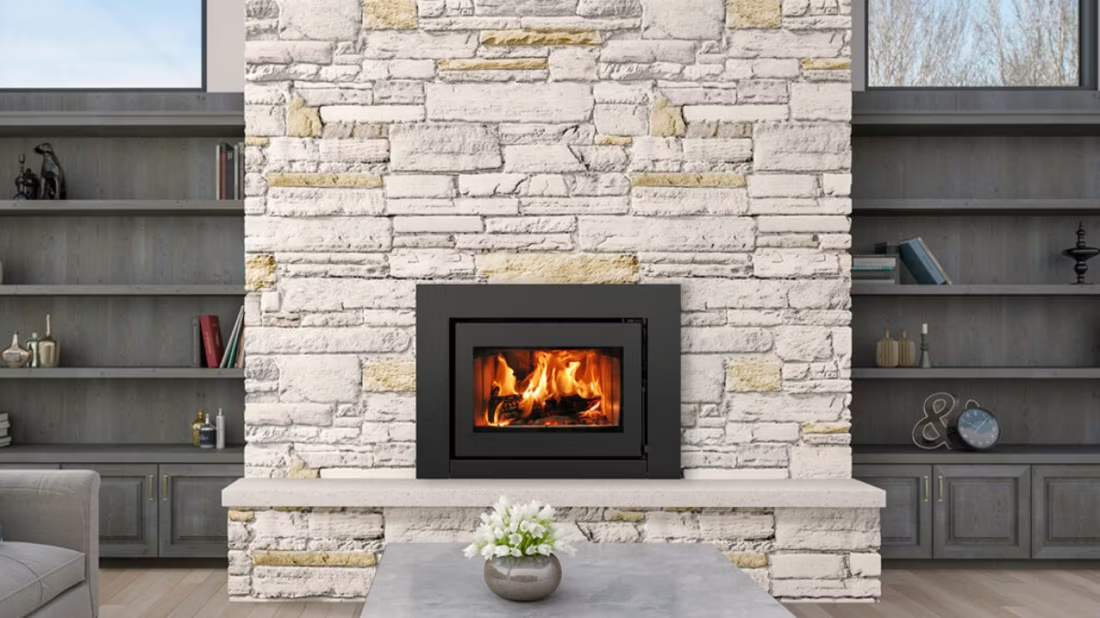
An insert makes sense if you already have a masonry fireplace—common in Evergreen's older mountain homes—since it uses the existing chimney and turns a heat-losing open hearth into an efficient, closed-combustion heater. A freestanding stove is the better call for cabins without an existing fireplace, additions, or garages and shops that need dedicated supplemental heat. Given how many Evergreen properties were built with a stone or brick fireplace as the original heat source, inserts are one of the most common upgrade projects local dealers handle.
Do I need a permit to install a wood stove in Evergreen?
Yes. Unincorporated Jefferson County, which includes Evergreen, requires a building permit for new wood stove installations through the Jefferson County Building Division, and the unit must meet current EPA emissions standards. Most local dealers pull the permit as part of the install. Separately, watch for winter high pollution advisories issued for the Denver metro/North Front Range area, which can include voluntary or mandatory no-burn guidance during inversion events—Evergreen sits close enough to this air basin that those advisories are worth checking during still, cold stretches.
What's the best wood stove for Evergreen's climate and elevation?
For sustained cold at altitude, catalytic stoves such as Blaze King hold a fire 20+ hours, which matters when overnight temperatures sit in the single digits and a storm has taken out the power. Whatever model you choose, confirm it's rated for operation at Evergreen's 7,164-foot elevation—draft and combustion air needs shift meaningfully above 5,000 feet, and a stove not rated for it can underperform or smoke back. Because pinyon and juniper are common local firewood and both are resinous, a stove with a solid catalytic or secondary-burn system will also help manage creosote buildup.
How often should my chimney be inspected in Evergreen?
Plan on an annual CSIA-standard inspection and sweep, ideally before burning season starts in early fall. Because pinyon and juniper—both popular local species—carry more resin and pitch than ponderosa or aspen, creosote can accumulate faster in households that burn a lot of it, so heavier burners may want a mid-season check. Skipping inspections is the leading cause of chimney fires, and it's a quick, inexpensive step compared to a full flue relining.
Where can I get firewood in or near Evergreen?
Many Evergreen households cut their own through the Arapaho-Roosevelt National Forests, where permits run $5 to $20 per cord during the May-through-October cutting season—a straightforward way to stock up on ponderosa pine, aspen, pinyon, and juniper before the snow flies. For those who'd rather buy, local and regional firewood suppliers deliver seasoned cordwood throughout Jefferson County; pinyon and juniper command a premium for their higher heat output, while aspen is typically the least expensive and dries fastest.
Wood stove vs. pellet stove—which fits Evergreen better?
Wood stoves keep working through the storm-related power outages that are a fact of life in the Evergreen foothills, since they need no electricity to burn—a real advantage when Xcel Energy (Public Service Co of Colorado) lines go down under heavy wet snow. Pellet stoves, using regional bags from brands like Bear Mountain, Lignetics, or Forest Energy, are more convenient to load and burn cleaner, but the auger and blower require power, so they stop working in an outage unless paired with a battery backup. For a primary or backup heat source in Evergreen's climate, wood tends to be the more resilient choice; pellet stoves work well as a second, lower-maintenance heat source in homes with reliable grid power.
Why is a fireplace insert so efficient?
An insert does two things: it seals the chimney completely, so you stop losing air you already paid to heat, and it radiates warmth into the room through the firebox and glass. Most add a heat-exchange fan that pulls cool room air underneath, wraps it around the hot firebox, and pushes it back out warm. Your home is more efficient before you've even lit the first fire.
Why won't my new wood stove get going like my old one?
New wood stoves are 70%+ efficient, so far less heat goes up the flue—which also means less draft to get a fire established. The rule: build a genuinely hot fire for about 45 minutes before you choke it down. Skip that and you get smoke in the room, creosote in the chimney, and a fire that never takes off. Most performance complaints trace straight back to this.
How much should I budget for a fireplace?
For an average home—covering the fireplace, the vent pipe, and basic installation—a budget between $3,900 and $5,500 gives you a lot of options across wood, gas, and pellet. By the time you add finish work, gas line, and electrical, the average complete installation lands between $5,000 and $12,000 all-in. In a remodel or new build, a good rule is to put about 2.5% of the total project cost toward the fireplace.
Does a fireplace add value to my home?
On average, a fireplace adds back to the home about the same amount you spent installing it. Add the monthly savings from heating the rooms you actually use instead of the whole house—often hundreds of dollars a year—and the value case is strong before you even count what a fire does for how your family uses the room.
Nearby Dealers
Hearth shops serving Evergreen and the surrounding area. Every listing shows whether it is a WhyFire partner, a dealer we have verified as authorized for the brands we recommend, or a local business carrying hearth products. No manufacturer pays for placement. How we verify dealers →
Proud Souls Barbecue & Provisions
Outdoor Kitchen Dist. Inc
Chimney Doctors
Spa Brokers
Aria Custom Design
Distinctive Mantel Designs
Spa Brokers
Spa Brokers
Spa Brokers Iii
Find your wood fireplace in Evergreen.
Tell us about your home and elevation and we'll match you with a trusted local dealer, plus a free Project Guide & Parts List—the exact stove, hearth, and elevation-rated vent kit your Evergreen project needs.
Find Your Fireplace →