
Instant heat for Eagle County's high-elevation winters.
With 9,881 heating degree days and towns sitting between 6,300 and 8,150 feet, Eagle County homes—from Gypsum to Vail—need heat that works the moment the temperature drops. Find the right gas fireplace, insert, or stove and connect with a trusted local dealer.
Every Project Starts From One of These Five Situations
Reliable heat when the valley drops below zero.
Eagle County runs from Vail Pass down through the Eagle River valley—Vail at roughly 8,150 feet, Avon and Edwards in the 7,200-7,400 foot range, and Eagle and Gypsum closer to 6,300-6,600 feet. Average winter lows hover around 7°F, and with 9,881 heating degree days the county runs colder than Duluth, Minnesota most winters. Wood heat has deep roots here—ponderosa pine, aspen, pinyon, and juniper are all common locally, and White River National Forest issues cutting permits from May through October for $5 to $20 per cord—but summer and fall wildfire smoke has pushed a growing number of homeowners toward gas as a cleaner year-round option, especially in second homes and vacation rentals that need to heat up fast between guest stays.
Natural gas service reaches most of the valley floor—Gypsum, Eagle, Avon, Edwards, and parts of Vail—typically through Black Hills Energy. Higher, more remote parcels and backcountry properties near the national forest boundary usually run on propane instead. One detail that catches a lot of homeowners off guard: at Eagle County's elevations, most gas fireplace manufacturers require an altitude derate kit to adjust the orifice for reduced BTU output, and a local installer familiar with mountain-valley installs will already know which models need it. Whichever fuel source you're on, the payoff is the same—instant heat with no wood to split, haul, or dry, and the option to keep a room warm during the power outages that come with high-country storms.
Three steps. No salesperson until you're ready.
Tell us about your project
Your zip code, your situation, and the fuel you're leaning toward—or let the answers point you to one.
See what's actually available
The brands dealers within 100 miles genuinely carry—real options, never a catalog mirage.
Get your dealer & Project Guide
A trusted local dealer, plus the free Project Guide & Parts List that names every component of the job.
Frequently Asked Questions
How much does a gas fireplace installation cost in Eagle County?
Installations in Eagle County tend to run above national averages because of mountain-valley labor rates and, in many cases, the altitude derate kit required for elevation above 6,000 feet—expect roughly $5,000 to $12,000 depending on the unit, venting path, and whether new gas line work is needed. A direct-vent insert going into an existing masonry fireplace with gas already run to the hearth sits toward the lower end. New builds and remodels in Vail, Avon, or Edwards that require framing, longer vent runs, or a new propane tank sit higher. A local dealer will give you a firm number after seeing the space and confirming your elevation-specific parts list.
Can I convert my existing wood fireplace to gas?
Yes, and it's a common project in Eagle County's older Eagle and Gypsum-area homes that were originally built with a masonry wood fireplace. A gas insert slides into the existing firebox, using a stainless liner run through your current chimney for venting. The conversion typically needs an altitude-appropriate orifice kit given the valley's 6,300 to 8,150-foot elevation range, plus new gas line work if the fireplace wasn't already plumbed. Ask your installer whether propane or natural gas serves your address before ordering the unit, since the orifice and regulator setup differs between the two.
Is natural gas or propane more common in Eagle County?
It depends on where you are in the valley. Natural gas, generally through Black Hills Energy, reaches most of Gypsum, Eagle, Avon, Edwards, and portions of Vail along the I-70 corridor. Properties higher up the mountainsides, in more remote pockets near the White River National Forest boundary, or on large rural parcels typically run on propane with an on-site tank. Most gas fireplace models can be configured for either fuel with the correct orifice, so availability at your specific address—not the fireplace model—usually drives the decision.
Will my gas fireplace still work if the power goes out?
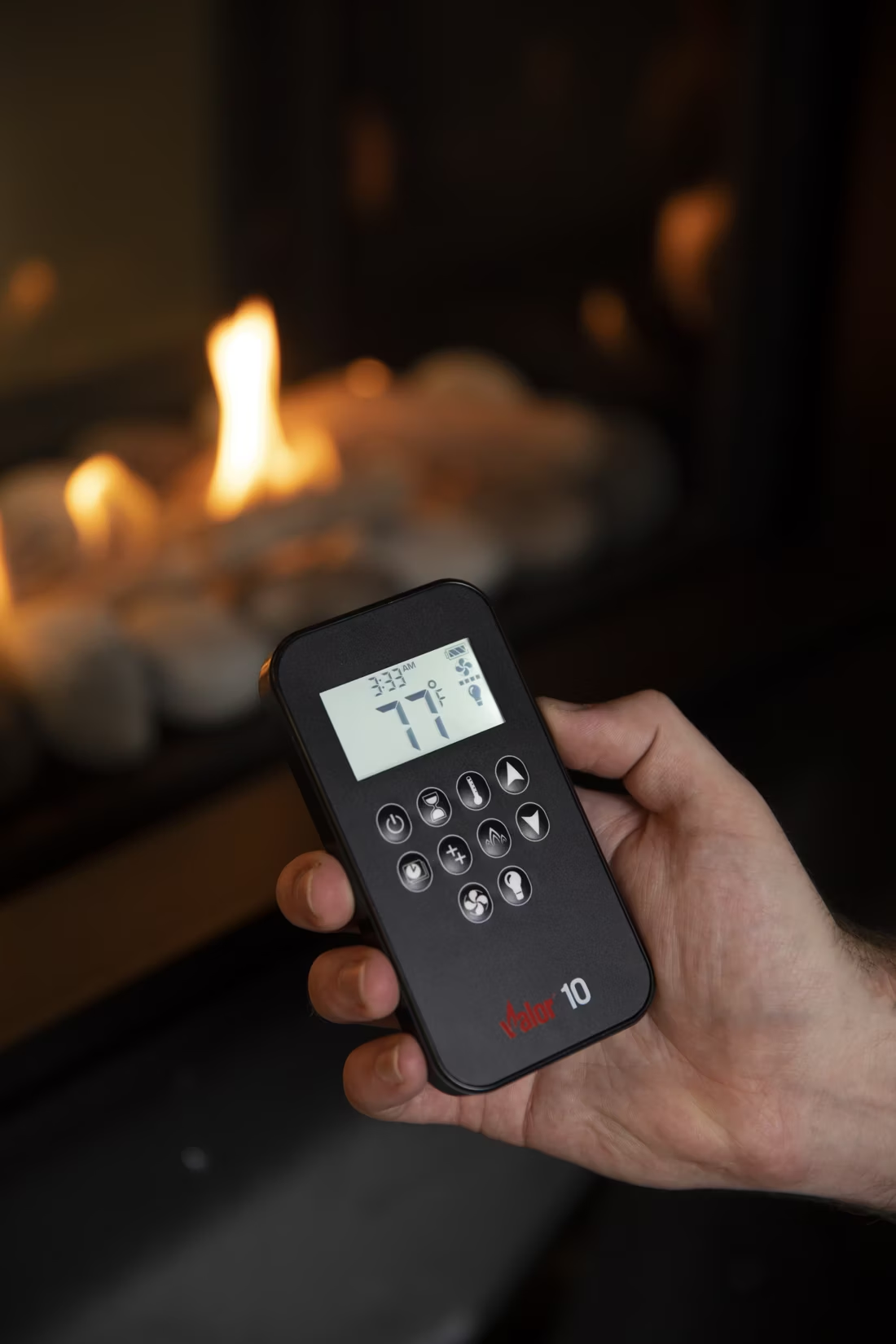
Most modern gas fireplaces will, which matters in a county where winter storms regularly knock out power along the I-70 corridor and up the side canyons. Units with intermittent pilot ignition (IPI) run on a battery backup that kicks in automatically—just remember to swap the batteries each fall before burn season. Valor fireplaces take a different approach: their pilot assembly generates its own electricity through the thermocouple, so there's no battery to forget. For a full-time or vacation home at 7,000-plus feet where a storm can knock out power for a day or more, that self-powering design is worth asking about.
What's the difference between a gas fireplace, insert, and stove?
A gas fireplace is a built-in unit framed into a wall—the standard choice for new construction in the newer developments around Avon and Edwards. A gas insert drops into an existing masonry firebox and uses the existing chimney (relined) as its vent, which is the common route for older Eagle and Gypsum homes with a wood fireplace already in place. A gas stove is a freestanding unit that sits on the floor, similar in footprint to a wood stove, and works well in cabins or smaller mountain homes without an existing fireplace opening. Your existing structure usually decides which of the three makes sense.
Do I need a permit to install a gas fireplace in Eagle County?
Yes. Within incorporated towns—Vail, Avon, Eagle, Gypsum—permits go through that town's own building department rather than the county; unincorporated areas of the valley go through Eagle County Building Department. Either way, a gas line permit is required in addition to the building permit, and the gas-fitting work has to be done by a licensed professional. Most established local hearth dealers coordinate the permitting, the gas line hookup, and the venting inspection together, which is one less thing to manage on a remodel or new build.
Do vent-free gas fireplaces work at Eagle County's altitude?
They can, but altitude changes the math. Colorado allows vent-free units, but manufacturers derate BTU output for elevation, and above roughly 6,000 feet—which is every incorporated town in Eagle County—an altitude-adjusted orifice is typically required regardless of whether the unit is vented or vent-free. Vented direct-vent units remain the more common and more universally recommended choice locally, since they don't carry the room-sizing and ventilation restrictions that come with vent-free operation. A local dealer familiar with high-altitude installs will know exactly which derate kit your specific model needs.
How often should a gas fireplace be serviced in Eagle County?
An annual inspection before the start of the winter season is standard, and it matters more here given how many units in Eagle County run through a full six-plus months of heavy use each year. A technician checks the burner, pilot assembly, gas connections, and any electronic ignition components, and confirms the venting is clear of nesting debris—a real issue in mountain towns where birds and rodents look for warm chimney terminations in fall. Expect to pay roughly $150 to $250 for a standard inspection through a local hearth service provider.
Gas or wood—which makes more sense for an Eagle County home?
Wood remains a legitimate option here—ponderosa pine, aspen, pinyon, and juniper are all locally available, and White River National Forest cutting permits run just $5 to $20 per cord from May through October. Wood also keeps working without electricity, which counts for something during a mountain power outage. But wildfire smoke concerns in late summer and fall have pushed many households toward gas for cleaner, more predictable heat, and gas fireplaces are a much better fit for second homes and short-term rentals that need to warm up in minutes between guest turnovers. A lot of full-time Eagle County residents end up with both: gas for daily convenience in the main living area, wood for backup heat and ambiance elsewhere in the house.
Why is a fireplace insert so efficient?
An insert does two things: it seals the chimney completely, so you stop losing air you already paid to heat, and it radiates warmth into the room through the firebox and glass. Most add a heat-exchange fan that pulls cool room air underneath, wraps it around the hot firebox, and pushes it back out warm. Your home is more efficient before you've even lit the first fire.
What's the difference between an insert and a zero-clearance fireplace?
An insert is a fireplace that slides into a pre-existing wood-burning fireplace—if you don't have one, there's nothing to insert it into. A zero-clearance fireplace is built into a framed wall, which makes it the answer for remodels and new construction. Simple test: existing masonry fireplace means insert; blank or framed wall means zero-clearance.
How much should I budget for a fireplace?
For an average home—covering the fireplace, the vent pipe, and basic installation—a budget between $3,900 and $5,500 gives you a lot of options across wood, gas, and pellet. By the time you add finish work, gas line, and electrical, the average complete installation lands between $5,000 and $12,000 all-in. In a remodel or new build, a good rule is to put about 2.5% of the total project cost toward the fireplace.
What is an in-home preview and do I need one?
It's a visit where a hearth professional measures your space, confirms the model you picked actually works in your home, and walks the specs—framing, gas line, venting, finish work—before anything is ordered. Some details you just can't know until you see the house. Never make a down payment without one; it's the single most-skipped step that burns buyers.
Stove and Fireplace Dealers in Eagle County
Find your gas fireplace in Eagle County.
Tell us about your home's elevation and setup, and we'll match you with a trusted local Eagle County dealer and send over a free Project Guide & Parts List—the right unit, the correct altitude derate kit, and the vent components your installer will need.
Find Your Fireplace →