
Reliable pellet heat for Dolores County's remote high country.
From the sage plain around Dove Creek to the mountain elevations near Rico, Dolores County winters are long and the nearest hearth retailer is often an hour's drive away. Find the right pellet stove or insert, and connect with a trusted local dealer who knows what actually gets delivered out here.
Every Project Starts From One of These Five Situations
Consistent warmth without hauling cordwood.
Dolores County is one of Colorado's smallest and most sparsely populated counties—just over 1,100 residents spread across the Great Sage Plain and up into the San Juan Mountains. Dove Creek, the county seat and self-proclaimed Pinto Bean Capital of the World, sits at roughly 6,844 feet, while Rico, tucked into the mountains at the county's eastern edge, climbs above 8,800 feet. Climate zone 6B means long, cold winters at every elevation in the county, and late-summer wildfire smoke is a recurring concern for anyone weighing how they heat and ventilate their home.
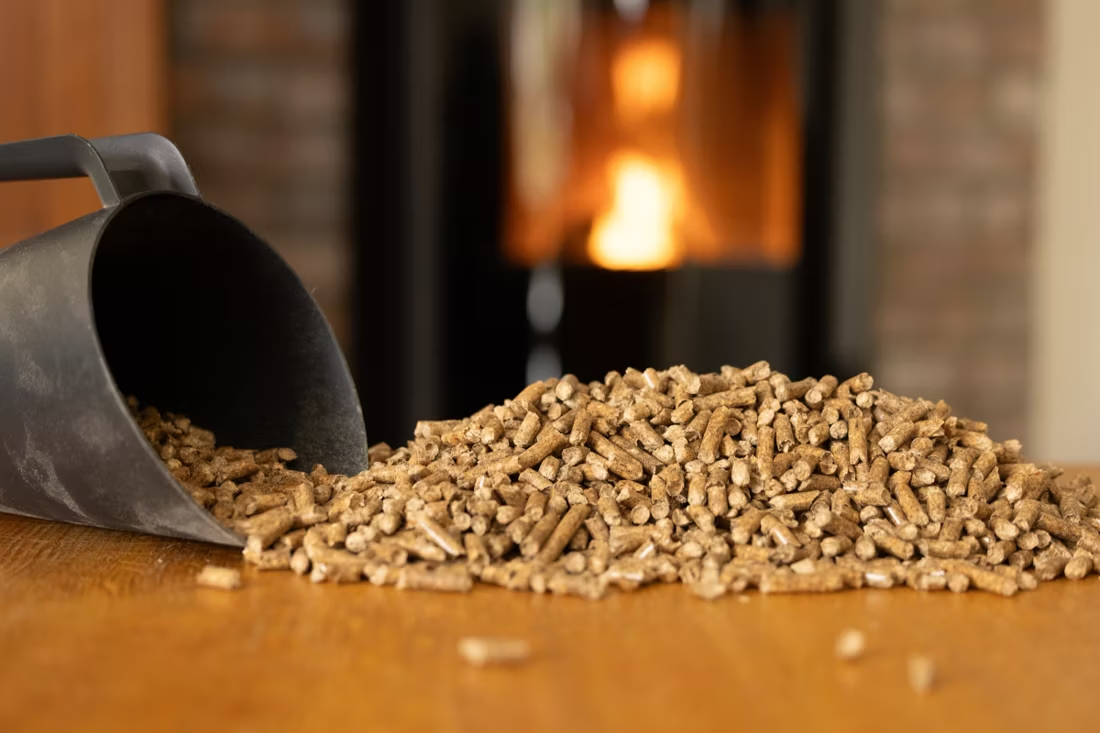
For a lot of Dolores County households, wood heat runs deep—ponderosa pine, aspen, pinyon, and juniper are all abundant locally. But pellet stoves have carved out a real niche here for households that want that same steady radiant warmth without cutting, splitting, and stacking cords every fall, and without adding to smoke loads during already smoky wildfire seasons. Pellet appliances burn cleaner and more consistently than an open wood stove, and EPA-certified units produce a fraction of the particulate output—a meaningful difference in a county where regional haze and wildfire smoke are already part of the summer and fall reality.
Three steps. No salesperson until you're ready.
Tell us about your project
Your zip code, your situation, and the fuel you're leaning toward—or let the answers point you to one.
See what's actually available
The brands dealers within 100 miles genuinely carry—real options, never a catalog mirage.
Get your dealer & Project Guide
A trusted local dealer, plus the free Project Guide & Parts List that names every component of the job.
Frequently Asked Questions
How much does a pellet stove installation cost in Dolores County?
Most pellet stove installations in Dolores County run in the $3,000 to $6,000 range, including the unit, venting, and a basic hearth pad. That's typically lower than a comparable wood stove or gas insert install because pellet stoves vent through a simple horizontal pipe rather than a full masonry or Class A chimney system. Costs run toward the higher end for homes without an existing exterior wall penetration, for installations in Rico or other higher-elevation spots where a contractor is traveling a longer distance, or if you need an electrical outlet added near the unit to power the auger and blower.
Where do pellet stove owners in Dolores County actually get pellets?
This is the real logistics question in a county this remote. Regional brands like Bear Mountain, Lignetics, and Forest Energy supply most of the pellets sold through hearth retailers in Cortez and Durango, both roughly 45 minutes to an hour from Dove Creek. Very few households in Dolores County have a local pellet retailer within a short drive, so most owners plan around one or two bulk-buy trips per season rather than picking up a bag or two at a time. Buying a full season's supply—typically 2 to 3 tons for an average home—at the start of fall, before mountain passes get snow, is the practical approach most local owners settle into.
Will my pellet stove work during a power outage?
Not without a backup power source, and this matters more here than in most places. Pellet stoves rely on an electric auger to feed fuel and a blower to circulate heat, so a power outage shuts the unit down completely—unlike a wood stove, which keeps burning with no electricity at all. Empire Electric Association serves most of Dolores County, and rural line outages during winter storms or high-wind events aren't unusual. A small battery backup or portable generator sized for the stove's low wattage draw (most units pull under 500 watts) is a common and inexpensive fix that local dealers can help size correctly.
Do I need a permit to install a pellet stove in Dolores County?
Yes—a building permit is generally required for a new pellet stove installation, issued through the Dolores County Building Department for anything outside the town of Rico's own jurisdiction. The permit process is simpler than for a wood stove or masonry fireplace because pellet venting doesn't require a full chimney system, but the inspector will still confirm proper clearances, correct vent termination location, and code-compliant electrical work for the stove's power cord. Most local installers pull the permit as part of the job.
Pellet stove vs. wood stove—which makes more sense in Dolores County?
Wood is deeply practical here given how much ponderosa pine, aspen, pinyon, and juniper grow locally, and a wood stove keeps working with zero electricity—a real advantage on a rural power grid. Pellet stoves trade that off-grid independence for convenience: no splitting or stacking, more consistent heat output, easier ash cleanup, and lower particulate emissions during wildfire smoke season when air quality is already a concern. For a second home, a smaller off-season cabin near Rico, or a household that doesn't want to manage a woodpile, pellet is often the better fit. For a primary residence where storm-related outages are a real winter risk, many Dolores County homeowners keep a wood-burning backup even if pellet is their day-to-day heat.
What size pellet stove do I need for a home in Dolores County?
Sizing depends heavily on elevation and exposure here. A well-insulated home on the sage plain near Dove Creek at around 6,800 feet typically does fine with a mid-size unit rated for 1,200 to 1,800 square feet as supplemental or zone heat. Homes higher up near Rico, above 8,800 feet, face colder, longer winters and more wind exposure, so sizing up—or choosing a stove rated for whole-home heating rather than a supplemental unit—is usually the right call. A local dealer can walk through your home's insulation, ceiling height, and layout to land on the right BTU output rather than guessing off square footage alone.
How much pellet storage space do I need for a Dolores County winter?
Plan for roughly 2 to 3 tons of pellets to get a typical Dolores County home through a full heating season, more if the stove is your primary heat source at higher elevations near Rico. A ton of bagged pellets takes up about 50 cubic feet of dry, covered storage space—a corner of a garage or a mudroom shelving setup works for most households. Because the nearest stocked retailers are in Cortez or Durango, most local owners buy in one or two large deliveries or truck trips per season rather than restocking as they go, so building in storage space for a full season's supply up front saves repeat trips once winter roads get rough.
What pellet stove brands are actually available through local dealers?
Regional distribution in this part of southwestern Colorado runs through brands like Bear Mountain, Lignetics, and Forest Energy for fuel, alongside stove manufacturers such as Harman, Quadra-Fire, and Englander that Cortez and Durango-area retailers commonly stock and service. Because Dolores County itself doesn't have a hearth showroom, working with a dealer who already services this corridor matters—they'll know which units hold up well at higher elevation, which brands have parts and service support within a reasonable drive, and which pellet fuel is consistently available locally rather than special-order only.
Are pellet stoves a good option given wildfire smoke concerns in Dolores County?
Yes, and it's one of the more compelling reasons homeowners here choose pellet over an open wood-burning setup. EPA-certified pellet stoves burn more completely and produce significantly less particulate matter than traditional wood stoves, which matters in a county where wildfire smoke already degrades summer and fall air quality some years. Choosing a cleaner-burning heat appliance doesn't reduce wildfire risk itself, but it does mean your daily heating habits aren't adding meaningfully to particulate load during smoke-heavy stretches—a small but real difference for households with respiratory sensitivities or young kids.
Why is my open fireplace making my house colder?
Open fireplaces suck—literally. As the fire burns, it consumes air your furnace already paid to heat and pulls it out through the chimney, so the house is actually colder after the fire goes out than before you lit it. An insert fixes this: it seals the chimney, puts fixed glass across the front, and turns that hole in your house into a real heat source.
How often does a pellet stove need cleaning?
A clean pellet stove is a happy pellet stove. Plan on cleaning the burn pot about once a week when you're burning regularly—ash and clinkers gum up the air holes just like a pellet barbecue. Most pellet stove problems trace back to skipped cleaning that nobody explained up front. Some designs make it easy with a trapdoor burn pot: pull a lever and the gunk drops into the ash pan.
How much should I budget for a fireplace?
For an average home—covering the fireplace, the vent pipe, and basic installation—a budget between $3,900 and $5,500 gives you a lot of options across wood, gas, and pellet. By the time you add finish work, gas line, and electrical, the average complete installation lands between $5,000 and $12,000 all-in. In a remodel or new build, a good rule is to put about 2.5% of the total project cost toward the fireplace.
What is an in-home preview and do I need one?
It's a visit where a hearth professional measures your space, confirms the model you picked actually works in your home, and walks the specs—framing, gas line, venting, finish work—before anything is ordered. Some details you just can't know until you see the house. Never make a down payment without one; it's the single most-skipped step that burns buyers.
Pellet Brands Stocked Around Dolores County
Manufacturers will point you to the nearest stocking dealer.
Find your pellet stove in Dolores County.
Tell us about your home—elevation, square footage, and how you plan to use it—and we'll put together a free Project Guide & Parts List for your pellet project, matched with a trusted local dealer who knows what's actually installable and available out here.
Find Your Fireplace →