
Heating a high-country county with fewer than 1,200 residents.
Wood, gas, pellet, and electric fireplace resources for Dove Creek, Rico, Cahone, and every ranch and homestead in between. Find the right unit for your elevation and connect with a real local hearth retailer.
Every Project Starts From One of These Five Situations
Remote, high-elevation heating in southwest Colorado.
Dolores County sits in climate zone 6B, spanning from the Dove Creek mesa country down toward the Dolores River canyon and up into the San Juan foothills near Rico, where elevation tops 8,800 feet. This is sparsely populated land—just over 1,150 residents scattered across nearly 1,100 square miles—and winters run long and cold, closer in character to Bozeman, MT than to the Front Range. Ponderosa pine, aspen, pinyon, and juniper are the woods locals actually burn, much of it self-cut from national forest allotments or standing dead timber on private ground.
What you'll find on this hub: hearth retailers, service technicians, and fuel suppliers who cover the whole county—because with a population this small, no single town supports its own dedicated dealer network. Most homeowners in Dove Creek, Rico, or the outlying ranches work with retailers based an hour or more away in Cortez or Durango who travel in for installs. Pick your fuel below to see local dealers, typical costs, and the specifics for your project.
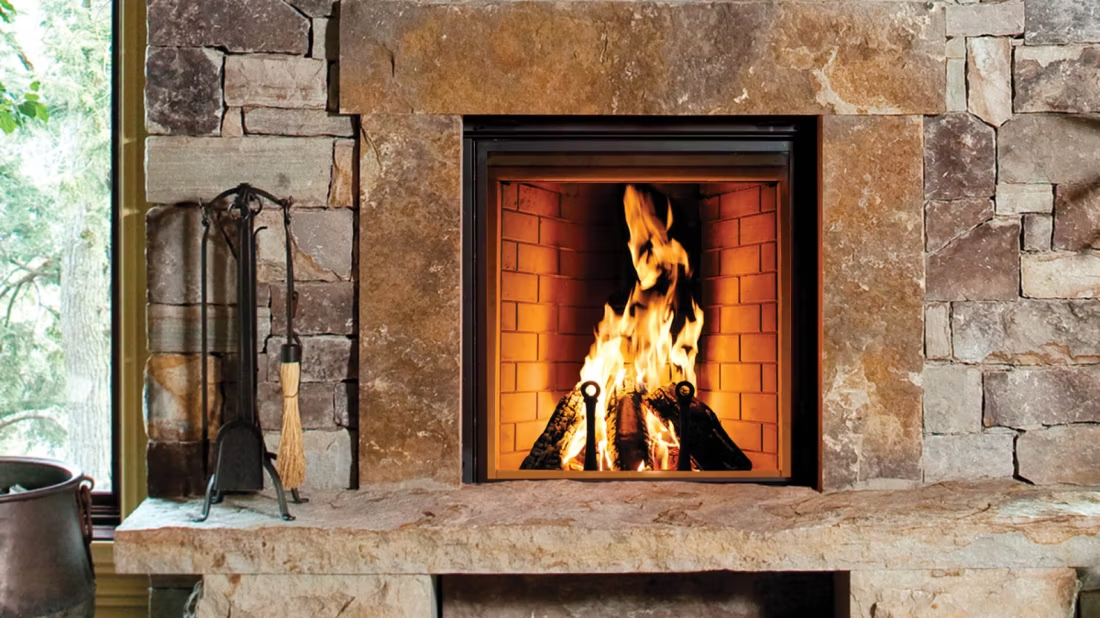
Four fuels. One honest answer for Dolores County.
Three steps. No salesperson until you're ready.
Tell us about your project
Your zip code, your situation, and the fuel you're leaning toward—or let the answers point you to one.
See what's actually available
The brands dealers within 100 miles genuinely carry—real options, never a catalog mirage.
Get your dealer & Project Guide
A trusted local dealer, plus the free Project Guide & Parts List that names every component of the job.
Frequently Asked Questions
Which fuel works best in Dolores County?
It depends heavily on where in the county you live. In Rico, at nearly 8,800 feet with winters that rival International Falls, MN for sustained cold, wood is the practical primary heat source for most cabins and homes—a catalytic stove burning standing dead pinyon or ponderosa can hold overnight temperatures reliably even without grid power, which matters given how exposed some of these properties are to outages. Down around Dove Creek and Cahone, propane is the common convenience fuel since there's no natural gas infrastructure this far from a distribution line—propane fireplaces and stoves are widely installed as either primary or backup heat. Pellet stoves work well for homeowners who want wood-like heat without the cutting and stacking labor, though pellet delivery in a county this remote means planning ahead and often buying in bulk when a truck comes through. Electric fireplaces are supplemental here—fine for a den or bedroom, but not something to rely on through a Dolores County winter power outage.
Do I need a permit to install a fireplace in Dolores County?
Yes, in most cases. Dolores County requires building permits for new wood stoves, wood inserts, gas fireplaces, gas inserts, gas stoves, and pellet stoves, issued through the Dolores County Building Department. Propane installations also typically require sign-off from the propane supplier or a licensed installer on the tank and line work, separate from the structural permit. Electric fireplaces generally skip the permit process unless you're doing a built-in installation with new wiring. Given the distance most retailers travel to reach Dove Creek or Rico, it's worth confirming upfront that your installer is pulling the permit as part of the job—it saves a second trip.
Are there wildfire smoke or air quality concerns for wood burning in Dolores County?
Yes, though it's tied to wildfire season rather than winter inversions. Dolores County's dry pine and pinyon-juniper forests mean summer and early fall wildfire smoke can affect air quality, and during active fire events or red flag conditions, voluntary burn restrictions may be issued locally. This mostly affects outdoor burning and slash piles rather than indoor wood stove use, but it's a good reason to keep chimneys swept and stoves burning clean, dry, seasoned wood—better combustion means less smoke contribution on days when air quality is already strained.
Can one local retailer handle all four fuel types for a Dolores County home?
Some can, but given how few retailers actually serve this county, it's worth confirming fuel coverage before you commit to a dealer. Multi-fuel retailers out of Cortez or Durango are more likely to carry wood, gas/propane, pellet, and electric under one roof, which is convenient if you're comparing options before deciding. Smaller or more specialized dealers may focus on wood and propane only, since that's what the bulk of Dolores County demand looks like. If you're not sure which fuel fits your property—especially at higher elevations near Rico where power reliability is a real factor—ask the retailer directly about their experience with off-grid or outage-prone installs.
How does installation and service work when you live far from a hearth retailer?
Expect to factor in travel distance and lead time. Most retailers and service techs covering Dolores County are based 45 minutes to well over an hour away in Cortez, Durango, or Montrose, so scheduling—especially for pre-season chimney sweeps or gas inspections—should happen well before the first cold snap. A trip charge for the drive is common and reasonable given the mileage. For remote properties near Rico or out on the mesa near Cahone, it's worth asking your installer about spare parts on hand (igniters, thermocouples for propane units) so a simple fix doesn't mean waiting on a second visit.
What's the typical cost range for fireplace installation across all fuel types in Dolores County?
Costs run a bit higher here than in more densely served counties, largely due to travel time built into labor. Wood stove or insert installation: roughly $5,000–$10,000 for a typical setup, more for new chimney construction on a cabin build. Propane fireplace, insert, or stove: roughly $4,500–$11,000 depending on tank setup and venting. Pellet stove or insert: roughly $4,800–$8,000. Electric fireplace: $200–$3,000 for the unit itself, plus $400–$1,200 in labor for anything beyond a simple plug-in installation. See the county + fuel pages above for retailer-specific pricing detail.
How much should I budget for a fireplace?
For an average home—covering the fireplace, the vent pipe, and basic installation—a budget between $3,900 and $5,500 gives you a lot of options across wood, gas, and pellet. By the time you add finish work, gas line, and electrical, the average complete installation lands between $5,000 and $12,000 all-in. In a remodel or new build, a good rule is to put about 2.5% of the total project cost toward the fireplace.
Wood, gas, pellet, or electric—how do I choose?
Match the fuel to your life, not the other way around. Wood: lowest fuel cost and total power-outage independence, but you're hauling and stacking. Gas: press a button, set a thermostat, no maintenance to speak of. Pellet: wood economics with automatic feeding, in exchange for weekly cleaning and a need for electricity. Electric: plugs in anywhere with honest supplemental heat. Nobody regrets the fuel that fits how they actually live.
Does a fireplace add value to my home?
On average, a fireplace adds back to the home about the same amount you spent installing it. Add the monthly savings from heating the rooms you actually use instead of the whole house—often hundreds of dollars a year—and the value case is strong before you even count what a fire does for how your family uses the room.
Can a fireplace actually lower my heating bill?
Yes—by creating a comfort zone. A furnace heats every square foot of the house just to warm the one room you're in; a gas fireplace on low burns roughly a sixth of the gas a typical furnace does. Set the furnace around 55–60 degrees as a baseline, then heat the rooms your family actually uses. Families who heat this way commonly save $20–$60 a month.
Stove and Fireplace Dealers in Dolores County
Listings include WhyFire partner dealers, dealers we have verified as authorized for the brands we recommend, and established local businesses that carry hearth products. Every listing shows which one it is. The ones marked Preferred run on WhyFire's software, so they can show you real pricing and book your appointment right here. No manufacturer pays for placement. How we verify dealers →
Choice Building Supply
Slavens True Value Hardware
San Juan Hearth
Find your fireplace fit in Dolores County.
Pick your fuel below and we'll match you with a trusted local dealer who actually installs in this county, plus a free Project Guide & Parts List built for your home and elevation.
Find Your Fireplace →