
Warm, code-compliant gas fireplaces for the Mile High City.
Instant heat that clears Denver's altitude requirements and skips the wood-burning restrictions that kick in during winter inversions. Find the right gas unit and connect with a trusted local dealer.
Every Project Starts From One of These Five Situations
Reliable heat that skips the smoke and the burn bans.
Denver sits at 5,280 feet in a 5B climate zone, with a winter heating season that runs long and cold, with winter lows that average around 18°F. That's a real heating season—comparable in demand to Madison, WI—but it plays out differently than a mountain or forest county. Denver's Front Range winter inversions trap cold air and pollution against the city for days at a time, and the Regional Air Quality Council and Denver's health department regularly issue high pollution advisories that restrict older, uncertified wood-burning stoves and fireplaces on the worst days. Denver's building code has also prohibited new wood-burning fireplaces in new residential construction for years. Between the air quality rules and the density of the metro area, wood heat has become the exception here, not the rule—even though ponderosa pine, aspen, and pinyon still burn plenty of campfires and cabin stoves up in the foothills outside the county.
Gas fills that gap cleanly. Xcel Energy serves natural gas throughout most of Denver County, so homes in neighborhoods from Highlands to Cherry Creek to Stapleton typically already have a gas line nearby. One detail that trips up out-of-area installers: Denver's elevation means gas appliances need a high-altitude orifice or derate kit to burn correctly above roughly 4,500 feet—a local dealer who works in the metro daily will already have this dialed in. The payoff is a fireplace that lights on demand, isn't affected by inversion-day burn advisories, and delivers steady zone heat through a Front Range winter without any wood to split, haul, or store.
Three steps. No salesperson until you're ready.
Tell us about your project
Your zip code, your situation, and the fuel you're leaning toward—or let the answers point you to one.
See what's actually available
The brands dealers within 100 miles genuinely carry—real options, never a catalog mirage.
Get your dealer & Project Guide
A trusted local dealer, plus the free Project Guide & Parts List that names every component of the job.
Frequently Asked Questions
How much does a gas fireplace installation cost in Denver County?
Most gas fireplace installations in Denver County run in the range of $4,000 to $10,000, depending on the unit, the venting path, and whether new gas line work is required. A direct-vent insert going into an existing masonry fireplace with a gas line already nearby sits toward the lower end. New construction or a remodel that needs framing, a fresh gas line run, and through-wall venting sits higher. Because Denver sits above 5,000 feet, expect your installer to also account for a high-altitude orifice or derate kit—skipping this step is a common mistake among installers who don't normally work at altitude, and it shows up as poor combustion or pilot problems later. A local dealer will give you a firm number after an in-home consultation.
Can I convert my existing wood fireplace to gas?
Yes, and it's one of the more common projects in Denver's older neighborhoods—Park Hill, Washington Park, Capitol Hill—where many homes were built with a traditional masonry fireplace decades before the city tightened rules on new wood-burning units. A gas insert typically slides into that existing masonry opening, using a stainless liner run through your existing chimney for venting. Costs generally land between $4,500 and $9,000 depending on the insert and whether new gas piping is needed. Because Denver's building code no longer allows new wood-burning fireplace installations in most new construction, a gas conversion is often the only path forward if you want fire in a home that doesn't already have one.
Do I need natural gas to install a gas fireplace, or can I use propane?
Natural gas is the default across almost all of Denver County—Xcel Energy provides service throughout the metro area, and most homes already have a gas water heater, range, or furnace, which makes adding a fireplace straightforward. Propane is uncommon within Denver's city limits but shows up occasionally in unincorporated pockets or newer developments still waiting on gas main extensions. Most fireplace models can be configured for either fuel; your installer sets the orifice and regulator to match whichever gas source you have.
Will my gas fireplace work during a power outage?
Most modern gas fireplaces will, which matters in Denver given occasional winter outages tied to heavy Front Range snow or high-wind events. Units with intermittent pilot ignition (IPI) run on a small battery backup that kicks in automatically when the power drops, so the fireplace lights on demand just like normal. Valor fireplaces take a different approach—their pilot assembly generates its own electricity through the thermocouple, so there's no battery to remember at all. Ask your local dealer about the ignition system on any model you're considering if outage backup matters to you.
What's the difference between a gas fireplace, gas insert, and gas stove?
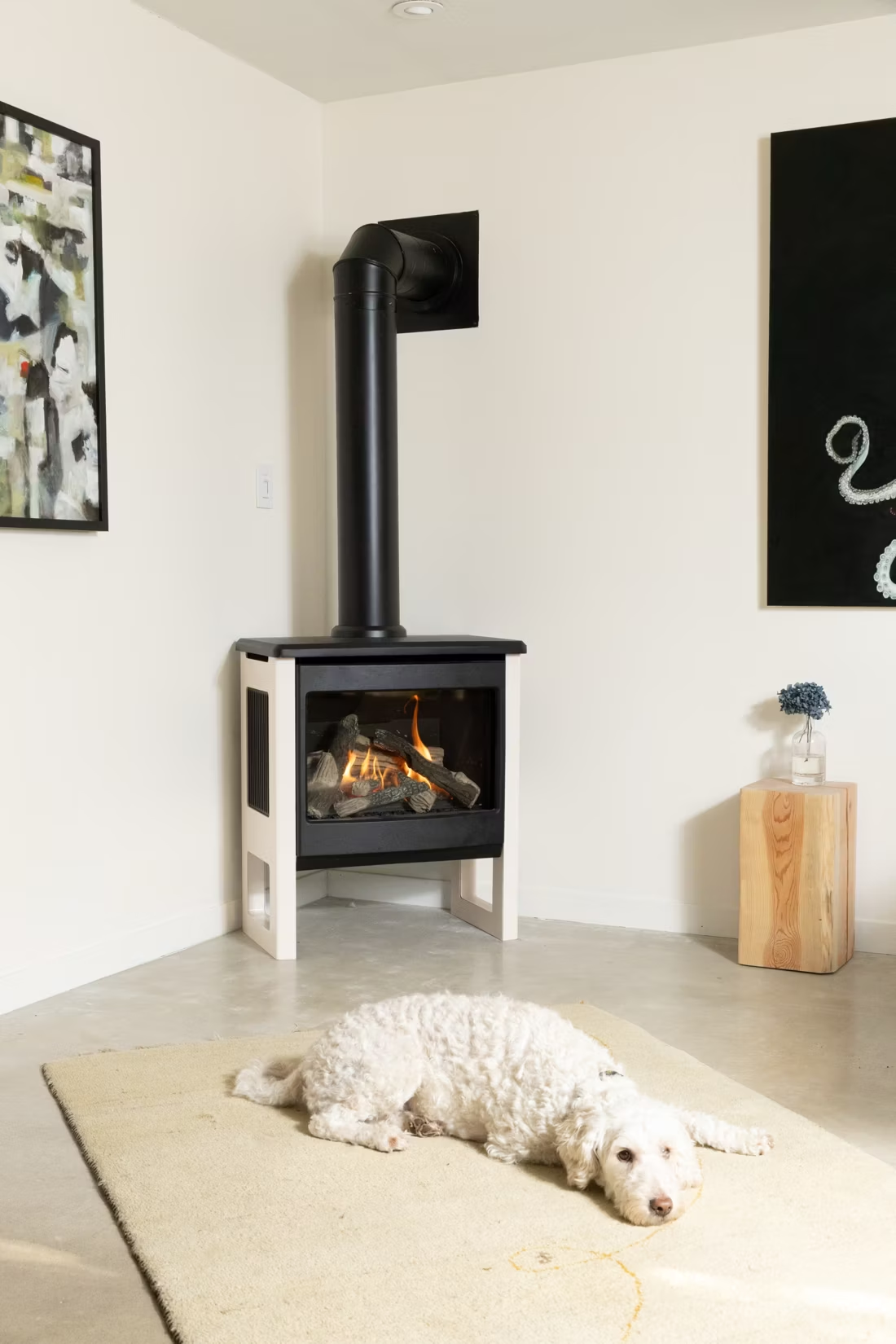
A gas fireplace is a fully built-in unit framed into a wall—the usual choice for new construction or a major remodel, which is common in Denver's newer subdivisions and infill townhomes. A gas insert drops into an existing masonry fireplace opening, converting a drafty older hearth into a sealed, efficient heat source using the existing chimney as the vent path—the go-to option for Denver's pre-1970s housing stock. A gas stove is a freestanding unit that sits on the floor like a wood stove but burns gas, useful where there's no existing fireplace opening and floor space allows for it. A local dealer can tell you which fits your specific opening and floor plan.
Do I need a permit to install a gas fireplace in Denver County?
Yes. Installations within the City and County of Denver require a building permit and a separate gas piping permit through Denver's Community Planning and Development department, and the gas line work has to be done by a licensed gas fitter. Homes in surrounding Denver County suburbs follow similar permitting through their local building departments. Most established hearth dealers handle the permit filing and inspection scheduling as part of the install, which is one of the practical reasons to work with a certified local company rather than a handyman.
What's the difference between vented and vent-free gas fireplaces?
Vented gas fireplaces—direct-vent or B-vent—pull combustion air from outside and exhaust the byproducts back outside through a sealed vent. Vent-free units burn directly into the room with no outside venting at all, which is more efficient on paper but releases water vapor and small amounts of combustion byproducts into your living space. Colorado is one of the states that restricts vent-free gas appliances more heavily than most, and some jurisdictions within the Denver metro limit or prohibit them outright. For that reason, direct-vent units are by far the more common and more broadly approved choice across Denver County—ask your local dealer which vent-free restrictions, if any, apply in your specific jurisdiction before you fall in love with a vent-free model.
How often should my gas fireplace be serviced?
An annual inspection is the standard recommendation for any gas fireplace or insert. A technician checks the burner, pilot assembly, gas connections, and venting, and cleans the glass and interior—a much lighter lift than a wood chimney sweep but still important, especially at Denver's altitude where combustion tuning is more sensitive to elevation than it is at sea level. Expect to pay in the neighborhood of $150 to $250 for a routine annual service call from a local gas hearth technician.
Gas vs. wood—which is right for my Denver home?
In most of Denver County, gas is the practical answer. Wood-burning fireplaces are largely absent from new construction under current city building code, older wood-burning units are subject to mandatory no-burn restrictions on high pollution advisory days during winter inversions, and lot sizes in most Denver neighborhoods don't leave much room for firewood storage. Gas sidesteps all of that—it's unaffected by inversion-day burn bans, needs no wood handling, and installs cleanly into the compact floor plans common in Denver's bungalows, townhomes, and condos. Wood heat still has a place in the mountain communities and forested counties west of Denver, where ponderosa pine and aspen are cut under Arapaho-Roosevelt National Forest permits, but within Denver County itself gas is the fuel that fits the building code, the air quality rules, and the housing stock.
Can I put a TV above my fireplace?
Yes—with an asterisk. Fireplaces are hot and TVs don't like heat. Either put a mantel between them to deflect rising warmth, or choose a fireplace with heat-management technology that creates a cool zone on the wall above—the wall stays around 125 degrees, barely warm, while the room still gets full heat. If you like clean lines and don't want a mantel, heat management is the answer.
Why is my open fireplace making my house colder?
Open fireplaces suck—literally. As the fire burns, it consumes air your furnace already paid to heat and pulls it out through the chimney, so the house is actually colder after the fire goes out than before you lit it. An insert fixes this: it seals the chimney, puts fixed glass across the front, and turns that hole in your house into a real heat source.
How much should I budget for a fireplace?
For an average home—covering the fireplace, the vent pipe, and basic installation—a budget between $3,900 and $5,500 gives you a lot of options across wood, gas, and pellet. By the time you add finish work, gas line, and electrical, the average complete installation lands between $5,000 and $12,000 all-in. In a remodel or new build, a good rule is to put about 2.5% of the total project cost toward the fireplace.
Does a fireplace add value to my home?
On average, a fireplace adds back to the home about the same amount you spent installing it. Add the monthly savings from heating the rooms you actually use instead of the whole house—often hundreds of dollars a year—and the value case is strong before you even count what a fire does for how your family uses the room.
Stove and Fireplace Dealers in Denver County
Find your gas fireplace in Denver County.
Tell us about your home and altitude-specific needs, and we'll match you with a trusted local Denver dealer plus a free Project Guide & Parts List—the exact vent kit and parts your project needs, and who to call to install it.
Find Your Fireplace →