
Find the Right Fireplace for Denver's Front Range Winters.
Fireplace resources for every neighborhood in Denver County—from downtown high-rises to the far-flung edges of Green Valley Ranch. Wood and pellet installs are uncommon here for code reasons we'll explain, but gas and electric are what a licensed Denver dealer can actually permit and install.
Every Project Starts From One of These Five Situations
Gas and electric fireplaces lead in Denver's mile-high climate.
Denver sits at 5,280 feet where the high plains meet the Front Range—winters average 18°F lows and the county racks up a heating season in the same range as Helena, Montana. But cold isn't the county's defining constraint. Denver's winter temperature inversions trap pollutants against the mountains for days at a stretch, and wildfire smoke drifting down from Colorado's fire season adds another layer most homeowners have to think about. Both have shaped how the city and county regulate combustion appliances for decades.
Denver adopted one of the country's earliest municipal restrictions on new wood-burning fireplaces back in 1987, and the metro remains in nonattainment for particulate matter under Colorado's Regulation No. 4—so new wood and pellet installations are genuinely rare inside city limits, and most local hearth retailers stock their showroom floors with gas inserts, gas stoves, and electric units instead. That doesn't mean wood heat has disappeared entirely: older homes in neighborhoods like Park Hill and Washington Park still have legacy wood-burning fireplaces, and some Denver residents still pull firewood permits from Arapaho-Roosevelt National Forests for use at mountain cabins. But for a new install or remodel here, gas—through Xcel Energy service—and electric are the fuels a licensed Denver dealer will actually be able to code-approve and install. This hub covers all four fuels so you can see what's genuinely available in this market and connect with a trusted local pro who works within it.
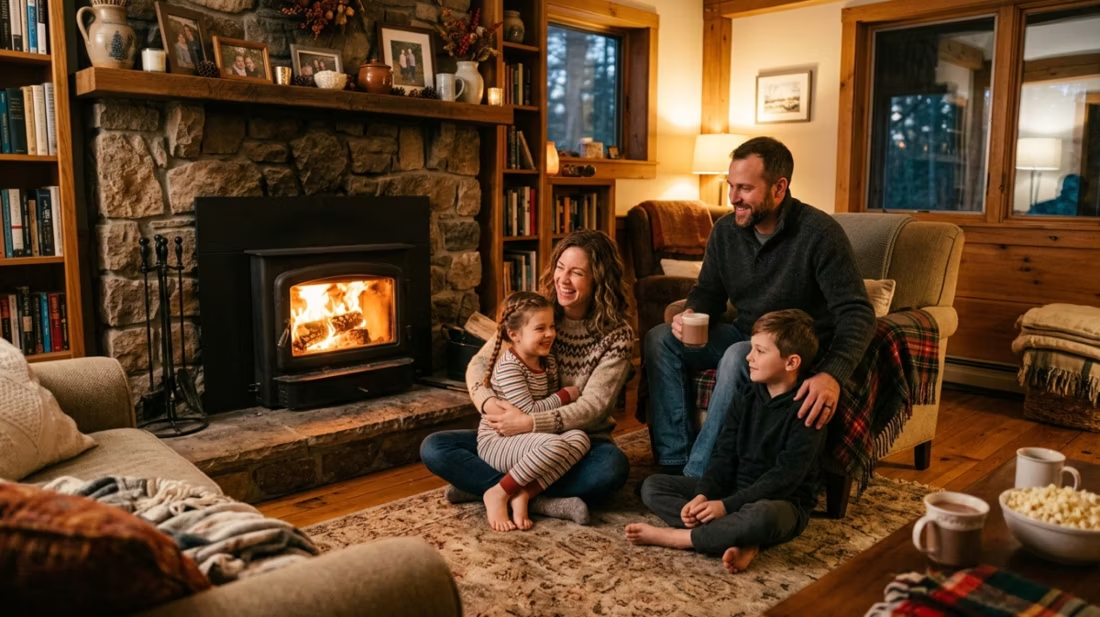
Four fuels. One honest answer for Denver County.
Three steps. No salesperson until you're ready.
Tell us about your project
Your zip code, your situation, and the fuel you're leaning toward—or let the answers point you to one.
See what's actually available
The brands dealers within 100 miles genuinely carry—real options, never a catalog mirage.
Get your dealer & Project Guide
A trusted local dealer, plus the free Project Guide & Parts List that names every component of the job.
Frequently Asked Questions
Which fuel works best for a fireplace in Denver?
For new installs and remodels, gas and electric are the practical answers. Gas fireplaces and inserts run on Xcel Energy service, which covers essentially the entire metro, and give you instant heat without a chimney to maintain. Electric units work anywhere there's an outlet or a dedicated circuit, which makes them the default for condos, high-rises, and rentals across downtown and the Cherry Creek area. Wood is the outlier—Denver's 1987 ordinance restricting new wood-burning fireplaces, combined with the metro's particulate nonattainment status under Colorado Regulation No. 4, means new wood installs are uncommon and heavily scrutinized. Pellet stoves face similar friction; they're more viable in the foothill towns west of the city than inside Denver proper. If you already have a wood-burning fireplace in an older home, a gas insert conversion is usually the most straightforward upgrade path.
Can I still install a wood-burning fireplace in Denver?
It's difficult, and for new construction it's generally not permitted. Denver's 1987 ordinance restricts new wood-burning fireplaces within city limits, and the metro's ongoing nonattainment status for fine particulate matter under Colorado's Regulation No. 4 adds further scrutiny to any new solid-fuel appliance. Homes with existing legacy wood-burning fireplaces—common in older neighborhoods like Park Hill, Washington Park, and Capitol Hill—are typically grandfathered in, but many owners choose to convert to a gas log set or gas insert rather than maintain a wood chimney under these restrictions. If a wood stove is genuinely what you want, some Denver-area dealers can walk you through options for a mountain property outside city limits, where EPA-certified stoves and Arapaho-Roosevelt National Forest firewood permits are a normal part of heating a cabin.
Do I need a permit for a gas fireplace installation in Denver?
Yes. Gas fireplace, insert, and gas stove installations require a building permit through Denver's Community Planning and Development office, plus a separate gas line permit for any new gas piping—that work has to be done by a licensed gas fitter, and Xcel Energy typically needs to sign off on the connection. Electric fireplace installs usually don't require a permit unless you're hardwiring a built-in unit into a new circuit, in which case an electrical permit applies. Most local Denver hearth retailers handle the permitting process as part of a full installation, so you're not usually pulling permits yourself.
How do Denver's air quality issues affect my fireplace choice?
They're a real factor. Denver's winter inversions trap the metro's famous 'brown cloud' of pollution against the Front Range for days at a time, and wildfire smoke from Colorado's summer and fall fire season adds to particulate levels on top of that. These conditions are part of why the city restricts new wood-burning appliances and why the metro remains in nonattainment under Colorado Regulation No. 4. Gas and electric fireplaces don't add to particulate load the way wood combustion does, which is a meaningful reason they've become the default choice for new installs here—not just a code technicality, but a genuine air-quality consideration for a metro of nearly 2.7 million people.
Are pellet stoves an option anywhere in the Denver area?
Inside Denver County proper, pellet stoves are uncommon—the same code restrictions and nonattainment concerns that limit new wood installs make pellet appliances a hard sell for most local dealers, and few homes here are built with the space or venting a pellet stove needs. Regional pellet brands like Bear Mountain, Lignetics, and Forest Energy are sold at supply stores serving the broader Front Range, and pellet stoves are genuinely more common in the foothill communities west of Denver—Evergreen, Conifer, and similar mountain towns—where wood heat is culturally normal and lot sizes accommodate a hopper and venting more easily. If you're in Denver proper and specifically want a pellet stove, expect a smaller pool of installers than for gas or electric.
What's the typical cost range for a fireplace installation in Denver, across fuel types?
Gas fireplace, insert, or stove: roughly $4,500–$11,000 depending on venting and whether new gas line work is needed; converting an existing wood-burning fireplace to a gas insert tends to land on the lower end since the chimney and firebox are already in place. Electric fireplace: $200–$3,000 for the unit itself, plus $400–$1,200 in labor for anything beyond a plug-and-play install, which covers most wall-mount and built-in electric units. Wood and pellet installations are rare enough in Denver proper that most local retailers don't quote them as a standard line item—if you're pursuing either fuel, expect a more custom conversation with your dealer about what's actually permittable for your address.
What is an in-home preview and do I need one?
It's a visit where a hearth professional measures your space, confirms the model you picked actually works in your home, and walks the specs—framing, gas line, venting, finish work—before anything is ordered. Some details you just can't know until you see the house. Never make a down payment without one; it's the single most-skipped step that burns buyers.
Wood, gas, pellet, or electric—how do I choose?
Match the fuel to your life, not the other way around. Wood: lowest fuel cost and total power-outage independence, but you're hauling and stacking. Gas: press a button, set a thermostat, no maintenance to speak of. Pellet: wood economics with automatic feeding, in exchange for weekly cleaning and a need for electricity. Electric: plugs in anywhere with honest supplemental heat. Nobody regrets the fuel that fits how they actually live.
How much should I budget for a fireplace?
For an average home—covering the fireplace, the vent pipe, and basic installation—a budget between $3,900 and $5,500 gives you a lot of options across wood, gas, and pellet. By the time you add finish work, gas line, and electrical, the average complete installation lands between $5,000 and $12,000 all-in. In a remodel or new build, a good rule is to put about 2.5% of the total project cost toward the fireplace.
Does a fireplace add value to my home?
On average, a fireplace adds back to the home about the same amount you spent installing it. Add the monthly savings from heating the rooms you actually use instead of the whole house—often hundreds of dollars a year—and the value case is strong before you even count what a fire does for how your family uses the room.
Stove and Fireplace Dealers in Denver County
Listings include WhyFire partner dealers, dealers we have verified as authorized for the brands we recommend, and established local businesses that carry hearth products. Every listing shows which one it is. The ones marked Preferred run on WhyFire's software, so they can show you real pricing and book your appointment right here. No manufacturer pays for placement. How we verify dealers →
Rio Grande Co.
Fireplace And Grill Experts - Service Only
Spa Brokers (Corporate)
Spa Brokers V
Distinctive Mantel Designs
Aria Custom Design
Spa Brokers
Outdoor Kitchen Dist. Inc
Proud Souls Barbecue & Provisions
Spa Brokers
Spa Brokers
Spa Brokers Iii
Thoshini LLC
Spa Brokers
Find your Denver fireplace dealer.
Answer a few questions about your home and we'll match you with a trusted local Denver dealer and send you a free Project Guide & Parts List—the exact parts, including the vent kit, and the dealer we recommend for your gas or electric fireplace project.} 07-31-2025**
Find Your Fireplace →