
Real Heat for the Mile High City.
Instant, clean heat for Denver's cold snaps and inversion days—sized correctly for 5,280 feet and matched with a trusted local dealer.
Every Project Starts From One of These Five Situations
Built for altitude, inversions, and cold snaps.
Denver sits at 5,280 feet on the edge of the Front Range, in climate zone 5B with a heating season on par with cities like Cheyenne or Bozeman and winter lows averaging 18°F. Arctic cold fronts can drop temperatures 30 degrees in an afternoon, and the same high-desert air that makes Denver sunny also makes it prone to winter inversions that trap smoke and particulates over the metro basin. In a city this size—spread from downtown lofts to the older brick bungalows of Park Hill and Washington Park to newer builds in Stapleton and Green Valley Ranch—gas has become the default hearth fuel, and wood-burning appliances are rarely installed as primary heat within city limits.
Public Service Company of Colorado (Xcel Energy) runs natural gas service to nearly every neighborhood in Denver, so hooking up a new fireplace or insert is usually a matter of tapping an existing line rather than extending new infrastructure. That matters on the days the Regional Air Quality Council issues a High Pollution Advisory during a winter inversion—wood-burning restrictions kick in, but vented gas fireplaces keep running. One local wrinkle worth knowing before you buy: at 5,280 feet, gas appliances burn differently than they do at sea level, and most manufacturers require a high-altitude orifice kit or de-rated BTU setting for any installation above about 4,500 feet. A dealer familiar with Denver's elevation will handle this automatically; a big-box installer unfamiliar with altitude de-rating may not.
Three steps. No salesperson until you're ready.
Tell us about your project
Your zip code, your situation, and the fuel you're leaning toward—or let the answers point you to one.
See what's actually available
The brands dealers within 100 miles genuinely carry—real options, never a catalog mirage.
Get your dealer & Project Guide
A trusted local dealer, plus the free Project Guide & Parts List that names every component of the job.
Frequently Asked Questions
How much does a gas fireplace installation cost in Denver?
Most Denver gas fireplace and insert installations run roughly $4,000 to $10,000, with the spread driven by the unit itself, the venting path, and whether new gas line work is needed. A direct-vent insert dropped into an existing masonry fireplace in a Wash Park or Congress Park bungalow with gas already run to that wall sits toward the lower end. A new built-in unit in a Stapleton or Green Valley Ranch remodel—with framing, a fresh gas line, and altitude-rated venting components—lands in the middle to upper range. Expect your installer to factor in a high-altitude orifice kit as part of the quote; it's a small line item but a required one at Denver's elevation.
Can I convert my existing wood fireplace to gas?
Yes, and it's one of the more common projects for Denver's older housing stock. Many of the brick bungalows and Denver Squares built before 1950 in neighborhoods like Park Hill, Congress Park, and Sunnyside have a masonry fireplace that was rarely used to begin with—a gas insert with a stainless liner run up the existing flue converts it into real, reliable heat. Given Denver's air quality restrictions during winter inversions, this conversion also means you're no longer subject to wood-burning advisories on Action Day alerts. A local dealer will need to confirm your flue can accommodate a liner and that gas service already reaches the fireplace wall or can be extended affordably.
Do I need natural gas, or should I plan on propane?
Within Denver city limits, natural gas from Public Service Company of Colorado (Xcel Energy) reaches nearly every address, so propane is rarely necessary unless you're in an unusual pocket without service. Propane becomes more relevant the farther you get from the urban core—toward the foothills in Jefferson County or the exurbs of Douglas and Elbert counties, where gas mains don't always reach. Most gas fireplace models can be configured for either fuel with the right orifice, so the fuel choice mainly comes down to what's already running to your house.
Will my gas fireplace work during a power outage?
Most modern direct-vent gas fireplaces will, provided they use IPI (intermittent pilot ignition) with a battery backup—the unit switches to battery power automatically and lights on demand just like normal. Given how quickly Front Range cold fronts can knock temperatures down after a storm, that backup capability is worth asking about specifically. Valor's lineup takes a different approach: their pilot assembly generates its own electricity through the thermocouple, so there's no battery to remember to replace. Ask your local dealer which ignition system is in the model you're considering.
What's the difference between a gas fireplace, gas insert, and gas stove?
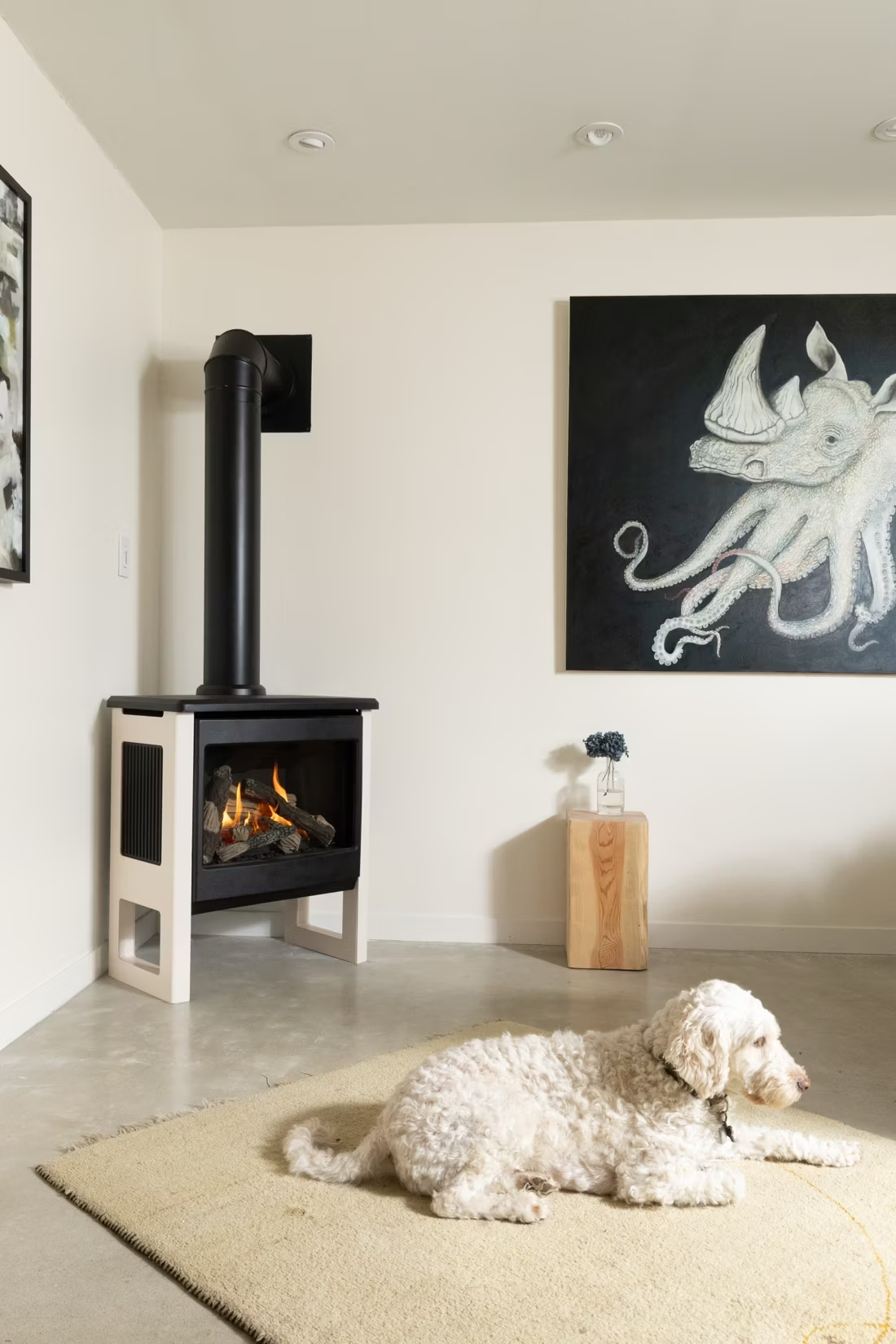
A gas fireplace is a fully built-in unit framed into a wall—common in new construction throughout Stapleton, Green Valley Ranch, and other newer Denver developments. A gas insert slides into an existing masonry opening, which suits the older brick homes common in central Denver neighborhoods. A gas stove is freestanding, sitting on its own hearth pad, and works well in a condo or loft downtown where there's no existing fireplace opening to build into. Most Denver homeowners with an older house and an existing masonry fireplace end up choosing an insert; newer builds and downtown units more often go with a built-in fireplace or freestanding stove.
Do I need a permit to install a gas fireplace in Denver?
Yes. The City and County of Denver's Community Planning and Development office requires both a building permit and a licensed gas-fitter for any new gas line or gas appliance installation. Most established hearth dealers pull these permits as part of the job and schedule the inspection, so you're not coordinating separate trades yourself. Given Denver's altitude-rating requirements on top of standard code, working with an installer who does this regularly in the metro area—rather than a generalist—avoids inspection failures over improperly de-rated units.
Does Denver's elevation actually affect how a gas fireplace performs?
It does. At 5,280 feet, air is thinner and combustion behaves differently than the sea-level conditions most gas appliances are designed and rated for. Most manufacturers require a high-altitude orifice kit—or a specific de-rated BTU input—for installations above roughly 4,500 to 6,000 feet, and Denver sits well past that threshold. Skipping this step can mean incomplete combustion, a yellow-tipping flame, or sooting on the glass. It's a routine adjustment for any dealer who regularly installs along the Front Range, but it's exactly the kind of detail a big-box retailer unfamiliar with Denver's elevation can miss.
Should I consider a vent-free gas fireplace in Denver?
I'd steer most Denver homeowners toward vented, direct-vent units instead. Vent-free (unvented) fireplaces rely on an oxygen depletion sensor calibrated for sea-level oxygen concentrations—at Denver's elevation, ambient oxygen levels are naturally lower, which can affect how reliably that sensor performs. Colorado also restricts vent-free installations in several occupied-space scenarios under adopted building code. Direct-vent units solve both problems: they draw combustion air from outside and exhaust it back outside, which also means they keep working normally on the winter days when a Regional Air Quality Council advisory is in effect.
Gas vs. wood—why does gas dominate in Denver specifically?
Wood heat is real in the mountains and foothills around Denver, where ponderosa pine, aspen, pinyon, and juniper are cut locally—the Arapaho-Roosevelt National Forest issues cutting permits for $5 to $20 per cord during the May-to-October season. But inside Denver proper, wood-burning appliances are rarely installed as primary or even supplemental heat: the city's dense population, frequent winter inversions, and Regional Air Quality Council burn restrictions make wood impractical for day-to-day use, and most new construction and remodels default to gas from the start. If you're in the metro core, gas is almost always the more sensible choice; wood heat makes more sense for a cabin or property up in the foothills where those forest permits actually apply.
Is my gas fireplace wasting gas?
If it was installed more than 15 years ago, probably. Older gas fireplaces keep a standing pilot light burning all the time, and that little flame can cost a couple hundred dollars a year. Newer models use pilot-on-demand ignition—the pilot lights only when you use the fireplace and goes out when you turn it off.
Can I put a TV above my fireplace?
Yes—with an asterisk. Fireplaces are hot and TVs don't like heat. Either put a mantel between them to deflect rising warmth, or choose a fireplace with heat-management technology that creates a cool zone on the wall above—the wall stays around 125 degrees, barely warm, while the room still gets full heat. If you like clean lines and don't want a mantel, heat management is the answer.
How much should I budget for a fireplace?
For an average home—covering the fireplace, the vent pipe, and basic installation—a budget between $3,900 and $5,500 gives you a lot of options across wood, gas, and pellet. By the time you add finish work, gas line, and electrical, the average complete installation lands between $5,000 and $12,000 all-in. In a remodel or new build, a good rule is to put about 2.5% of the total project cost toward the fireplace.
What is an in-home preview and do I need one?
It's a visit where a hearth professional measures your space, confirms the model you picked actually works in your home, and walks the specs—framing, gas line, venting, finish work—before anything is ordered. Some details you just can't know until you see the house. Never make a down payment without one; it's the single most-skipped step that burns buyers.
Nearby Dealers
Hearth shops serving Denver and the surrounding area. Every listing shows whether it is a WhyFire partner, a dealer we have verified as authorized for the brands we recommend, or a local business carrying hearth products. No manufacturer pays for placement. How we verify dealers →
Rio Grande Co.
Fireplace And Grill Experts - Service Only
Spa Brokers (Corporate)
Spa Brokers V
Distinctive Mantel Designs
Aria Custom Design
Spa Brokers
Outdoor Kitchen Dist. Inc
Proud Souls Barbecue & Provisions
Spa Brokers
Spa Brokers
Spa Brokers Iii
Thoshini LLC
Spa Brokers
Let's spec out your Denver gas fireplace.
Tell us about your home and elevation-specific needs, and we'll match you with a trusted Denver-area dealer plus a free Project Guide & Parts List—the exact fireplace, altitude-rated vent kit, and installation plan for your project.
Find Your Fireplace →