
Steady heat for Delta County's long winters, without the woodpile.
From the North Fork Valley to the town of Delta, pellet stoves deliver clean, thermostat-controlled heat through a long, steady winter heating season. Find the right unit and connect with a trusted local dealer.
Every Project Starts From One of These Five Situations
Consistent warmth that doesn't depend on a chainsaw.
Delta County sits in a climate zone 5B pocket of Colorado's Western Slope, where the town of Delta and orchard communities like Cedaredge, Paonia, and Hotchkiss see winter lows averaging 15°F and a heating season that runs deep into spring. Wood has long been the default heat source here, with ponderosa pine, aspen, pinyon, and juniper cut locally under Forest Service permits—but pellet stoves have carved out a real niche for homeowners who want the radiant comfort of a solid-fuel fire without splitting, stacking, or hauling cordwood every season.
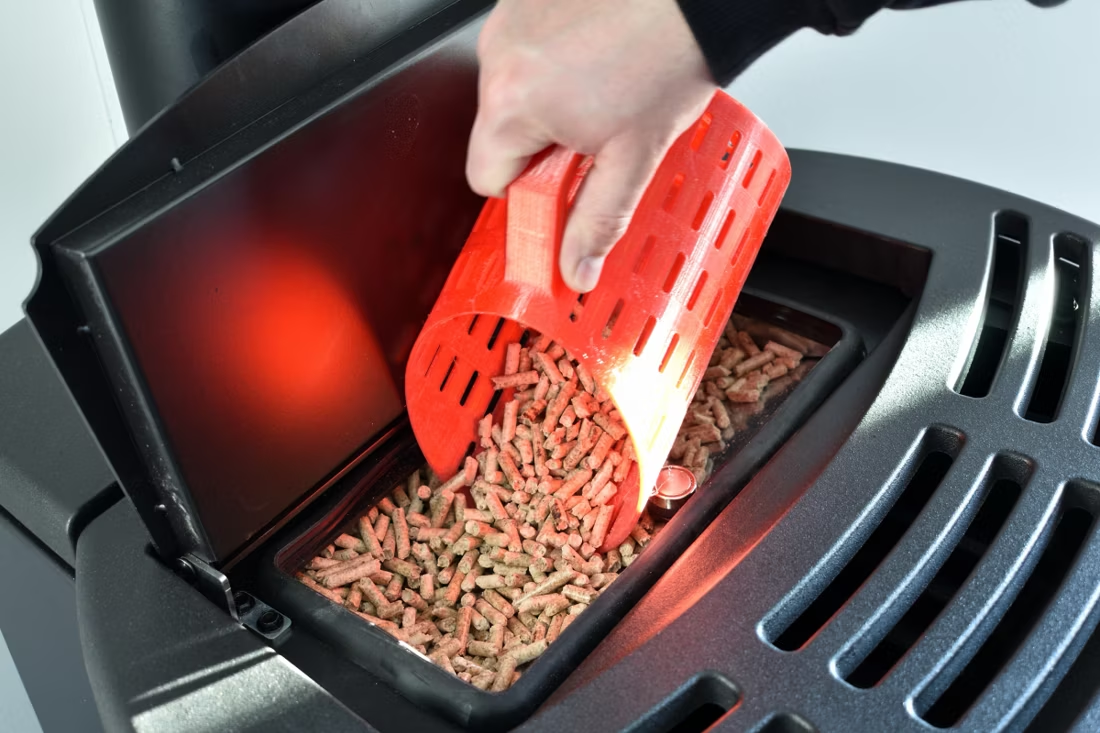
Pellet supply is solid throughout the region, with Bear Mountain, Lignetics, and Forest Energy pellets stocked at hardware and hearth stores from Delta up through the North Fork Valley. A hopper-fed pellet stove burns cleaner than an open wood fire—a real advantage during the wildfire-smoke-heavy stretches of late summer and fall that Delta County shares with much of the Western Slope—and it holds a steady temperature overnight without the tending a wood stove demands. For orchard-country homes and rural properties scattered across the county, that combination of low-smoke operation and set-it-and-forget-it heat has made pellet stoves an increasingly common choice.
Three steps. No salesperson until you're ready.
Tell us about your project
Your zip code, your situation, and the fuel you're leaning toward—or let the answers point you to one.
See what's actually available
The brands dealers within 100 miles genuinely carry—real options, never a catalog mirage.
Get your dealer & Project Guide
A trusted local dealer, plus the free Project Guide & Parts List that names every component of the job.
Frequently Asked Questions
How much does a pellet stove installation cost in Delta County?
Pellet stove and insert installations in Delta County typically run in the same general range as other Western Slope communities—expect $3,500 to $7,500 depending on whether the unit is a freestanding stove or an insert going into an existing masonry fireplace, and whether the vent run is straightforward or requires routing through an exterior wall or roof. Homes in Paonia, Cedaredge, or Hotchkiss without an existing chimney will lean toward the higher end since a full through-wall vent kit and electrical hookup (pellet stoves need a standard outlet for the auger and blower) have to be installed from scratch. A local hearth dealer can size the job accurately during an in-home visit.
Will a pellet stove keep up with Delta County's cold winter nights?
Yes, for most homes. With winter lows averaging 15°F and a long, steady cold season, Delta County's climate is comparable to places like Bozeman, Montana, in terms of steady cold-weather demand—well within the range a properly sized pellet stove handles. A mid-size hopper holds enough fuel to run 24-plus hours on a low setting, and thermostat control means the stove automatically ramps up output on the coldest nights rather than requiring you to manually reload at 2 a.m. the way a wood stove does. Sizing still matters: an undersized stove in a large or poorly insulated farmhouse in the North Fork Valley will struggle on the coldest stretches, so a local dealer should size to your square footage and insulation level, not just list price.
Where can I buy pellets in Delta County, and what do they cost?
Bear Mountain, Lignetics, and Forest Energy are the regional brands most commonly stocked at hardware stores and hearth retailers serving Delta, Cedaredge, and the North Fork Valley. Prices generally track the broader Western Slope market, and buying by the ton (typically 50 forty-pound bags) ahead of the winter season, rather than bag by bag as needed, is the standard way to lock in the best per-ton rate and guarantee supply before winter demand picks up. Local dealers can also advise on softwood versus hardwood pellet blends, though softwood pellets from regional pine sources are the norm here.
Do pellet stoves work during a power outage?
This is the one real tradeoff of pellet heat, and it's worth understanding before you buy. Pellet stoves rely on an electric auger to feed fuel and a blower to circulate heat, so they stop running when the power goes out—unlike a wood stove, which keeps burning with no electricity at all. For Delta County homes in rural stretches around Paonia, Crawford, or Hotchkiss where outages can run longer during winter storms, some homeowners pair a pellet stove with a small battery backup or generator specifically to keep it running, or keep a wood-burning option as backup. If uninterrupted off-grid heat is your top priority, a wood stove may be the better primary choice, with pellet as a clean, convenient supplement.
What's the difference between a pellet stove and a pellet insert?
A pellet stove is a freestanding unit that sits on its own hearth pad and vents through a wall or existing chimney chase—it can go almost anywhere with proper clearances. A pellet insert is built to slide into an existing masonry fireplace opening, converting an old open hearth into a sealed, high-efficiency pellet appliance. For Delta County homes with an existing wood fireplace, particularly older farmhouses in the orchard towns, an insert is often the simpler retrofit since it reuses the existing masonry chimney chase for venting. Homes without an existing fireplace typically go with a freestanding stove instead.
Do I need a permit to install a pellet stove in Delta County?
Most pellet stove and insert installations require a building permit in Delta County, covering the appliance installation, venting, and any electrical work for the outlet the unit needs. Most local hearth dealers handle the permitting process as part of the installation, so homeowners typically don't have to navigate it themselves. Because Delta County spans both incorporated towns like Delta and Cedaredge and unincorporated rural areas, it's worth confirming with your installer which jurisdiction's building department applies to your specific property before work begins.
How often does a pellet stove need to be cleaned and serviced?
Pellet stoves need a lighter maintenance routine than wood stoves, but they're not maintenance-free. Plan on emptying and vacuuming the ash pan every few days of regular use, a deeper cleaning of the burn pot and heat exchanger tubes every few weeks during the heating season, and a full annual service—checking the auger motor, gaskets, and venting—typically done at the start of the burning season before Delta County's cold months set in. Skipping the annual service is the most common cause of feed jams and reduced heat output partway through winter.
Is a pellet stove a good fit given Delta County's wildfire smoke concerns?
Yes—this is one of the strongest arguments for pellet heat in Delta County specifically. Pellet stoves burn compressed, kiln-dried fuel far more completely than cordwood, producing a fraction of the particulate emissions of an open wood fire or even a well-run wood stove. During the smoke-heavy stretches of late summer and fall that affect the Western Slope, a pellet stove lets homeowners run a solid-fuel heat source without adding meaningfully to local air quality concerns. It's not a wildfire mitigation tool by itself, but for households weighing indoor air quality and community smoke impact, pellet is the cleaner-burning solid-fuel option.
Pellet vs. wood stove—which is right for my Delta County home?
Wood stoves burn free or low-cost self-cut fuel from Forest Service permits through the Grand Mesa-Uncompahgre-Gunnison or White River National Forests, run with zero electricity, and deliver the classic radiant fire experience—a real advantage for rural properties worried about outages. Pellet stoves trade that off-grid independence for convenience: automated feed, thermostat control, longer unattended burn times, and meaningfully lower emissions, which matters during wildfire smoke season. For in-town homes in Delta or Cedaredge with reliable power, pellet is often the easier day-to-day choice. For remote North Fork Valley properties where power reliability is a real concern, wood remains the safer primary heat source, sometimes paired with a pellet stove for everyday convenience.
Why is my open fireplace making my house colder?
Open fireplaces suck—literally. As the fire burns, it consumes air your furnace already paid to heat and pulls it out through the chimney, so the house is actually colder after the fire goes out than before you lit it. An insert fixes this: it seals the chimney, puts fixed glass across the front, and turns that hole in your house into a real heat source.
What's the difference between an insert and a zero-clearance fireplace?
An insert is a fireplace that slides into a pre-existing wood-burning fireplace—if you don't have one, there's nothing to insert it into. A zero-clearance fireplace is built into a framed wall, which makes it the answer for remodels and new construction. Simple test: existing masonry fireplace means insert; blank or framed wall means zero-clearance.
How much should I budget for a fireplace?
For an average home—covering the fireplace, the vent pipe, and basic installation—a budget between $3,900 and $5,500 gives you a lot of options across wood, gas, and pellet. By the time you add finish work, gas line, and electrical, the average complete installation lands between $5,000 and $12,000 all-in. In a remodel or new build, a good rule is to put about 2.5% of the total project cost toward the fireplace.
What is an in-home preview and do I need one?
It's a visit where a hearth professional measures your space, confirms the model you picked actually works in your home, and walks the specs—framing, gas line, venting, finish work—before anything is ordered. Some details you just can't know until you see the house. Never make a down payment without one; it's the single most-skipped step that burns buyers.
Pellet Brands Stocked Around Delta County
Manufacturers will point you to the nearest stocking dealer.
Find your pellet stove in Delta County.
Tell us a bit about your home and we'll put together a free Project Guide & Parts List—the right pellet stove or insert, the vent kit you need, and a trusted local dealer to install it.
Find Your Fireplace →