
Instant heat for Delta County's cold mesa winters.
From the Uncompahgre Valley floor around Delta to Cedaredge's mesa-top elevation, winters here run cold enough to matter—comparable to Buffalo, NY, with average lows near 15°F. I'll match you with a trusted local dealer who knows Black Hills Energy's natural gas footprint, rural propane logistics, and how to vent a fireplace correctly at 6,000-plus feet.
Every Project Starts From One of These Five Situations
Heat on demand across the North Fork Valley and the Uncompahgre plateau.
Delta County covers a wide range of terrain and elevation, from the roughly 4,960-foot valley floor around Delta and the Uncompahgre River, up through Hotchkiss and Paonia in the North Fork Valley, to Cedaredge's 6,100-foot doorstep of Grand Mesa. With a heating load and average winter lows around 15°F—not far off Buffalo, NY's—homes and orchard properties across the county need appliances that hold their own through a long, genuinely cold season. Wood heat has deep roots here, especially on the county's ranches and orchard operations, but gas has become the practical choice for main living areas because it delivers steady, thermostat-controlled heat without the daily work of splitting and hauling ponderosa pine, aspen, or pinyon.
Black Hills Energy runs natural gas service through Delta, Cedaredge, Hotchkiss, and Paonia, so homes in those town limits can typically tie a new fireplace or insert into an existing gas meter. Outside those footprints—on orchard and ranch properties around Crawford, Austin, and Rogers Mesa—propane from a local bulk supplier is the standard fuel. Either way, gas has a real advantage during Delta County's wildfire smoke season: when regional fires push smoke into the North Fork Valley and county air quality advisories are in effect, a direct-vent gas fireplace adds zero smoke to your home's air, unlike a wood stove that still needs to draw and exhaust combustion byproducts through a chimney.
Three steps. No salesperson until you're ready.
Tell us about your project
Your zip code, your situation, and the fuel you're leaning toward—or let the answers point you to one.
See what's actually available
The brands dealers within 100 miles genuinely carry—real options, never a catalog mirage.
Get your dealer & Project Guide
A trusted local dealer, plus the free Project Guide & Parts List that names every component of the job.
Frequently Asked Questions
How much does a gas fireplace installation cost in Delta County?
Most gas fireplace and insert installations in this area run roughly $4,000 to $10,000. An insert dropped into an existing masonry firebox in a Delta or Hotchkiss home with a gas line already nearby lands toward the lower end. A new direct-vent fireplace for a remodel or new build—with framing, a fresh gas line run, and venting through an exterior wall or roof—sits higher. Homes up around Cedaredge or on Grand Mesa's lower access roads sometimes need a high-altitude orifice kit for correct combustion above 6,000 feet, which a local installer will account for in the quote rather than leaving you to guess.
Can I convert my existing wood fireplace to gas?
Yes, and it's a common project for older homes in Delta and Paonia with an original wood-burning masonry fireplace. A gas insert sets into the existing firebox and vents through a stainless liner run up the current chimney, so you keep the fireplace opening but gain real, controllable heat output at the flip of a switch. Expect somewhere in the $4,000 to $8,500 range depending on whether the home is already on natural gas through Black Hills Energy or needs a propane setup, and whether the existing flue needs relining work before the insert goes in.
Do I need natural gas, or does propane work for a gas fireplace?
Both work, and most fireplace models can be set up for either fuel with the correct orifice and regulator. Black Hills Energy serves natural gas within Delta, Cedaredge, Hotchkiss, and Paonia, so town homes already on a gas line for a furnace or water heater can usually add a fireplace on that same service. Out on the county's orchard and ranch land—much of Rogers Mesa, Crawford, and the more remote stretches toward Austin—there's no gas main, and propane from a regional bulk delivery company is the standard fuel, either off an existing tank or a new one your propane supplier sets and fills.
Will my gas fireplace still work if the power goes out?
Most direct-vent gas fireplaces with intermittent pilot ignition run on battery backup, so they'll still light and heat during an outage even though the blower fan may not run at full speed. That matters in Delta County, where winter storms and high-wind events on the mesa can knock out power to rural lines for a stretch. Valor units go further, using a self-powered pilot assembly with no battery to maintain at all. If you're on a ranch or orchard property with a history of outages, ask your local dealer about ignition type specifically—it's a meaningful difference here, not a minor spec.
What's the difference between a gas fireplace, gas insert, and gas stove?
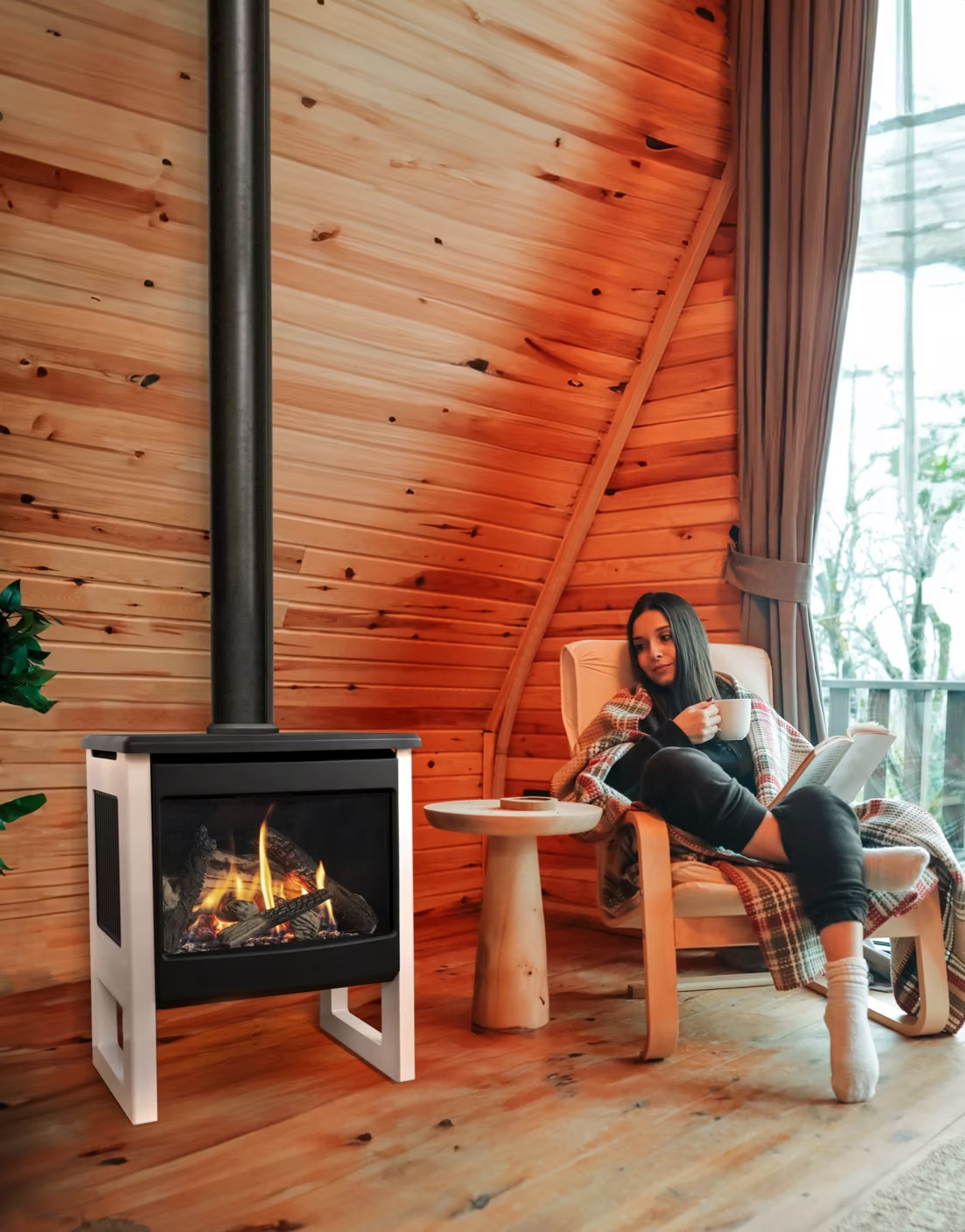
A gas fireplace is a fully framed-in built-in unit, the right call for new construction or a full remodel in a Delta or Cedaredge home. A gas insert fits into an existing masonry firebox and uses the current chimney as its vent chase, which is the more common route for older homes throughout the North Fork Valley. A gas stove is a freestanding, cabinet-style unit that doesn't need an existing fireplace opening at all, which makes it a good fit for manufactured homes or newer rooms without a chimney. A local dealer can walk the space and tell you which configuration actually fits your venting path.
Do I need a permit to install a gas fireplace in Delta County?
Generally yes—both a building permit and a gas line permit are required, whether you're inside the City of Delta, the towns of Cedaredge or Paonia, or in unincorporated Delta County under the county building department. The gas line work itself has to be done by a licensed gas fitter, which is one reason to go through a full-service hearth dealer: they coordinate the gas connection, the venting, and the final inspection as a single job instead of leaving you to schedule separate trades and permits yourself.
Should I get a vented or vent-free gas fireplace given the wildfire smoke here?
Direct-vent (sealed combustion) units are the better call for most Delta County homes. They draw combustion air from outside and exhaust it back outside through a sealed pipe, so nothing from the burn enters the living space. Vent-free units are legal in Colorado within room-sizing limits, but they release combustion byproducts and moisture directly into the room—not ideal in a county that already deals with wildfire smoke advisories some summers and falls. Most local dealers steer homeowners toward direct-vent for that reason: it keeps indoor air clean on days when outdoor air quality is already a concern.
How often does a gas fireplace need to be serviced here?
Plan on an annual inspection, ideally before the heating season ramps up in the fall. A technician checks the burner, pilot or ignition system, gas connections, and venting, and cleans the glass—a quick visit compared to a wood chimney sweep, but still worthwhile given how many hours a gas unit runs through a winter about on par with Buffalo, NY's. Homes above about 6,000 feet, around Cedaredge and the lower Grand Mesa roads, should also have the altitude orifice setting checked periodically, since combustion at elevation is more sensitive to a mis-tuned burner than it is at the valley floor near Delta.
Gas vs. wood—which makes more sense for a Delta County home?
Wood—cut as ponderosa pine, aspen, pinyon, or juniper under a Grand Mesa-Uncompahgre-Gunnison or White River National Forest personal-use permit for as little as $5 to $20 a cord—remains popular on ranch and orchard properties where a wood stove serves as backup heat during power outages. Gas offers instant, thermostat-controlled heat with no ash and no smoke, which is a real advantage on the days each summer or fall when regional wildfire smoke settles into the North Fork Valley and air quality advisories go up. Many Delta County households end up running both: gas for daily convenience in the main living space, wood as a hedge against a multi-day outage on the mesa.
Why is a fireplace insert so efficient?
An insert does two things: it seals the chimney completely, so you stop losing air you already paid to heat, and it radiates warmth into the room through the firebox and glass. Most add a heat-exchange fan that pulls cool room air underneath, wraps it around the hot firebox, and pushes it back out warm. Your home is more efficient before you've even lit the first fire.
Why is my open fireplace making my house colder?
Open fireplaces suck—literally. As the fire burns, it consumes air your furnace already paid to heat and pulls it out through the chimney, so the house is actually colder after the fire goes out than before you lit it. An insert fixes this: it seals the chimney, puts fixed glass across the front, and turns that hole in your house into a real heat source.
Should the dealer who sells my fireplace also install it?
Ideally, yes. A fireplace project involves vent pipe, gas line, electrical, and often tile or stone. Hire three or four separate trades and you own the liability and the game of telephone between them. One company selling and installing means one accountable party, start to finish—ask about factory training, on-time completion records, and what happens if an inspection fails.
Can a fireplace actually lower my heating bill?
Yes—by creating a comfort zone. A furnace heats every square foot of the house just to warm the one room you're in; a gas fireplace on low burns roughly a sixth of the gas a typical furnace does. Set the furnace around 55–60 degrees as a baseline, then heat the rooms your family actually uses. Families who heat this way commonly save $20–$60 a month.
Get your free Project Guide & Parts List for a gas fireplace in Delta County.
Tell me about your home, its elevation, and whether you're on Black Hills Energy natural gas or propane, and I'll match you with a trusted local dealer and send over a free Project Guide & Parts List—the exact equipment, vent kit, and recommended installer for your gas project, no big-box guesswork.
Find Your Fireplace →