
Steady, thermostat-controlled heat for the San Luis Valley's coldest nights.
Costilla County sits on the floor of the San Luis Valley at roughly 7,500 to 8,000 feet, ringed by the Sangre de Cristo range and Blanca Peak—a Zone 6B climate where winter nights routinely bottom out well below zero. A pellet stove or insert delivers consistent, controllable heat without the daily wood-hauling that valley winters demand.
Every Project Starts From One of These Five Situations
Consistent warmth without a woodpile to manage.
Costilla County is one of Colorado's least populated counties—around 1,500 residents spread across San Luis, Fort Garland, Blanca, and the ranches and off-grid parcels in between. The valley floor's exposure and elevation give it a Zone 6B climate that can rival Fargo, ND for sheer cold on a clear, still night, even though daytime highs often feel deceptively mild. Homes here are frequently older adobe or ranch construction, heated by a mix of wood, propane, and increasingly, pellet appliances that offer set-it-and-forget-it heat during long stretches of sub-zero nights.
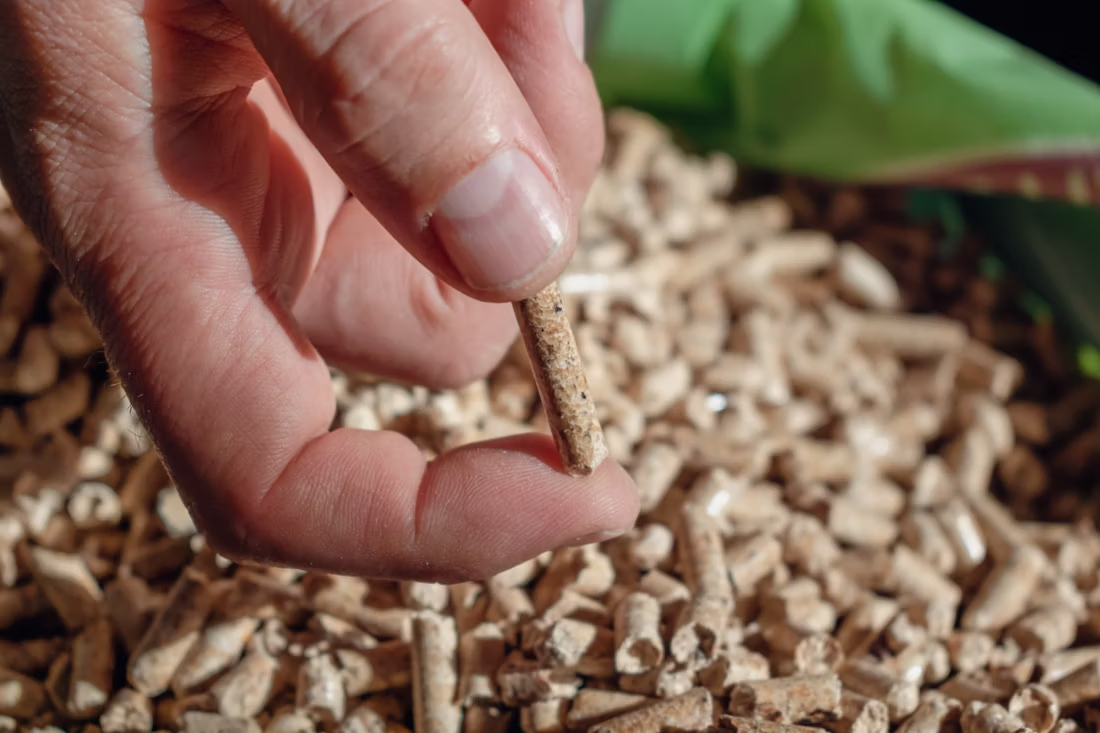
The surrounding forests—ponderosa pine, aspen, pinyon, and juniper—have long supplied firewood to valley households, but cutting, hauling, and splitting isn't for everyone, especially on remote or elderly-occupied properties. Pellet stoves and inserts running Bear Mountain, Lignetics, or Forest Energy pellets give Costilla County homeowners a cleaner-burning, thermostatically controlled alternative that still uses regionally sourced fuel. That matters locally for another reason too: wildfire smoke is a recognized air quality concern in the San Luis Valley, and pellet appliances burn markedly cleaner than open wood fires, which counts for something on the smokiest late-summer and fall days.
Three steps. No salesperson until you're ready.
Tell us about your project
Your zip code, your situation, and the fuel you're leaning toward—or let the answers point you to one.
See what's actually available
The brands dealers within 100 miles genuinely carry—real options, never a catalog mirage.
Get your dealer & Project Guide
A trusted local dealer, plus the free Project Guide & Parts List that names every component of the job.
Frequently Asked Questions
How much does a pellet stove installation cost in Costilla County?
Pellet stove and insert installations typically run in the $3,000 to $6,500 range nationally, and Costilla County homeowners should expect to land in that range or slightly above it once travel is factored in—the nearest certified hearth dealers are generally based out of Alamosa, roughly 30-40 minutes from San Luis or Fort Garland. Costs depend on the unit, whether it's a freestanding stove or an insert going into an existing masonry fireplace, and whether new venting or an electrical circuit needs to be added. Because so few installers serve this stretch of the valley directly, it's worth asking upfront about a service-call or mileage charge for the initial consultation and any follow-up maintenance visits.
What size pellet stove do I need for a home in the San Luis Valley?
Sizing depends on square footage, insulation, and how exposed the home is to valley wind—a common factor here that gets overlooked. A stove rated for 1,000-1,500 square feet may struggle in an older, less-insulated ranch house on an open, wind-exposed parcel outside San Luis or Fort Garland, even if the square footage on paper suggests it should be plenty. For most single-family homes in the county, a mid-size unit in the 2.2-3 cubic foot hopper range with a heat output around 40,000-50,000 BTU handles the coldest overnight stretches without constant reloading. A local dealer can walk through your specific home's exposure and construction before recommending a model.
Where can I find a certified pellet stove installer near Costilla County?
Given the county's small population, there isn't a hearth retailer physically located in San Luis, Fort Garland, or Blanca—most certified installers covering this part of the San Luis Valley are based in Alamosa. Look for NFI-certified technicians, since pellet appliances involve electrical hookups, venting, and hopper/auger systems that benefit from professional setup and calibration. A dealer covering rural Costilla County routes should be upfront about drive time and whether that adds to the installation quote.
What's the difference between a pellet stove and a pellet insert?
A pellet stove is a freestanding appliance that sits on its own hearth pad and vents through an exterior wall or existing chimney—it can go almost anywhere with the right clearances, which makes it a common choice in Costilla County's off-grid cabins and newer construction without a masonry fireplace. A pellet insert is built to slide into an existing fireplace opening, converting an old wood-burning fireplace into a much more efficient, thermostat-controlled heat source using the chimney that's already there. For the county's older adobe and ranch homes that already have a fireplace, an insert is often the simpler retrofit.
Do I need a permit to install a pellet stove in Costilla County?
Yes—new pellet stove and insert installations generally require a building permit through the Costilla County building department, covering the appliance, venting, and any new electrical work for the unit's hopper and blower. Most certified installers handle the permitting as part of the job, so this typically isn't something homeowners need to manage themselves. Given how spread out and rural much of the county is, it's worth confirming permit turnaround time with your installer before scheduling the install date.
What's the best pellet stove for the San Luis Valley's climate?
For Costilla County's overnight lows, prioritize a stove with a larger hopper capacity (40+ pounds) so it can run through a long cold night without a refill, along with a reliable thermostat control for unattended operation. Brands carrying pellets regionally—Bear Mountain, Lignetics, and Forest Energy—are widely available through valley suppliers, so choosing a stove that burns standard hardwood or softwood pellet blends without a specific brand requirement gives you more flexibility if supply gets tight during a hard winter. A local dealer can match hopper size and BTU output to your home's exposure and square footage.
Will a pellet stove work during a power outage?
This is worth taking seriously in Costilla County: pellet stoves require electricity to run the auger, igniter, and blower, and rural power lines across the San Luis Valley can go down during heavy snow or high wind events. Unlike a wood stove, a pellet stove will not operate without power unless it's paired with a battery backup or generator setup—some models offer an optional battery backup accessory that can carry the unit through a shorter outage. Homeowners who want heat that works no matter what should discuss backup power options with their dealer, or consider keeping a wood stove or fireplace as a secondary, off-grid heat source alongside a pellet appliance.
Where can I buy pellets in or near Costilla County?
Pellets from regional brands like Bear Mountain, Lignetics, and Forest Energy are typically stocked at farm and ranch supply stores in Alamosa, the closest larger town to San Luis and Fort Garland. Given the county's small population and rural layout, buying pellets in bulk—a ton or more at a time—before the coldest months set in is the common approach, since it reduces the number of supply runs needed once winter weather makes valley roads harder to travel. Expect to pay in line with regional Colorado pellet pricing, generally in the $250-$350 per ton range, with some seasonal variation.
Pellet stove vs. wood stove—which makes more sense in Costilla County?
Wood is abundant locally—ponderosa pine, aspen, pinyon, and juniper are all common in the surrounding forests—and a wood stove works with zero dependence on electricity, which matters when valley power lines go down in a storm. A pellet stove trades that off-grid resilience for convenience: no cutting, splitting, or hauling, more even heat output, and a cleaner burn that helps on days when wildfire smoke is already thick in the valley air. For households that can keep the lights on reliably or have backup power, pellet is often the easier daily-use choice. For remote parcels where outages are common and self-sufficiency matters most, many Costilla County homeowners keep a wood stove as the backup even if pellet is the primary heat source.
Why is a fireplace insert so efficient?
An insert does two things: it seals the chimney completely, so you stop losing air you already paid to heat, and it radiates warmth into the room through the firebox and glass. Most add a heat-exchange fan that pulls cool room air underneath, wraps it around the hot firebox, and pushes it back out warm. Your home is more efficient before you've even lit the first fire.
What's the difference between an insert and a zero-clearance fireplace?
An insert is a fireplace that slides into a pre-existing wood-burning fireplace—if you don't have one, there's nothing to insert it into. A zero-clearance fireplace is built into a framed wall, which makes it the answer for remodels and new construction. Simple test: existing masonry fireplace means insert; blank or framed wall means zero-clearance.
Can I install a fireplace myself?
If you're putting a fire in your house on purpose, it's best to work with an expert. Unless you're genuinely experienced in framing, gas line, vent pipe, and the national code on clearances to combustibles, have a professional do it—and ideally the same company that sells you the fireplace, so warranty, service, and liability all live under one roof.
What is an in-home preview and do I need one?
It's a visit where a hearth professional measures your space, confirms the model you picked actually works in your home, and walks the specs—framing, gas line, venting, finish work—before anything is ordered. Some details you just can't know until you see the house. Never make a down payment without one; it's the single most-skipped step that burns buyers.
Pellet Brands Stocked Around Costilla County
Manufacturers will point you to the nearest stocking dealer.
Find your pellet stove in Costilla County.
Tell us about your home in the San Luis Valley and we'll match you with a trusted local dealer and send over a free Project Guide & Parts List—the right pellet stove or insert for your home, with the exact parts and venting you'll need.
Find Your Fireplace →