
Instant heat, zero smoke, for the coldest valley in Colorado.
At 7,500+ feet in the San Luis Valley, with wildfire smoke a real concern most falls, an electric fireplace gives Costilla County homes clean supplemental heat and ambiance with no chimney and no venting. Find the right unit and connect with a trusted local dealer.
Every Project Starts From One of These Five Situations
A smoke-free option for the San Luis Valley's toughest winters.
Costilla County sits high in Colorado's San Luis Valley, home to San Luis, the oldest continuously occupied town in the state, and Fort Garland at the foot of the Sangre de Cristo range. With a Climate Zone 6B designation, elevations pushing 8,000 feet in the valley floor and well beyond that toward Culebra Peak, and a year-round population of around 1,563 spread across a wide, sparsely settled landscape, winters here are long and genuinely harsh. Summer and fall wildfire smoke from the surrounding forests is also a recurring air quality concern, which pushes some households toward heating options that don't add anything to the air inside the home.
Electricity in Costilla County typically comes through San Luis Valley Rural Electric Cooperative, and most homes here rely on wood, propane, or pellet as their primary heat source given the extreme overnight cold that 6B winters bring. Electric fireplaces and stoves fill a different, valuable role: zone heat for an addition, casita, or mobile home; ambiance without masonry or a flue; and a genuinely smoke-free option during wildfire smoke advisories when running a wood stove isn't appealing. Because these units plug into a standard circuit or run on a dedicated 20-amp line, there's no chimney to build, no venting to size, and often no building permit required at all—a real advantage in a county where contractor availability is limited and every trip out from Alamosa adds to a project's cost.
Three steps. No salesperson until you're ready.
Tell us about your project
Your zip code, your situation, and the fuel you're leaning toward—or let the answers point you to one.
See what's actually available
The brands dealers within 100 miles genuinely carry—real options, never a catalog mirage.
Get your dealer & Project Guide
A trusted local dealer, plus the free Project Guide & Parts List that names every component of the job.
Frequently Asked Questions
How much does an electric fireplace installation cost in Costilla County?
Plug-in electric fireplace inserts and freestanding stoves generally run $300 to $900 for the unit itself, with no installation cost beyond plugging it in—a popular choice for casitas, additions, and mobile homes that make up a lot of Costilla County's housing stock. Built-in or wall-mounted electric fireplaces that need a dedicated 20-amp circuit run higher, typically $800 to $1,800 once an electrician's time is factored in. Because Costilla County is rural with a limited pool of local electricians, expect a trip charge if your project is well outside San Luis or Fort Garland—worth confirming up front with whoever quotes the job.
What size electric fireplace do I need for my home?
Most electric fireplaces top out around 1,500 watts, or roughly 5,000 BTU—enough to noticeably warm a single room (400 to 500 square feet) but not enough to serve as whole-home heat in a Zone 6B climate like Costilla County's. For a bedroom, den, or small casita, a standard insert or stove-style unit is plenty. For a larger open living area, plan on it as supplemental heat alongside your primary wood, propane, or pellet appliance rather than a replacement for it. A local dealer can walk through your specific room and existing heat source to confirm what makes sense.
Where can I find installers for electric fireplaces near me?
Plug-in units require no professional installation at all. For hardwired or built-in electric fireplaces that need a dedicated circuit, you'll want a licensed electrician—given the county's small population, most residents in San Luis, Fort Garland, or the surrounding valley end up working with an electrician based out of Alamosa, about 20 to 25 miles away. A trusted local hearth dealer will typically coordinate that electrical work as part of a full installation rather than leaving you to find and schedule a separate trade.
What's the difference between an electric fireplace, insert, and stove?
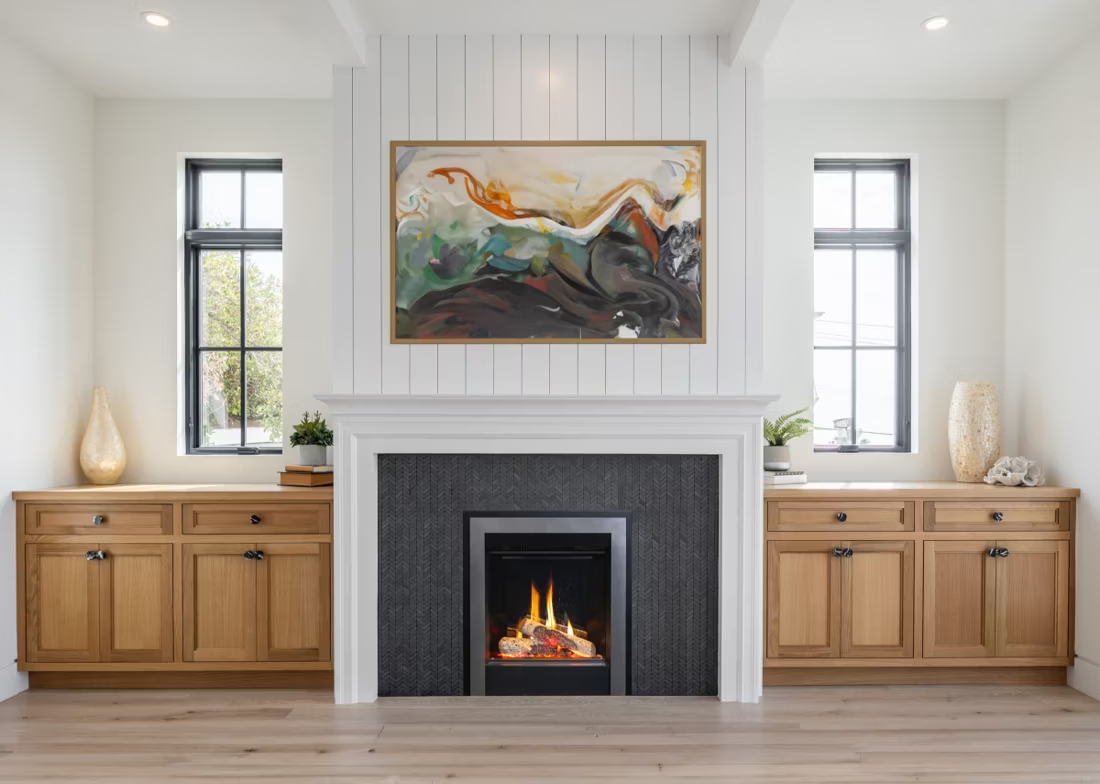
An electric fireplace is usually a built-in or wall-mounted unit designed to look like a traditional fireplace, often with a mantel surround. An electric insert is sized to slide into an existing masonry fireplace opening, giving an old, unused fireplace real heat and flame effect without touching the chimney. An electric stove is a freestanding, cabinet-style unit that mimics a wood stove's look and can sit anywhere near an outlet. For Costilla County homes with an existing but unused fireplace, an insert is often the simplest upgrade; for casitas, additions, or mobile homes without a fireplace opening, a freestanding stove or wall-mounted unit is more common.
Do I need a permit to install an electric fireplace in Costilla County?
Plug-in electric fireplaces generally don't require a permit since there's no venting or gas line involved. If your installation calls for a new dedicated circuit or any electrical panel work, that portion falls under standard electrical permitting through Costilla County. Because there's no combustion and no flue, electric fireplaces avoid the EPA certification, chimney sweep, and venting-clearance requirements that apply to wood and gas units in the county—one of the reasons they're a low-hassle option for a second home or rental property in the valley.
Is an electric fireplace enough heat for a Costilla County winter?
On its own, no—a standard 1,500-watt electric fireplace isn't sized to carry a home through a San Luis Valley winter at 6B-climate temperatures, especially overnight when readings regularly drop well below zero at this elevation. It's best used as zone heat for one room or as a supplement to a primary wood, pellet, or propane system. It's also worth noting electric fireplaces won't run during a power outage, which matters in a rural valley where winter storms can knock out lines for hours or longer—most Costilla County households keep a wood stove or propane heater as their outage backup even if electric handles day-to-day comfort in a specific room.
How much maintenance does an electric fireplace need?
Very little. There's no chimney to sweep, no creosote, and no annual gas-line inspection. Basic upkeep is dusting the unit, occasionally cleaning the glass front, and replacing the LED flame bulbs every several years as they dim—most modern units use long-life LEDs rather than traditional bulbs. This low-maintenance profile is part of why electric units show up often in Costilla County rental cabins and second homes where nobody's checking on the appliance every week.
What does it cost to run an electric fireplace in Costilla County?
A typical 1,500-watt electric fireplace run for a few hours an evening costs a few dollars a week on a San Luis Valley Rural Electric Cooperative bill—nowhere near the cost of heating a whole home electrically, which is exactly why these units work best as supplemental or ambiance heat rather than a primary system in a cold, high-elevation county like this one.
Electric vs. wood or pellet—which fits my Costilla County home?
Wood, sourced from the ponderosa pine, aspen, pinyon, and juniper common around the valley, and pellet stoves remain the practical choice for primary heat in most Costilla County homes, especially given how cold nights get here and how often winter storms interrupt power. Electric fireplaces don't compete on raw heat output or storm-outage reliability, but they win on convenience, zero smoke output, and simple installation—a real advantage during wildfire smoke season when even a well-run wood stove adds particulates you might rather avoid. Many households in the valley end up with both: wood or pellet for real heat, electric for a smoke-free accent in a den, casita, or guest space.
Can I put a TV above my fireplace?
Yes—with an asterisk. Fireplaces are hot and TVs don't like heat. Either put a mantel between them to deflect rising warmth, or choose a fireplace with heat-management technology that creates a cool zone on the wall above—the wall stays around 125 degrees, barely warm, while the room still gets full heat. If you like clean lines and don't want a mantel, heat management is the answer.
Do electric fireplaces actually produce heat?
Yes—most put out around 4,800–5,000 BTUs from a standard outlet, which comfortably warms a bedroom, office, or den as a comfort-zone heater. What they won't do is carry a whole house the way wood, gas, or pellet can. Think of electric as ambiance-first with honest supplemental heat: flames on with no heat in July, flames plus warmth in January.
Can a fireplace actually lower my heating bill?
Yes—by creating a comfort zone. A furnace heats every square foot of the house just to warm the one room you're in; a gas fireplace on low burns roughly a sixth of the gas a typical furnace does. Set the furnace around 55–60 degrees as a baseline, then heat the rooms your family actually uses. Families who heat this way commonly save $20–$60 a month.
Can I install a fireplace myself?
If you're putting a fire in your house on purpose, it's best to work with an expert. Unless you're genuinely experienced in framing, gas line, vent pipe, and the national code on clearances to combustibles, have a professional do it—and ideally the same company that sells you the fireplace, so warranty, service, and liability all live under one roof.
Find your electric fireplace in Costilla County.
Tell us a bit about your home and we'll match you with the right electric fireplace, insert, or stove—and connect you with a trusted local dealer, plus a free Project Guide & Parts List for your install.
Find Your Fireplace →