
Steady pellet heat for Conejos County's long, cold winters.
From the Antonito flats to the foothills near Platoro, Conejos County winters call for heat you don't have to babysit. Find the right pellet stove or insert, and get matched with a trusted local dealer who knows the valley.
Every Project Starts From One of These Five Situations
Consistent, low-labor heat for a rural high-desert valley.
Conejos County sits on the western edge of Colorado's San Luis Valley, with the valley floor around 7,500 to 8,300 feet and the Rio Grande National Forest and Conejos Peak country rising to over 12,000 feet at the county's western border. With only about 4,200 residents spread across small towns—Antonito, La Jara, Manassa, Romeo, Sanford, Capulin—this is genuinely rural country, and a Climate Zone 6B winter here means long stretches of single-digit nights and big daily temperature swings typical of high-desert valleys.
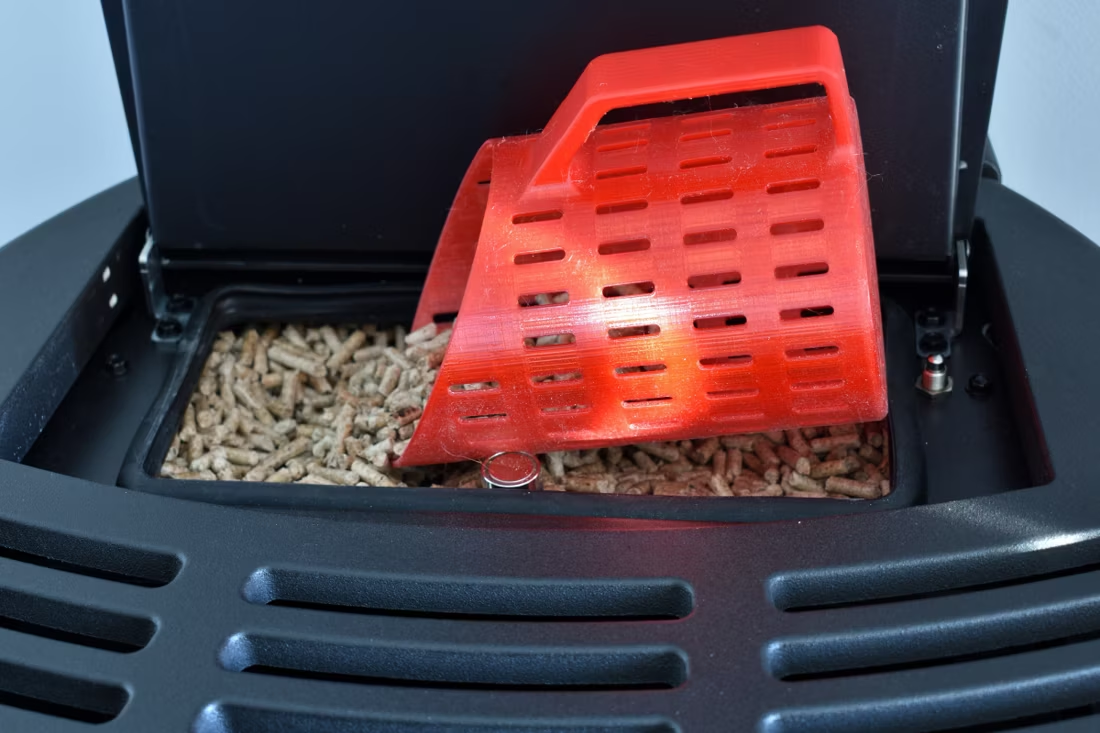
Cordwood is available locally from the ponderosa pine, aspen, pinyon, and juniper stands around the county, but cutting, hauling, and seasoning wood is real labor for a lot of households—especially older residents or anyone managing a second home in the valley. A pellet stove trades that labor for a hopper you fill once or twice a day, a thermostat-controlled burn, and a noticeably cleaner exhaust—a real plus given the wildfire smoke that regularly settles into the San Luis Valley during summer and fall. Regional pellet brands like Bear Mountain, Lignetics, and Forest Energy are sold through hearth dealers serving the valley, typically out of Alamosa. One thing worth planning for: pellet stoves need continuous electricity to run the auger and blower, and rural Conejos County is served by San Luis Valley Rural Electric Cooperative—reliable day to day, but winter storms do occasionally knock out lines in outlying areas, so a battery backup or small generator is a smart pairing.
Three steps. No salesperson until you're ready.
Tell us about your project
Your zip code, your situation, and the fuel you're leaning toward—or let the answers point you to one.
See what's actually available
The brands dealers within 100 miles genuinely carry—real options, never a catalog mirage.
Get your dealer & Project Guide
A trusted local dealer, plus the free Project Guide & Parts List that names every component of the job.
Frequently Asked Questions
How much does a pellet stove installation cost in Conejos County?
A typical pellet stove installation in Conejos County runs roughly $3,500 to $7,000, depending on the unit, whether it's a freestanding stove or an insert going into an existing masonry fireplace, and how much venting work is needed. Because Conejos County is sparsely populated and most certified dealers are based around Alamosa, expect a modest travel charge factored into quotes for homes further out toward Platoro, Capulin, or the western county line. Ask your dealer whether that travel cost is itemized or already built into the estimate.
What size pellet stove do I need for my home?
Sizing depends on square footage, ceiling height, and how tightly your home is insulated—older ranch homes around La Jara and Manassa often leak more heat than newer construction, which changes the math. As a rough guide for Conejos County's Zone 6B winters: smaller units (under 1,200 sq ft) suit a cabin or single living area, while larger hopper-capacity stoves make more sense for full-time, whole-home heating given how long and cold the season runs here. A local dealer will size your space and hopper capacity together, since a bigger hopper means fewer refills during a multi-day cold snap or storm.
Where can I find certified pellet stove installers near me?
Look for installers with NFI (National Fireplace Institute) certification, which covers proper venting, clearance, and electrical hookup for pellet appliances. Given Conejos County's small population, most certified dealers cover the whole county from a base near Alamosa, and will quote travel time for installs out toward Platoro, Capulin, or the far western reaches near the national forest boundary. Because pellet stoves also need a dedicated electrical circuit in most cases, it's worth confirming your installer coordinates that wiring rather than leaving it to a separate electrician.
What's the difference between a pellet stove and a pellet insert?
A pellet stove is a freestanding unit that sits on its own hearth pad and vents through a wall or roof—it can go almost anywhere with the right clearances. A pellet insert is built to slide into an existing masonry fireplace opening, turning a drafty open hearth into a sealed, thermostat-controlled heat source. For older Conejos County homes with an existing wood fireplace that isn't doing much heating, an insert is usually the more efficient upgrade. Homes without an existing fireplace opening are generally better suited to a freestanding stove.
Do I need a permit to install a pellet stove in Conejos County?
Yes—new pellet stove installations require a building permit through the Conejos County Building Department, covering venting, clearances, and the electrical circuit the unit runs on. Most local dealers handle the permitting as part of the installation, so you generally don't have to manage that paperwork directly. Given the wildfire smoke concerns that show up in the San Luis Valley during dry summers, some homeowners also appreciate that pellet appliances burn considerably cleaner than open wood fires, which matters when regional air quality is already under strain.
What's the best pellet stove for Conejos County's climate?
For a Zone 6B valley with long, cold winters, look at stoves with larger hopper capacities—40 to 80 pounds—so you're not refilling multiple times a day during a hard freeze. Brands like Harman and Quadra-Fire are common recommendations from dealers who also carry regional pellet fuel brands such as Bear Mountain, Lignetics, and Forest Energy, since matching stove and pellet quality affects burn efficiency and how often you're cleaning the firepot. If you're heating a full-time residence rather than a weekend cabin near the mountains, ask specifically about models rated for continuous, high-output use.
How much maintenance does a pellet stove need?
Pellet stoves need more routine attention than a wood stove but far less than a full chimney sweep. Plan on cleaning the firepot and ash pan every few days during heavy winter use, a deeper cleaning of the burn pot and heat exchanger monthly, and a full professional service once a year—typically in late summer before the burning season starts in earnest across Conejos County. Skipping the annual service is the most common reason pellet stoves lose efficiency or start smoking back into the room.
Where can I buy pellets in Conejos County?
Regional brands like Bear Mountain, Lignetics, and Forest Energy are typically stocked through hearth dealers and farm supply stores serving the San Luis Valley, often out of Alamosa. Given how rural Conejos County is, it's worth buying a full season's supply—usually 2 to 3 tons for a primary heat source—before winter sets in rather than counting on restocking mid-season if roads get hard to travel. Buying pellets rated for low ash content also cuts down on how often you're cleaning the firepot.
Pellet stove vs. wood stove—which is right for my home?
Wood stoves work without electricity, which matters if you're in an outlying part of Conejos County where San Luis Valley Rural Electric Cooperative lines occasionally go down in a winter storm, and cordwood from local ponderosa pine, aspen, pinyon, or juniper is genuinely available nearby. Pellet stoves trade that off for a cleaner, more consistent burn and far less physical labor—no splitting, stacking, or hauling. If your home is in a more accessible area with reliable power, pellet is usually the easier day-to-day choice; if you're further out and want a heat source that works no matter what the grid does, wood is worth serious consideration as a backup or primary source.
Why is a fireplace insert so efficient?
An insert does two things: it seals the chimney completely, so you stop losing air you already paid to heat, and it radiates warmth into the room through the firebox and glass. Most add a heat-exchange fan that pulls cool room air underneath, wraps it around the hot firebox, and pushes it back out warm. Your home is more efficient before you've even lit the first fire.
Why is my open fireplace making my house colder?
Open fireplaces suck—literally. As the fire burns, it consumes air your furnace already paid to heat and pulls it out through the chimney, so the house is actually colder after the fire goes out than before you lit it. An insert fixes this: it seals the chimney, puts fixed glass across the front, and turns that hole in your house into a real heat source.
Can a fireplace actually lower my heating bill?
Yes—by creating a comfort zone. A furnace heats every square foot of the house just to warm the one room you're in; a gas fireplace on low burns roughly a sixth of the gas a typical furnace does. Set the furnace around 55–60 degrees as a baseline, then heat the rooms your family actually uses. Families who heat this way commonly save $20–$60 a month.
Does a fireplace add value to my home?
On average, a fireplace adds back to the home about the same amount you spent installing it. Add the monthly savings from heating the rooms you actually use instead of the whole house—often hundreds of dollars a year—and the value case is strong before you even count what a fire does for how your family uses the room.
Pellet Brands Stocked Around Conejos County
Manufacturers will point you to the nearest stocking dealer.
Find your pellet stove in Conejos County.
Tell us about your home and we'll match you with a trusted local dealer and put together a free Project Guide & Parts List—the exact stove, vent kit, and installation plan for your Conejos County home.
Find Your Fireplace →