
Find heat that lasts through San Luis Valley winters.
Wood, gas, pellet, and electric fireplace resources for every town in Conejos County—from Antonito and La Jara to Manassa, Sanford, and Conejos. Find the right unit and connect with a trusted local hearth retailer.
Every Project Starts From One of These Five Situations
High-desert cold in Colorado's San Luis Valley.
Conejos County sits at the southern edge of the San Luis Valley, a high-altitude basin running 7,500 to 8,000 feet above sea level with the San Juan Mountains rising to over 13,000 feet along its western border. Climate zone 6B means winters here are long and genuinely cold—overnight lows well below zero are routine, comparable to what Bozeman, Montana sees most winters. This is one of the oldest continuously settled areas in Colorado—the parish at Conejos dates to 1858—and wood heat has been part of that history for generations. Ponderosa pine, aspen, pinyon, and juniper are the local standbys, much of it cut under Rio Grande National Forest permits just west of the valley floor.
What you'll find on this hub: hearth retailers, service technicians, and fuel suppliers covering every community in the county—Antonito near the New Mexico line, La Jara and Romeo along US-285, Manassa (Jack Dempsey's birthplace), and the Mormon settlement of Sanford to the east. Pick your fuel below to drill into local dealers, installation costs, and recommended units for your specific project. Whether you're heating a ranch house on the valley floor or a cabin up toward the forest boundary, this is the starting point.
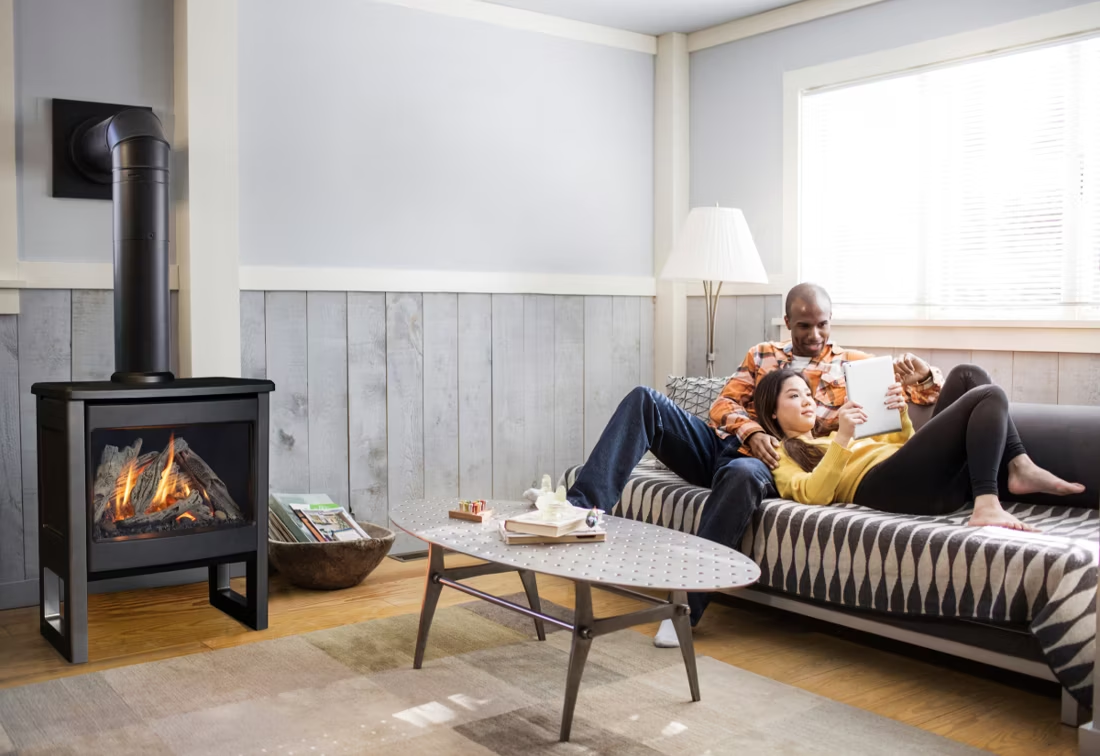
Four fuels. One honest answer for Conejos County.
Three steps. No salesperson until you're ready.
Tell us about your project
Your zip code, your situation, and the fuel you're leaning toward—or let the answers point you to one.
See what's actually available
The brands dealers within 100 miles genuinely carry—real options, never a catalog mirage.
Get your dealer & Project Guide
A trusted local dealer, plus the free Project Guide & Parts List that names every component of the job.
Frequently Asked Questions
Which fuel works best in Conejos County?
It depends on the home and the household. Wood is the traditional heavyweight here—Rio Grande National Forest cutting permits keep fuel costs low for ponderosa pine, aspen, pinyon, and juniper, and a wood stove keeps working when a winter storm knocks out power on the valley floor. Gas is mostly propane in this county rather than piped natural gas, since municipal gas service is limited outside the larger towns—it's the convenience choice for instant heat without hauling wood. Pellet is a solid middle ground, especially with Bear Mountain, Lignetics, and Forest Energy pellets stocked regionally—less labor than a woodpile, similar cozy heat. Electric fireplaces are supplemental here, useful in a bedroom or a mobile home addition, but nobody in Conejos County is heating a house through a 6B winter on electric resistance heat alone. Most households end up running wood or pellet as primary heat with propane or electric backup in secondary rooms.
Do I need a permit to install a fireplace in Conejos County?
In most cases, yes. New wood stoves, wood inserts, gas appliances, and pellet stoves typically require a building permit through the Conejos County Building Department, and wood-burning units need to meet EPA-certified emissions standards to be installed. Gas installations also call for a separate gas line permit, and propane conversions should go through a licensed installer for the tank and line work. Electric fireplaces usually skip the permit process unless it's a built-in unit that requires new wiring or a dedicated circuit. Most local retailers—even the ones based out of Alamosa—handle the permitting paperwork as part of an installation package, so it's rarely something the homeowner has to navigate alone.
Are there air quality restrictions on wood burning in Conejos County?
There's no winter inversion advisory program here like you'd find in a basin town, but wildfire smoke is the real air-quality concern in this part of the San Luis Valley—summer and early fall smoke from regional fires can settle into the valley for days at a time. That has a direct effect on wood heat, too: during periods of extreme fire danger, the Rio Grande National Forest sometimes restricts or closes firewood-cutting permits, which is worth checking before you plan a season's supply. On the appliance side, EPA-certified wood stoves burn cleaner and use less fuel per BTU than older uncertified units, which matters both for smoke output and for stretching a permit-cut woodpile through a long 6B winter.
Can one local hearth retailer handle all four fuel types?
Given how small Conejos County is, most of the retailers serving this area are based in Alamosa and cover several fuel types rather than specializing in just one. A full-line dealer carrying wood, gas, pellet, and electric is worth seeking out if you're still comparing fuels—they can show working displays side by side and talk through what actually vents and installs cleanly in your specific home. Smaller, more wood-and-pellet-focused shops are common too, especially ones that also handle firewood or pellet delivery. If a business you're looking at is really a fuel supplier rather than an installer, that's worth knowing going in—the county + fuel pages above separate installers from suppliers.
How does service work in rural areas of Conejos County?
Most technicians covering Conejos County are based in Alamosa and drive out to La Jara, Antonito, Manassa, Sanford, and Romeo for scheduled appointments. Expect a modest travel fee on top of the service call for the more outlying addresses, and expect August–October to book up faster than mid-winter—that's when everyone wants their chimney swept or gas unit inspected before the cold really sets in. If you're on a rural property near the forest boundary, it's worth scheduling early and keeping a backup heat source on hand; a wood stove as backup for a pellet or propane system covers you if a winter storm makes the roads impassable for a few days.
What's the typical cost range for fireplace installation across all fuel types in Conejos County?
Ranges vary by fuel and by how much existing infrastructure is already in place. Wood stove or insert installation: roughly $4,000–$8,500 for a typical job, more if new chimney work is needed for new construction. Gas fireplace, insert, or stove: roughly $4,500–$10,000, with propane tank and line work pushing costs toward the higher end for homes without existing service. Pellet stove or insert: roughly $4,000–$7,000 for most installs. Electric fireplace: $200–$3,000 for the unit itself, plus $400–$1,200 in labor if it's a built-in rather than plug-and-play. Rural travel distance and the condition of an existing chimney or gas line are the two biggest swing factors here—a local dealer walking your specific site will give you a tighter number than any general range.
Does a fireplace add value to my home?
On average, a fireplace adds back to the home about the same amount you spent installing it. Add the monthly savings from heating the rooms you actually use instead of the whole house—often hundreds of dollars a year—and the value case is strong before you even count what a fire does for how your family uses the room.
I know I want a fireplace—where do I actually start?
Do two things today: snap a photo of the wall or fireplace you want to transform, and take a tape measure to the space—width, height, depth. Those two artifacts answer most of a hearth professional's first questions. Then settle fuel (wood, gas, pellet, or electric) and set a realistic budget: $3,900–$5,500 covers fireplace, vent, and basic install for most homes.
Wood, gas, pellet, or electric—how do I choose?
Match the fuel to your life, not the other way around. Wood: lowest fuel cost and total power-outage independence, but you're hauling and stacking. Gas: press a button, set a thermostat, no maintenance to speak of. Pellet: wood economics with automatic feeding, in exchange for weekly cleaning and a need for electricity. Electric: plugs in anywhere with honest supplemental heat. Nobody regrets the fuel that fits how they actually live.
What is an in-home preview and do I need one?
It's a visit where a hearth professional measures your space, confirms the model you picked actually works in your home, and walks the specs—framing, gas line, venting, finish work—before anything is ordered. Some details you just can't know until you see the house. Never make a down payment without one; it's the single most-skipped step that burns buyers.
Stove and Fireplace Dealers in Conejos County
Listings include WhyFire partner dealers, dealers we have verified as authorized for the brands we recommend, and established local businesses that carry hearth products. Every listing shows which one it is. The ones marked Preferred run on WhyFire's software, so they can show you real pricing and book your appointment right here. No manufacturer pays for placement. How we verify dealers →
White Shop
Shangrilah Stove & Spa LLC
Find your fireplace in Conejos County.
Pick your fuel below and we'll match you with a trusted local dealer and send you a free Project Guide & Parts List—the exact parts, vent kit included, and the dealer we'd recommend for your home in Conejos County.
Find Your Fireplace →