
Warmth that keeps up with Clear Creek County's long mountain winters.
From Idaho Springs to Georgetown to Silver Plume, pellet stoves deliver steady, thermostat-controlled heat without the daily wood-splitting—a good fit for a county where a heavy winter heating load and I-70 canyon winters test every home. Find the right unit and connect with a trusted local dealer.
Every Project Starts From One of These Five Situations
Clean-burning heat built for altitude and convenience.
Clear Creek County runs along the I-70 corridor west of Denver, from Idaho Springs at 7,540 feet up through Georgetown at 8,530 feet and Silver Plume near 9,144 feet, with Empire and smaller canyon communities tucked in between. With only about 8,100 residents spread across steep, forested terrain, a large share of the county's housing stock is seasonal cabins, ski-corridor weekend homes near Loveland Ski Area, and older mountain houses that were never built with efficient heat in mind. Winters here are long and demanding—a heavy winter heating load and average winter lows around 16°F mean the heating season often starts before Halloween and doesn't let go until May.
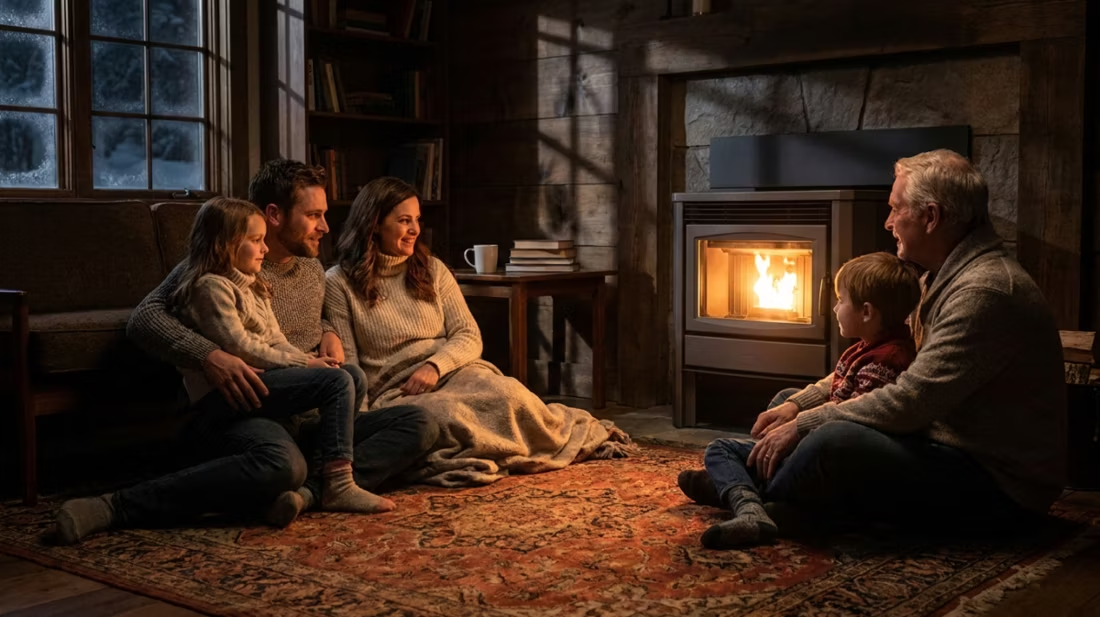
Pellet stoves have found a real niche in Clear Creek County precisely because so much of the housing here is occupied part-time. A hopper-fed stove can run for 24 hours or more on a single load, which matters when you're not around every day to feed a firebox, and it lights and shuts off with a thermostat rather than a match. Pellets from regional suppliers like Bear Mountain, Lignetics, and Forest Energy are widely stocked at Front Range and mountain-corridor dealers, and the cleaner burn is a genuine plus in a county where wildfire smoke already stresses summer and fall air quality—a certified pellet appliance puts out a fraction of the particulate of open wood burning.
Three steps. No salesperson until you're ready.
Tell us about your project
Your zip code, your situation, and the fuel you're leaning toward—or let the answers point you to one.
See what's actually available
The brands dealers within 100 miles genuinely carry—real options, never a catalog mirage.
Get your dealer & Project Guide
A trusted local dealer, plus the free Project Guide & Parts List that names every component of the job.
Frequently Asked Questions
How much does a pellet stove installation cost in Clear Creek County?
Most pellet stove installations in Clear Creek County run in the $3,500 to $7,000 range, depending on the unit, whether you're installing into an existing masonry fireplace (a pellet insert) or as a freestanding stove needing new wall venting, and how much electrical work is required for the outlet. Homes at higher elevations—Georgetown, Silver Plume, and other canyon communities above about 8,000 feet—sometimes see slightly higher install quotes because of the extra care needed on combustion-air venting at altitude. A local dealer will give you a firm number after seeing your home.
Do pellet stoves need special adjustment for Clear Creek County's elevation?
Yes. Most pellet stoves are calibrated for combustion at or near sea level, and once you're above roughly 4,500 to 5,000 feet, the thinner air changes how the auger feed and combustion blower need to be set. In Georgetown (8,530 feet) and especially Silver Plume (over 9,000 feet), a high-altitude kit—usually a modified blower or adjusted feed rate—is standard practice, not optional. Manufacturers like Lopi, Harman, and Enviro all offer altitude kits; a dealer familiar with mountain-corridor installs will know which kit your specific model needs and install it correctly the first time.
Will my pellet stove work during a power outage?
Not without backup power. Pellet stoves rely on electricity to run the auger that feeds fuel and the blower that pushes heat into the room, so a standard unit shuts down the moment power drops—which matters in a county where winter storms along the I-70 corridor regularly knock out electricity for hours at a time. Homeowners who want pellet convenience but need outage resilience typically pair the stove with a small battery backup or portable generator sized for the stove's low wattage draw (most pellet stoves use under 500 watts running). If reliable heat during outages is the priority, some Clear Creek County homeowners choose a wood stove for a backup heat source and keep pellet as their primary, everyday unit.
Are pellet stoves a better choice than wood stoves given the wildfire smoke here?
For everyday air quality, yes. EPA-certified pellet stoves burn compressed, uniform fuel with a controlled auger feed, producing far less particulate matter than open wood combustion—a meaningful difference in a county that already deals with wildfire smoke drifting through the canyons in late summer and fall. That said, plenty of Clear Creek County households still burn ponderosa pine, aspen, pinyon, and juniper cut under Arapaho-Roosevelt National Forest permits ($5 to $20 per cord, May through October), often as a secondary or backup heat source. Choosing pellet as your primary unit reduces your household's contribution to local smoke without giving up a real, radiant heat source.
How much do wood pellets cost and where do I buy them near Clear Creek County?
Bear Mountain, Lignetics, and Forest Energy are the pellet brands most commonly stocked by hearth dealers serving the Front Range and I-70 mountain corridor, and prices generally run somewhat higher here than in Denver-metro stores due to trucking distance up the canyon. Buying a season's supply—typically 2 to 3 tons for a primary-heat home—before the first big snow closes mountain roads is common practice for both full-time residents and cabin owners who want fuel on-site before they're not around to restock.
Do I need a permit to install a pellet stove in Clear Creek County?
Yes—new pellet stove and insert installations require a building permit through the Clear Creek County Building Department, covering the appliance, the venting, and any electrical work for the unit's power supply. If you're inside Idaho Springs or Georgetown town limits, check whether the municipality handles permitting separately from the county. Most local dealers pull the permit as part of the installation, so you typically don't have to navigate it yourself.
What size pellet stove do I need for a Clear Creek County home?
Sizing depends on square footage, insulation, and whether the stove is your primary or supplemental heat source—but Clear Creek County's climate zone 7 conditions and heavy winter heating load push sizing toward the larger end compared to lower-elevation Front Range towns. A small stove might handle a tight cabin or single great room, while a well-insulated 1,500 to 2,000 square foot home typically needs a mid-to-large unit to keep up through a full winter. Older, drafty mountain homes in places like Idaho Springs or Empire often need more capacity than their square footage alone would suggest. A local dealer will size the stove based on an in-home look at your specific house.
Can I install a pellet insert into my existing fireplace?
In most cases, yes. A pellet insert fits into an existing masonry fireplace opening and vents through the existing chimney with a liner, which is often simpler and less expensive than adding a new through-wall vent for a freestanding stove. This is a common upgrade path for older Clear Creek County homes built with a traditional open fireplace that was never an efficient heat source to begin with. Your dealer will check chimney condition and clearances before recommending an insert versus a freestanding unit.
Pellet vs. wood—which makes more sense for a Clear Creek County home?
Wood—cut locally as ponderosa pine, aspen, pinyon, or juniper through an Arapaho-Roosevelt National Forest permit—costs less in raw fuel and keeps working through a power outage, which matters given how often mountain storms interrupt electricity here. Pellet stoves cost more per BTU but require far less hands-on work: no splitting, stacking, or hauling, just loading bags into a hopper, and they burn cleaner in a county already sensitive to wildfire smoke. For full-time residents comfortable with wood handling, wood remains popular. For weekend and seasonal homeowners who want heat that starts reliably without a stockpile of split wood waiting for them, pellet is usually the better fit. Some households run both.
How often does a pellet stove need cleaning?
A clean pellet stove is a happy pellet stove. Plan on cleaning the burn pot about once a week when you're burning regularly—ash and clinkers gum up the air holes just like a pellet barbecue. Most pellet stove problems trace back to skipped cleaning that nobody explained up front. Some designs make it easy with a trapdoor burn pot: pull a lever and the gunk drops into the ash pan.
What's the difference between an insert and a zero-clearance fireplace?
An insert is a fireplace that slides into a pre-existing wood-burning fireplace—if you don't have one, there's nothing to insert it into. A zero-clearance fireplace is built into a framed wall, which makes it the answer for remodels and new construction. Simple test: existing masonry fireplace means insert; blank or framed wall means zero-clearance.
What is an in-home preview and do I need one?
It's a visit where a hearth professional measures your space, confirms the model you picked actually works in your home, and walks the specs—framing, gas line, venting, finish work—before anything is ordered. Some details you just can't know until you see the house. Never make a down payment without one; it's the single most-skipped step that burns buyers.
How much should I budget for a fireplace?
For an average home—covering the fireplace, the vent pipe, and basic installation—a budget between $3,900 and $5,500 gives you a lot of options across wood, gas, and pellet. By the time you add finish work, gas line, and electrical, the average complete installation lands between $5,000 and $12,000 all-in. In a remodel or new build, a good rule is to put about 2.5% of the total project cost toward the fireplace.
Pellet Brands Stocked Around Clear Creek County
Manufacturers will point you to the nearest stocking dealer.
Find your pellet stove in Clear Creek County.
Tell us a bit about your home—including its elevation and whether it's a full-time or seasonal residence—and we'll match you with a trusted local dealer and send over a free Project Guide & Parts List for your pellet project, including the correct venting for your altitude.
Find Your Fireplace →