
High-country heat for Clear Creek County homes.
Wood, gas, pellet, and electric fireplace resources for every mountain community in Clear Creek County—from Idaho Springs to Empire and Silver Plume. Get matched with a trusted local dealer who knows what actually holds heat above 8,000 feet.
Every Project Starts From One of These Five Situations
Zone 7 winters in a steep mountain corridor.
Clear Creek County sits along the I-70 corridor west of Denver, with towns ranging from Idaho Springs at roughly 7,500 feet up to Silver Plume and Georgetown well above 9,000 feet. Climate Zone 7 and 8,312 heating degree days put this county in the same heating-load territory as Bozeman, Montana—long, cold seasons where a single heat source rarely carries the whole house. Ponderosa pine, aspen, pinyon, and juniper are the wood species most homeowners here burn or see delivered, and many properties still hold Arapaho-Roosevelt National Forest cutting permits for personal firewood.
What you'll find on this hub: hearth retailers, service technicians, and fuel suppliers covering the whole county—from Idaho Springs and Georgetown down the canyon to Empire, Dumont, and Silver Plume. Pick your fuel below to see local dealers, realistic installation costs at altitude, and the units that actually perform in this climate. Whether you're heating a Georgetown Victorian or a newer build off Highway 103, this page is the starting point before you call anyone.
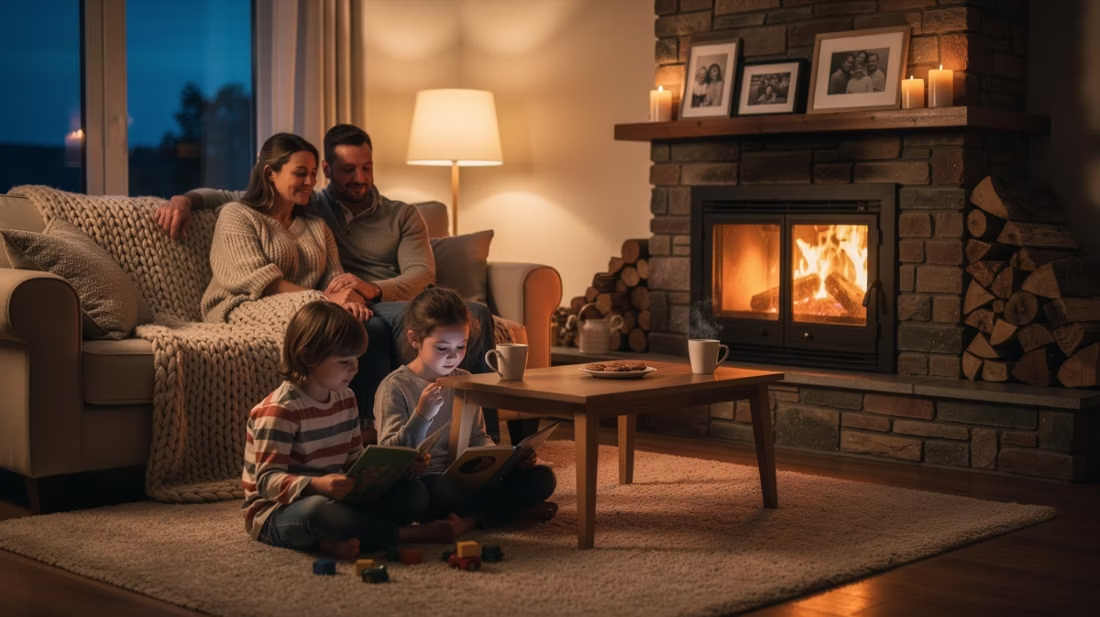
Four fuels. One honest answer for Clear Creek County.
Wood
81 models available near Clear Creek County.
Find your wood stove →Gas
365 models available near Clear Creek County.
Find your gas fireplace →Pellet
See what's available near Clear Creek County.
Find your pellet stove →Electric
11 models available near Clear Creek County.
Find your electric fireplace →Three steps. No salesperson until you're ready.
Tell us about your project
Your zip code, your situation, and the fuel you're leaning toward—or let the answers point you to one.
See what's actually available
The brands dealers within 100 miles genuinely carry—real options, never a catalog mirage.
Get your dealer & Project Guide
A trusted local dealer, plus the free Project Guide & Parts List that names every component of the job.
Frequently Asked Questions
Which fuel works best in Clear Creek County?
It depends on elevation and how the home is used. Wood remains a strong choice in the older canyon towns—Georgetown and Silver Plume homes were built around wood heat, and Arapaho-Roosevelt National Forest permits still let residents cut their own ponderosa pine, aspen, or pinyon at low cost. Gas is the practical choice where propane service is reliable (most of the county is off the natural gas grid, so this usually means propane tanks rather than piped gas)—no wood handling, and it keeps working through a snowed-in driveway. Pellet stoves are a solid middle option with Bear Mountain and Lignetics both distributed regionally, though homeowners at 9,000+ feet should confirm a dealer has experience with altitude-adjusted combustion settings. Electric works well as a supplemental unit in a bedroom or den but shouldn't be relied on as primary heat given 8,312 heating degree days and the real chance of winter power interruptions along the I-70 corridor. Most Clear Creek homes run two fuels—one for primary heat, one for backup or ambiance.
Do I need a permit to install a fireplace in Clear Creek County?
In most cases, yes. New wood stoves, wood inserts, gas fireplaces, gas inserts, and pellet stoves typically require a building permit through Clear Creek County's building department, and wood-burning appliances need to meet current EPA emissions standards to be installed. Propane installations also require a licensed gas-fitter for the tank and line connection, since most of the county relies on propane rather than piped natural gas. Electric fireplaces are usually permit-free unless the installation involves a new dedicated circuit or built-in hardwiring. Given the altitude and snow-load considerations on chimney and vent penetrations here, most homeowners let their installing retailer pull the permit rather than handling it themselves.
Are there wildfire smoke or air quality restrictions on wood burning in Clear Creek County?
Wildfire smoke is the primary air quality concern in Clear Creek County, more so than winter inversion smog seen in some Colorado basins. During active wildfire season, county and state air quality advisories may recommend limiting outdoor burning and non-essential wood smoke, particularly when regional smoke levels are already elevated from nearby forest fires. This is separate from routine heating-season wood stove use, which isn't subject to the kind of mandatory curtailment programs found in places like the Klamath Basin. Newer EPA-certified stoves burn meaningfully cleaner than older pre-1990s units, which matters both for local air quality and for reducing particulate buildup on steep, poorly-ventilated mountain lots.
Can one local hearth retailer handle all four fuel types?
Coverage varies by dealer, and it's worth confirming before you commit to one. Some mountain-corridor retailers stock wood, gas, and pellet units and can walk you through trade-offs across all three, but electric fireplace selection at altitude tends to be thinner and is sometimes handled through a secondary supplier or online order with local install support. If you're planning to cross-shop fuels—say, comparing a wood insert against a propane unit for a Georgetown remodel—ask a retailer directly whether they carry working displays of each, since a dealer's stated fuel coverage should be verified rather than assumed for a small-population county like this one.
How does service work for homes above 9,000 feet in Clear Creek County?
Most chimney sweeps and gas technicians serving Clear Creek County are based lower in the corridor, around Idaho Springs, and travel up-canyon to Georgetown, Silver Plume, and Empire. Expect a modest travel charge for the higher, harder-to-access properties, and expect scheduling to tighten considerably once the first heavy snow hits—pre-season service in September or early October is far easier to book than a January emergency call after a canyon road closure. Because winter power outages do happen along this stretch of I-70, many homeowners keep a wood or propane backup source even if their primary heat is electric or a gas unit with electronic ignition.
What's the typical cost range for fireplace installation across all fuel types in Clear Creek County?
Costs run somewhat higher here than in lower-elevation Colorado counties due to snow-load venting requirements and travel time for installers. Wood stove or insert installation: roughly $5,000–$10,000 for a typical retrofit, more for new chimney construction through a steep roofline. Gas or propane fireplace, insert, or stove: roughly $5,000–$12,000, with propane tank setup adding to the cost if a property doesn't already have one. Pellet stove or insert: roughly $5,000–$8,000. Electric fireplace: $200–$3,000 for the unit itself, plus $400–$1,200 in labor for anything beyond a plug-and-play wall unit. A trusted local dealer can give you a firm number once they've seen your specific venting path and roof pitch.
Can I install a fireplace myself?
If you're putting a fire in your house on purpose, it's best to work with an expert. Unless you're genuinely experienced in framing, gas line, vent pipe, and the national code on clearances to combustibles, have a professional do it—and ideally the same company that sells you the fireplace, so warranty, service, and liability all live under one roof.
How much should I budget for a fireplace?
For an average home—covering the fireplace, the vent pipe, and basic installation—a budget between $3,900 and $5,500 gives you a lot of options across wood, gas, and pellet. By the time you add finish work, gas line, and electrical, the average complete installation lands between $5,000 and $12,000 all-in. In a remodel or new build, a good rule is to put about 2.5% of the total project cost toward the fireplace.
Can a fireplace actually lower my heating bill?
Yes—by creating a comfort zone. A furnace heats every square foot of the house just to warm the one room you're in; a gas fireplace on low burns roughly a sixth of the gas a typical furnace does. Set the furnace around 55–60 degrees as a baseline, then heat the rooms your family actually uses. Families who heat this way commonly save $20–$60 a month.
Wood, gas, pellet, or electric—how do I choose?
Match the fuel to your life, not the other way around. Wood: lowest fuel cost and total power-outage independence, but you're hauling and stacking. Gas: press a button, set a thermostat, no maintenance to speak of. Pellet: wood economics with automatic feeding, in exchange for weekly cleaning and a need for electricity. Electric: plugs in anywhere with honest supplemental heat. Nobody regrets the fuel that fits how they actually live.
Stove and Fireplace Dealers in Clear Creek County
Listings include WhyFire partner dealers, dealers we have verified as authorized for the brands we recommend, and established local businesses that carry hearth products. Every listing shows which one it is. The ones marked Preferred run on WhyFire's software, so they can show you real pricing and book your appointment right here. No manufacturer pays for placement. How we verify dealers →
The Warm Store
Chimney Doctors
Spa Brokers
Get matched with a local dealer in Clear Creek County.
Pick your fuel below and we'll match you with a trusted local dealer who knows this terrain, plus a free Project Guide & Parts List—the exact parts, vent kit, and recommended installer for your home.
Find Your Fireplace →