
See what's actually possible for pellet heat in Boulder.
Pellet appliances are a narrow fit here—Boulder's building code steers most new installs toward gas or electric. We'll help you find out what's realistic for your address and connect you with a dealer who knows the local rules.
Every Project Starts From One of These Five Situations
Boulder's building code steers most homes toward gas or electric.
Boulder sits at 5,260 feet with a long, cold winter heating season and average winter lows around 22°F—cold enough that a solid-fuel appliance would make heating sense in a lot of towns. But Boulder isn't most towns. The city's Green Building and Compliance code effectively restricts new solid-fuel-burning appliances—wood or pellet—in new residential construction, part of a broader push tied to the region's wildfire-smoke and winter air-quality concerns. That's why pellet, like wood, shows up as a poor fit for most new installs here, while gas and electric remain the standard path.
That doesn't mean pellet is off the table entirely. Homes built before the current code, properties in unincorporated Boulder County (Gunbarrel, the foothills, Eldorado Springs), and replacement installs in existing hearths can sometimes still work. Regional pellet fuel—Bear Mountain, Lignetics, and Forest Energy are the brands that show up most often along the Front Range—is sold seasonally at hardware and feed stores in the area, including well-known local retailers like McGuckin Hardware. But pellet units need electricity to run the auger and blower, which matters in a region where Public Service Co of Colorado (Xcel) has run public safety power shutoffs during high wind and fire-danger days. Given all that, this page exists to help you figure out honestly whether pellet is workable for your specific address—not to talk you into a fuel that doesn't fit Boulder's code or climate reality.
Three steps. No salesperson until you're ready.
Tell us about your project
Your zip code, your situation, and the fuel you're leaning toward—or let the answers point you to one.
See what's actually available
The brands dealers within 100 miles genuinely carry—real options, never a catalog mirage.
Get your dealer & Project Guide
A trusted local dealer, plus the free Project Guide & Parts List that names every component of the job.
Frequently Asked Questions
Are pellet stoves even allowed in Boulder?
It depends on the building and the address. Boulder's Green Building and Compliance code restricts new solid-fuel-burning appliances—including pellet stoves—in new residential construction within city limits, as part of the city's air-quality and wildfire-smoke strategy. Existing homes with a pre-code unit can generally keep it, service it, and in many cases replace it in kind. Properties in unincorporated Boulder County fall under different rules through Boulder County Community Planning & Permitting. Before you buy anything, it's worth confirming your specific situation with the City of Boulder Planning & Development Services building division—a local dealer matched through our free Project Guide & Parts List will also flag this for you before you spend a dollar.
How much does it cost to install a pellet stove in Boulder?
Pellet is enough of a niche category in Boulder that there isn't a well-established local price benchmark the way there is for gas fireplaces, which dominate the market here. Costs are driven mostly by whether you're installing into an existing masonry opening, running new venting, and which stove or insert you choose. Because so few dealers in the Boulder-Denver corridor still stock pellet units, pricing varies more than it would for a mainstream fuel—the most reliable number is a quote from a dealer who's actually seen your chimney or wall and knows current code constraints for your address.
What's the difference between a pellet stove and a pellet insert?
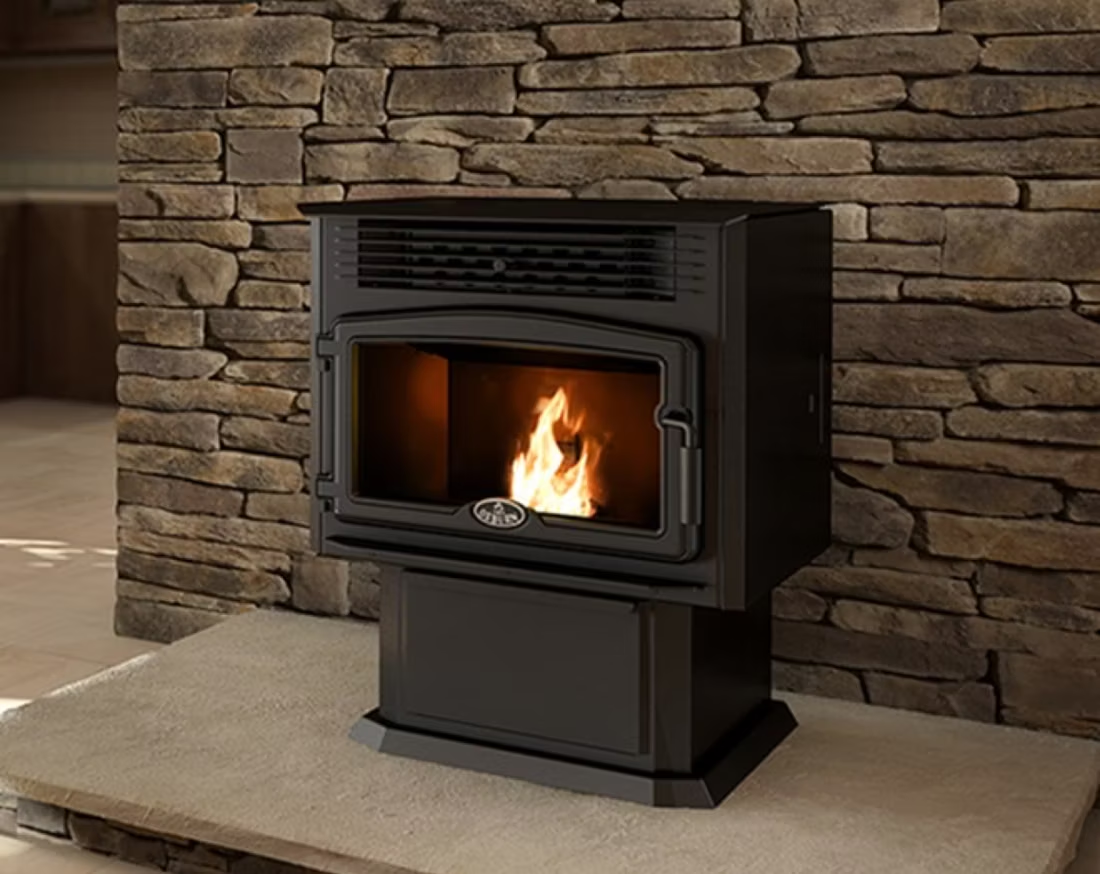
A pellet stove is a freestanding unit that vents through a wall or existing chimney chase and can sit almost anywhere with the right clearances. A pellet insert is built to slide into an existing masonry fireplace opening, using a liner run up the original chimney. In Boulder, an insert into a fireplace that predates the current building code is generally the more realistic path, since it's a replacement into an existing solid-fuel opening rather than a brand-new install—but confirm that with your local jurisdiction before assuming it's grandfathered in.
Will a pellet stove work during a power outage in Boulder?
No, not without a battery backup or generator. Pellet stoves rely on an electric auger to feed fuel and a blower to circulate heat, so they shut down the moment power drops. That matters along the Front Range foothills, where Public Service Co of Colorado has instituted public safety power shutoffs during high-wind, high-fire-danger days—exactly the kind of weather that also brings cold nights. If outage-proof heat is the priority, that's a point in favor of gas units with battery-backup ignition, which are far more common and code-friendly in Boulder anyway.
Where can I buy pellet fuel near Boulder?
Regional pellet brands including Bear Mountain, Lignetics, and Forest Energy are typically stocked at hardware stores and feed retailers along the Front Range, with local favorites like McGuckin Hardware carrying pellets seasonally each fall. Exact per-ton pricing isn't standardized for the Boulder market the way it might be in a state with a bigger pellet-stove installed base, and supply tightens up as cold weather sets in, so it's worth calling ahead in October or November rather than waiting for a cold snap.
What building department handles pellet stove permits in Boulder?
For addresses inside city limits, that's the City of Boulder Planning & Development Services building division, which enforces the city's Green Building and Compliance restrictions on new solid-fuel appliances. For addresses outside the city—unincorporated parts of Boulder County like Gunbarrel or the foothills—permitting runs through Boulder County Community Planning & Permitting instead, and the rules can differ. Given how localized these restrictions are, this is one of the few fuel categories where checking with the actual jurisdiction before buying anything really matters.
Pellet vs. gas—which is right for my Boulder home?
For most homes in Boulder today, gas wins on practicality: natural gas service is widely available in the city, a gas insert or fireplace installs without running into the code restrictions that apply to new solid-fuel appliances, and it delivers instant, thermostat-controlled heat. Pellet offers a Colorado-forest-sourced fuel (ponderosa pine and aspen byproducts are common inputs) and a real flame, but it needs electricity to run and faces installation limits under current city code. Pellet tends to make more sense for an existing home that already has a compliant setup, or a rural Boulder County property outside the city's building code jurisdiction.
Given Boulder's air-quality concerns, is pellet a cleaner-burning choice than wood?
Yes, relative to open wood burning—EPA-certified pellet stoves burn far more completely and produce a fraction of the particulate matter of a typical wood stove, which is part of why pellet appliances are treated differently from cordwood in a lot of air-quality programs nationally. That said, Boulder's air-quality concerns here are tied to regional wildfire smoke and winter inversion events, and any combustion appliance—pellet included—can be subject to temporary burn guidance issued by Boulder County Public Health or CDPHE during a bad smoke day. It's a real point in pellet's favor over wood, just not a blanket exemption from every restriction the region might issue.
Can I still get parts and service for an existing pellet stove in Boulder?
Generally yes, even though new retail pellet-stove sales are thin within city limits. Hearth technicians who service the wider Denver-Boulder corridor still support common pellet-stove brands used across Colorado's mountain and foothill communities, and pellet fuel compatible with most of those units—Bear Mountain, Lignetics, Forest Energy—is available seasonally at regional retailers. If you've got an older unit that predates the current code, it's worth getting matched with a dealer who still carries parts for your specific brand rather than assuming a big-box retailer will know the model.
Why is my open fireplace making my house colder?
Open fireplaces suck—literally. As the fire burns, it consumes air your furnace already paid to heat and pulls it out through the chimney, so the house is actually colder after the fire goes out than before you lit it. An insert fixes this: it seals the chimney, puts fixed glass across the front, and turns that hole in your house into a real heat source.
What's the difference between an insert and a zero-clearance fireplace?
An insert is a fireplace that slides into a pre-existing wood-burning fireplace—if you don't have one, there's nothing to insert it into. A zero-clearance fireplace is built into a framed wall, which makes it the answer for remodels and new construction. Simple test: existing masonry fireplace means insert; blank or framed wall means zero-clearance.
What is an in-home preview and do I need one?
It's a visit where a hearth professional measures your space, confirms the model you picked actually works in your home, and walks the specs—framing, gas line, venting, finish work—before anything is ordered. Some details you just can't know until you see the house. Never make a down payment without one; it's the single most-skipped step that burns buyers.
Can I install a fireplace myself?
If you're putting a fire in your house on purpose, it's best to work with an expert. Unless you're genuinely experienced in framing, gas line, vent pipe, and the national code on clearances to combustibles, have a professional do it—and ideally the same company that sells you the fireplace, so warranty, service, and liability all live under one roof.
Preferred Dealers in Boulder
Marked Preferred because they run on WhyFire's software—so they can show you real pricing and book your appointment right here. No manufacturer pays for placement. How we verify dealers →
Pellet Brands Stocked Around Boulder
Manufacturers will point you to the nearest stocking dealer.
Find out if pellet heat works for your Boulder home.
Tell us about your address and existing setup, and we'll give you an honest read on whether pellet is workable under Boulder's code—plus a free Project Guide & Parts List with the exact venting and parts needed, and a match to a local dealer who knows the rules.
Find Your Fireplace →