
Clean Heat That Fits Boulder's Building Code.
No venting, no smoke, no gas line required—an electric fireplace works in a Mapleton Hill Victorian or a new net-zero build in Gunbarrel. Find the right unit and connect with a trusted local dealer.
Every Project Starts From One of These Five Situations
Boulder's rules make electric the practical default for new fireplaces.
Boulder sits at 5,260 feet in climate zone 5B, with an average winter low around 22°F and a real, sustained heating season from October through April, though nowhere near as brutal as Fargo or International Falls. What sets Boulder apart isn't the climate, it's the code. The city's building and air quality regulations have long restricted new solid-fuel appliances, and Boulder's more recent push toward all-electric new construction under its climate commitments has made wood stoves and pellet stoves a non-starter for most new installs—hence why both fuels are essentially off the table here.
That leaves gas and electric as the two realistic paths, and electric has a specific niche: no chimney, no gas line, no combustion byproducts, and none of the wildfire-smoke concerns that already put Boulder's summer and fall air quality on alert most years. Public Service Co of Colorado (Xcel Energy) supplies residential power here at roughly $0.1505 per kWh, and as the utility's Colorado grid keeps adding renewable generation, an electric fireplace fits the values of a lot of Boulder households—including renters and HOA-governed condos near CU-Boulder where venting a gas or wood unit simply isn't an option.
Three steps. No salesperson until you're ready.
Tell us about your project
Your zip code, your situation, and the fuel you're leaning toward—or let the answers point you to one.
See what's actually available
The brands dealers within 100 miles genuinely carry—real options, never a catalog mirage.
Get your dealer & Project Guide
A trusted local dealer, plus the free Project Guide & Parts List that names every component of the job.
Frequently Asked Questions
How much does an electric fireplace installation cost in Boulder?
Plug-in electric fireplaces and inserts that use a standard 120V outlet run as low as $300–$800 for the unit itself, with no real installation cost beyond mounting. Built-in linear electric fireplaces or larger inserts that need a dedicated 20-amp circuit run higher—typically $1,200–$2,500 once an electrician runs new wiring and the unit is set into a wall or existing masonry firebox. If you're converting an old wood-burning fireplace in an older Mapleton Hill or Newlands home, expect the insert plus minor surround work to land in that same $1,200–$2,500 range. A licensed electrician handles any new-circuit work, and the City of Boulder Building Division permits that portion when applicable.
Will an electric fireplace actually heat my Boulder home during winter?
Most electric fireplaces put out around 5,000 BTU (roughly 1,500 watts) of supplemental heat, enough to comfortably warm a single room of 400–500 square feet—useful on the shoulder-season nights and the many 22°F-average winter evenings Boulder sees, but not a substitute for your furnace or heat pump on the coldest stretches of Boulder's long, sustained winter. Think of it the way most Boulder homeowners do: zone heat for the room you're actually using, paired with central heating for the rest of the house. If you're hoping to heat an entire floor or an older, poorly insulated home near downtown, talk to a local dealer about a larger insert or a different fuel entirely.
Can I install an electric insert into my existing masonry fireplace?
Yes, and it's one of the more common projects for Boulder's older housing stock—plenty of homes near University Hill and downtown have existing masonry fireboxes that were built for wood but have sat unused or under-code for years. An electric insert slides into that opening, plugs into a nearby outlet or a newly run dedicated circuit, and gives you real flame-effect ambiance and supplemental heat without touching the chimney or triggering any solid-fuel restrictions. It's typically the fastest, least invasive upgrade for a fireplace that hasn't been burned in years.
Why can't I install a new wood-burning fireplace in Boulder?
Boulder has restricted new solid-fuel fireplace installations for years as part of its air quality and building rules, and that's reflected in why wood and pellet appliances just aren't a realistic option for most homeowners here—new construction and major remodels are steered toward gas or electric instead. Wildfire smoke is already a recurring concern along the Front Range in late summer and fall, and city policy has generally aimed to avoid adding wood smoke to that picture in dense residential areas. If you're set on a wood-burning appliance, it's worth a direct conversation with the City of Boulder Building Division before you plan around one—but for the vast majority of Boulder projects, gas or electric is where things land.
Do I need a permit for an electric fireplace in Boulder?
A plug-in electric fireplace or insert that runs off an existing outlet generally doesn't require a permit—there's no venting, no gas line, and no structural change. If your unit needs a new dedicated circuit (common with larger built-in linear fireplaces), the electrical work itself needs a permit through the City of Boulder Building Division, and a licensed electrician pulls that as part of the job. Either way, you're skipping the chimney inspections, clearance requirements, and combustion-air rules that come with gas or wood installs—one of the real advantages of going electric in Boulder.
How much does it cost to run an electric fireplace in Boulder?
At Public Service Co of Colorado's residential rate of about $0.1505 per kWh, a typical 1,500-watt electric fireplace costs roughly $0.23 per hour to run on high. Used for a few hours most evenings through Boulder's heating season, that works out to somewhere around $15–$25 a month depending on settings and how often the heater element (versus just the flame effect) is running. That's a fraction of what it costs to raise the thermostat on your central system, which is exactly why most owners use it as targeted, occasional-room heat rather than a whole-house solution.
Electric vs. gas—which is right for my Boulder home?
Gas fireplaces put out more real heat, work during power outages, and are a common, code-compliant choice throughout Boulder wherever natural gas service already reaches the house. Electric fireplaces skip the gas line and venting entirely, install in a fraction of the time, and work in condos, rentals, and HOA communities where running a flue simply isn't allowed. For a primary supplemental heat source in an older Boulder home with existing gas service, gas is usually the better fit. For ambiance, zone heat, or a unit going into a rental, a top-floor condo, or a net-zero new build where gas hookups aren't part of the plan, electric is the more practical call.
Are electric fireplaces allowed in Boulder rental properties, condos, or HOA communities?
Yes—this is one of the main reasons electric fireplaces have gained ground in Boulder's condo and rental market near CU-Boulder and downtown. Because there's no venting, no chimney, and no gas line to run, a plug-in electric insert or wall-mounted unit typically doesn't require landlord sign-off on structural changes or HOA approval the way a gas or wood installation would. It's a straightforward way to add real ambiance and supplemental heat to a unit where your options are otherwise limited.
What's the difference between an electric fireplace and an electric insert?
An electric fireplace is a standalone unit—wall-mounted, freestanding, or built into new framing—well suited to newer Boulder construction like the net-zero homes going up in Gunbarrel or Wonderland Creek where there's no existing masonry to work with. An electric insert is sized to slide into an existing fireplace opening, which makes it the natural choice for older homes near Mapleton Hill or University Hill that already have a masonry firebox sitting unused. Both run off standard or dedicated circuits and both skip venting entirely—the right choice mostly comes down to whether you're starting from an empty wall or an existing hearth.
Can I put a TV above my fireplace?
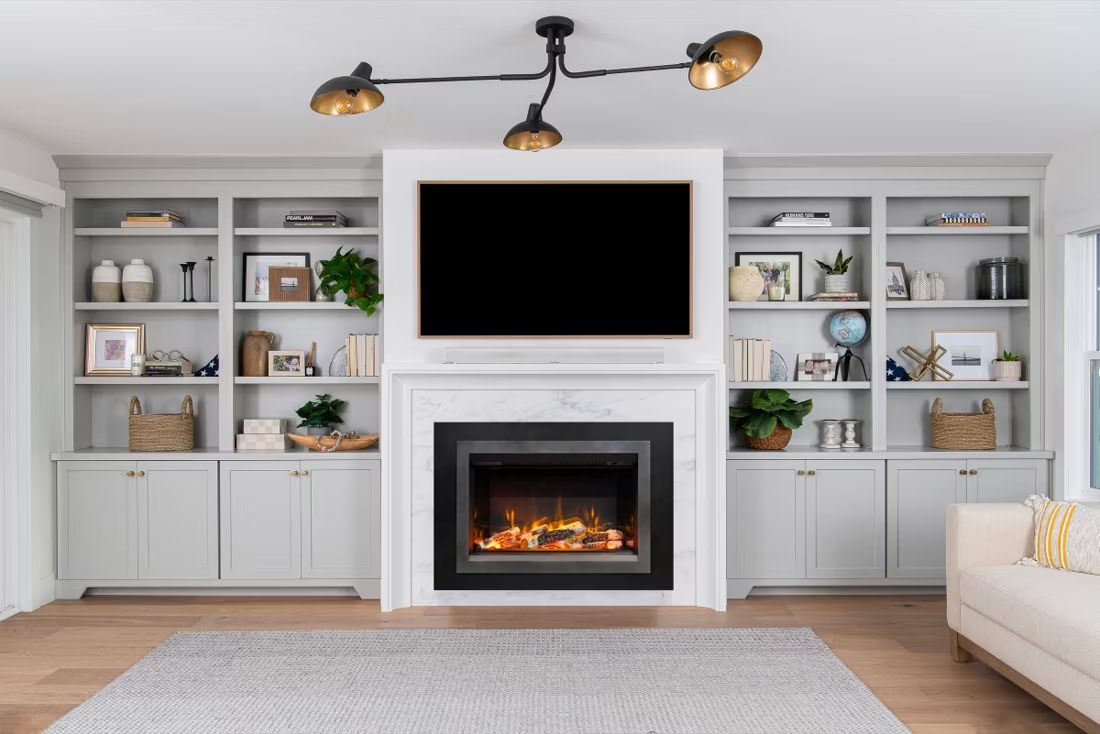
Yes—with an asterisk. Fireplaces are hot and TVs don't like heat. Either put a mantel between them to deflect rising warmth, or choose a fireplace with heat-management technology that creates a cool zone on the wall above—the wall stays around 125 degrees, barely warm, while the room still gets full heat. If you like clean lines and don't want a mantel, heat management is the answer.
How much does an electric fireplace cost to run?
With the heater on, a typical unit draws about 1,500 watts—at average electric rates that's roughly 20 cents an hour. Run the flame effect alone and it costs pennies; the flames are LED-driven and use about as much power as a light bulb. There's no pilot light, no fuel delivery, and essentially no maintenance.
What is an in-home preview and do I need one?
It's a visit where a hearth professional measures your space, confirms the model you picked actually works in your home, and walks the specs—framing, gas line, venting, finish work—before anything is ordered. Some details you just can't know until you see the house. Never make a down payment without one; it's the single most-skipped step that burns buyers.
Can I install a fireplace myself?
If you're putting a fire in your house on purpose, it's best to work with an expert. Unless you're genuinely experienced in framing, gas line, vent pipe, and the national code on clearances to combustibles, have a professional do it—and ideally the same company that sells you the fireplace, so warranty, service, and liability all live under one roof.
Preferred Dealers in Boulder
Marked Preferred because they run on WhyFire's software—so they can show you real pricing and book your appointment right here. No manufacturer pays for placement. How we verify dealers →
Electric Service in Boulder
An electric fireplace's heater draws about 1,500 watts—pennies per hour at local rates.
Public Service Co Of Colorado
Find your electric fireplace in Boulder.
Tell us a bit about your Boulder home and we'll match you with a trusted local dealer and send over your free Project Guide & Parts List—the exact electric fireplace or insert for your space, sized right, with no big-box guesswork.
Find Your Fireplace →