
Warm Up Without Waiting on a Spare the Air Ban.
Woodland winters are mild, but Sacramento Valley smoke advisories still shut down open wood fires. A pellet stove keeps the heat on and stays code-compliant. Find the right unit and a trusted local dealer.
Every Project Starts From One of These Five Situations
Clean heat that beats the burn ban.
Woodland sits in the Sacramento Valley at just 41 feet of elevation, and winters here are genuinely mild—average lows around 38°F and only 2,432 heating degree days a year, a fraction of what a place like Duluth MN racks up in a single season. That means most Yolo County homes don't need a stove to carry the whole house through winter; they need reliable, efficient supplemental heat for the living room on the handful of genuinely cold nights, plus something that still works when the valley's air quality gets bad.
That's the real driver behind pellet heat in Woodland: this is a designated non-attainment area, and wildfire smoke plus winter inversion regularly trigger Check Before You Burn and Spare the Air restrictions across the Sacramento Valley. Uncertified open-hearth wood burning gets curtailed on those days—but EPA-certified pellet stoves are typically exempt, so a Woodland household can still get real heat while a neighbor's wood fireplace sits cold. Pellets themselves are easy to source locally: Bear Mountain, Lignetics, and Pacific Pellet bags are stocked at farm and hearth stores throughout the region, no Forest Service cutting permit or truck bed of oak and madrone required. And with PG&E residential electric rates running among the highest in the country at roughly $0.317 per kWh, a pellet stove's modest auger-and-blower draw is a far cheaper way to heat a room than electric resistance space heaters.
Three steps. No salesperson until you're ready.
Tell us about your project
Your zip code, your situation, and the fuel you're leaning toward—or let the answers point you to one.
See what's actually available
The brands dealers within 100 miles genuinely carry—real options, never a catalog mirage.
Get your dealer & Project Guide
A trusted local dealer, plus the free Project Guide & Parts List that names every component of the job.
Frequently Asked Questions
How much does a pellet stove installation cost in Woodland?
A typical pellet stove or insert installation in Woodland runs in the $3,500 to $7,000 range, depending on the unit and whether it's a freestanding stove venting through an exterior wall or an insert going into an existing masonry fireplace. Pellet venting uses smaller PL-rated pipe rather than a full Class A chimney, which usually keeps costs below a comparable wood stove install. Homes without an existing hearth or fireplace opening will run toward the higher end once wall penetration and hearth pad work are factored in.
Is a pellet stove really worth it in a mild climate like Woodland's?
With only about 2,432 heating degree days a year and average winter lows around 38°F, Woodland doesn't need whole-home wood or pellet heat the way a Sierra foothill town or a place like Bozeman MT does. But that's exactly why pellet stoves fit well here—most local buyers are looking for supplemental zone heat for a family room or open living space, not a furnace replacement, and a mid-size pellet insert covers that easily. The bigger local driver is air quality: on Spare the Air and Check Before You Burn advisory days, which the Sacramento Valley sees regularly due to winter inversion and wildfire smoke, EPA-certified pellet stoves are typically allowed to keep running when older uncertified wood stoves are not.
Where can I buy pellet fuel in Woodland?
Bear Mountain, Lignetics, and Pacific Pellet are all widely stocked at farm supply and hearth stores throughout Yolo County, typically sold in 40-pound bags running roughly $6 to $8 each, or $300 to $400 per ton if you buy by the pallet. Buying in late summer or early fall, before Spare the Air season drives demand up, is the usual way locals get ahead of price spikes and avoid scrambling for stock during the first cold snap.
What size pellet stove do I need for my Woodland home?
Because Woodland's heating season is short and mild, most homeowners here do fine with a small to mid-size pellet stove or insert rated for 1,000 to 1,800 square feet, used as zone heat for a main living area rather than whole-house heat. A larger, older farmhouse-style home in outlying Yolo County with less insulation may want a bigger unit or a second zone heater for a detached space. A local dealer will size the unit to your square footage and layout during an in-home visit—oversizing a pellet stove in a mild climate just means you're running it at low, inefficient settings most of the season.
Do I need a permit to install a pellet stove in Woodland?
Yes—new pellet stove and insert installations typically require a building permit through the City of Woodland Building Division, or the Yolo County Building Division for homes outside city limits. The permit process confirms proper wall clearances, venting termination location, and hearth pad compliance. Most local hearth dealers handle the permit application as part of the installation, so it's rarely something homeowners have to navigate on their own.
Will my pellet stove work during a power outage?
Not without a backup power source—pellet stoves rely on an electric auger to feed fuel and a blower to distribute heat, so a standard unit goes dark the moment power drops. That matters more in Woodland than in many places, since PG&E has used Public Safety Power Shutoffs during high fire-risk conditions in Northern California in recent years. Homeowners who want pellet heat with outage resilience typically pair the stove with a small battery backup unit or a portable generator sized for the stove's draw—ask your local dealer about UPS options when you're selecting a model.
How much maintenance does a pellet stove need?
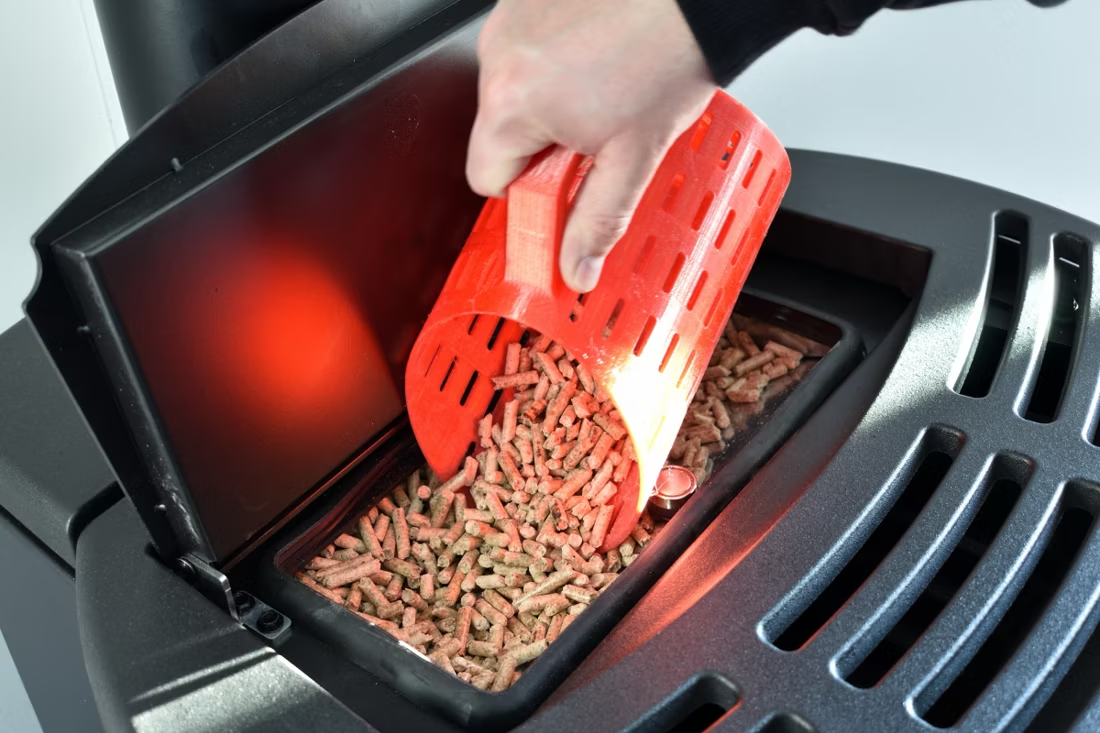
Pellet stoves need more frequent light maintenance than wood stoves but far less heavy cleaning. Plan on emptying the ash pan every few days during regular use, cleaning the burn pot weekly, and scheduling a full professional cleaning of the exhaust vent, hopper, and auger mechanism once a year—typically before the fall Spare the Air season ramps up. Because pellet venting is smaller-diameter PL pipe rather than a full masonry chimney, the annual service is quicker and less expensive than a traditional chimney sweep.
What are the best pellet stove brands available near Woodland?
Local Northern California dealers commonly carry Harman, Lopi, and Enviro pellet stoves and inserts, all of which perform well with the Bear Mountain, Lignetics, and Pacific Pellet fuel that's already stocked regionally. Harman units are known for heavier-duty auger systems that handle a wider range of pellet quality, while Lopi and Enviro tend to run quieter—a real consideration if the stove is going in an open living space. A local dealer can walk you through which models they service directly, which matters for warranty and parts availability down the road.
Pellet stove vs. gas fireplace—which makes more sense in Woodland?
Gas fireplaces offer instant on-off heat with no fuel storage or ash cleanup, and most homes in Woodland already have PG&E natural gas service, making a gas insert or fireplace a straightforward retrofit. Pellet stoves take a bit more hands-on management—loading the hopper, emptying ash—but they burn a renewable, locally available fuel and, critically, are typically exempt from the wood-burning restrictions PG&E's service area and the Yolo-Solano Air Quality Management District impose during smoke advisories, while some gas appliances have their own restrictions in extreme air quality events. For a primary living space where convenience matters most, gas often wins. For homeowners who want a hedge against both cold snaps and burn-day restrictions, pellet is worth a close look.
What's the difference between an insert and a zero-clearance fireplace?
An insert is a fireplace that slides into a pre-existing wood-burning fireplace—if you don't have one, there's nothing to insert it into. A zero-clearance fireplace is built into a framed wall, which makes it the answer for remodels and new construction. Simple test: existing masonry fireplace means insert; blank or framed wall means zero-clearance.
Why is a fireplace insert so efficient?
An insert does two things: it seals the chimney completely, so you stop losing air you already paid to heat, and it radiates warmth into the room through the firebox and glass. Most add a heat-exchange fan that pulls cool room air underneath, wraps it around the hot firebox, and pushes it back out warm. Your home is more efficient before you've even lit the first fire.
Does a fireplace add value to my home?
On average, a fireplace adds back to the home about the same amount you spent installing it. Add the monthly savings from heating the rooms you actually use instead of the whole house—often hundreds of dollars a year—and the value case is strong before you even count what a fire does for how your family uses the room.
How much should I budget for a fireplace?
For an average home—covering the fireplace, the vent pipe, and basic installation—a budget between $3,900 and $5,500 gives you a lot of options across wood, gas, and pellet. By the time you add finish work, gas line, and electrical, the average complete installation lands between $5,000 and $12,000 all-in. In a remodel or new build, a good rule is to put about 2.5% of the total project cost toward the fireplace.
Pellet Brands Stocked Around Woodland
Manufacturers will point you to the nearest stocking dealer.
Find your pellet fireplace in Woodland.
Tell us a bit about your home and we'll put together a free Project Guide & Parts List—the right pellet stove or insert, the vent kit it needs, and a trusted local Woodland dealer to install it.
Find Your Fireplace →