
Warmth that works on Woodland's no-burn days.
In the Sacramento Valley's mild, smoke-conscious winters, gas fireplaces deliver instant heat without waiting out a burn advisory. Find the right unit for your Woodland home and connect with a trusted local dealer.
Every Project Starts From One of These Five Situations
Convenient heat for Woodland's mild winters and smoky summers.
Woodland sits at just 41 feet elevation in the Sacramento Valley, where winters are short and mild—average lows hover around 38°F and the city logs roughly 2,432 heating degree days a year, a fraction of what a place like Duluth, Minnesota sees in a single season. Wood heat has deep roots here, with oak, madrone, and Douglas fir sourced from the nearby Sierra foothills, but Yolo County sits within a federal ozone and particulate non-attainment area, and wildfire smoke is now a regular feature of late-summer and fall air quality. Winter valley inversions trigger mandatory Check Before You Burn restrictions through the Yolo-Solano Air Quality Management District, when uncertified wood-burning devices are barred from operating entirely.
That's where gas has carved out a real role in Woodland homes. Pacific Gas & Electric Company (PG&E) supplies both natural gas and electric service to most of the city, and a gas fireplace or insert is exempt from burn-day curtailments—it works on the smokiest no-burn night just as reliably as a clear one. With PG&E's residential electric rate running a steep $0.317 per kWh, gas heat is also markedly cheaper to operate than electric resistance heaters for the zone heating many Woodland homeowners want in a family room or converted den. The tradeoff, as always, is that a gas unit needs a live gas line or propane tank—something a local installer can size and permit correctly from day one.
Three steps. No salesperson until you're ready.
Tell us about your project
Your zip code, your situation, and the fuel you're leaning toward—or let the answers point you to one.
See what's actually available
The brands dealers within 100 miles genuinely carry—real options, never a catalog mirage.
Get your dealer & Project Guide
A trusted local dealer, plus the free Project Guide & Parts List that names every component of the job.
Frequently Asked Questions
How much does a gas fireplace installation cost in Woodland?
Typical gas fireplace and insert installations in Woodland run in the $3,500 to $9,000 range, depending on the unit, whether a new gas line needs to be run, and the venting path. A direct-vent insert dropped into an existing masonry fireplace with gas already stubbed nearby sits at the lower end. New construction, a room addition, or a location that requires running gas line from the meter pushes the project toward the higher end. If you're on propane rather than PG&E natural gas, add the cost of a tank if you don't already have one. A local dealer will give you a firm number after seeing your home.
Can I convert my existing wood fireplace to gas?
Yes, and it's a common upgrade in Woodland's older neighborhoods, including homes near the historic downtown with original masonry fireboxes. A gas insert slides into the existing firebox and vents through a stainless liner run up your current chimney, so you keep the fireplace opening you already have. Most conversions in town run $4,000 to $8,000, with the final number driven by insert selection and whether your home already has a gas line nearby. The upside beyond convenience: a converted gas fireplace isn't subject to the county's winter burn-day restrictions the way an open wood fireplace is.
Do I need natural gas, or can I use propane?
Either works, and which one you use mostly comes down to where in Yolo County you live. PG&E provides natural gas throughout most of Woodland proper, so homes with an existing gas water heater, range, or furnace can usually add a fireplace with minimal new line work. Outside city limits, in the county's more rural stretches, propane tanks are the standard fallback. Most gas fireplace models can be configured for either fuel with the correct orifice—your installer sets this up as part of the job.
Will my gas fireplace work during a PG&E power shutoff?
In most cases, yes. Standard direct-vent gas fireplaces with intermittent pilot ignition (IPI) run on a battery backup that keeps the igniter working when the grid goes down—a real consideration in Woodland given how often PG&E calls Public Safety Power Shutoffs during high fire-risk, high-wind conditions in late summer and fall. Valor fireplaces go a step further: their pilot assembly generates its own electricity through the thermocouple, so there's no battery to remember or replace at all. Ask your local dealer which ignition system is on any model you're considering, especially if backup heat during an outage matters to you.
What's the difference between a gas fireplace, gas insert, and gas stove?
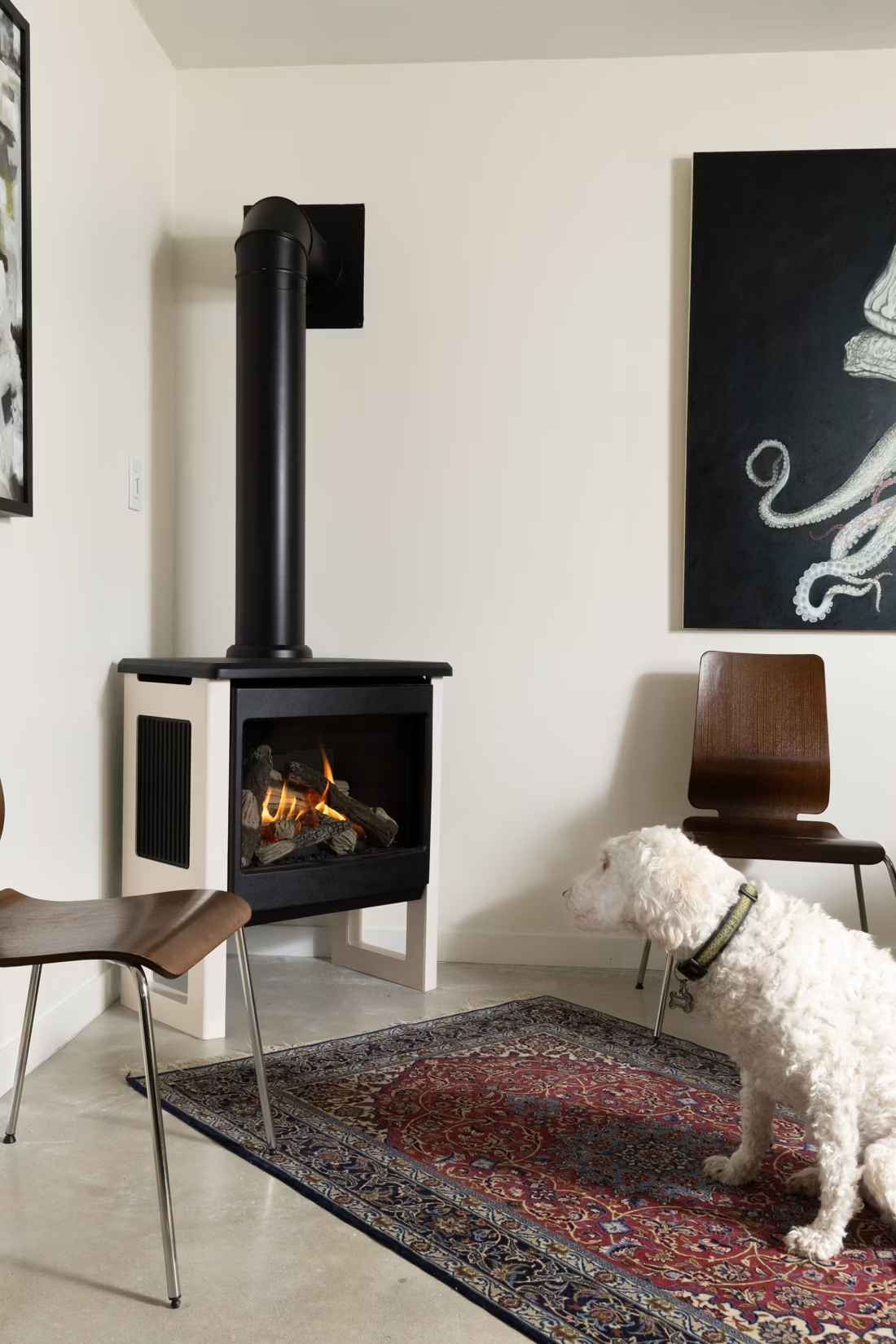
A gas fireplace is a fully built-in unit framed into a wall—the right call for new construction or a remodel where there's no existing fireplace. A gas insert is sized to slide into an existing masonry firebox, which is common in Woodland's older housing stock, and uses the existing chimney as its vent chase. A gas stove is a freestanding cast-iron or steel unit that sits on the floor and vents through a wall or ceiling, useful in a room with no fireplace at all. Most homeowners upgrading an existing wood fireplace go the insert route; those building new go with a built-in fireplace or a freestanding stove.
Do I need a permit to install a gas fireplace in Woodland?
Yes. The City of Woodland Building Division requires a building permit for the appliance installation and a separate permit for any new gas line work, which has to be run by a licensed gas-fitter. For homes outside city limits, Yolo County Building Division handles the same process. Most established hearth dealers pull both permits as part of the installation and coordinate the inspection, so you're not left managing two separate trades yourself.
What's the difference between vented and vent-free gas fireplaces?
Vented (direct-vent) units draw combustion air from outside and exhaust the byproducts back outside through sealed venting—they're the standard choice and the one nearly every Woodland installer defaults to. Vent-free units burn directly into the room without exterior venting; they're technically more efficient but release moisture and trace combustion byproducts into the living space, and California's mechanical code puts tight limits on room size and BTU output for any ventless appliance. Given Yolo County's existing air quality non-attainment status, most local dealers steer homeowners toward direct-vent units, and it's what you'll typically be quoted unless you ask otherwise.
How often should my gas fireplace be serviced?
Plan on an annual inspection, ideally before the first cool nights of fall smoke season roll in. A certified technician checks the burner, pilot assembly, venting, and gas connections, and cleans the glass and interior—a straightforward visit that typically runs $150 to $250 in the Woodland area. It's a smaller job than wood chimney sweeping, but skipping it is still the most common cause of pilot and ignition problems down the line.
Gas vs. wood—which is right for my Woodland home?
Wood has real roots here—oak, madrone, and Douglas fir are all available through Forest Service cutting permits in the Eldorado and Tahoe National Forests within a couple hours' drive, typically $5 to $20 a cord. But uncertified wood-burning devices get shut down entirely on Check Before You Burn advisory days, which happen regularly during winter valley inversions, and wildfire smoke season adds another layer of air quality concern most of the year. Gas sidesteps both problems: it runs on any day, doesn't add to particulate pollution, and delivers instant heat without cutting, hauling, or stacking cordwood. For a primary living space in Woodland, gas is usually the more practical daily-use choice; some homeowners still keep a wood-burning unit elsewhere on the property for backup heat during a PG&E outage or for the ambiance of a real fire when air quality allows it.
What's the difference between an insert and a zero-clearance fireplace?
An insert is a fireplace that slides into a pre-existing wood-burning fireplace—if you don't have one, there's nothing to insert it into. A zero-clearance fireplace is built into a framed wall, which makes it the answer for remodels and new construction. Simple test: existing masonry fireplace means insert; blank or framed wall means zero-clearance.
Why is a fireplace insert so efficient?
An insert does two things: it seals the chimney completely, so you stop losing air you already paid to heat, and it radiates warmth into the room through the firebox and glass. Most add a heat-exchange fan that pulls cool room air underneath, wraps it around the hot firebox, and pushes it back out warm. Your home is more efficient before you've even lit the first fire.
How much should I budget for a fireplace?
For an average home—covering the fireplace, the vent pipe, and basic installation—a budget between $3,900 and $5,500 gives you a lot of options across wood, gas, and pellet. By the time you add finish work, gas line, and electrical, the average complete installation lands between $5,000 and $12,000 all-in. In a remodel or new build, a good rule is to put about 2.5% of the total project cost toward the fireplace.
Can a fireplace actually lower my heating bill?
Yes—by creating a comfort zone. A furnace heats every square foot of the house just to warm the one room you're in; a gas fireplace on low burns roughly a sixth of the gas a typical furnace does. Set the furnace around 55–60 degrees as a baseline, then heat the rooms your family actually uses. Families who heat this way commonly save $20–$60 a month.
Find your gas fireplace in Woodland.
Tell us about your home and we'll match you with a trusted local dealer and send over your free Project Guide & Parts List—the exact parts, including the vent kit, for your gas fireplace project in Woodland.
Find Your Fireplace →