
Pellet Stoves in Stockton: A Niche Fit for Mild Central Valley Winters.
With winter lows averaging 39°F and a short, mild heating season, Stockton doesn't need pellet heat to survive winter—but some homeowners still want it, often for reasons that have nothing to do with staying warm.
Every Project Starts From One of These Five Situations
Stockton's climate rarely demands the heat pellet stoves are built to deliver.
Stockton sits at just 9 feet of elevation in California's Central Valley, in climate zone 3B, where winter lows average 39°F and the entire heating season is mild and short—a fraction of the sustained cold a place like Bozeman, Montana or Duluth, Minnesota racks up in a single January. Whole-house pellet heating, designed to run a hopper and auger through months of sustained cold, simply isn't a natural match for a place where most winter nights don't dip below the low 40s.
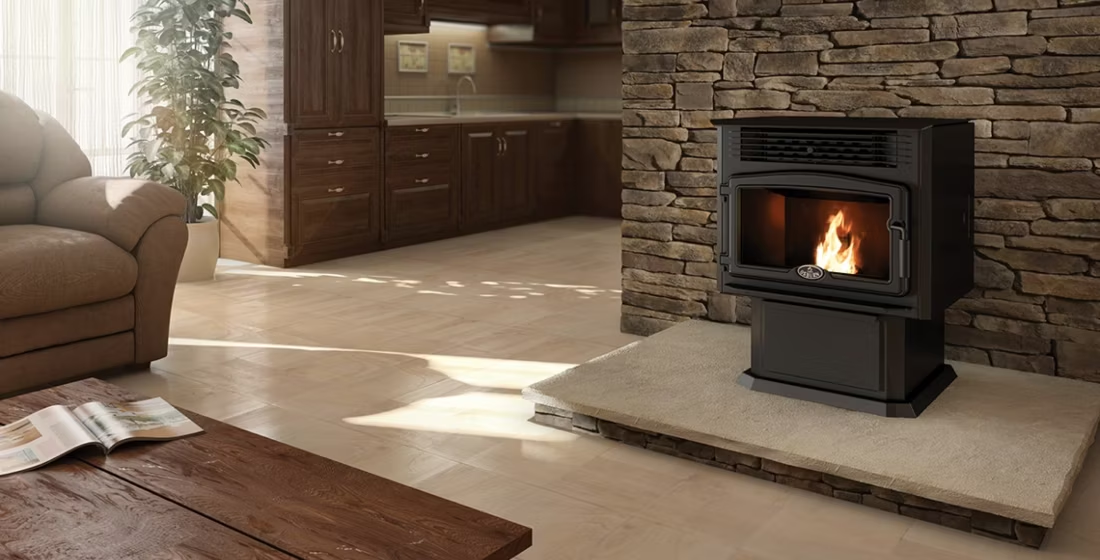
That said, pellet stoves aren't unheard of here. San Joaquin County sits in a federal non-attainment area, and the San Joaquin Valley Air Pollution Control District runs a mandatory winter curtailment program (Check Before You Burn) that restricts wood-burning on high-pollution days. EPA-certified pellet stoves are typically exempt from those curtailment restrictions, which is the main reason some Stockton homeowners install one—not for primary heat, but for a clean-burning appliance they can legally run on days when the neighbor's wood stove can't.
Three steps. No salesperson until you're ready.
Tell us about your project
Your zip code, your situation, and the fuel you're leaning toward—or let the answers point you to one.
See what's actually available
The brands dealers within 100 miles genuinely carry—real options, never a catalog mirage.
Get your dealer & Project Guide
A trusted local dealer, plus the free Project Guide & Parts List that names every component of the job.
Frequently Asked Questions
How common are pellet stoves in Stockton?
Not very. With winter lows averaging 39°F and a short, mild heating season, Stockton's climate is closer to mild-winter cities than to true cold-climate markets. Compare that to Fargo, North Dakota or Duluth, Minnesota, where pellet and wood stoves run daily for months—in Stockton, most homes rely on central gas furnaces and heat pumps, and a pellet stove is more likely to show up as a secondary or occasional-use appliance than a primary heat source.
If Stockton winters are mild, why would anyone install a pellet stove here?
The most common reasons we see locally: exemption from the San Joaquin Valley Air District's winter wood-burning curtailment days (pellet stoves are typically allowed to operate when wood stoves aren't), a desire for radiant zone heat in one room during the occasional cold snap, or simply wanting the ambiance of a real flame without the smoke and ash of a wood-burning unit. It's rarely about whole-home heating capacity.
What is Check Before You Burn, and how does it affect pellet stoves in Stockton?
The San Joaquin Valley Air Pollution Control District issues mandatory wood-burning curtailment alerts on high-pollution winter days, part of its Check Before You Burn program addressing the Valley's non-attainment status and winter inversion layers that trap smoke close to the ground. Uncertified wood stoves and open fireplaces are typically banned on these days; EPA-certified pellet stoves are generally exempt because they burn cleaner and more consistently. If air quality compliance is part of your reason for considering a pellet appliance, a local dealer can confirm current district rules for your specific unit.
How much does a pellet stove or insert cost to install in Stockton?
Pricing depends heavily on the unit, whether it's a freestanding stove or an insert going into an existing fireplace, and what venting work is needed—direct-vent pellet units generally use smaller PL-vent pipe than a masonry wood chimney, which can simplify installation in a single-story Stockton tract home. Because pellet heat is a low-volume product locally, pricing isn't standardized the way it is in cold-climate markets, so the most reliable number is a firm quote from a local dealer after they see your fireplace or install location.
Where can I buy wood pellets in Stockton?
Regional brands like Bear Mountain, Lignetics, and Pacific Pellet are the most common labels sold through farm and feed stores, hardware retailers, and hearth dealers serving the Central Valley. Because pellet stoves are less common in Stockton than in the Sierra foothill towns to the east, inventory can be seasonal—stores stock up ahead of the rare cold snap and Valley Air District curtailment season, so it's worth buying a season's supply early rather than waiting for a cold week to shop.
Do pellet stoves need electricity, and does that matter with PG&E rates in Stockton?
Yes—the auger that feeds pellets and the blower that circulates heat both run on standard household current, typically drawing 100 to 400 watts. At Pacific Gas & Electric's residential rate of roughly $0.317 per kWh, that adds only a few dollars a month to run. The bigger consideration in Stockton is PG&E's Public Safety Power Shutoff (PSPS) events during fire season and severe weather—a pellet stove without battery backup or a small generator won't run during an outage, which matters if you're counting on it for anything beyond occasional supplemental heat.
Pellet stove or gas fireplace—which makes more sense for a Stockton home?
For most Stockton homes, gas is the more practical choice. Natural gas service is widely available in the city, gas fireplaces deliver instant heat with no fuel storage or ash cleanup, and they don't carry the maintenance burden of hopper loading and ash pan emptying that a pellet stove requires. Pellet stoves make more sense when a homeowner specifically wants the wood-fire look and feel, needs an appliance that's exempt from Valley Air District wood-burning curtailment days, or already has pellets on hand for a second property in the Sierra foothills.
Can I convert my existing fireplace to a pellet insert in Stockton?
Yes—many Stockton homes, especially older construction downtown and in the Miracle Mile area, have open masonry wood-burning fireplaces that can accept a pellet insert. The insert uses the existing firebox opening with a smaller vent pipe run through the chimney. Given the mild local climate, this is usually a better fit as an air-quality-compliant ambiance upgrade than as a heating-cost investment—the payback math that works in a place with a long, seven-plus-month heating season doesn't pencil out the same way at Stockton's much shorter, milder one.
What size pellet stove do I need in Stockton's climate?
Given how mild the winters are here, most Stockton installations lean toward smaller-capacity units meant for a single room or as a supplemental zone heater rather than large units sized for whole-home heating. A stove rated for 1,000 to 1,500 square feet is oversized for most local use cases and will short-cycle in a climate this mild. A local dealer can walk through your specific room, insulation, and intended use—occasional ambiance versus genuine backup heat—to land on the right size rather than defaulting to a cold-climate spec sheet.
Why is my open fireplace making my house colder?
Open fireplaces suck—literally. As the fire burns, it consumes air your furnace already paid to heat and pulls it out through the chimney, so the house is actually colder after the fire goes out than before you lit it. An insert fixes this: it seals the chimney, puts fixed glass across the front, and turns that hole in your house into a real heat source.
How often does a pellet stove need cleaning?
A clean pellet stove is a happy pellet stove. Plan on cleaning the burn pot about once a week when you're burning regularly—ash and clinkers gum up the air holes just like a pellet barbecue. Most pellet stove problems trace back to skipped cleaning that nobody explained up front. Some designs make it easy with a trapdoor burn pot: pull a lever and the gunk drops into the ash pan.
Can a fireplace actually lower my heating bill?
Yes—by creating a comfort zone. A furnace heats every square foot of the house just to warm the one room you're in; a gas fireplace on low burns roughly a sixth of the gas a typical furnace does. Set the furnace around 55–60 degrees as a baseline, then heat the rooms your family actually uses. Families who heat this way commonly save $20–$60 a month.
Does a fireplace add value to my home?
On average, a fireplace adds back to the home about the same amount you spent installing it. Add the monthly savings from heating the rooms you actually use instead of the whole house—often hundreds of dollars a year—and the value case is strong before you even count what a fire does for how your family uses the room.
Nearby Dealers
Hearth shops serving Stockton and the surrounding area.
Elite Fireplace Service & Repair (Parts Only)
Pellet Brands Stocked Around Stockton
Manufacturers will point you to the nearest stocking dealer.
Find your pellet fireplace fit in Stockton.
Tell us about your home and how you plan to use it, and we'll match you with a trusted local dealer and put together a free Project Guide & Parts List—sized right for Stockton's mild winters, not a cold-climate spec sheet.
Find Your Fireplace →