
Heat That Keeps Burning on Spare the Air Days.
From Stockton to Lodi to Tracy and Manteca, San Joaquin County homeowners are turning to pellet stoves for clean, steady heat that keeps running even when wood-burning is restricted. Find the right unit and get matched with a trusted local dealer.
Every Project Starts From One of These Five Situations
The heat source the burn ban can't touch.
San Joaquin County sits in the heart of California's Central Valley, home to more than 810,000 people across Stockton, Lodi, Tracy, Manteca, Lathrop, Ripon, and Escalon. The climate here is mild by national standards—Climate Zone 3B, average winter lows around 39°F, and only a light overall heating load each year, a fraction of what a place like Fargo, ND or Duluth, MN logs in a single winter. Nobody in this county is heating a house through months of subzero nights. But the Valley has a different problem: it's a federal non-attainment area for particulate matter, and winter Tule fog traps wood smoke, agricultural haze, and wildfire residue close to the ground, producing some of the worst air quality inversions anywhere in the state.
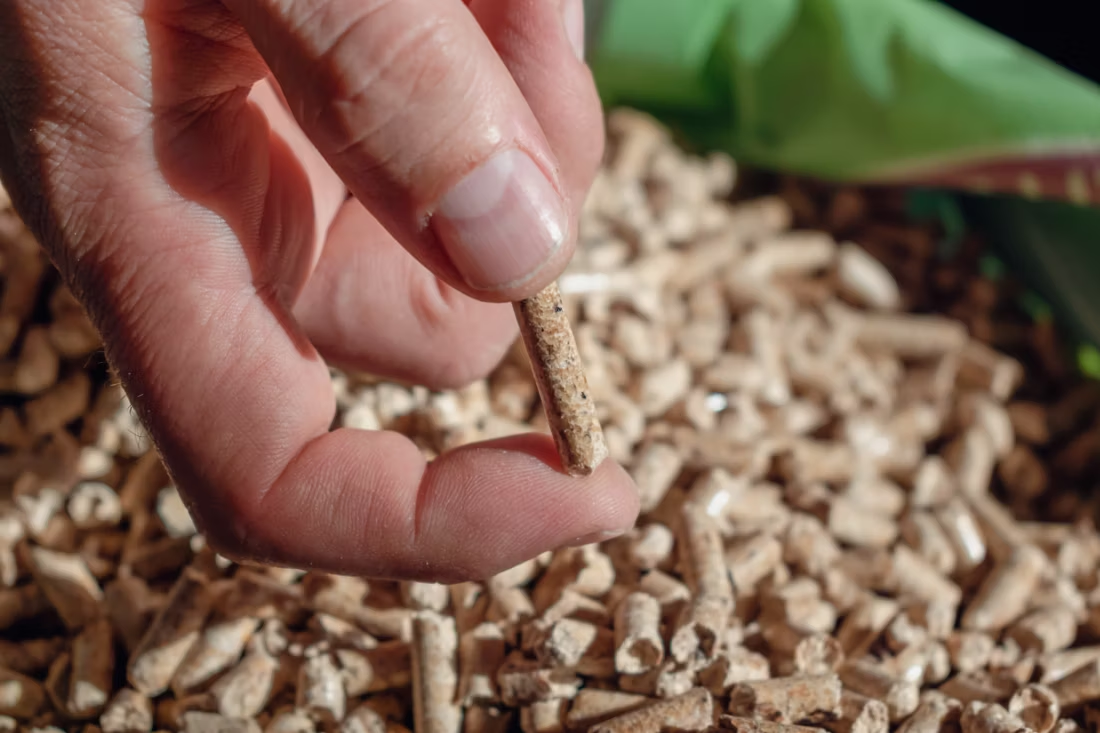
That's where pellet appliances earn their place here. The San Joaquin Valley Air Pollution Control District runs a mandatory "Check Before You Burn" program, declaring no-burn days for uncertified and even certified wood-burning devices when PM2.5 levels spike between November and February. EPA-certified pellet stoves are typically exempt from these curtailment restrictions, which means a homeowner in Stockton or Manteca with a pellet insert can still run heat on a day when a neighbor's wood stove has to stay cold. Regional brands like Bear Mountain, Lignetics, and Pacific Pellet supply the fuel, and because most installs don't need a full masonry chimney, a pellet unit is often the simplest, cleanest path to supplemental heat and ambiance in a county where wildfire smoke and winter inversions are a fact of life, not an occasional inconvenience.
Three steps. No salesperson until you're ready.
Tell us about your project
Your zip code, your situation, and the fuel you're leaning toward—or let the answers point you to one.
See what's actually available
The brands dealers within 100 miles genuinely carry—real options, never a catalog mirage.
Get your dealer & Project Guide
A trusted local dealer, plus the free Project Guide & Parts List that names every component of the job.
Frequently Asked Questions
How much does a pellet stove installation cost in San Joaquin County?
Pellet stove and insert installs in San Joaquin County generally run in the same range seen across the rest of Northern California—typically $3,500 to $6,500 depending on whether the unit is a freestanding stove or an insert going into an existing fireplace, and whether new vent-through-wall work or electrical is needed for the hopper and blower. Inserts installed into an existing masonry fireplace in a Stockton or Lodi home tend to land on the lower end since the chimney opening already exists. New construction or a stove going into a wall with no prior venting runs higher. A local dealer will give you a firm number after seeing your space.
What size pellet stove do I need for my home?
Because San Joaquin County's winters are mild—average lows near 39°F and a light overall heating load each year—most homeowners here are sizing for supplemental heat and ambiance rather than whole-house survival heat the way a Fargo, ND or Duluth, MN homeowner would. A small-to-medium pellet stove (rated for 1,000 to 1,800 square feet) is enough to comfortably heat a main living area in most Manteca, Tracy, or Lodi homes. Larger, well-insulated homes or those aiming to offset natural gas furnace use during cold snaps may want a unit rated closer to 2,000+ square feet. A local retailer can size it correctly based on your layout and insulation during an in-home visit.
Are pellet stoves exempt from Spare the Air burn bans in San Joaquin County?
In most cases, yes. The San Joaquin Valley Air Pollution Control District's "Check Before You Burn" program issues mandatory no-burn days for wood-burning devices during winter inversions, when Tule fog traps particulate matter close to the ground across Stockton, Lodi, Tracy, and Manteca. EPA-certified pellet stoves and inserts are typically exempt from these curtailment days, since they burn cleaner and more consistently than cordwood appliances. This exemption is one of the biggest reasons pellet units have grown in popularity across the county—you're not stuck without heat on the exact days the air quality alerts hit. Always confirm exemption status for your specific model with your installer, since exemptions can be tied to certification date.
Where can I buy pellets locally, and what brands are available?
Regional pellet brands commonly stocked by San Joaquin County dealers include Bear Mountain, Lignetics, and Pacific Pellet, all of which are produced within reach of the Central Valley and sold at hearth shops and larger home retailers throughout the county. Softwood pellets (pine-based) are the standard choice for most stoves and burn cleaner with less ash; hardwood blends exist but are less common locally. Pricing fluctuates seasonally, so it's worth asking your dealer whether they offer pre-season bulk pricing—many local shops sell out of popular brands during cold snaps and Spare the Air stretches when demand spikes.
What's the difference between a pellet stove and a pellet insert?
A pellet stove is a freestanding appliance that sits on its own hearth pad and vents through a wall or existing chimney—it can go almost anywhere with the right clearances. A pellet insert is built to slide into an existing masonry fireplace opening, which is common in older homes throughout Stockton and Lodi that already have a wood-burning fireplace they no longer use. For a county where a fair number of homes have an existing but underused masonry fireplace, an insert is often the more cost-effective upgrade since it reuses the existing opening and typically just needs a vent liner run up the flue.
Do I need a permit to install a pellet stove in San Joaquin County?
Yes—a building permit is generally required for a new pellet stove or insert installation, whether you're in Stockton, Lodi, Tracy, Manteca, or an unincorporated part of the county, since the work involves venting and sometimes new electrical circuits for the hopper and blower motor. Permits are pulled through the relevant city building department inside incorporated areas, or through San Joaquin County for unincorporated parcels. Most established local dealers handle this paperwork as part of the installation, which is one of the practical advantages of working with a trusted installer rather than a big-box purchase with no local install support.
Will my pellet stove work during a PG&E power outage?
This is worth knowing upfront: pellet stoves require electricity to run the auger that feeds fuel and the blower that distributes heat, so a standard unit will shut down during a power outage. That matters in San Joaquin County given PG&E's occasional Public Safety Power Shutoffs during high fire-risk periods. Some pellet stove owners pair their unit with a small battery backup or portable generator specifically to keep the auger and igniter running through short outages. If reliable off-grid heat during outages is a priority, a wood stove or vented gas unit with battery-backup ignition is a more dependable pick—your local dealer can walk through the tradeoffs based on how often outages affect your specific area.
Pellet vs. wood—which is right for my San Joaquin County home?
Wood-burning is deeply established in this region—oak, madrone, and Douglas fir are the common local species, and Forest Service permits through Stanislaus National Forest and Eldorado National Forest ($5–$20 per cord, typically May through October) make self-cut firewood accessible for county residents willing to make the drive into the Sierra foothills. But wood stoves are far more likely to be grounded on a Spare the Air no-burn day than a certified pellet unit, which matters given how often the Valley's winter inversions trigger district restrictions. Pellet stoves also skip the need for a full chimney in many installs and produce far less ash and creosote. For a household that wants dependable ambiance and supplemental heat without worrying about burn-ban days, pellet is usually the better fit; for those who value self-sufficiency, lower fuel cost from permit-cut wood, and heat that works with zero electricity, wood still has a strong case.
How often does a pellet stove need cleaning and maintenance?
Pellet stoves need more frequent attention than a gas unit but far less than a wood stove's annual chimney sweep. Plan on emptying and cleaning the burn pot every few days during regular use, a deeper cleaning of the hopper, auger, and heat exchanger tubes every few weeks, and a full professional service once a year—ideally before the winter burn season and San Joaquin Valley's Check Before You Burn advisories start in earnest. Regular ash removal keeps the burn pot from clogging, which is the most common cause of poor pellet stove performance in Central Valley homes running units through a full winter season.
Why is a fireplace insert so efficient?
An insert does two things: it seals the chimney completely, so you stop losing air you already paid to heat, and it radiates warmth into the room through the firebox and glass. Most add a heat-exchange fan that pulls cool room air underneath, wraps it around the hot firebox, and pushes it back out warm. Your home is more efficient before you've even lit the first fire.
What's the difference between an insert and a zero-clearance fireplace?
An insert is a fireplace that slides into a pre-existing wood-burning fireplace—if you don't have one, there's nothing to insert it into. A zero-clearance fireplace is built into a framed wall, which makes it the answer for remodels and new construction. Simple test: existing masonry fireplace means insert; blank or framed wall means zero-clearance.
How much should I budget for a fireplace?
For an average home—covering the fireplace, the vent pipe, and basic installation—a budget between $3,900 and $5,500 gives you a lot of options across wood, gas, and pellet. By the time you add finish work, gas line, and electrical, the average complete installation lands between $5,000 and $12,000 all-in. In a remodel or new build, a good rule is to put about 2.5% of the total project cost toward the fireplace.
Can a fireplace actually lower my heating bill?
Yes—by creating a comfort zone. A furnace heats every square foot of the house just to warm the one room you're in; a gas fireplace on low burns roughly a sixth of the gas a typical furnace does. Set the furnace around 55–60 degrees as a baseline, then heat the rooms your family actually uses. Families who heat this way commonly save $20–$60 a month.
Stove and Fireplace Dealers in San Joaquin County
Elite Fireplace Service & Repair (Parts Only)
Pellet Brands Stocked Around San Joaquin County
Manufacturers will point you to the nearest stocking dealer.
Find your pellet stove in San Joaquin County.
Tell us a bit about your home and we'll match you with a trusted local dealer, plus a free Project Guide & Parts List—a plan for your pellet stove or insert project in San Joaquin County with the exact parts, including the vent kit, and your recommended local installer.
Find Your Fireplace →