
Pellet Heat for South San Francisco's Mild Bay Climate.
Pellet stoves are a niche choice here, not a mainstream one. If you're one of the homeowners for whom it still makes sense, we'll connect you with a dealer who actually carries them.
Every Project Starts From One of These Five Situations
A niche appliance in a bay-moderated climate.
South San Francisco sits at just 20 feet above sea level on the fog-cooled edge of the bay, where San Mateo County's marine climate keeps winters mild by any national standard: an average winter low of 44°F and a light overall heating load, just a fraction of what a place like Duluth, Minnesota logs in a single season. Most homes here rely on central gas furnaces, heat pumps, or a gas fireplace for the handful of genuinely cold nights, and pellet stoves have never gained real traction as a primary or supplemental heat source in the area.
The Bay Area Air Quality Management District lists San Mateo County as a non-attainment area, and wildfire smoke drifting in from Sierra and North Bay fire seasons already strains local air quality most autumns—conditions that don't exactly invite adding another combustion appliance to a home. Where we do see genuine interest is narrow but real: homeowners who want backup heat for PG&E public safety power shutoffs, people who split time between South San Francisco and a colder second home in the Sierra or Tahoe basin, and a smaller number who simply like the look and ambiance of a pellet fire. If that's you, a local hearth dealer can tell you honestly whether it's worth doing.
Three steps. No salesperson until you're ready.
Tell us about your project
Your zip code, your situation, and the fuel you're leaning toward—or let the answers point you to one.
See what's actually available
The brands dealers within 100 miles genuinely carry—real options, never a catalog mirage.
Get your dealer & Project Guide
A trusted local dealer, plus the free Project Guide & Parts List that names every component of the job.
Frequently Asked Questions
Do pellet stoves actually make sense for a home in South San Francisco?
For most houses here, no—not as a primary heat source. With such a light overall heating load and winter lows that rarely dip below the low 40s, the math that makes pellet stoves attractive in places like Duluth or Bozeman simply doesn't apply here. Central gas heat or a heat pump already handles the mild heating load most South San Francisco homes need. Where a pellet stove does make sense: as a supplemental zone heater in a converted garage or ADU, as ambiance in a family room, or as backup heat for PG&E power shutoff events (paired with a battery backup, since pellet stoves need electricity to run). If your reason falls into one of those buckets, it's a reasonable project—just go in knowing it's a niche choice, not the local norm.
How much does a pellet stove installation cost near South San Francisco?
Because pellet stoves are uncommon on the Peninsula, there isn't a deep local pricing history the way there is for gas fireplace installs. Regionally in California, a pellet stove installation with venting typically runs somewhere in the $3,500 to $6,500 range depending on the unit and whether you're venting through an exterior wall or an existing chimney. Expect the estimate to vary more than usual here simply because fewer local installers do this work regularly—get a firm, in-home quote from a dealer who actually stocks pellet units rather than assuming a generic number applies to your house.
Do I need a permit to install a pellet stove in South San Francisco?
Yes. Any new wood- or pellet-burning appliance install requires a building permit through the City of South San Francisco Building Division, and the unit itself needs to be EPA-certified to current emissions standards to be legally sold and installed in California. Because pellet installs are infrequent locally, it's worth confirming with the Building Division ahead of time that your installer's permit paperwork is complete—this isn't a routine, high-volume permit type for this office the way a water heater swap is.
Are pellet stoves restricted on Spare the Air days?
The Bay Area Air Quality Management District's Spare the Air program restricts wood-burning devices during winter Wood Burning Curtailment episodes, but EPA-certified pellet stoves are generally exempt from these curtailments because they burn cleaner and more consistently than open wood fires or older wood stoves. San Mateo County's non-attainment status means BAAQMD does watch this closely, so if you install a pellet unit, keep the EPA certification label and make sure your installer registers the appliance correctly—that documentation is what protects you if curtailment enforcement ever comes up.
Where can I buy pellet fuel near South San Francisco?
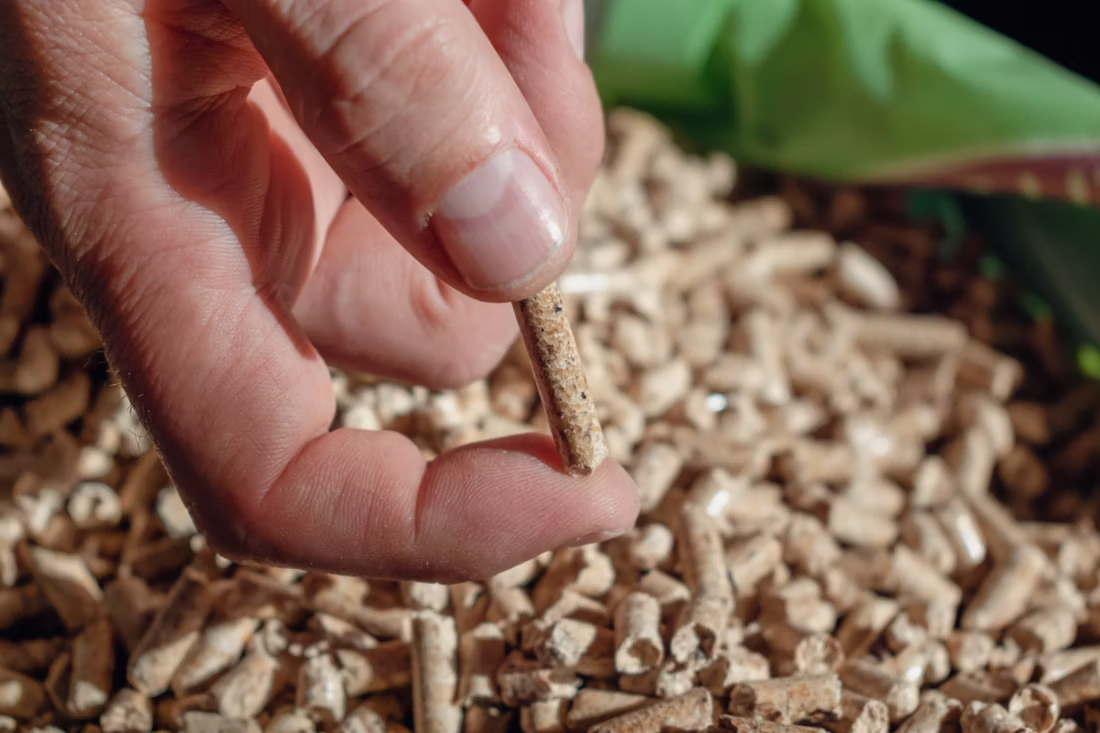
Regional brands like Bear Mountain, Lignetics, and Pacific Pellet are sold through hardware chains and hearth retailers across Northern California, though dedicated pellet-fuel stock on the immediate Peninsula is thinner than it is in the Sierra foothills or the Central Valley, where pellet heat is far more common. Expect to pay somewhere around $300–$400 per ton, sold in 40-lb bags, and plan to either order ahead for delivery or make a trip to a supplier in San Jose or the East Bay during peak season if local shelves run low.
Will a pellet stove work during a PG&E power outage or PSPS event?
Not on its own. Pellet stoves rely on an electric auger to feed fuel, an igniter to start the fire, and a blower to distribute heat and exhaust—typically drawing around 100 to 120 watts continuously. During a PG&E Public Safety Power Shutoff, a pellet stove without backup power simply won't run. If backup heat during outages is your main reason for considering one, pair it with a small battery backup or generator sized for that load, or talk to a local dealer about units with lower-wattage startup draws.
What size pellet stove do I actually need for a South San Francisco home?
Given how mild the climate is here, most South San Francisco installs end up being small supplemental units rather than whole-home heaters—think a single room, a converted garage, or an ADU, not a 2,000-square-foot floor plan. A stove rated for 1,000 to 1,500 square feet is oversized for most single-room use cases in this climate and will need to run on low settings most of the time. A local dealer can size it correctly based on the specific room and insulation rather than a generic square-footage chart built for colder regions.
Pellet stove vs. gas fireplace—which fits better in South San Francisco?
For most homes here, gas wins. Natural gas infrastructure is well established across South San Francisco, gas fireplaces install into existing framing or masonry with a straightforward direct-vent run, and there's no fuel storage or hopper-loading involved. Pellet stoves require bagged fuel storage, periodic hopper refilling, and ash cleanup—extra maintenance that's harder to justify when the heating need is already modest. Gas makes sense as either a primary supplemental heat source or a design feature; pellet is better reserved for the specific cases above, like PSPS backup or a Tahoe-cabin-style aesthetic.
Pellet stove vs. electric fireplace—with PG&E rates around $0.317 per kWh, which costs less to run?
PG&E's residential rate of roughly $0.317/kWh is among the highest in the country, which makes electric fireplaces expensive to run as anything beyond occasional ambiance or light supplemental heat—a 1,500-watt electric unit running several hours a day adds up fast on a Bay Area bill. Pellet fuel costs less per BTU delivered, but a pellet stove carries real upfront installation and venting costs plus ongoing fuel storage and cleaning that an electric unit doesn't. For most South San Francisco homes where heating need is already low, electric fireplaces are typically chosen for ambiance rather than real heat, while pellet is reserved for the narrower cases—backup power events or a genuine wood-heat preference—where the extra installation effort is worth it.
Why is a fireplace insert so efficient?
An insert does two things: it seals the chimney completely, so you stop losing air you already paid to heat, and it radiates warmth into the room through the firebox and glass. Most add a heat-exchange fan that pulls cool room air underneath, wraps it around the hot firebox, and pushes it back out warm. Your home is more efficient before you've even lit the first fire.
How often does a pellet stove need cleaning?
A clean pellet stove is a happy pellet stove. Plan on cleaning the burn pot about once a week when you're burning regularly—ash and clinkers gum up the air holes just like a pellet barbecue. Most pellet stove problems trace back to skipped cleaning that nobody explained up front. Some designs make it easy with a trapdoor burn pot: pull a lever and the gunk drops into the ash pan.
Does a fireplace add value to my home?
On average, a fireplace adds back to the home about the same amount you spent installing it. Add the monthly savings from heating the rooms you actually use instead of the whole house—often hundreds of dollars a year—and the value case is strong before you even count what a fire does for how your family uses the room.
How much should I budget for a fireplace?
For an average home—covering the fireplace, the vent pipe, and basic installation—a budget between $3,900 and $5,500 gives you a lot of options across wood, gas, and pellet. By the time you add finish work, gas line, and electrical, the average complete installation lands between $5,000 and $12,000 all-in. In a remodel or new build, a good rule is to put about 2.5% of the total project cost toward the fireplace.
Nearby Dealers
Hearth shops serving South San Francisco and the surrounding area.
Pellet Brands Stocked Around South San Francisco
Manufacturers will point you to the nearest stocking dealer.
Find your pellet stove in South San Francisco.
Pellet stoves aren't common here, but if one genuinely fits your situation, we'll match you with a trusted local dealer who actually carries them and send you a free Project Guide & Parts List—the exact parts, including the vent kit, for your South San Francisco install.
Find Your Fireplace →