
Instant Warmth for South San Francisco's Foggy Nights.
Clean, on-demand heat for the marine layer chill that settles over South San Francisco most evenings. Find the right gas fireplace or insert, and get matched with a trusted local dealer.
Every Project Starts From One of These Five Situations
Real warmth, without the smoke.
South San Francisco sits at just 20 feet of elevation on the edge of the Bay, where the marine layer keeps winter lows around 44°F and the annual heating load—comparable to a mild, fog-driven winter climate—is a fraction of what a place like Duluth, MN sees in a single hard month. Nobody here is fighting single-digit nights. What they're fighting is a persistent, damp chill that settles in after the fog rolls back through neighborhoods like Sunshine Gardens, Winston Manor, and the hillside streets above Sign Hill, and central HVAC alone often doesn't make a room feel warm the way a real flame does.
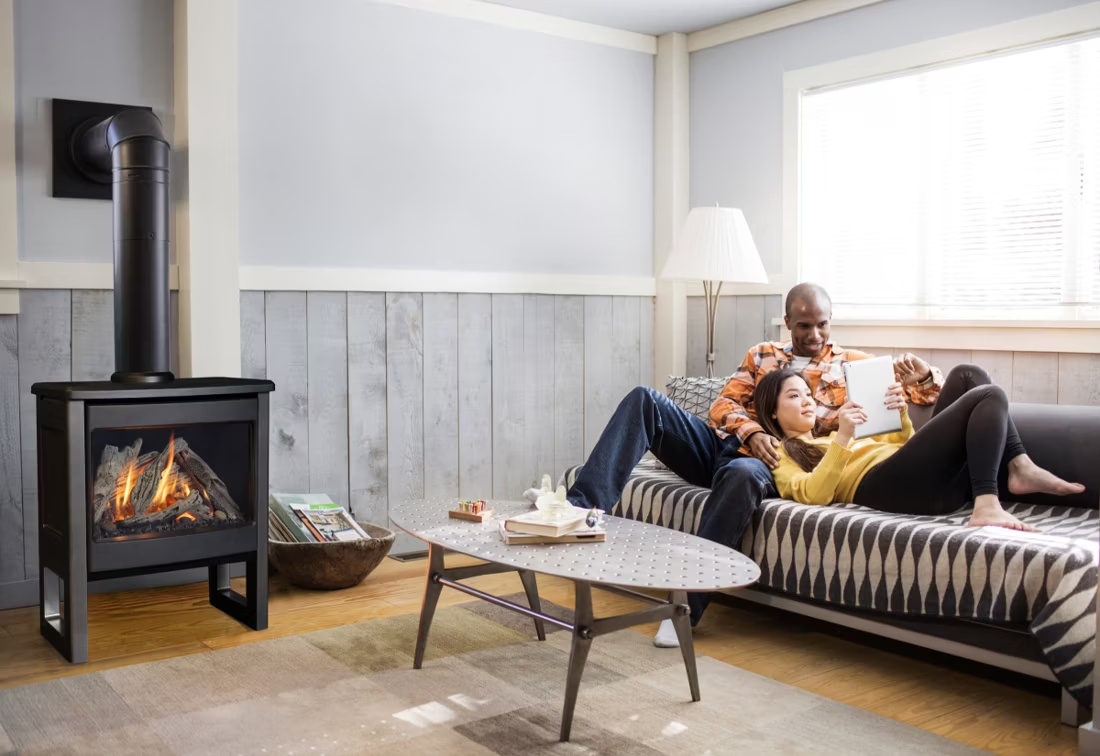
Wood-burning fireplaces are largely absent from newer construction here. The Bay Area Air Quality Management District's Regulation 6 restricts new wood-burning device installations across the region and calls Spare the Air alerts on high-pollution winter days, and South San Francisco falls within a designated non-attainment area that takes those alerts seriously. Gas has stepped into that gap as the standard hearth choice—PG&E delivers natural gas to nearly every block in the 94080 and 94083 zip codes, and a direct-vent gas fireplace or insert delivers real, immediate heat without adding smoke to an already sensitive air basin.
Three steps. No salesperson until you're ready.
Tell us about your project
Your zip code, your situation, and the fuel you're leaning toward—or let the answers point you to one.
See what's actually available
The brands dealers within 100 miles genuinely carry—real options, never a catalog mirage.
Get your dealer & Project Guide
A trusted local dealer, plus the free Project Guide & Parts List that names every component of the job.
Frequently Asked Questions
How much does a gas fireplace installation cost in South San Francisco?
Expect to pay roughly $5,500 to $12,500 for a gas fireplace or insert installation in South San Francisco, with Bay Area labor rates and gas line work driving costs toward the higher end more often than in inland markets. A gas insert dropped into an existing masonry fireplace with a nearby gas line already run tends to land on the lower end. A new direct-vent fireplace in a remodel or one of the newer condo builds near the East Grand Avenue biotech corridor—where framing, venting, and a fresh gas line all need to happen—runs higher. A local retailer will give you a firm number after seeing your home.
Can I convert my existing wood fireplace to gas?
Yes, and it's a common project in South San Francisco's older tract neighborhoods—Winston Manor, Buri Buri, and Westborough all have plenty of 1950s and 60s homes built with a wood-burning masonry fireplace that's rarely, if ever, used. A gas insert typically runs $5,000 to $9,500 here, using the existing chimney with a stainless liner for venting. Given how BAAQMD's Spare the Air program limits wood burning on high-pollution days, converting to gas is often the more practical path if you want reliable use of that fireplace all winter.
Do I need natural gas service, or is propane common here?
Natural gas is the default in South San Francisco. PG&E provides natural gas service throughout essentially the entire city, including both the 94080 and 94083 zip codes, so if your home already has gas appliances—a water heater or range—adding a fireplace usually just means extending an existing line. Propane is uncommon inside city limits and mostly shows up in a handful of unserved rural pockets elsewhere in San Mateo County. Most local installers won't even bring up propane as an option unless your specific address falls outside PG&E's gas footprint.
Will my gas fireplace work during a power outage?
Most modern gas fireplaces will, which matters in PG&E territory where Public Safety Power Shutoffs can hit even fog-protected coastal cities like South San Francisco during dry, windy conditions elsewhere in the grid. Units with intermittent pilot ignition (IPI) run on AA battery backup that kicks in automatically when power drops, so the fireplace lights on demand just like normal. Valor fireplaces go a step further—the pilot's thermocouple generates its own electricity, so there's no battery to remember or replace. Ask your local dealer about the ignition system on any unit before you buy.
What's the difference between a gas fireplace, gas insert, and gas stove?
A gas fireplace is a fully built-in unit framed into a wall—the common choice for newer condo and townhome construction going up around the Genentech campus and East Grand corridor. A gas insert slides into an existing masonry firebox, which fits the older wood-burning fireplaces common in South San Francisco's postwar tract homes. A gas stove is a freestanding cabinet-style unit that sits on the floor and doesn't need a built-in chase. Homeowners with an existing fireplace almost always land on an insert; new builds or additions without one usually go with a built-in unit.
Do I need a permit to install a gas fireplace in South San Francisco?
Yes. The City of South San Francisco Building Division requires a building permit for the fireplace installation and a separate permit for any new gas line work, which must be run by a licensed gas fitter. Most hearth retailers who do installations in South San Francisco handle both permits as part of the job and schedule the required inspection before the unit goes live, so you're not stuck coordinating separate trades yourself.
What's the difference between vented and vent-free gas fireplaces?
Vented (direct-vent) gas fireplaces draw combustion air from outside and exhaust exhaust gases back outside through a sealed pipe—they're the standard here. Vent-free units burn directly into the room air, and while they're technically legal in parts of California, they're rarely installed in San Mateo County: local building departments lean heavily toward sealed combustion appliances, and BAAQMD's non-attainment status makes anything that adds combustion byproducts to indoor air a harder sell. If a dealer near South San Francisco is showing you fireplaces, assume you're looking at direct-vent models, and that's generally the right call for both code compliance and indoor air quality.
How often should my gas fireplace be serviced?
Plan on an annual inspection, typically $150 to $250 with a certified technician checking the burner, pilot assembly, venting, and gas connections. South San Francisco's coastal fog and salt air can accelerate corrosion on venting components faster than in drier inland cities, so it's worth having a tech specifically check the vent termination and cap condition each year rather than skipping a cycle because the fireplace still lights fine.
Gas vs. electric fireplace—which makes more sense for my home?
It depends heavily on your electric rate and your venting situation. PG&E's residential rate of roughly $0.317 per kWh is among the highest in the country, which makes running a larger electric fireplace for real heat noticeably more expensive per BTU than gas over a full winter of use. Where electric wins is install simplicity and cost—plug-in or hardwired electric units run $400 to $1,200 installed with no venting or gas line required, which is why they show up so often in condos and apartments around Terrabay and the newer high-density buildings near the BART station that don't have a gas line or chimney chase available. If your home already has gas service and you want real, sustained warmth, gas remains the better choice; if you're in a unit without gas access and mainly want ambiance, electric is the lower-friction option.
What's the difference between an insert and a zero-clearance fireplace?
An insert is a fireplace that slides into a pre-existing wood-burning fireplace—if you don't have one, there's nothing to insert it into. A zero-clearance fireplace is built into a framed wall, which makes it the answer for remodels and new construction. Simple test: existing masonry fireplace means insert; blank or framed wall means zero-clearance.
Why is my open fireplace making my house colder?
Open fireplaces suck—literally. As the fire burns, it consumes air your furnace already paid to heat and pulls it out through the chimney, so the house is actually colder after the fire goes out than before you lit it. An insert fixes this: it seals the chimney, puts fixed glass across the front, and turns that hole in your house into a real heat source.
What is an in-home preview and do I need one?
It's a visit where a hearth professional measures your space, confirms the model you picked actually works in your home, and walks the specs—framing, gas line, venting, finish work—before anything is ordered. Some details you just can't know until you see the house. Never make a down payment without one; it's the single most-skipped step that burns buyers.
Does a fireplace add value to my home?
On average, a fireplace adds back to the home about the same amount you spent installing it. Add the monthly savings from heating the rooms you actually use instead of the whole house—often hundreds of dollars a year—and the value case is strong before you even count what a fire does for how your family uses the room.
Nearby Dealers
Hearth shops serving South San Francisco and the surrounding area.
See what's possible for gas heat in South San Francisco.
Tell us about your home and we'll match you with a trusted local dealer and send over a free Project Guide & Parts List—the exact fireplace or insert, venting, and parts your South San Francisco project needs, no big-box guesswork required.
Find Your Fireplace →