
Clean Heat for Seaside's Damp Coastal Winters.
Seaside's marine climate rarely dips below freezing, but the fog and damp chill off Monterey Bay still call for real indoor heat. Find the right pellet stove or insert, and get matched with a trusted local dealer who knows Central Coast homes.
Every Project Starts From One of These Five Situations
Clean-burning heat for a mild, marine climate.
Seaside sits right on Monterey Bay at just 288 feet of elevation, in climate zone 3C—one of the mildest heating climates in the continental U.S. Winter lows average a gentle 43°F, and the city has a light overall heating need for the year, a fraction of what a place like Duluth, Minnesota sees in a single winter. But mild doesn't mean warm indoors: the marine layer that rolls off the bay most mornings and evenings brings a damp, persistent chill that lingers in older homes, especially the modest single-wall construction common in the Fort Ord-era neighborhoods around town.
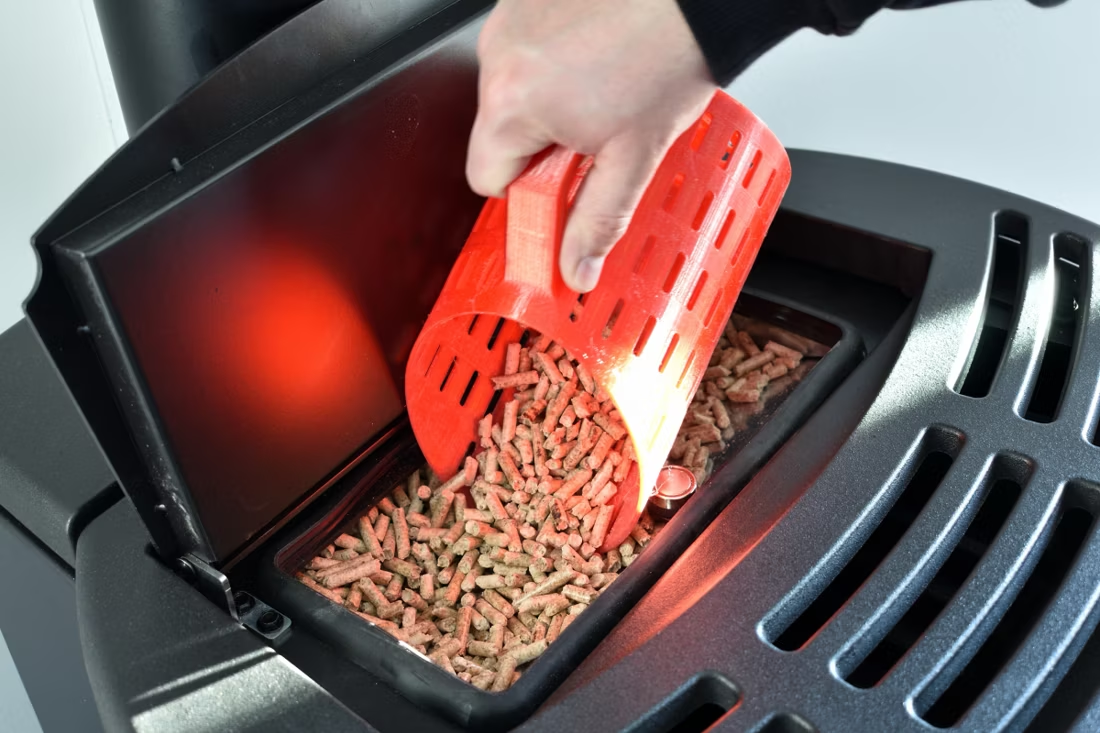
That's where pellet heat fits well. Pellet stoves and inserts burn compressed wood fuel—commonly Bear Mountain, Lignetics, or California-made Pacific Pellet—through a thermostat-controlled auger, delivering steady zone heat without the wood-splitting, chimney maintenance, or open-flame smoke of a traditional wood stove. That clean-burning profile matters locally: during wildfire smoke events or stagnant air days, the Monterey Bay Air Resources District can restrict traditional wood burning, and EPA-certified pellet appliances are typically exempt. Running one costs only a few dollars a month in electricity, whether that comes through PG&E or Central Coast Community Energy—the region's default, lower-cost generation provider—on top of the pellets themselves.
Three steps. No salesperson until you're ready.
Tell us about your project
Your zip code, your situation, and the fuel you're leaning toward—or let the answers point you to one.
See what's actually available
The brands dealers within 100 miles genuinely carry—real options, never a catalog mirage.
Get your dealer & Project Guide
A trusted local dealer, plus the free Project Guide & Parts List that names every component of the job.
Frequently Asked Questions
How much does a pellet stove installation cost in Seaside?
A pellet stove or insert installation in Seaside typically runs $3,500 to $6,500, depending on whether you're installing a freestanding stove with a simple through-wall vent or a full insert into an existing masonry fireplace with a stainless liner. Labor and permitting on the Monterey Peninsula tend to run a bit above the state average given the region's cost of living, but pellet installs are still generally less expensive than wood stove installs because venting is simpler—most pellet appliances vent horizontally through an exterior wall rather than requiring a full Class A chimney run through the roof.
What's the difference between a pellet stove and a wood stove?
Both burn wood fuel, but the experience differs. A wood stove burns logs and needs a chimney, seasoned firewood, and regular ash removal, offering the most authentic fire experience and running without electricity. A pellet stove burns compressed pellets from an auger-fed hopper, producing a steadier, thermostat-controlled heat with far less particulate output. That last point matters here: during wildfire smoke events and stagnant air days, the Monterey Bay Air Resources District can issue wood-burning curtailment advisories that restrict open wood stoves and fireplaces—pellet stoves are typically exempt because they burn so much cleaner. For Seaside homes near the oak and madrone woodlands around Fort Ord, where wildfire smoke is a real seasonal concern, that exemption is a meaningful advantage.
What size pellet stove do I need for a Seaside home?
Seaside's marine climate is genuinely mild—winter lows average 43°F and the city has a light overall heating need for the year, a fraction of what a place like Bozeman, Montana logs in a single winter. That means most homes here want a pellet stove for supplemental zone heating rather than a whole-house furnace replacement. A small to mid-size unit (roughly 40,000–50,000 BTU) is usually plenty for a single living area or an older Fort Ord-era home with minimal insulation, while larger or drafty homes closer to the bay might want a slightly bigger unit to fight the damp chill the marine layer brings in through fall and winter evenings. A local dealer will size this to your square footage and floor plan during a walkthrough.
Where can I buy pellets in the Seaside area, and what do they cost?
Bear Mountain, Lignetics, and Pacific Pellet are the three brands most commonly stocked by Central Coast hearth and feed retailers, and all three are widely available around Monterey Bay. Pacific Pellet, produced in California, is popular locally for that reason. Expect to pay roughly $300 to $400 per ton, with prices ticking up slightly during peak winter demand. Buying a season's supply—typically 1 to 2 tons for a supplemental-heat home in Seaside's mild climate—in late summer or early fall usually locks in the better price.
How much electricity does a pellet stove use, and what will it cost to run in Seaside?
Pellet stoves need household electricity to run the auger motor and combustion blower—typically 100 to 400 watts, similar to a couple of light bulbs. In Seaside, that power comes through Pacific Gas & Electric's grid, but most Monterey County residents get their generation through Central Coast Community Energy, the default local provider, which currently runs a meaningfully lower generation rate (around 13 cents per kWh) than PG&E's own generation rate, which can top 31 cents per kWh in some tiers. Either way, running a pellet stove typically adds only a few dollars a month to your electric bill—the pellets themselves are the primary fuel cost.
Do I need a permit to install a pellet stove in Seaside?
Yes. A new pellet stove or insert installation requires a building permit through the City of Seaside's Building and Safety Division, or through Monterey County's Building Services Department if your property sits just outside city limits. The appliance itself must be UL-listed, and the installer needs to meet the manufacturer's clearance-to-combustibles specs and proper vent termination distances from windows, doors, and property lines. Most local hearth dealers pull this permit as part of the installation, so it's rarely something homeowners have to manage themselves.
Does wildfire smoke or air quality affect pellet stove use in Seaside?
Air quality is a real consideration on the Central Coast, mostly tied to wildfire smoke drifting in from inland fires in late summer and fall rather than winter wood-smoke buildup. The Monterey Bay Air Resources District can issue burn advisories during smoke events or stagnant air conditions, and in most jurisdictions pellet stoves are exempt from these restrictions because EPA-certified pellet appliances emit a fraction of the particulate matter of an open wood-burning stove. For households who want reliable indoor heat without worrying about burn-day restrictions, that's one of the strongest arguments for pellet over cordwood in this region.
Will my pellet stove still work during a power outage?
This is worth knowing before you buy: pellet stoves require electricity to run the auger and blower, so a standard unit shuts down during a power outage. That matters on the Central Coast, where PG&E occasionally initiates Public Safety Power Shutoffs during high fire-risk conditions, even though Seaside itself sits outside the highest-risk fire zones. Some manufacturers offer battery-backup kits or DC-compatible models that can run for several hours off a small battery bank during an outage—worth asking your local dealer about if backup heat matters to you. If uninterrupted heat during outages is the top priority, a wood stove is generally the more resilient choice.
Pellet stove vs. gas fireplace—which is right for my Seaside home?
Gas fireplaces offer instant on-off heat with no fuel storage or hopper refilling, while pellet stoves offer a more authentic flame appearance, generally lower fuel costs than propane—natural gas service is limited in parts of Seaside, and many homes rely on propane—and the option to buy fuel locally from Central Coast retailers. Pellet stoves need a nearby outlet and require refilling the hopper every 24 to 48 hours, while gas units need only a gas line and vent. For Seaside's mild climate, either fuel comfortably heats a single zone; the choice usually comes down to whether the home already has gas service and how hands-on you want day-to-day operation to be.
How often does a pellet stove need cleaning?
A clean pellet stove is a happy pellet stove. Plan on cleaning the burn pot about once a week when you're burning regularly—ash and clinkers gum up the air holes just like a pellet barbecue. Most pellet stove problems trace back to skipped cleaning that nobody explained up front. Some designs make it easy with a trapdoor burn pot: pull a lever and the gunk drops into the ash pan.
Why is my open fireplace making my house colder?
Open fireplaces suck—literally. As the fire burns, it consumes air your furnace already paid to heat and pulls it out through the chimney, so the house is actually colder after the fire goes out than before you lit it. An insert fixes this: it seals the chimney, puts fixed glass across the front, and turns that hole in your house into a real heat source.
Does a fireplace add value to my home?
On average, a fireplace adds back to the home about the same amount you spent installing it. Add the monthly savings from heating the rooms you actually use instead of the whole house—often hundreds of dollars a year—and the value case is strong before you even count what a fire does for how your family uses the room.
Can a fireplace actually lower my heating bill?
Yes—by creating a comfort zone. A furnace heats every square foot of the house just to warm the one room you're in; a gas fireplace on low burns roughly a sixth of the gas a typical furnace does. Set the furnace around 55–60 degrees as a baseline, then heat the rooms your family actually uses. Families who heat this way commonly save $20–$60 a month.
Nearby Dealers
Hearth shops serving Seaside and the surrounding area.
Pellet Brands Stocked Around Seaside
Manufacturers will point you to the nearest stocking dealer.
Find your pellet stove in Seaside.
Tell us about your home and heating goals, and we'll match you with a trusted Central Coast dealer plus a free Project Guide & Parts List—the exact pellet stove or insert, vent kit, and installation plan for Seaside's marine climate.
Find Your Fireplace →