
Efficient Heat for Cool Santa Clara Valley Evenings.
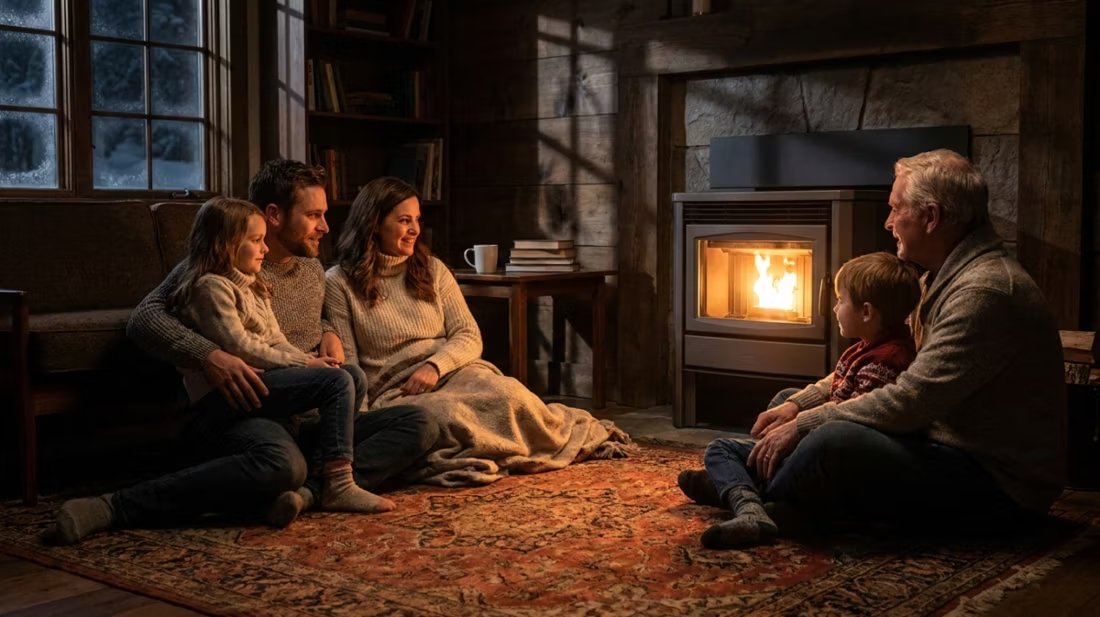
A clean-burning pellet stove takes the chill off citrus-country nights without adding to Ventura County's wildfire smoke load. Find the right unit and connect with a trusted local dealer.
Every Project Starts From One of These Five Situations
Warmth without the woodsmoke, sized for a mild climate.
Santa Paula sits at 284 feet in the Santa Clara River Valley, where winters average a mild 45 degrees and the region logs only about 1,551 heating degree days a year—a fraction of what a place like Bozeman, Montana racks up in a single cold snap. That means most homes here don't need a furnace-replacing heat source; they need something that takes the evening chill off a living room or converted garage without running the central system all night. A pellet stove or insert is built for exactly that kind of zone heating.
Ventura County's real constraint isn't cold, it's air quality—wildfire smoke events and the occasional Ventura County APCD burn advisory can put open wood burning on hold for days at a time. Pellet appliances typically keep operating through those curtailment periods since they burn compressed fuel cleanly and consistently, without the smoke output of an open wood fire. With Southern California Edison residential rates running around 28 cents per kWh, a pellet stove loaded with Bear Mountain, Lignetics, or Pacific Pellet fuel is often a more economical way to heat one room than a space heater, and it keeps working when you'd rather not lean on the grid.
Three steps. No salesperson until you're ready.
Tell us about your project
Your zip code, your situation, and the fuel you're leaning toward—or let the answers point you to one.
See what's actually available
The brands dealers within 100 miles genuinely carry—real options, never a catalog mirage.
Get your dealer & Project Guide
A trusted local dealer, plus the free Project Guide & Parts List that names every component of the job.
Frequently Asked Questions
How much does a pellet stove installation cost in Santa Paula?
Most pellet stove and insert installations run in the $3,500 to $7,000 range, depending on whether the unit vents through an existing chimney chase, requires new wall penetration for the exhaust and combustion-air intake, or needs an electrical circuit run for the auger and blower. Homes converting an old masonry fireplace to a pellet insert tend to land on the lower end since the chimney chase can often be reused. A local hearth dealer will confirm final pricing after seeing the install location, since venting distance and wall type both affect labor.
Do I even need a pellet stove in a climate this mild?
Santa Paula's winters are gentle by national standards—average lows near 45 degrees and roughly 1,551 heating degree days a year, compared to several thousand in genuinely cold-winter states. Most homeowners here aren't heating a whole house with a pellet stove; they're using it as targeted, supplemental heat for a family room, converted garage, or older home with weak insulation, so the central system doesn't have to run all evening. It's a comfort and cost-control purchase more than a survival one, which is exactly why pellet's simplicity and low fuel handling appeal here.
Pellet stove vs. wood stove—which fits a Ventura County home better?
Wood is genuinely available locally—oak, madrone, and Douglas fir are common species, and Los Padres and Angeles National Forest both issue personal-use cutting permits (typically $5 to $20 per cord) during the May-to-October season. But Ventura County's wildfire smoke concerns mean open wood burning can get restricted during poor-air-quality stretches, and hauling and seasoning cordwood is real work. Pellet stoves burn more consistently, produce far less visible smoke, and are commonly exempt from the curtailment periods that ground wood stoves. For a mild climate where the appliance is used for comfort rather than survival heat, most Santa Paula homeowners find pellet the lower-maintenance choice.
Will my pellet stove work if the power goes out?
Not without help. Pellet stoves rely on an electric auger to feed fuel and a blower to distribute heat, so a Southern California Edison outage—including a Public Safety Power Shutoff during high fire-risk conditions—will stop the stove unless you have backup power. Many Santa Paula homeowners pair their pellet stove with a small battery backup unit or a portable generator sized to handle the stove's low draw (most units use under 100 watts running). If outage-proof heat is the priority, a wood stove or a battery-backed gas unit is worth comparing against pellet before you commit.
Can I still run a pellet stove during a wildfire smoke advisory?
Generally yes. Ventura County Air Pollution Control District advisories and no-burn days are aimed primarily at open wood-burning appliances, and EPA-certified pellet stoves are typically exempt from those curtailment periods because they burn cleaner and more completely than cordwood fires. That said, if regional wildfire smoke has already pushed outdoor air quality into unhealthy territory, running any combustion appliance indoors is worth a second thought—check current AQI conditions before loading the hopper on a bad smoke day.
Do I need a permit to install a pellet stove in Santa Paula?
Yes—a building permit is required, issued through the City of Santa Paula Building Division for in-city addresses or Ventura County Building and Safety Division for unincorporated areas nearby. The permit covers the venting path, wall or floor clearances, and confirms the unit meets current EPA emissions standards. Most established hearth dealers handle the permit paperwork as part of the installation, so you're not filing it yourself.
What are the best pellet stove brands to look at?
Harman, Lopi, and Quadra-Fire are widely installed pellet stove and insert brands with strong service networks on the West Coast, and any of them holds up well for the supplemental-heat use case common in Santa Paula. For fuel, regional bagged pellets from Bear Mountain, Lignetics, and Pacific Pellet are the brands most local hearth shops stock and reorder regularly, which matters more than it sounds—running out of fuel mid-winter because your brand isn't carried locally is a common and avoidable frustration.
Is a pellet stove cheaper to run than electric heat here?
Often, yes, for the room you're actually heating. Southern California Edison's residential rate runs around 28 cents per kWh, among the higher rates in the state, which makes electric space heaters and resistance heating relatively expensive for sustained use. A pellet stove burning a 40-pound bag over several hours to heat a living room typically costs less per hour of comfort than running an equivalent electric heater at SCE rates, though the upfront installation cost is higher. For homes that already have central electric heat and just want to take the edge off one room most evenings, pellet often pencils out over time.
Where can I buy pellet fuel in Santa Paula?
Bear Mountain, Lignetics, and Pacific Pellet are the three regional brands most commonly stocked by hearth dealers and farm-and-feed retailers across Ventura County, and pricing typically runs in line with statewide California averages of roughly $300 to $400 per ton depending on the season and how early you buy. Stocking up in late summer before demand picks up is the usual local strategy, since pellet supply can tighten during smoke-heavy fire seasons when interest in cleaner-burning heat spikes.
Why is a fireplace insert so efficient?
An insert does two things: it seals the chimney completely, so you stop losing air you already paid to heat, and it radiates warmth into the room through the firebox and glass. Most add a heat-exchange fan that pulls cool room air underneath, wraps it around the hot firebox, and pushes it back out warm. Your home is more efficient before you've even lit the first fire.
What's the difference between an insert and a zero-clearance fireplace?
An insert is a fireplace that slides into a pre-existing wood-burning fireplace—if you don't have one, there's nothing to insert it into. A zero-clearance fireplace is built into a framed wall, which makes it the answer for remodels and new construction. Simple test: existing masonry fireplace means insert; blank or framed wall means zero-clearance.
How much should I budget for a fireplace?
For an average home—covering the fireplace, the vent pipe, and basic installation—a budget between $3,900 and $5,500 gives you a lot of options across wood, gas, and pellet. By the time you add finish work, gas line, and electrical, the average complete installation lands between $5,000 and $12,000 all-in. In a remodel or new build, a good rule is to put about 2.5% of the total project cost toward the fireplace.
Does a fireplace add value to my home?
On average, a fireplace adds back to the home about the same amount you spent installing it. Add the monthly savings from heating the rooms you actually use instead of the whole house—often hundreds of dollars a year—and the value case is strong before you even count what a fire does for how your family uses the room.
Nearby Dealers
Hearth shops serving Santa Paula and the surrounding area.
Earthcore Industries
Pellet Brands Stocked Around Santa Paula
Manufacturers will point you to the nearest stocking dealer.
Find your pellet stove in Santa Paula.
Tell us a bit about your home and we'll put together a free Project Guide & Parts List—the right pellet stove or insert, the vent kit it needs, and a trusted local dealer to install it.
Find Your Fireplace →