
Instant Warmth for Santa Paula's Cool Evenings.
Santa Paula winters are mild, but a fall Santa Ana wind or a damp January night still calls for real heat. Find the right gas fireplace or insert and connect with a trusted local dealer.
Every Project Starts From One of These Five Situations
Mild winters still call for real heat.
Santa Paula sits in the Santa Clara River Valley at just 284 feet of elevation, with an average winter low around 45°F and roughly 1,551 heating degree days a year—a fraction of what a place like Duluth, Minnesota sees in a single month. That's not a climate that demands wood heat to survive January. It's a climate where a gas fireplace earns its keep on cool valley-fog mornings, chilly evenings after the sun drops behind the Topatopa foothills, and the handful of nights each winter when temperatures dip into the 30s.
Most homes in town run on SoCalGas mains, the regional natural gas utility serving this stretch of Ventura County, which makes adding or converting to a gas fireplace straightforward if you already have gas service to the house. Gas also has a practical edge here that has nothing to do with cold: Ventura County sees real wildfire smoke seasons, and the Ventura County Air Pollution Control District has issued no-burn advisories on smoky days. A sealed, direct-vent gas fireplace keeps producing clean, instant heat regardless of outdoor air quality—no smoke, no ash, no county advisory to check before you light it.
Three steps. No salesperson until you're ready.
Tell us about your project
Your zip code, your situation, and the fuel you're leaning toward—or let the answers point you to one.
See what's actually available
The brands dealers within 100 miles genuinely carry—real options, never a catalog mirage.
Get your dealer & Project Guide
A trusted local dealer, plus the free Project Guide & Parts List that names every component of the job.
Frequently Asked Questions
How much does a gas fireplace installation cost in Santa Paula?
A typical gas fireplace installation in Santa Paula runs between $4,500 and $10,500, with the wide range driven mostly by venting and gas line work rather than the appliance itself. A direct-vent insert going into an existing masonry fireplace with gas already run to that wall sits toward the lower end. A new built-in gas fireplace in a remodel or an addition—with framing, a fresh gas line, and full venting—lands in the middle to upper end. Ventura County labor rates run a bit higher than inland California, which is part of why quotes here can come in above what you'd see in the Central Valley. Local dealers will give you a firm number after seeing your home.
Can I convert my existing wood fireplace to gas?
Yes, and it's a common project in Santa Paula's older neighborhoods near downtown, where many homes still have their original masonry fireplaces. A gas insert typically slides into that existing firebox and vents through the same chimney with a stainless liner, which keeps the cost down—usually $4,500 to $9,000 depending on the insert and whether new gas line work is needed. It's also an easy way to sidestep wood-burning curtailment days: when the Ventura County Air Pollution Control District calls a no-burn advisory during a smoky stretch, a gas insert just keeps working.
Do I need natural gas, or is propane the option in Santa Paula?
If your home is already on SoCalGas service—true for most of the city—a natural gas fireplace is the simpler and usually cheaper route, since you're just tapping an existing line rather than adding fuel storage. Out toward the agricultural edges of town and up into the foothills where gas mains don't always reach, propane is the standard fallback, supplied by a tank on the property. Most gas fireplace models can be set up for either fuel; your installer swaps the orifice and regulator to match.
Will my gas fireplace work during a power outage?
This matters more in Santa Paula than the mild climate might suggest, because Southern California Edison runs Public Safety Power Shutoffs during red flag wind events, and outages can stretch a day or more. Most gas fireplaces with IPI (intermittent pilot ignition) include a battery backup that kicks in automatically when the power drops, so the fireplace still lights on demand. Valor units go a step further—their pilot assembly generates its own electricity through the thermocouple, so there's no battery to remember at all. If you're weighing models, ask your local dealer about the ignition system specifically with PSPS events in mind.
What's the difference between a gas fireplace, gas insert, and gas stove?
A gas fireplace is a fully built-in unit framed into a wall—the right call for new construction or a remodel without an existing hearth, which describes a lot of the newer homes on Santa Paula's east side. A gas insert drops into an existing masonry fireplace opening and uses the chimney as its vent path, which fits the older bungalows and Craftsman-style homes near downtown. A gas stove is freestanding, sits on its own hearth pad, and can go almost anywhere with the right clearances and venting. Which one makes sense usually comes down to whether you're starting with an empty wall or an existing firebox.
Do I need a permit to install a gas fireplace in Santa Paula?
Yes. New gas fireplace installations require a building permit through the City of Santa Paula Building Division if you're within city limits, or the Ventura County Building and Safety Division for homes in unincorporated areas nearby. Gas line work also has to be done by a licensed gas fitter and typically requires its own inspection. Most established hearth dealers handle the permit filing and inspections as part of the installation, so you're not coordinating separate trades yourself.
What's the difference between vented and vent-free gas fireplaces?
Vented (direct-vent) gas fireplaces pull combustion air from outside and exhaust it back outside through a sealed pipe—they're the standard choice and burn cleanest. Vent-free units burn gas directly into the room with no outside venting; they're legal in California but come with strict room-size and ventilation requirements, and some homeowners simply prefer not to introduce combustion byproducts into living space. Given Santa Paula's existing wildfire smoke concerns during fire season, most local dealers steer homeowners toward direct-vent units—one less thing releasing anything into indoor air on days when outdoor air quality is already a question.
How often should my gas fireplace be serviced?
Plan on an annual inspection, ideally before the cool season starts each fall. A technician checks the burner, pilot assembly, gas connections, and venting, and cleans the glass and interior—usually $150 to $250. In Santa Paula specifically, it's worth having the venting checked after a heavy wildfire smoke season, since ash and particulate can settle in and around exterior vent caps even on a sealed direct-vent system.
Gas vs. wood—which is right for my home in Santa Paula?
Wood still has a following here—local oak, madrone, and Douglas fir are available through Los Padres and Angeles National Forest cutting permits for $5 to $20 per cord during the May-to-October season—and a real wood fire is hard to beat for ambiance on a cool valley evening. But with only about 1,551 heating degree days a year, most Santa Paula homes aren't leaning on wood for survival heat, and wildfire smoke advisories from the Ventura County Air Pollution Control District can sideline wood burning on exactly the days you'd want a fire. Gas sidesteps that entirely: instant on-off, no smoke output, no ash, and reliable performance regardless of outdoor air quality. For most homes here, gas serves the primary living space and wood, if it's part of the plan at all, stays a secondary or occasional-use choice.
Can I put a TV above my fireplace?
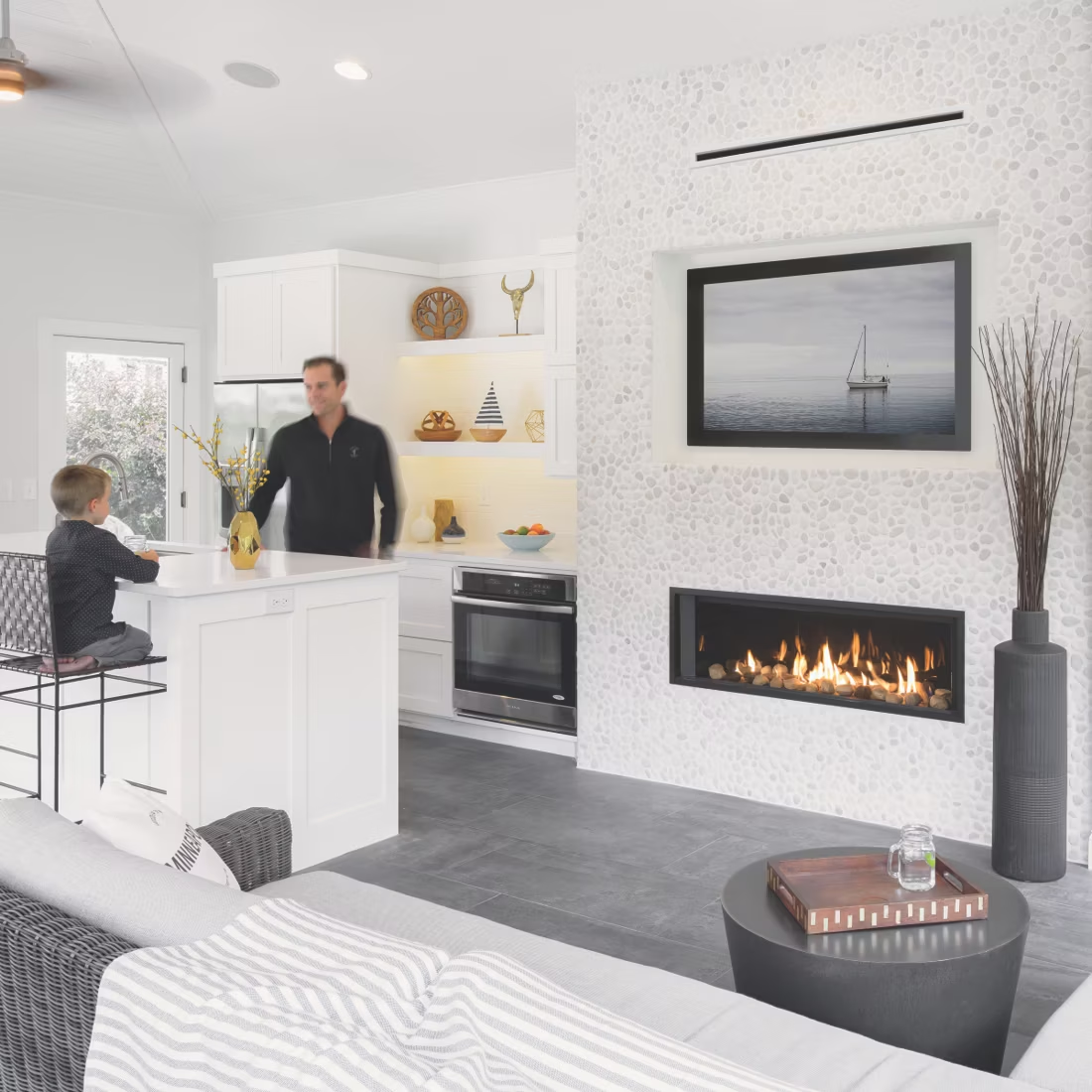
Yes—with an asterisk. Fireplaces are hot and TVs don't like heat. Either put a mantel between them to deflect rising warmth, or choose a fireplace with heat-management technology that creates a cool zone on the wall above—the wall stays around 125 degrees, barely warm, while the room still gets full heat. If you like clean lines and don't want a mantel, heat management is the answer.
Are new gas fireplaces really better than old ones?
Two ways, and they're both big. Looks: modern gas fireplaces are realistic enough that it's hard to believe they aren't burning wood. Cost: old units burn a standing pilot year-round (roughly $200 a year), while new ones use pilot-on-demand ignition and modern burners. Add remote controls and thermostat operation, and the day-to-day experience isn't close.
Can a fireplace actually lower my heating bill?
Yes—by creating a comfort zone. A furnace heats every square foot of the house just to warm the one room you're in; a gas fireplace on low burns roughly a sixth of the gas a typical furnace does. Set the furnace around 55–60 degrees as a baseline, then heat the rooms your family actually uses. Families who heat this way commonly save $20–$60 a month.
Should the dealer who sells my fireplace also install it?
Ideally, yes. A fireplace project involves vent pipe, gas line, electrical, and often tile or stone. Hire three or four separate trades and you own the liability and the game of telephone between them. One company selling and installing means one accountable party, start to finish—ask about factory training, on-time completion records, and what happens if an inspection fails.
Nearby Dealers
Hearth shops serving Santa Paula and the surrounding area.
Earthcore Industries
Find your gas fireplace in Santa Paula.
Tell us a bit about your home and we'll match you with a trusted local dealer and send over a free Project Guide & Parts List—the exact parts, vent kit included, for your Santa Paula gas fireplace project.
Find Your Fireplace →