
Keep Your Family Warm and Safe—No Matter What
Mild Central Valley winters and San Joaquin Valley air rules make wood burning uncommon here—but not impossible. We'll help you sort out whether it fits your home, and connect you with a dealer who knows the local restrictions.
Every Project Starts From One of These Five Situations
The Valley's air rules make wood the rare choice here.
Sanger sits in the San Joaquin Valley at just 365 feet of elevation, where winter lows average a mild 38°F and the heating season is short and light—just a fraction of the winter heating load a place like Fargo, ND or Duluth, MN racks up in a single hard winter. Most Sanger homes simply don't need the heat output a wood stove provides for months on end. On top of that, Fresno County is a federal non-attainment area for particulate matter, and the San Joaquin Valley Air Pollution Control District runs a mandatory winter curtailment program—Check Before You Burn—that restricts wood burning on high-pollution days from roughly November through February, sometimes even for EPA-certified devices.
That said, wood heat hasn't disappeared entirely. Some Sanger homeowners install a certified stove or insert as backup heat for PG&E power shutoffs, or because they own rural acreage where gas service doesn't reach. Others split time between town and a cabin up toward Shaver Lake or the Sequoia National Forest—Sanger calls itself the Gateway to the Sequoias for a reason, and wood heat makes a lot more sense a few thousand feet higher in elevation than it does in the Valley floor. If wood is genuinely the right call for your situation, we'll match you with a local dealer who understands the district's curtailment rules and can size a compliant, EPA-certified unit correctly.
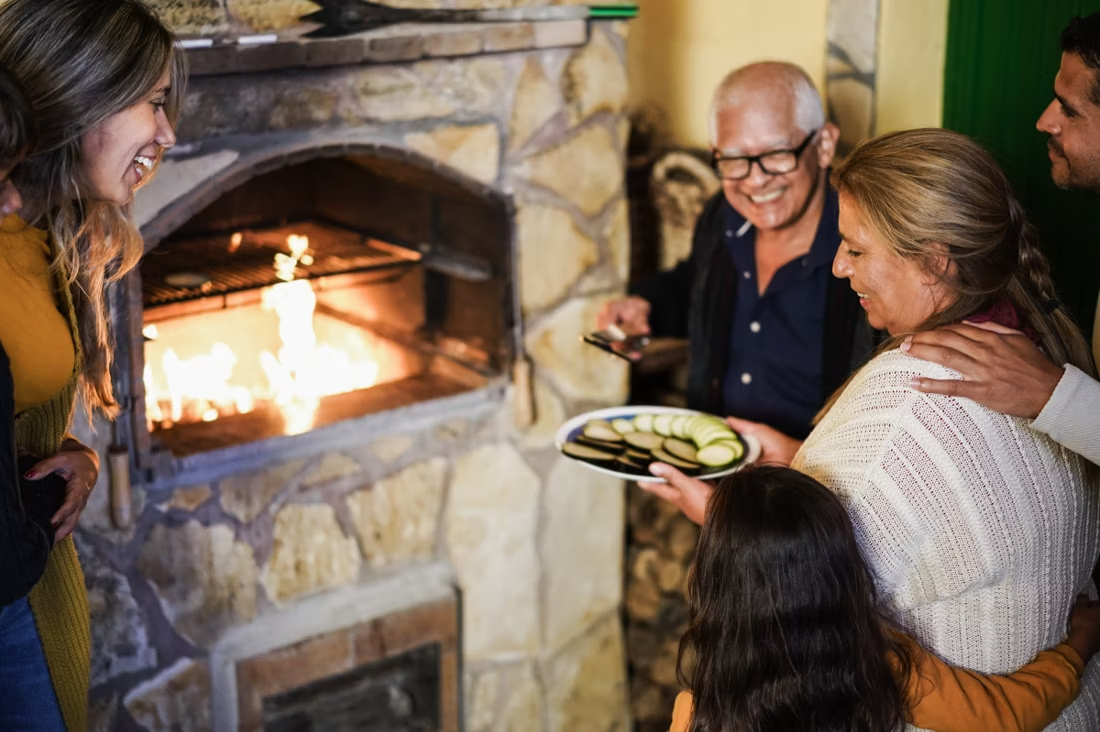
Firewood Cutting Permits Near Sanger
Three steps. No salesperson until you're ready.
Tell us about your project
Your zip code, your situation, and the fuel you're leaning toward—or let the answers point you to one.
See what's actually available
The brands dealers within 100 miles genuinely carry—real options, never a catalog mirage.
Get your dealer & Project Guide
A trusted local dealer, plus the free Project Guide & Parts List that names every component of the job.
Frequently Asked Questions
Is it legal to install a wood stove in Sanger?
Yes, but with real limits. Any new wood-burning device installed in Fresno County must meet EPA 2020 NSPS certification standards, and the San Joaquin Valley Air Pollution Control District requires registration of the unit. Once installed, the device is subject to the district's Check Before You Burn program, which can restrict or prohibit burning—even for certified stoves—on days when PM2.5 forecasts exceed health thresholds, typically November through February. It's legal to own and install a compliant stove; it's the day-to-day burning that gets regulated.
How much does a wood stove installation cost in Sanger?
Because so few hearth dealers in the Fresno area keep wood-burning inventory in stock—demand is low compared to mountain or northern climates—installation costs vary more than they would in a wood-heavy market. As a general planning range for a freestanding stove or insert with venting, expect somewhere in the $3,500 to $7,500 range depending on the unit, chimney condition, and whether new Class A pipe is needed. A local dealer can give you a firm number once they've seen your fireplace or install location.
What is Check Before You Burn, and how does it affect me?
Check Before You Burn is the San Joaquin Valley Air Pollution Control District's winter air quality program, active roughly November 1 through the end of February. On days when fine particulate forecasts are elevated, the district issues a curtailment: on some days only uncertified, older wood devices are restricted, but on higher-pollution days even EPA-certified stoves can be restricted unless the home has registered the stove as its sole source of heat. You can check daily status through the district's website or automated phone line before lighting a fire during winter months.
Why would anyone install a wood stove in Sanger if winters are this mild?
The most common reason we hear is backup heat. PG&E public safety power shutoffs during high fire-risk conditions can leave Fresno County homes without electricity for a day or more, and a wood stove keeps working when the grid doesn't—something a gas furnace with an electric igniter or an electric heater can't do. The other common case is rural or foothill properties outside the reach of natural gas service, and second homes or cabins up toward the Sierra and Sequoia National Forest boundary, where colder elevations make wood heat genuinely practical.
Where can I get firewood or cutting permits near Sanger?
The Sierra National Forest and Sequoia National Forest, both within reach of Sanger to the east, issue personal-use cutting permits during the May-to-October season, typically priced between $5 and $20 per cord. Common species available include oak, madrone, and Douglas fir—oak in particular burns hot and long and is well suited to the occasional cold snap the Valley does get. Permits are issued through the respective ranger district offices, and rules on unit limits and road access vary by district, so call ahead before you head up.
Do I need a permit from the city or county to install a wood stove?
Yes—a building permit is required for a new wood-burning installation whether you're inside Sanger city limits or in unincorporated Fresno County, and the unit must meet current EPA certification to pass inspection. Air district registration is a separate step from the building permit and is handled through the San Joaquin Valley Air Pollution Control District rather than the local building office. A certified installer will typically walk you through both pieces rather than leaving you to coordinate them separately.
If wood isn't the best fit, what should I install instead?
For most Sanger homes, gas and electric options are the more practical everyday choice. Natural gas fireplaces and inserts give you instant, on-off heat without any curtailment restrictions, and PG&E gas service reaches most of the city. Electric fireplaces and heat-focused inserts are simple to install with no venting or permitting hurdles at all, though at PG&E's residential rate of roughly $0.317 per kWh, they're better suited to supplemental or occasional use than as a primary heat source. Wood still has a place for backup heat or foothill properties—it's just not the default here the way it is in colder climates.
Can an EPA-certified stove burn on a curtailment day?
Sometimes. On a voluntary curtailment day, certified stoves are generally still allowed to burn. On a mandatory curtailment day, the district typically restricts even certified units unless the household has registered that stove as its sole source of heat with the air district in advance. If backup heating during outages is your main reason for wanting a stove, ask your installer about sole-source registration at the time of installation—it's much easier to set up upfront than after the fact.
Does wood heat make more sense for a cabin near Shaver Lake or the Sequoia foothills?
Often, yes. Elevation changes the math quickly in this part of California—a cabin a few thousand feet above the Valley floor near Shaver Lake or along the Sequoia National Forest boundary sees real winter cold and snow, unlike Sanger's mild 38°F average low. Those higher-elevation properties also tend to fall outside the same air district non-attainment pressure that limits burning down in the Valley, and many are far enough from the gas grid that wood is a legitimate primary or backup heat source. If that's your situation, we'll match you with a dealer experienced in foothill and mountain installations rather than a strictly Valley-market shop.
Why is my open fireplace making my house colder?
Open fireplaces suck—literally. As the fire burns, it consumes air your furnace already paid to heat and pulls it out through the chimney, so the house is actually colder after the fire goes out than before you lit it. An insert fixes this: it seals the chimney, puts fixed glass across the front, and turns that hole in your house into a real heat source.
Why is a fireplace insert so efficient?
An insert does two things: it seals the chimney completely, so you stop losing air you already paid to heat, and it radiates warmth into the room through the firebox and glass. Most add a heat-exchange fan that pulls cool room air underneath, wraps it around the hot firebox, and pushes it back out warm. Your home is more efficient before you've even lit the first fire.
How much should I budget for a fireplace?
For an average home—covering the fireplace, the vent pipe, and basic installation—a budget between $3,900 and $5,500 gives you a lot of options across wood, gas, and pellet. By the time you add finish work, gas line, and electrical, the average complete installation lands between $5,000 and $12,000 all-in. In a remodel or new build, a good rule is to put about 2.5% of the total project cost toward the fireplace.
What is an in-home preview and do I need one?
It's a visit where a hearth professional measures your space, confirms the model you picked actually works in your home, and walks the specs—framing, gas line, venting, finish work—before anything is ordered. Some details you just can't know until you see the house. Never make a down payment without one; it's the single most-skipped step that burns buyers.
Nearby Dealers
Hearth shops serving Sanger and the surrounding area.
Find out if wood heat fits your Sanger home.
Tell us about your home, your property, and why you're considering wood heat, and we'll send a free Project Guide & Parts List—the right unit, the vent kit, and a trusted local dealer who understands the San Joaquin Valley's air rules.
Find Your Fireplace →