
Find the right gas fireplace for your San Luis Obispo County home.
From coastal fog in Cambria to warm inland valleys around Paso Robles, gas fireplaces deliver instant, mild-climate heat without the wood-handling. Find the right unit and connect with a trusted local dealer.
Every Project Starts From One of These Five Situations
Mild winters, but the ambiance still matters.
San Luis Obispo County's Climate Zone 3C means winters here are gentle by national standards—average lows around 34°F and a mild, short heating season, a fraction of what a place like Bozeman, Montana logs in a single January. Most homes in San Luis Obispo, Paso Robles, and Arroyo Grande don't need aggressive heat output; they need a clean, reliable secondary heat source and the visual warmth of a real flame on foggy coastal evenings or cool inland nights near the Salinas River.
That's exactly where gas fireplaces do their best work. PG&E provides natural gas service across most of the county's incorporated cities and larger unincorporated communities, making direct-vent gas inserts and fireplaces a straightforward retrofit for homes with existing gas service. In outlying areas—the hills above Cambria, rural stretches near Creston and Santa Margarita, and pockets of the North County where PG&E lines don't reach—propane fills the gap. Either way, a gas fireplace gives you instant on-demand heat, a lower fire-risk profile than wood in a county that deals with real wildfire smoke concerns, and none of the ash or creosote upkeep that comes with burning oak or madrone.
Three steps. No salesperson until you're ready.
Tell us about your project
Your zip code, your situation, and the fuel you're leaning toward—or let the answers point you to one.
See what's actually available
The brands dealers within 100 miles genuinely carry—real options, never a catalog mirage.
Get your dealer & Project Guide
A trusted local dealer, plus the free Project Guide & Parts List that names every component of the job.
Frequently Asked Questions
How much does a gas fireplace installation cost in San Luis Obispo County?
A typical gas fireplace installation in San Luis Obispo County runs about the same as the statewide range—figure roughly $4,500 to $11,000 depending on the unit and the scope of work. A direct-vent insert dropped into an existing masonry fireplace with gas already plumbed to the room sits at the lower end. A new built-in unit for a remodel or new construction, requiring fresh gas line runs and framing, lands in the middle to upper range. Homes in areas served only by propane—parts of Cambria, Creston, and rural North County—may see added cost if a new propane tank needs to be set. Local retailers will give you a firm number after an in-home look at your venting path and gas access.
Can I convert my existing wood fireplace to gas?
Yes, and it's a common project for older homes in San Luis Obispo, Morro Bay, and Atascadero built with traditional masonry fireboxes. A gas insert slides into the existing firebox and vents through the same chimney using a stainless liner, so you keep the look of your fireplace while gaining push-button heat. Homes already on PG&E natural gas service typically have the easiest, least expensive conversion; homes relying on propane may need a line run from an existing or new tank. Given the county's wildfire smoke concerns during dry season, a lot of homeowners see this conversion as a way to keep the fireplace they love without adding to smoke output on bad air days.
Do I need natural gas, or can I use propane?
Either works, and which one you use mostly comes down to where you live. PG&E serves natural gas throughout San Luis Obispo, Paso Robles, Atascadero, Grover Beach, and most other incorporated areas, so homes already on the gas line for cooking or water heating are an easy add. Outside those service areas—up in the hills around Cambria, out toward Creston, or in more remote parts of the county—propane from a local supplier is the standard fallback. Most gas fireplace models can be configured for either fuel; your installer sets the correct orifice and regulator for whichever you're running.
Will my gas fireplace work during a power outage?
Most modern gas fireplaces will, which matters in a county that sees periodic PG&E outages, including planned Public Safety Power Shutoffs during high fire-risk conditions. Units with IPI (intermittent pilot ignition) run on a battery backup, typically a set of AA batteries inside the unit, that kicks in automatically when line power drops. Valor fireplaces take a different route worth asking about: their pilot system generates its own electricity via thermocouple, so there's no battery to maintain at all. For a county where power shutoffs can happen with little warning during fire season, that's a meaningful difference to weigh with your local retailer.
What's the difference between a gas fireplace, gas insert, and gas stove?
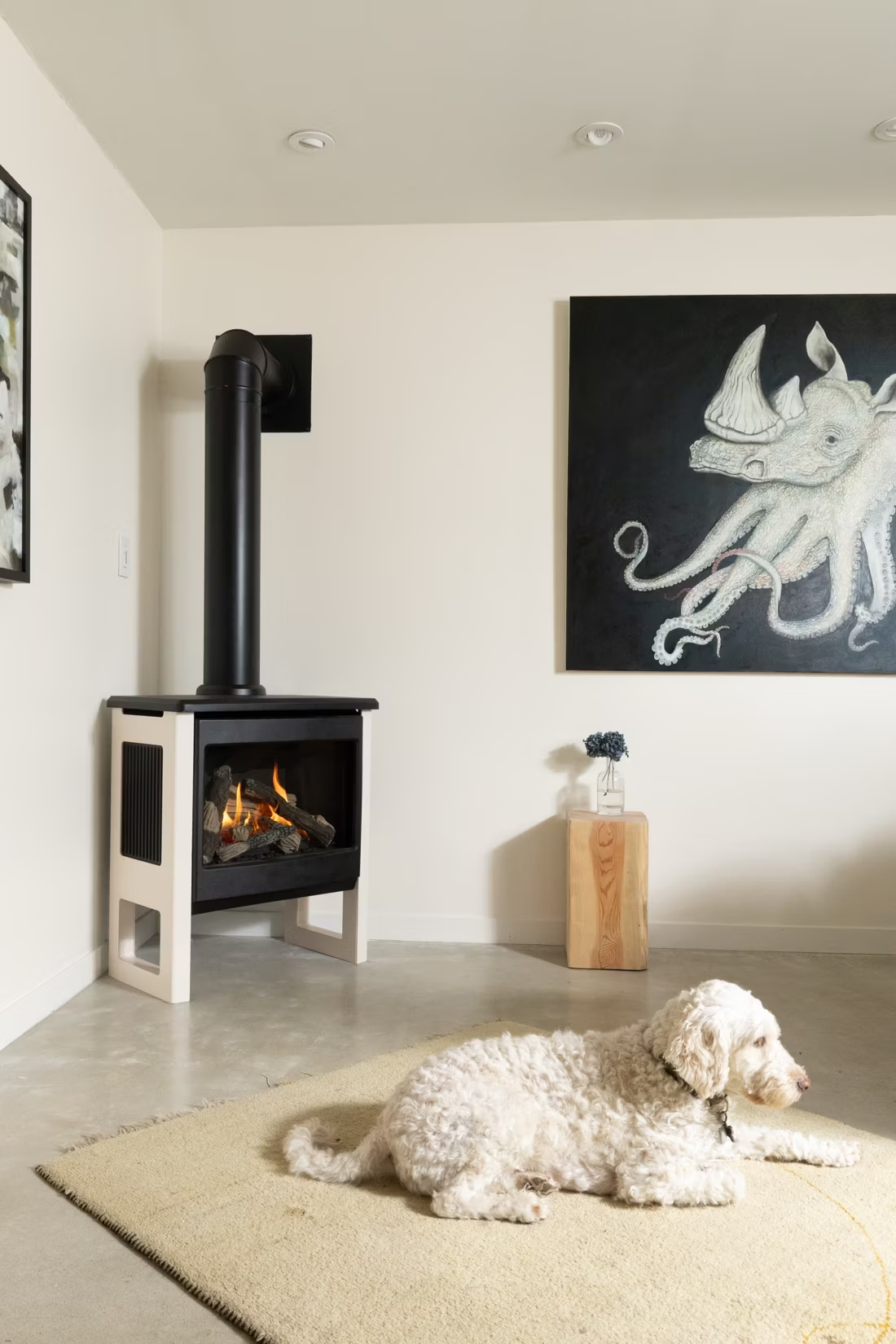
A gas fireplace is a fully built-in unit framed into a wall, typically chosen for new construction or a full remodel. A gas insert is sized to slide into an existing masonry firebox, turning an old open hearth into a sealed, efficient unit that vents through the existing chimney. A gas stove is a freestanding unit that sits on the floor on its own hearth pad, similar in footprint to a wood stove but running on gas. For the many older homes around San Luis Obispo and Atascadero with existing wood fireboxes, an insert is usually the simplest and most cost-effective route. Newer builds or rooms without a fireplace already in place are better suited to a built-in unit or freestanding stove.
Do I need a permit to install a gas fireplace in San Luis Obispo County?
Yes. Whether you're inside city limits or in unincorporated county territory, a gas fireplace installation requires a building permit and gas line permit, issued either by the relevant city building department or the San Luis Obispo County Department of Planning and Building for unincorporated areas. The gas line connection itself needs to be run by a licensed gas-fitter. Most established hearth retailers coordinate the permitting, gas work, and inspection as one package, which is usually simpler than trying to manage separate trades yourself.
What's the difference between vented and vent-free gas fireplaces?
Vented gas fireplaces, whether direct-vent or B-vent, pull combustion air from outside and exhaust the byproducts back outside through sealed venting. Vent-free units burn directly into the room without external venting, which makes them more flexible to install but means they release water vapor and small amounts of combustion byproducts into your living space. California allows vent-free units but holds them to strict room-sizing and oxygen-depletion-sensor requirements. Given the wildfire smoke issues San Luis Obispo County already deals with several weeks a year, most local installers steer homeowners toward direct-vent units, which don't add anything to indoor air quality concerns. It's worth asking your retailer to walk through both options for your specific room.
How often should my gas fireplace be serviced?
Plan on an annual inspection, same as any gas appliance. A technician checks the burner, pilot assembly, gas connections, and venting, and cleans the glass and firebox interior. It's a far lighter job than sweeping a wood chimney, but skipping it is how small issues—a dirty pilot, a failing thermocouple—turn into no-heat calls in the middle of a cold front. Local gas appliance service providers in the county typically charge in the $150 to $250 range for a standard annual visit.
Gas vs. wood—which is right for my home?
Wood offers a real fire, lower fuel cost if you're set up to source oak, madrone, or douglas fir locally, and heat that doesn't depend on the grid. Gas offers instant on-off convenience, no ash or creosote, and a cleaner burn on days when wildfire smoke already has the air quality compromised. Given San Luis Obispo County's mild Zone 3C winters, most homeowners here aren't leaning on their fireplace for serious heat load the way a colder climate would—it's more about ambiance and backup warmth. That tilts many toward gas for daily use, with some households keeping a wood option at a second property or for genuine emergency heat during an extended outage.
Why is a fireplace insert so efficient?
An insert does two things: it seals the chimney completely, so you stop losing air you already paid to heat, and it radiates warmth into the room through the firebox and glass. Most add a heat-exchange fan that pulls cool room air underneath, wraps it around the hot firebox, and pushes it back out warm. Your home is more efficient before you've even lit the first fire.
Is my gas fireplace wasting gas?
If it was installed more than 15 years ago, probably. Older gas fireplaces keep a standing pilot light burning all the time, and that little flame can cost a couple hundred dollars a year. Newer models use pilot-on-demand ignition—the pilot lights only when you use the fireplace and goes out when you turn it off.
Does a fireplace add value to my home?
On average, a fireplace adds back to the home about the same amount you spent installing it. Add the monthly savings from heating the rooms you actually use instead of the whole house—often hundreds of dollars a year—and the value case is strong before you even count what a fire does for how your family uses the room.
Can I install a fireplace myself?
If you're putting a fire in your house on purpose, it's best to work with an expert. Unless you're genuinely experienced in framing, gas line, vent pipe, and the national code on clearances to combustibles, have a professional do it—and ideally the same company that sells you the fireplace, so warranty, service, and liability all live under one roof.
Stove and Fireplace Dealers in San Luis Obispo County
Find your gas fireplace in San Luis Obispo County.
Tell us a bit about your home and we'll match you with a trusted local dealer, plus a free Project Guide & Parts List—the exact parts, including the vent kit, for your San Luis Obispo County gas fireplace project.
Find Your Fireplace →