
Real Flame for San Luis Obispo's Foggy Evenings.
Marine-layer evenings drop the mercury even when the days are mild—a gas fireplace gives San Luis Obispo homes instant, clean warmth without the hassle of firewood. Find the right unit and connect with a trusted local dealer.
Every Project Starts From One of These Five Situations
Comfort built for a mild climate.
San Luis Obispo sits just five miles from the coast at only 159 feet of elevation, and it shows in the numbers: a mild, short heating season and an average winter low of 41°F—a fraction of the heating load carried by a place like Burlington, Vermont. Wood stoves and pellet stoves never took hold here the way they did in Sierra or Cascade foothill towns; there's no real cutting-permit culture or cordwood economy around oak, madrone, and douglas fir, and the county's air district watches wildfire smoke, not winter wood-smoke inversions, as its seasonal concern. Gas fireplaces fill that gap instead, supplying the cozy, radiant warmth people want on a 45-degree fog-rolled evening downtown or out toward Edna Valley without asking anyone to season firewood.
Pacific Gas & Electric provides both natural gas and electric service throughout San Luis Obispo, which makes direct-vent gas fireplaces and inserts the practical default for most homes, new construction and remodels alike. It's also common here to convert an existing wood-burning fireplace—especially in the older bungalows and ranch homes around downtown and Cal Poly—into a sealed gas insert: same look, a fraction of the mess, heat on demand. For the handful of homes outside PG&E's gas footprint in the outlying county, propane fills the same role.
Three steps. No salesperson until you're ready.
Tell us about your project
Your zip code, your situation, and the fuel you're leaning toward—or let the answers point you to one.
See what's actually available
The brands dealers within 100 miles genuinely carry—real options, never a catalog mirage.
Get your dealer & Project Guide
A trusted local dealer, plus the free Project Guide & Parts List that names every component of the job.
Frequently Asked Questions
How much does a gas fireplace installation cost in San Luis Obispo?
Expect to pay roughly $5,000 to $11,000 for a gas fireplace or insert installation in San Luis Obispo, with the spread driven mainly by venting and gas line work rather than the unit itself. A direct-vent insert dropped into an existing masonry fireplace with gas already run to the hearth sits at the low end. New construction or a remodel that requires framing a chase, running new gas line, and coordinating with a licensed gas-fitter pushes toward the higher end. Central Coast labor rates run a bit above the national average, so get a firm, in-home quote from a local dealer rather than pricing off a national average.
Can I convert my existing wood-burning fireplace to gas?
Yes, and it's one of the more common projects for the older homes around downtown San Luis Obispo and the Cal Poly area, many of which were built with open wood-burning fireboxes decades before gas became the local default. A gas insert slides into the existing masonry opening and uses a stainless liner run up the same chimney, so the exterior doesn't change. Budget $4,500 to $9,500 depending on whether a gas line already reaches the fireplace. Given that oak and madrone cordwood was never really part of daily life here, most homeowners doing this conversion are motivated by convenience and cleaner air rather than nostalgia for a wood fire.
Do I need natural gas service, or is propane an option?
Pacific Gas & Electric provides natural gas to nearly all of the city of San Luis Obispo, so most homes can tie a new fireplace into an existing line or have one run from the meter. If you're in one of the unincorporated pockets of the county outside PG&E's gas territory, propane is the standard workaround, using either a buried tank or an above-ground tank from a local propane supplier. Either fuel works in the same fireplace with the correct orifice kit, so it's rarely a factor in which unit you choose.
Will my gas fireplace still work if the power goes out?
Most direct-vent gas fireplaces will, which matters more here than the mild climate might suggest—San Luis Obispo County sits inside PG&E's Public Safety Power Shutoff footprint, and outages tied to high fire-danger weather can happen well outside winter. Units with intermittent pilot ignition (IPI) run on a small battery backup that kicks in the moment power drops, so the fireplace lights normally. Valor's gas fireplaces go a step further: the pilot's thermocouple generates the electricity the unit needs, so there's no battery to remember at all. Ask your local dealer which ignition system is in the model you're considering.
What's the difference between a gas fireplace, insert, and stove?
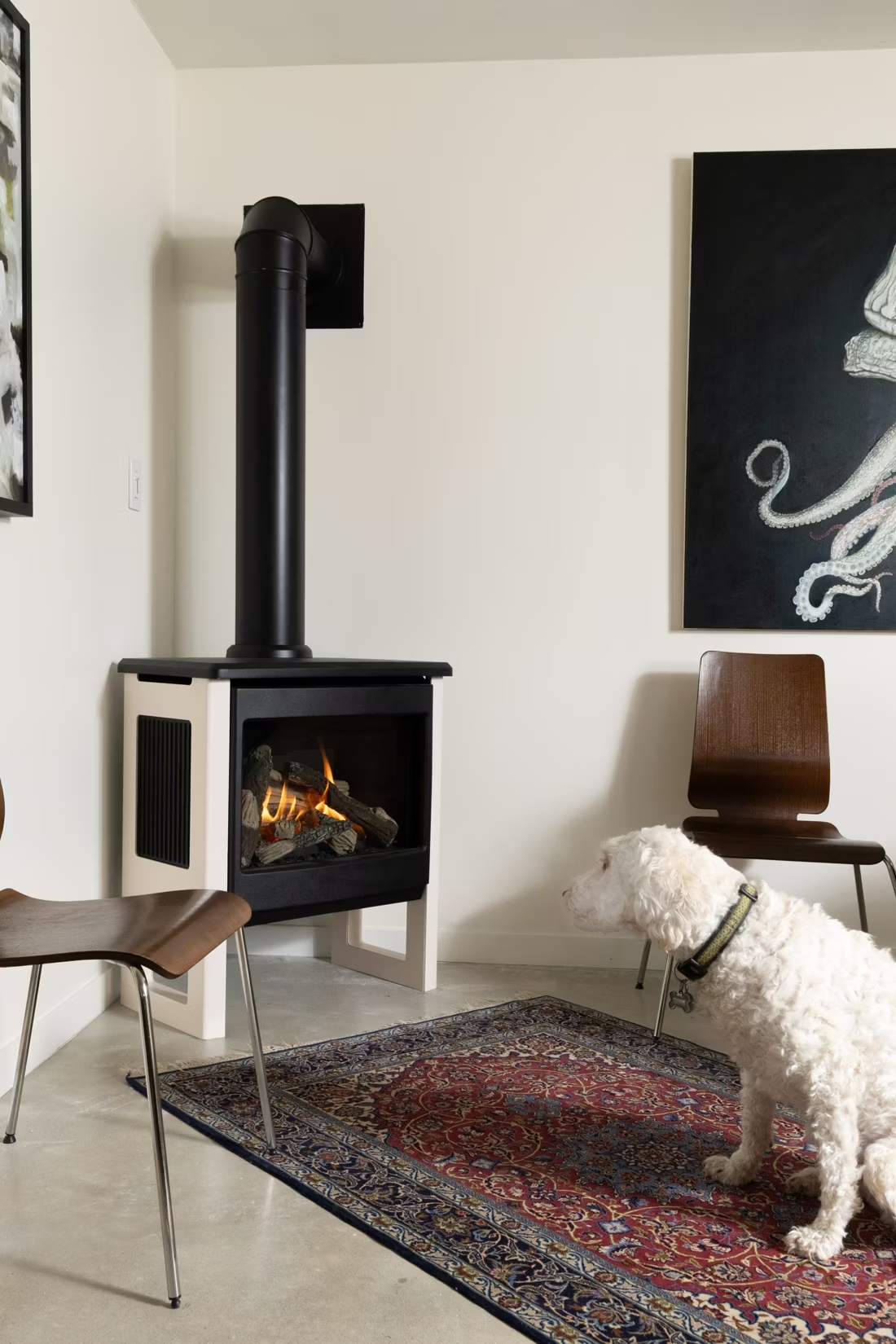
A gas fireplace is a built-in unit framed into a wall—the right call for new construction or a remodel with no existing firebox. A gas insert fits inside an existing masonry fireplace opening, which is the common path for San Luis Obispo's older housing stock. A gas stove is a freestanding cast-iron or steel unit that sits on the floor and vents through a wall or ceiling, useful in a room without any existing fireplace. For most homeowners here converting a wood-burning firebox, an insert is the simplest and most cost-effective route.
Do I need a permit to install a gas fireplace in San Luis Obispo?
Yes. New gas fireplace installations require a building permit—through the City of San Luis Obispo Building Division inside city limits, or the San Luis Obispo County Building Department for unincorporated areas—plus a separate gas line permit if new piping is involved. A licensed hearth dealer typically pulls both as part of the installation and schedules the inspection, so you're not coordinating multiple trades yourself.
Are vent-free (ventless) gas fireplaces allowed in San Luis Obispo?
In practice, no—California's building and mechanical codes make it very difficult to install a true vent-free gas appliance in a home here, and most local dealers won't sell them. Direct-vent gas fireplaces, which draw combustion air from outside and exhaust it back outside through a sealed pipe, are the standard and the only option most installers will quote. That's a good thing for indoor air quality, and it means you're choosing a unit based on style and heat output rather than weighing venting trade-offs.
How often does a gas fireplace need to be serviced?
Plan on an annual inspection, ideally before the foggy months of December through February when you'll actually be running it. A technician checks the burner, pilot assembly, gas connections, and venting, and cleans the glass. It's a lighter job than chimney sweeping for a wood stove—most local service providers charge in the $150 to $250 range for a standard inspection and cleaning.
Should I consider a wood or pellet stove instead of gas?
Realistically, no—wood and pellet stoves are uncommon in San Luis Obispo, and for good reason. The mild coastal climate keeps heating demand low (a mild, short heating season versus well over triple the heating load in a Midwestern cold-climate city like Burlington, Vermont), there's no established cordwood or pellet supply chain locally, and the county's air district is focused on wildfire smoke rather than winter wood-smoke inversions. A gas fireplace delivers the same instant, radiant comfort on a cool evening without sourcing fuel, storing cordwood, or dealing with ash—which is why it's the fuel almost every local dealer defaults to.
Is my gas fireplace wasting gas?
If it was installed more than 15 years ago, probably. Older gas fireplaces keep a standing pilot light burning all the time, and that little flame can cost a couple hundred dollars a year. Newer models use pilot-on-demand ignition—the pilot lights only when you use the fireplace and goes out when you turn it off.
Why is a fireplace insert so efficient?
An insert does two things: it seals the chimney completely, so you stop losing air you already paid to heat, and it radiates warmth into the room through the firebox and glass. Most add a heat-exchange fan that pulls cool room air underneath, wraps it around the hot firebox, and pushes it back out warm. Your home is more efficient before you've even lit the first fire.
Should the dealer who sells my fireplace also install it?
Ideally, yes. A fireplace project involves vent pipe, gas line, electrical, and often tile or stone. Hire three or four separate trades and you own the liability and the game of telephone between them. One company selling and installing means one accountable party, start to finish—ask about factory training, on-time completion records, and what happens if an inspection fails.
What is an in-home preview and do I need one?
It's a visit where a hearth professional measures your space, confirms the model you picked actually works in your home, and walks the specs—framing, gas line, venting, finish work—before anything is ordered. Some details you just can't know until you see the house. Never make a down payment without one; it's the single most-skipped step that burns buyers.
Nearby Dealers
Hearth shops serving San Luis Obispo and the surrounding area.
Find your gas fireplace in San Luis Obispo.
Tell us about your home and we'll match you with the right gas fireplace or insert, plus a free Project Guide & Parts List—the exact parts, including the vent kit, and a trusted local San Luis Obispo dealer to install it.
Find Your Fireplace →