
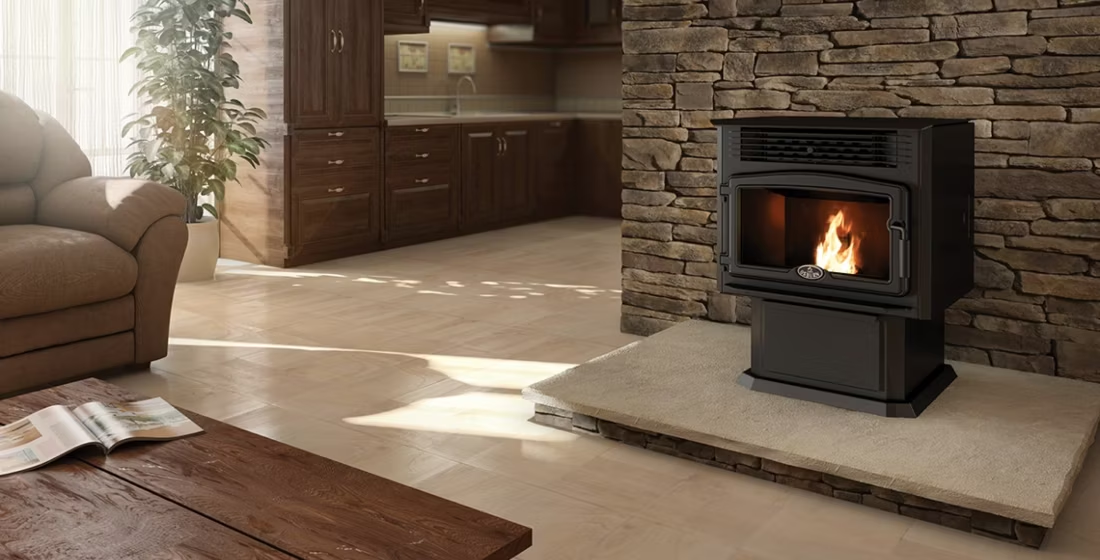
Pellet heat, sized for San Jacinto's mild winters.
With winter lows averaging 40°F and only about 1,801 heating degree days a year, San Jacinto rarely needs a dedicated pellet stove—but for backup heat during power shutoffs or a warm supplemental room, we'll connect you with a local dealer who can size it right.
Every Project Starts From One of These Five Situations
San Jacinto's mild winters rarely call for pellet heat.
San Jacinto sits at 1,495 feet in the San Jacinto Valley of Riverside County, where winter lows average a mild 40°F and the entire heating season totals roughly 1,801 heating degree days—a fraction of what a place like Duluth, Minnesota logs in a single winter. Most homes here rely on a standard central furnace or heat pump, and dedicated solid-fuel heating, wood or pellet, simply isn't part of the local building culture the way it is in colder parts of California.
That said, pellet stoves aren't unheard of here. Homeowners in the foothill neighborhoods closer to the San Jacinto Mountains, where nights run cooler than the valley floor, sometimes install a pellet insert for supplemental warmth or as backup heat during the public safety power shutoffs Southern California Edison occasionally calls during high fire-risk periods. San Jacinto also sits in a South Coast AQMD non-attainment area for particulate matter, and wildfire smoke already strains air quality most summers—so for the small number of homeowners who do want a solid-fuel backup option, a clean-burning EPA-certified pellet stove is often the more air-quality-conscious choice over an open wood fire.
Three steps. No salesperson until you're ready.
Tell us about your project
Your zip code, your situation, and the fuel you're leaning toward—or let the answers point you to one.
See what's actually available
The brands dealers within 100 miles genuinely carry—real options, never a catalog mirage.
Get your dealer & Project Guide
A trusted local dealer, plus the free Project Guide & Parts List that names every component of the job.
Frequently Asked Questions
How much does a pellet stove installation cost in San Jacinto?
Because pellet installations are uncommon in San Jacinto, pricing varies more than it would in a cold-climate market with dozens of installers competing for the work. As a general range, expect $3,500 to $6,500 for a freestanding pellet stove with wall venting and a dedicated electrical outlet, or a bit more for a pellet insert into an existing masonry fireplace. Given the limited number of local dealers, it's worth getting two quotes rather than assuming a single price is standard.
Are pellet stoves even available from dealers near San Jacinto?
Yes, though the selection is thinner than in the mountain or high-desert parts of the state. Regional brands like Bear Mountain, Lignetics, and Pacific Pellet distribute pellet fuel throughout Southern California, and a handful of Inland Empire hearth dealers carry pellet stoves and inserts even though local demand skews toward gas and electric. We match you with a dealer who actually stocks and installs pellet units near San Jacinto rather than sending you to a big-box store that only sells bagged fuel.
Do I need a permit to install a pellet stove in San Jacinto?
Yes—a pellet stove installation requires a building permit through the City of San Jacinto Building & Safety Division (or Riverside County Building and Safety if your property is in an unincorporated area). The permit process checks hearth clearances, venting termination points, and the electrical circuit the unit's auger and blower run on. Most hearth dealers who install pellet stoves in this area will pull the permit and schedule the inspection as part of the job.
How does venting work for a pellet stove versus a wood stove?
Pellet stoves vent through a smaller-diameter PL vent pipe, typically 3 or 4 inches, that can run horizontally through an exterior wall—no masonry chimney required. This is one reason pellet units show up in San Jacinto homes without an existing fireplace: the venting is simpler and cheaper than the Class A chimney a wood stove needs. The tradeoff is that pellet stoves require electricity to run the auger, igniter, and combustion blower, so they won't operate during a power outage unless paired with a battery backup—worth considering given SCE's periodic public safety power shutoffs in fire-risk weather.
What size pellet stove do I need in a climate this mild?
Most San Jacinto homes don't need a whole-home-rated pellet stove. A small unit with a 40-pound hopper and a heating capacity of 1,000 to 1,500 square feet is plenty for supplemental heat in a family room or as backup during a cold snap or outage. Oversizing is the more common mistake here—a stove rated for 2,000+ square feet will run at a low, inefficient burn rate most of the season since San Jacinto's heating demand is so light. A local dealer can size this correctly during an in-home visit.
Where do I buy pellets, and how should I store them?
Bear Mountain, Lignetics, and Pacific Pellet all distribute in the region, and Inland Empire feed stores and some hardware retailers carry bagged pellets, typically running $300 to $400 per ton depending on the season and brand. Because San Jacinto's climate is dry most of the year, storage is less of a headache than in wetter parts of the state—a garage or covered shed keeps bags dry. Just don't stack near a wildfire-prone brush line if you're in a foothill property; keep fuel storage inside defensible space.
Does the South Coast AQMD restrict pellet stove use like it does wood burning?
South Coast AQMD's mandatory no-burn curtailment days, called Check Before You Burn, apply to open wood fireplaces and older uncertified wood stoves in this non-attainment area, especially during winter inversion episodes. EPA-certified pellet stoves are generally exempt from these curtailment restrictions because they burn far cleaner and more completely than cordwood. That exemption is one of the practical reasons a handful of San Jacinto homeowners choose pellet over wood when they want a solid-fuel backup option at all.
Is a pellet stove cheaper to run than electric heat in San Jacinto?
It depends on how much you'd actually run it. Southern California Edison's residential rate runs about $0.2825 per kWh, which is high compared to most of the country, so running electric resistance heat for hours at a time gets expensive fast. A pellet stove burning $350-a-ton fuel can undercut that cost per BTU when it's your primary heat source. But San Jacinto's mild winters mean most homes only need supplemental heat for a handful of cold nights a year—at that usage level, the fuel savings rarely offset the upfront cost of the stove and venting. Pellet tends to make more financial sense as backup heat for outages than as a cost-saving strategy here.
Are there rebates available for installing a pellet stove in San Jacinto?
Not typically. Most current California incentive programs, including SCE and TECH Clean California rebates, are aimed at heat pumps and electric appliances rather than pellet stoves. South Coast AQMD has occasionally run wood-burning device changeout programs that offer credit toward a cleaner-burning pellet stove when replacing an old uncertified wood fireplace, but these programs are intermittent and eligibility varies by year. A local hearth dealer will know if any changeout incentive is currently active in Riverside County.
How often does a pellet stove need cleaning?
A clean pellet stove is a happy pellet stove. Plan on cleaning the burn pot about once a week when you're burning regularly—ash and clinkers gum up the air holes just like a pellet barbecue. Most pellet stove problems trace back to skipped cleaning that nobody explained up front. Some designs make it easy with a trapdoor burn pot: pull a lever and the gunk drops into the ash pan.
Why is a fireplace insert so efficient?
An insert does two things: it seals the chimney completely, so you stop losing air you already paid to heat, and it radiates warmth into the room through the firebox and glass. Most add a heat-exchange fan that pulls cool room air underneath, wraps it around the hot firebox, and pushes it back out warm. Your home is more efficient before you've even lit the first fire.
Can I install a fireplace myself?
If you're putting a fire in your house on purpose, it's best to work with an expert. Unless you're genuinely experienced in framing, gas line, vent pipe, and the national code on clearances to combustibles, have a professional do it—and ideally the same company that sells you the fireplace, so warranty, service, and liability all live under one roof.
Does a fireplace add value to my home?
On average, a fireplace adds back to the home about the same amount you spent installing it. Add the monthly savings from heating the rooms you actually use instead of the whole house—often hundreds of dollars a year—and the value case is strong before you even count what a fire does for how your family uses the room.
Nearby Dealers
Hearth shops serving San Jacinto and the surrounding area.
Palm Springs True Value Hardware & Patio
Pellet Brands Stocked Around San Jacinto
Manufacturers will point you to the nearest stocking dealer.
See if pellet heat makes sense for your San Jacinto home.
Tell us about your home and how you'd use it, and if a pellet stove is the right call, we'll match you with a trusted local dealer and send over a free Project Guide & Parts List—including the vent kit and exact parts your project needs.
Find Your Fireplace →