
Warm up your San Jacinto home without the smoke.
San Jacinto's winters are short and mild, and the South Coast Air Basin's rules on wood smoke are not. Electric heat gives you real ambiance and zone warmth without a chimney, a permit fight, or a no-burn-day notice.
Every Project Starts From One of These Five Situations
Mild winters, strict air rules, easy install.
San Jacinto sits at about 1,495 feet in the San Jacinto Valley, with average winter lows near 40°F and a light winter heating load overall—a fraction of what a place like Duluth, Minnesota logs in a single January. Most San Jacinto homes don't need a whole-house heat source; they need supplemental warmth for a living room on the handful of genuinely cold evenings each winter, plus a fireplace that looks good and works instantly the other 350 nights a year.
San Jacinto also sits within the South Coast Air Quality Management District's non-attainment area, and the surrounding hills bring wildfire smoke episodes most late summers and falls. SCAQMD's Check Before You Burn program restricts wood-burning fireplaces and stoves on high-pollution days, which is a big part of why wood and pellet appliances are rare here even though oak, madrone, and Douglas fir are cuttable under permit from the nearby San Bernardino and Angeles National Forests. Electric fireplaces sidestep all of it—no combustion, no venting, no curtailment days, just a plug into an existing outlet or a dedicated circuit run by Southern California Edison territory electricians.
Three steps. No salesperson until you're ready.
Tell us about your project
Your zip code, your situation, and the fuel you're leaning toward—or let the answers point you to one.
See what's actually available
The brands dealers within 100 miles genuinely carry—real options, never a catalog mirage.
Get your dealer & Project Guide
A trusted local dealer, plus the free Project Guide & Parts List that names every component of the job.
Frequently Asked Questions
How much does it cost to install an electric fireplace in San Jacinto?
A freestanding or plug-in electric insert that drops into an existing fireplace opening or media console typically runs $300 to $1,200 installed, since most units plug into a standard 120V outlet with no electrician required. A built-in wall unit or a linear electric fireplace set into new framing runs higher, generally $1,500 to $4,000, because it usually needs a dedicated 20-amp circuit and sometimes a licensed electrician to bring power to the wall. Local hearth dealers in the San Jacinto Valley can quote a firm number after seeing your wall and existing wiring.
Do I need a permit for an electric fireplace in San Jacinto?
A freestanding, plug-in electric fireplace generally doesn't require a permit since it doesn't touch the home's electrical system or structure. A built-in unit that involves new wiring, wall framing, or a dedicated circuit typically does need an electrical and/or building permit through the City of San Jacinto Building & Safety Division, or the Riverside County Building Department if you're in one of the unincorporated pockets around the 92582 or 92581 zips. Most dealers who install built-in units will pull the permit as part of the job.
Why don't more homes in San Jacinto have wood or pellet stoves?
San Jacinto falls inside the South Coast Air Quality Management District's non-attainment area, and the region gets regular wildfire smoke episodes in late summer and fall. SCAQMD's Check Before You Burn program restricts wood-burning appliances on high-pollution days throughout the winter, and pellet stoves aren't widely stocked by dealers in the Inland Empire the way they are in colder, wood-heat-dependent parts of the state. Combined with San Jacinto's mild winters—average lows around 40°F—there's just not the same case for a cordwood or pellet heating system here that you'd see in a place like Bozeman, Montana. Electric and gas fireplaces cover the ambiance and zone-heat needs without adding to the air basin's pollution load.
How much does it cost to run an electric fireplace in San Jacinto?
Southern California Edison's residential rate runs about $0.2825 per kWh, which is on the higher side nationally. A typical electric fireplace draws around 1,500 watts on its highest heat setting, which works out to roughly $0.42 per hour to run at full heat. Most owners run the flame effect without heat for ambiance most of the year—that draws only 30 to 100 watts, a fraction of a cent per hour—and switch on the heater only during the valley's coldest nights.
What type of electric fireplace works best for San Jacinto's climate?
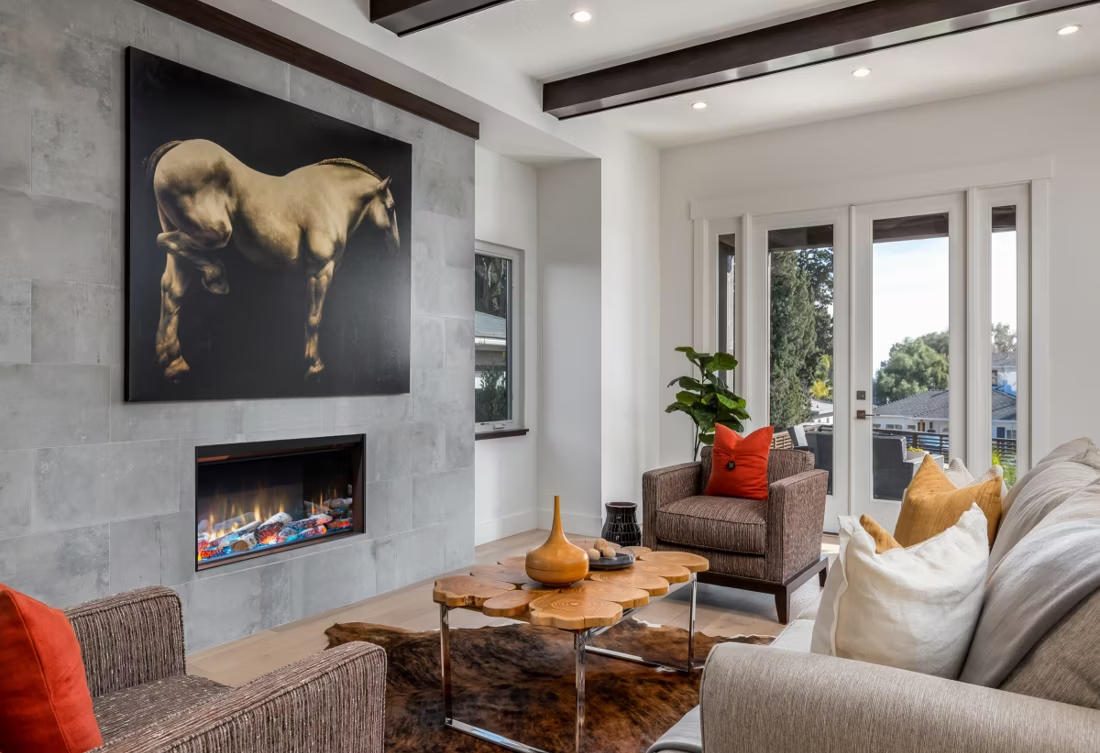
Because San Jacinto rarely needs sustained whole-home heat, most homeowners here do well with a linear wall-mounted unit or an insert that drops into an existing fireplace opening, sized for ambiance and supplemental zone heat rather than as a furnace replacement. A 1,500-watt unit comfortably takes the chill off a 300-400 sq ft living room on a cold Valley evening. Whole-home electric heating from a fireplace isn't realistic anywhere, but that's rarely the goal here—it's a good-looking, no-maintenance flame with real backup warmth on demand.
Will my electric fireplace work during a power outage?
No—electric fireplaces require power to run, so they won't operate during an SCE outage, including the Public Safety Power Shutoffs that Southern California Edison sometimes calls during high wildfire-risk conditions in Riverside County. If backup heat during an outage matters to you, a propane or natural gas unit with battery-backed ignition is worth considering alongside an electric fireplace. Most San Jacinto homeowners treat electric as their everyday, no-fuss option and pair it with another heat source, like central HVAC or a portable propane heater, for outage backup.
Electric vs. gas fireplace—which is right for my San Jacinto home?
Gas fireplaces put out real, sustained heat and can run during a power outage if they have battery-backed ignition, which matters given SCE's occasional wildfire-season shutoffs. Electric fireplaces cost far less to install, need no venting or gas line, produce zero emissions (a real plus inside a non-attainment air basin), and can go anywhere there's an outlet—including rentals and apartments where gas line work isn't an option. For San Jacinto's mild winters, where the fireplace is doing more ambiance work than serious heating most of the year, electric is often the simpler, cheaper choice. Homes wanting genuine backup heat during outages tend to lean gas.
What's the difference between an electric insert, a wall-mounted unit, and a mantel package?
An electric insert is built to slide into an existing fireplace opening—a good fit for older San Jacinto homes with a masonry or builder-grade wood-burning firebox that's rarely been used. A wall-mounted linear unit hangs flush or recessed into a wall, popular in newer construction and remodels for a modern, low-profile look. A mantel package pairs a freestanding electric firebox with a surrounding mantel and is the easiest option for renters or anyone who doesn't want to touch a wall—it just needs floor space and an outlet. All three are available from local dealers who can tell you which fits your specific opening or wall.
How big of an electric fireplace do I need for my San Jacinto home?
Given the Valley's mild average winter lows near 40°F, most homeowners size for the room they'll actually sit in rather than the whole house—a 26 to 40 inch unit rated around 1,500 watts comfortably heats a 300-400 sq ft living or family room. Larger open-concept spaces or homes wanting more visual impact often go with a 50-60 inch linear unit, still on the same 1,500-watt heating element since that's the practical ceiling for a standard circuit. A local dealer can measure your space and existing wall or fireplace opening to confirm the right size before you buy.
Can I put a TV above my fireplace?
Yes—with an asterisk. Fireplaces are hot and TVs don't like heat. Either put a mantel between them to deflect rising warmth, or choose a fireplace with heat-management technology that creates a cool zone on the wall above—the wall stays around 125 degrees, barely warm, while the room still gets full heat. If you like clean lines and don't want a mantel, heat management is the answer.
Does an electric fireplace need a vent or chimney?
No—that's its superpower. An electric fireplace needs a wall and an outlet, period. No vent pipe, no gas line, no clearances to design around, which is why it works in bedrooms, offices, apartments, and walls where venting a gas or wood unit would be impractical or impossible. Installation is typically the simplest and least expensive of any fireplace type.
How much should I budget for a fireplace?
For an average home—covering the fireplace, the vent pipe, and basic installation—a budget between $3,900 and $5,500 gives you a lot of options across wood, gas, and pellet. By the time you add finish work, gas line, and electrical, the average complete installation lands between $5,000 and $12,000 all-in. In a remodel or new build, a good rule is to put about 2.5% of the total project cost toward the fireplace.
Can a fireplace actually lower my heating bill?
Yes—by creating a comfort zone. A furnace heats every square foot of the house just to warm the one room you're in; a gas fireplace on low burns roughly a sixth of the gas a typical furnace does. Set the furnace around 55–60 degrees as a baseline, then heat the rooms your family actually uses. Families who heat this way commonly save $20–$60 a month.
Nearby Dealers
Hearth shops serving San Jacinto and the surrounding area.
Palm Springs True Value Hardware & Patio
Electric Service in San Jacinto
An electric fireplace's heater draws about 1,500 watts—pennies per hour at local rates.
Southern California Edison Co
Find your electric fireplace in San Jacinto.
Tell us a bit about your home and we'll match you with the right electric fireplace or insert, plus a free Project Guide & Parts List and a trusted local dealer to install it.
Find Your Fireplace →