
Pellet Heat Is Rare Here—But Not Impossible.
With winter lows hovering around 47°F on the Palos Verdes Peninsula, few homes need a pellet stove for warmth. But if you want one—for a great room, a hillside remodel, or a mountain cabin—we'll match you with a dealer who can actually do the install.
Every Project Starts From One of These Five Situations
The ocean keeps this hillside too mild for pellet heat to matter much.
Rancho Palos Verdes sits on coastal bluffs above the Pacific at just over 1,000 feet elevation, with a winter heating load that's just a fraction of what a place like Bozeman, MT or Duluth, MN racks up in a single hard winter. Winter lows average in the mid-40s. Most homes on the Peninsula get through the entire cold season with a gas furnace cycling occasionally, or nothing more than a heat pump from Southern California Edison territory. That's the core reason pellet stoves show up so rarely here: there simply isn't enough cold to justify one as a primary or even meaningful supplemental heat source.
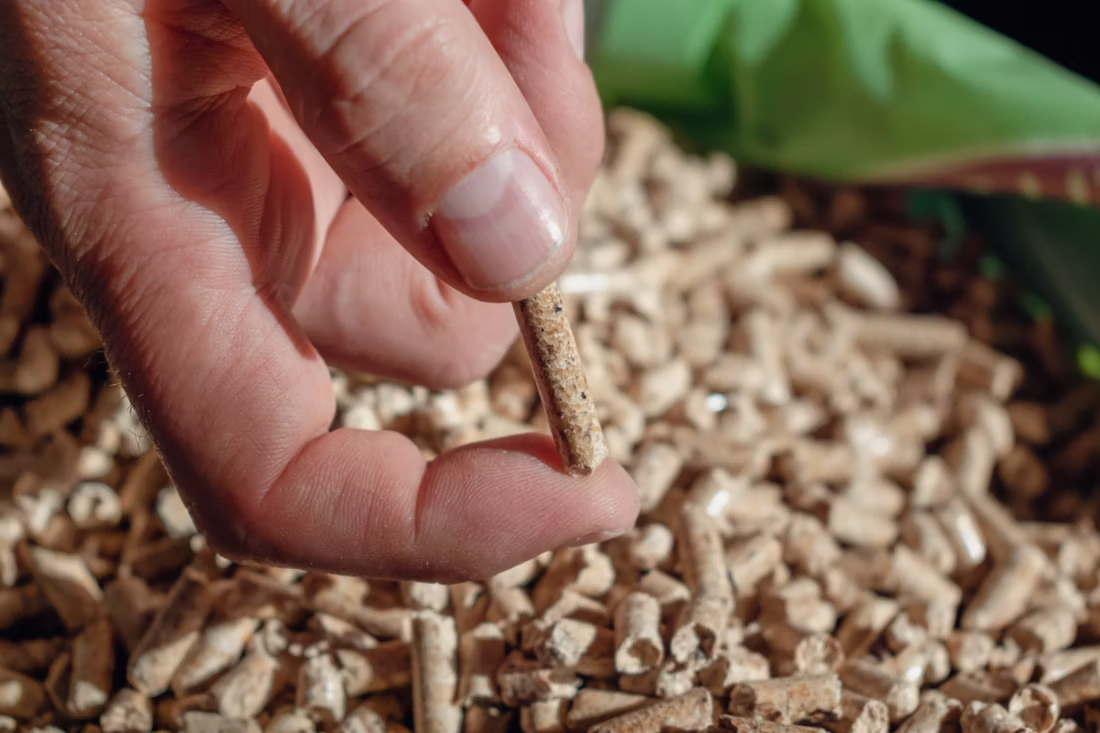
There's also the air quality picture. The South Coast Air Basin is a designated non-attainment area, and Santa Ana wind events regularly bring wildfire smoke into the region—conditions that make adding any combustion appliance a harder sell, even a pellet stove, which burns considerably cleaner than cordwood. Pellet units also require electricity to run the auger and blower, so they don't double as outage-proof backup heat the way a wood stove can. None of this makes a pellet stove impossible in Rancho Palos Verdes—it just means the handful of homeowners who want one are usually after ambiance in a high-ceilinged great room, a modest heat boost in an older hillside home with real drafts, or a stove for a second property in the mountains. If that's you, the install still needs to be done right, and that starts with finding a dealer who actually stocks pellet appliances in an LA-area market where demand is thin.
Three steps. No salesperson until you're ready.
Tell us about your project
Your zip code, your situation, and the fuel you're leaning toward—or let the answers point you to one.
See what's actually available
The brands dealers within 100 miles genuinely carry—real options, never a catalog mirage.
Get your dealer & Project Guide
A trusted local dealer, plus the free Project Guide & Parts List that names every component of the job.
Frequently Asked Questions
Are pellet stoves common in Rancho Palos Verdes?
No—they're uncommon. With a winter heating load that's just a fraction of colder climates and winter lows averaging 47°F, most Peninsula homes never need supplemental heat beyond a gas furnace or an SCE-powered heat pump. Pellet stoves show up occasionally in homes that want the look and ambiance of a real flame without wood handling, or in hillside houses with drafty single-pane construction from the 1960s and '70s. But this isn't a market where you'll find a pellet stove showroom on every corner—expect to work with one of a smaller number of LA-area dealers who carry the appliances at all.
How much does a pellet stove installation cost in Rancho Palos Verdes?
Because pellet installs are infrequent here, there isn't a deep local pricing history the way there is for gas conversions. As a general range for the LA basin, expect somewhere in the $3,000 to $6,500 territory for a freestanding pellet stove with a standard exterior vent kit, with pellet inserts into an existing masonry fireplace running toward the higher end once venting and hearth work are factored in. Get a firm number from a dealer who's actually installed pellet units on the Peninsula rather than a general contractor pricing it from a catalog.
Where can I buy pellets near Rancho Palos Verdes?
Regional brands like Bear Mountain, Lignetics, and Pacific Pellet are distributed through hearth shops and larger home-improvement retailers across the LA area, though selection on the Peninsula itself is thin—plan on driving toward the South Bay or Torrance for reliable stock, or having pellets delivered by pallet. Because Southern California isn't a major pellet-manufacturing region, prices here typically run a bit higher than in the Pacific Northwest where most of these brands are milled; budget accordingly and buy a season's supply early rather than chasing bags in December.
Will a pellet stove work as backup heat if the power goes out?
Not reliably. Pellet stoves depend on an electric auger to feed fuel and a blower to distribute heat, so a standard unit goes dark the moment power drops. Southern California Edison's Public Safety Power Shutoffs during Santa Ana wind events are the most likely outage scenario in Rancho Palos Verdes, and those can stretch into hours or a day. Some homeowners pair a pellet stove with a small battery backup or portable generator sized for the stove's draw, but if outage-proof heat is the actual goal, that's worth discussing with a dealer before you buy—a pellet stove isn't the appliance built for that job.
Is a pellet stove allowed under South Coast AQMD rules?
Generally, yes, and pellet stoves are actually the more permission-friendly option in a non-attainment area. EPA-certified pellet appliances typically burn clean enough to be exempt from the no-burn curtailment days that apply to wood-burning devices in the South Coast Air Basin. That said, a building permit from the City of Rancho Palos Verdes is still required for the installation itself, and if your property falls under one of the Peninsula's homeowners associations, you'll likely also need architectural review sign-off before any exterior venting goes in—worth checking before you order equipment.
Do I need a permit to install a pellet stove in Rancho Palos Verdes?
Yes. New installations require a building permit through the City of Rancho Palos Verdes Community Development Department, and the venting has to meet manufacturer specs and code clearances. Given how many Peninsula neighborhoods carry HOA covenants—the Palos Verdes Homes Association territory among them—it's also common to need a separate architectural committee approval for anything visible from the street or a neighboring lot, including a through-wall vent termination. A dealer who's installed on the Peninsula before will know which jurisdiction and which HOA rules apply to your specific address.
What's the difference between a pellet stove and a pellet insert?
A pellet stove is a freestanding, self-contained unit that vents through a wall or roof and can go almost anywhere with the right clearances. A pellet insert is built to slide into an existing masonry wood-burning fireplace, using a liner run up the old chimney or a direct-vent kit through the back. Rancho Palos Verdes has a fair number of older hillside homes from the 1960s and '70s that still have their original open masonry fireplaces—for those homes, an insert is often the cleaner path since it reuses the existing opening rather than requiring new framing for a freestanding stove.
Would a pellet stove actually make sense for my home?
For most Rancho Palos Verdes homes, honestly, probably not as primary heat—the climate doesn't demand it. Where it does make sense: a great room with high ceilings and a lot of glass facing the ocean, where radiant heat from a stove takes the edge off on the handful of genuinely cold nights each winter; an older home with drafty single-pane windows that never quite feels warm even with the furnace running; or a second property you own up toward the Angeles or San Bernardino National Forest, where the elevation and temperatures make a pellet stove far more useful than it would be on the coast. If none of those describe your situation, a gas insert or electric unit will likely serve you better and cost less to install.
Pellet vs. gas—which is right for my Rancho Palos Verdes home?
Gas is the more practical choice for the vast majority of homes on the Peninsula. A direct-vent gas insert or fireplace lights instantly, needs no fuel storage, and works with the natural gas service most RPV homes already have. Pellet stoves require hopper loading, ash cleanup, and a standing supply of bagged fuel that isn't sold on every corner locally—real maintenance for a climate that rarely asks for extra heat. The main reasons to choose pellet over gas here are aesthetic (the look of a real flame) or situational (no gas line to the room, or a second home in a colder area). For most everyday RPV living spaces, gas wins on convenience and cost; pellet is the choice for someone who specifically wants that appliance and knows what they're signing up for.
What's the difference between an insert and a zero-clearance fireplace?
An insert is a fireplace that slides into a pre-existing wood-burning fireplace—if you don't have one, there's nothing to insert it into. A zero-clearance fireplace is built into a framed wall, which makes it the answer for remodels and new construction. Simple test: existing masonry fireplace means insert; blank or framed wall means zero-clearance.
Why is a fireplace insert so efficient?
An insert does two things: it seals the chimney completely, so you stop losing air you already paid to heat, and it radiates warmth into the room through the firebox and glass. Most add a heat-exchange fan that pulls cool room air underneath, wraps it around the hot firebox, and pushes it back out warm. Your home is more efficient before you've even lit the first fire.
Does a fireplace add value to my home?
On average, a fireplace adds back to the home about the same amount you spent installing it. Add the monthly savings from heating the rooms you actually use instead of the whole house—often hundreds of dollars a year—and the value case is strong before you even count what a fire does for how your family uses the room.
How much should I budget for a fireplace?
For an average home—covering the fireplace, the vent pipe, and basic installation—a budget between $3,900 and $5,500 gives you a lot of options across wood, gas, and pellet. By the time you add finish work, gas line, and electrical, the average complete installation lands between $5,000 and $12,000 all-in. In a remodel or new build, a good rule is to put about 2.5% of the total project cost toward the fireplace.
Nearby Dealers
Hearth shops serving Rancho Palos Verdes and the surrounding area.
All Valley Distrib. Dba Marco Distrib
The Heat Source (Burrico) - Lancaster
Tropicana Outdoor Living
Pellet Brands Stocked Around Rancho Palos Verdes
Manufacturers will point you to the nearest stocking dealer.
Find your pellet setup in Rancho Palos Verdes.
Tell us about your home and what you're after, and we'll match you with a local dealer who actually carries pellet appliances in the LA area—plus a free Project Guide & Parts List with the vent kit and equipment your install needs.
Find Your Fireplace →